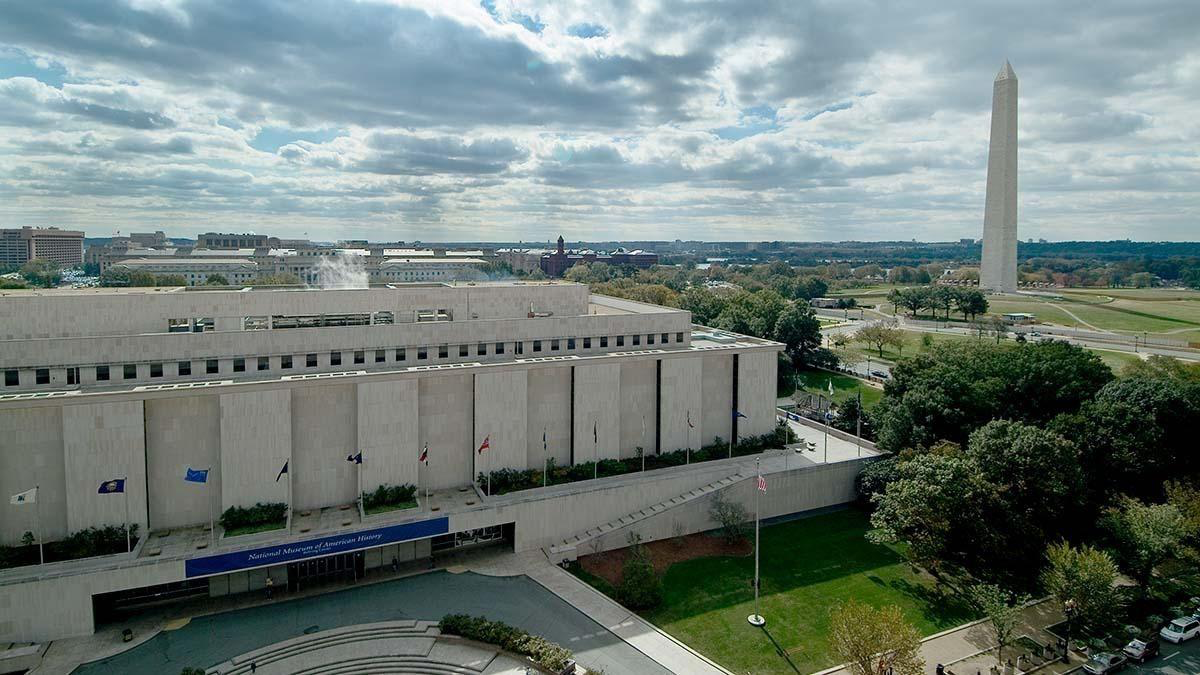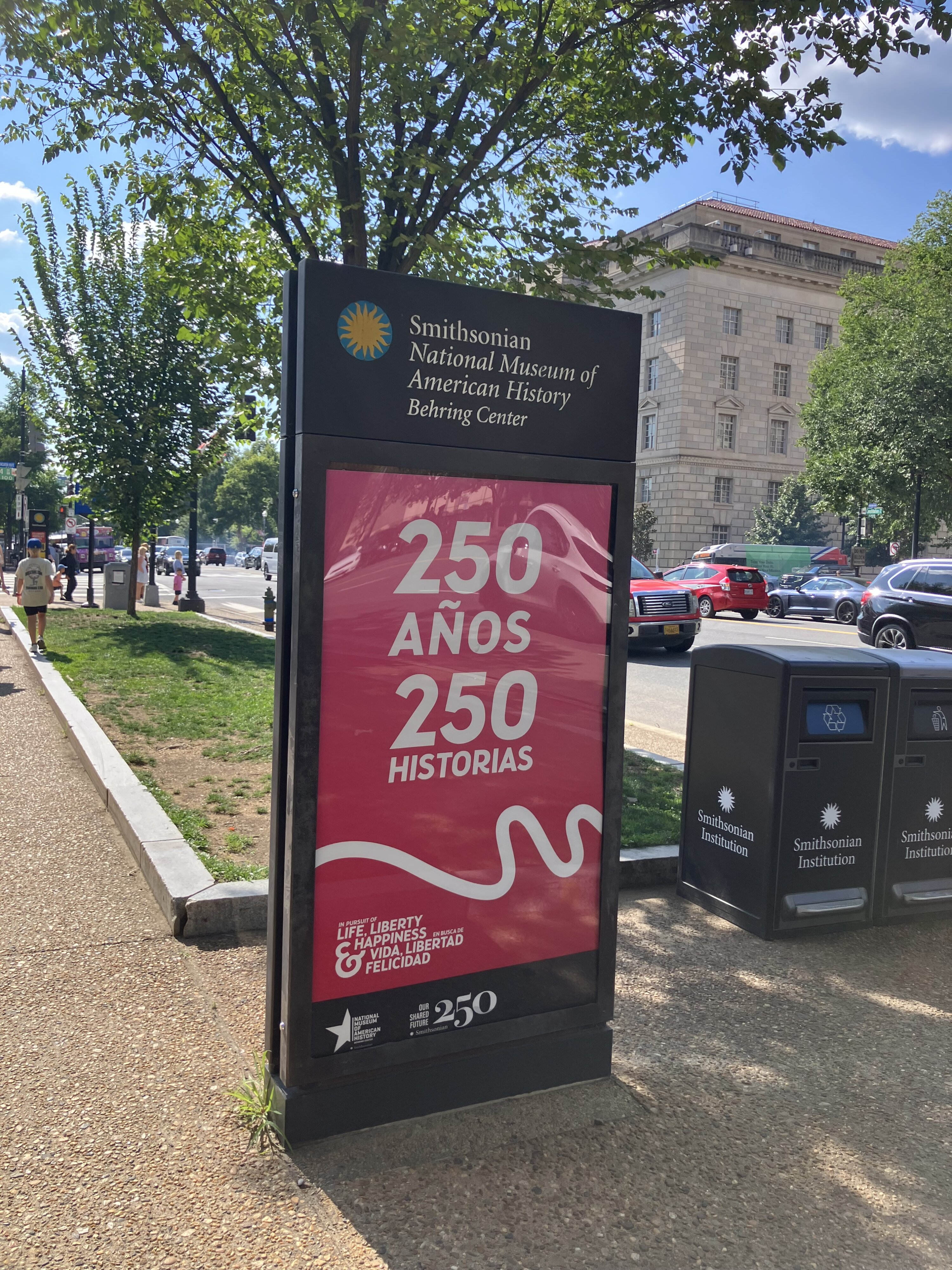
On a recent trip to the Smithsonian’s National Museum of American History, I was wandering a corridor devoted to American technological innovations—a camera shutter, a denture, an artificial heart—when I heard music in the hall behind me. A group of Black women in long printed skirts appeared, clapping and stepping and singing an uptempo version of the spiritual “Watch That Star.” I was about to walk into an exhibit, but I followed these women instead.
They led me to a small atrium, where a handful of visitors had gathered to watch them sing. One performer explained that they were doing a ring shout, “a rhythmic religious dance of African origin,” then another theatrically asked why, if the dance is African, we’re learning about it in the American history museum. They explained that the ring shout crossed the ocean with enslaved people who adapted their various cultural traditions “into something truly American.” There was discussion of the Gullah Geechee people, following the North Star to escape slavery, and why they were using sticks instead of drums. Eventually, I wandered off—but in an adjacent room, as I read about Eli Whitney’s patent woes, I could still hear their voices echoing, singing Rihanna and Lauryn Hill.
This performance, I suppose, was woke. It’s exactly the kind of thing that the White House Domestic Policy Council recently called out in its 130-page polemic against the National Museum of American History. The document, released on July 4, alleges that the museum:
…purposely presents America as a problematic country irredeemably conceived, founded by deeply flawed men, and still operating today as an instrument of systemic racism and oppression. In the Museum’s current telling, the country is, above all, defined by white supremacy, slavery, conquest, exclusion, hierarchy, racism, xenophobia, misogyny, and systemic injustice.
[The White House report] identifies a broad pattern: the Founders are minimized, if not entirely excluded; traditional patriotic narratives are treated with suspicion, if not outright contempt; and the basic symbols and stories that once helped unify Americans are presented not as reasons for gratitude and inspiration, but as objects to be inherently questioned, dismantled, “problematized,” and reinterpreted to achieve ideological ends.
Essentially, the report accuses the American history museum of being captured by an unpatriotic leftist agenda that distorts basic historical facts in order to tell an ideological story that places undue emphasis on our nation’s flaws. Perhaps that has elements of truth; during my three hours at the museum, I did see some silly ideological things. But the ring shout was not among them. What struck me about the performance was not its implicit political content—its acknowledgement that slavery existed and was cruel and that its legacy persists today, all of which is true and appropriate—but that it felt engaging. It was a lively experience that existed in three dimensions. It was something that I did not have to read off of a wall.
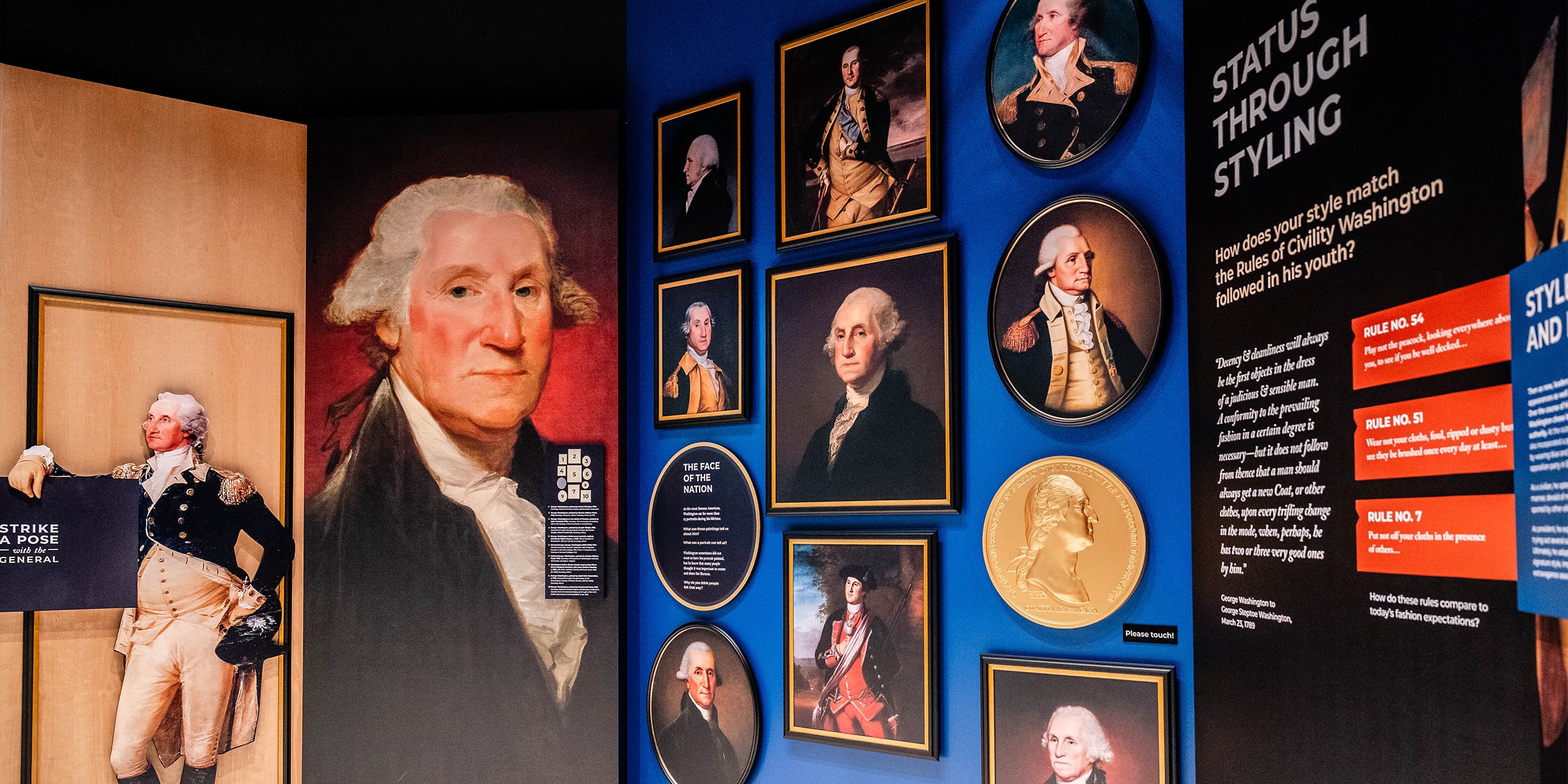
Just so you understand why that’s noteworthy, here is an image of the exhibit I saw next:
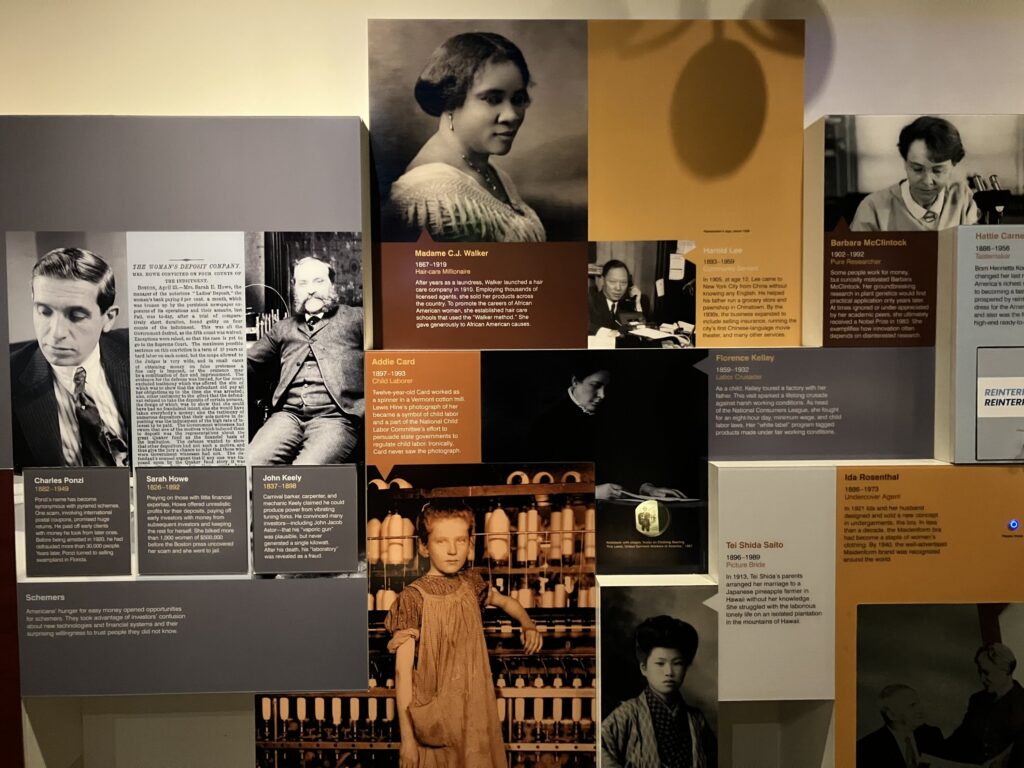
You’ll notice the overabundance of wall text. And you’ll barely notice any objects at all. The “Inventing in America” exhibit has a ratio of text to objects so extravagantly skewed that, in portions of it, you actually have to search to encounter anything that’s not signage. It’s like trudging through the pages of a large-print book.
I thought perhaps this was anomalous, so I moved to another exhibit called “Many Voices, One Nation,” which seemed to have more objects but equally voluminous text. “Why is there a model of a steamboat next to a woven basket next to a porcelain wash basin next to an animal jawbone?” I asked in my notes, adding that, “I think this all has to do with 19th century westward migration, but I would have to do so much reading to find out.”
“Many Voices, One Nation” was among the primary targets of the White House report, which claims that the exhibit’s “ultimate goal” is to “convince visitors that illegal aliens are entitled to citizenship, voting rights, and ‘belonging’ in America.” If that’s the case—and I do not believe that it is—then I failed to receive the message, perhaps because all the signage is so dull.
I’d gone to the Smithsonian because, frankly, there were aspects of the White House Domestic Policy Council report that didn’t seem 100 percent crazy. In the past decade, I have attended many lectures and dance performances and literary readings and gallery shows that have made me feel extremely hectored on identitarian grounds. My objection isn’t political. I’m a liberal. I care deeply about these things. But it’s fairly suffocating to see the world exclusively in terms of fighting oppression. I like when cultural experiences surprise me, when they challenge me and expand my capacity to think. At a certain point, it does feel like ideological disciplinarianism to suggest—implicitly or otherwise—that the only appropriate meaning to be made from the world comes through the lens of social justice.
The White House report claimed that the American history museum was explicitly enforcing that type of thought. It quotes from the museum’s interpretive plan, suggesting that “whatever the topic,” exhibits should “speak to the core issues of our time”—specifically “race/identity, gender/sexuality, climate change, immigration/migrations, economic inequality, technological change, and nationalism/globalism.” My immediate reaction to that was yikes. According to the interpretive plan, “What gives these issues their potency is that they are both the live questions of our moment and the enduring challenges of our country’s history.” But the report claims that the result of following such a plan is that “visitors encounter the same ideological storyline over and over again.”
That seemed like a plausible charge, but it’s not what I encountered at the museum. Inside the “Inventing in America” exhibit, there was a totally reasonable display explaining the founders’ differing opinions about the ideal structure of the American economy, and a gloss of the cotton gin that never actually mentions its role in expanding slavery across the South. On one wall, Cesar Chavez is labeled a “Labor Legend” while Sam Walton is a “Retail Revolutionary”—and even the most devoted culture warrior from the White House Domestic Policy Council might struggle to discern an ideological agenda from that. The museum has permanent exhibitions devoted to battleships and the presidency and the Star-Spangled Banner, leavened with special exhibitions about salsa music and lowriders. None of it felt ideologically coherent, and I don’t mean that as a criticism at all.
The issue with the American history museum isn’t that it’s too woke; it’s that the material is tough to digest because it’s so tediously over-explained. I’m aware that with the Smithsonian under attack from the Trump administration, it’s a suboptimal moment to pile on. Not everybody, especially the museum’s hardworking and passionate staff, wants to hear that its historical lessons are probably too impenetrable to indoctrinate anyone, even if the exhibits were doctrinaire. But I like museums. I think they’re valuable. And the Smithsonian has a real opportunity—and desire, I think—to engage both Americans and visitors from around the globe.
Typically, a museum pulls us in with objects. For example, I recently visited the Edgar Allan Poe Museum in Richmond. That museum is not slick. It’s not fancy. But it stays out of its own way. It has an interesting collection that it presents with minimal intervention: a lock of Poe’s hair, his boyhood bed, an unsettling painting of a distraught Victorian woman that he once gave to a friend. Obviously, there are many differences between the Poe Museum and the National Museum of American History, namely of mission and scope. The Poe Museum is not attempting to do anything nearly so ambitious as to tell the nation’s story. But I do find it elucidating to contrast their presentation of objects. In the Poe museum, the wall text buttresses the objects. At the American history museum, the objects mostly buttress the wall text. They’re props in whatever story the museum is trying to tell.
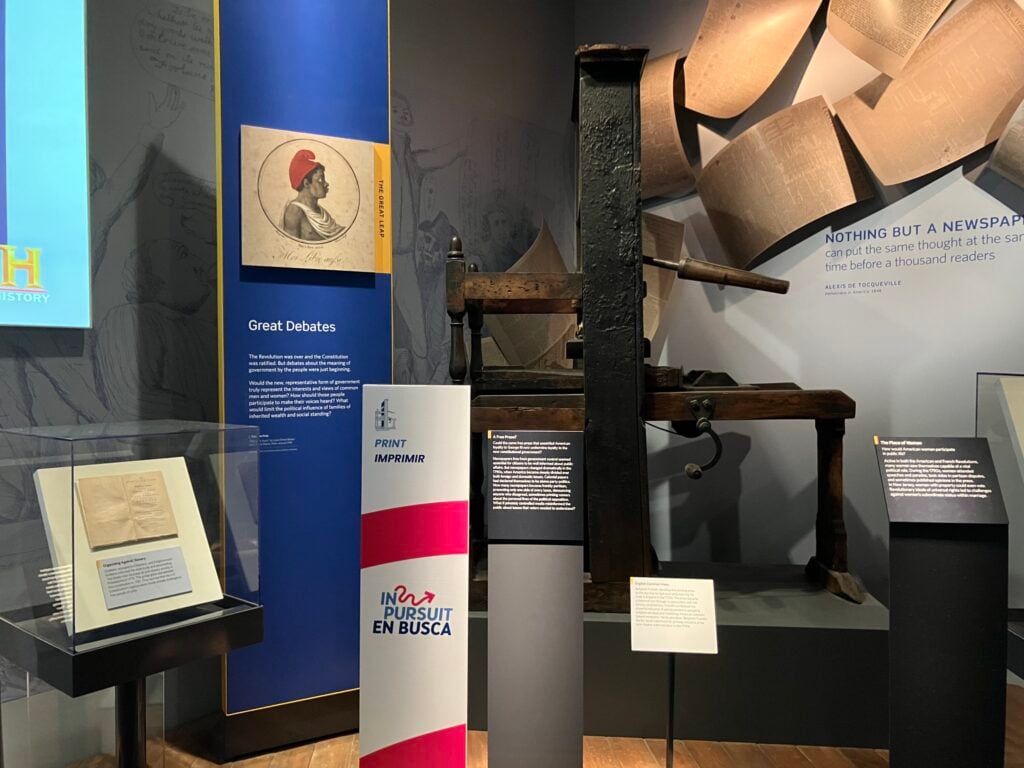
For example, one of the more intriguing objects I encountered there—in a hall devoted to American democracy—was a printing press that Ben Franklin had used, pocked and weathered with age. I literally had to peer around five different signs to see it. The content of those signs was moderately interesting, especially the one about partisan media in the 1790s—but honestly, I only read that sign after the fact, via a photo on my phone. While standing there, I was overwhelmed by the barrage of signage and peeved that it was obscuring an object that I actually wanted to see, so I didn’t pause to grapple with any of the rich questions (“What if privately controlled media misinformed the public about issues that voters needed to understand?”) that the museum wanted me to ask.
The thing is, I like objects. Perhaps that’s an unsophisticated preference, but I certainly don’t think I’m alone. The most boisterous energy at the museum was around its marquee items: the top hat Abraham Lincoln wore to Ford’s Theatre on the night he was assassinated, or the Gunboat Philadelphia which sank in 1776. Around those displays, children shrieked and parents snapped photos. Scrums of people—families, retirees, tourists, teens—lingered and gawked and discussed.
At one point, I fought my way through a crowd to see the ruby slippers from The Wizard of Oz. They’re magic on screen. They glitter. They appear to be made from a substance that’s not naturally found on this earth. But in the museum, they’re so endearingly analog: just faded sequins and beads stitched onto dated heels, the kind of thing you could fabricate at home. The wall text emphasized how Dorothy’s pluck resonated with beleaguered Depression-era audiences, an interpretation that seems plausibly true but just did not make the slippers feel alive. What entranced me was their low-key physicality. It made me understand something about how the camera transfigures the world, about the magic of color film.
Not everything in a museum can or should be as splashy as the ruby slippers. The Smithsonian’s collection is full of quieter objects, ones of less compelling provenance that tell a more quotidian story: GameBoys and credit cards and rolls of Scotch tape—items that are significant not because they have an unusual or important backstory, but because they’re generic, part of the fabric of everyday Americans’ lives. With those objects, the museum faces a real interpretive challenge. It doesn’t take much to explain why the ruby slippers are interesting, but a random product scanning gun from 1996 may require some textual finesse.
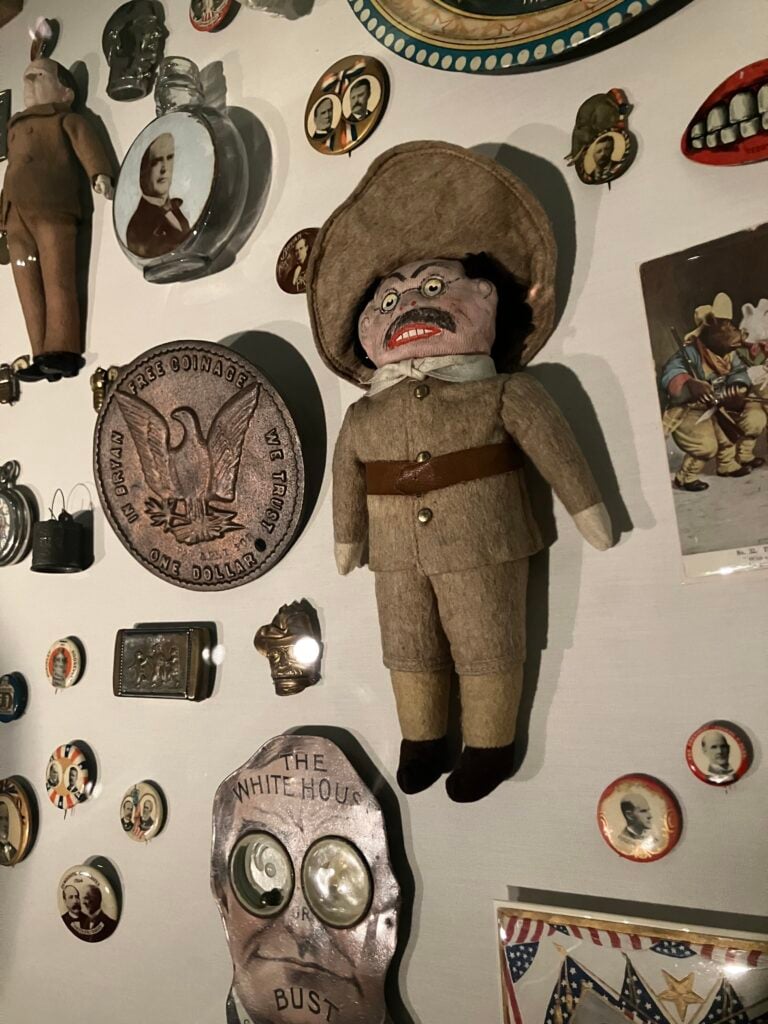
I just don’t think more signage is the answer. The museum’s everyday objects are most striking to me when grouped. I liked the jumbled cases of campaign memorabilia: a banana-sized cigar promoting the candidacy of William Howard Taft, a pair of John Kerry flip flops sponsored by George W. Bush. Presented together, these objects told stories about the evolution of American manufacturing and the escalating savvy of political campaigns. I also loved the re-created rooms from decades past, like Julia Child’s kitchen and video game pioneer Ralph Baer’s workshop, stuffed with pre-internet era household objects like land-line telephones and hefty reference texts and dishware with outdated prints. In these contexts, the individual objects don’t need to be explained. They gain meaning from their proximity to one another, from letting us experience what it once felt like to be alive.
Contrast that with the cherry red Weber kettle grill from the ’70s that I encountered—disembodied, stripped of context—in a white-walled display case, accompanied by the following text: “In post-World War II suburbs, dads grilling meat on the patio transformed food preparation from work to recreation.” That left me totally cold.
I’m sure that I am misunderstanding much about this museum, and that a curator could explain to me why the exhibits are how they are. I actually tried to speak with the director—but the Smithsonian did not make her available, which seems reasonable given that the White House has personally singled her out for attack. I’m not claiming to understand or represent the museum’s point of view, but I think it matters that as an ordinary person with a particular interest in American history, I felt pretty alienated when I went there. I think it matters that I have no idea what the museum is trying to do and I can’t seem to figure it out.
In the museum’s interpretive plan, I did find this sentence: “We need a history that in every moment and in every aspect is indelibly human and alive—a history that touches people, moves them and changes them.” I agree with that. And during my visit, the past felt most alive to me while I was staring at a butterfly ballot from the 2000 election, whose notoriously confusing design may have led thousands of Palm Beach voters to accidentally select Pat Buchanan instead of Al Gore. I knew about butterfly ballots—I’d seen pictures of them—but actually encountering one felt different. As a live object, it’s more bewildering than I’d imagined. I sat with it for multiple minutes and was still not convinced that I’d figured out how to vote for Gore.
I cannot precisely say what I learned from seeing the butterfly ballot, but I can tell you what it made me feel. It made democracy seem precarious. A design flaw in a ballot in one single American county may have led to the Iraq war, to the financial crisis, to the current extraordinary concentration of wealth. Standing there, trying to sort out which slot corresponded to which candidate, I thought about how this fiasco was an accident, while today we’re besieged by actual efforts to subvert elections: January 6th, the SAVE Act, Citizens United, the gerrymandering wars. I’m not sure I gained any specific knowledge from the butterfly ballot, or arrived at a coherent story about our nation, but I left with an unsettling understanding that everything of value is so precarious and contingent and could be lost in any number of ways.
And I arrived there not because any of this was explained to me, but because I had an experience with an object from the past.