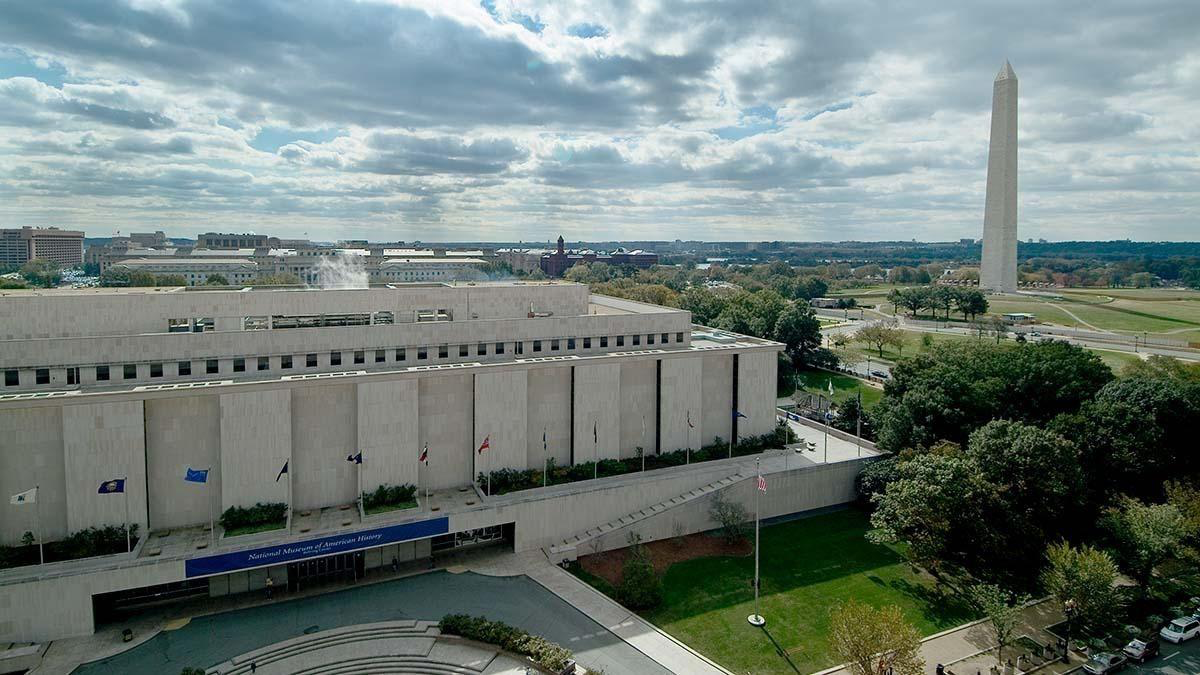
The Trump Administration’s Domestic Policy Council released a scathing 162-page report on Monday taking aim at the National Museum of American History. The report argues that the museum “fails in the basic task of illuminating our heritage” and that it intends to “divide, dispirit, and discourage our citizens.”
All 162 pages are a crazy ride, accusing the museum of everything from a grand conspiracy to give all undocumented immigrants citizenship to viewing slavery through too much of a “racial lens.” Here are some of the wilder takeaways from the report.
More George Washington
One of the report’s biggest gripes is that the museum does not spotlight little-known historical figure George Washington enough. This could have dire consequences, as the report warns that people visiting the museum may not know who he is at all: “Who is George Washington and why does he matter? Visitors are never told.” They’re also deeply concerned about the museum’s “failing to dedicate a single (new or current) exhibit on display at NMAH to George Washington, Thomas Jefferson, other Founders.” The long-standing American Presidency exhibit would like a word.
Girls Gone Wild
The report takes specific aim at an exhibit titled “Girlhood (It’s Complicated),” which they argue teaches young girls to be activists. They write that the exhibit “encourages all young children—but girls in particular—to “talk back” and defy authority, including teachers, parents, and religion.” One of the culprits? Bobs. They quote one placard that describes how girls “made new gender-bending ideas—such as bobbing their hair—popular,” which they say “praises activism that blurs the lines between the two genders.”
Making Slavery “Too Racial”
Another issue with the museum? It apparently doesn’t take a color-blind approach to slavery. The report says that one placard “shamefully divides Americans based on race by reducing the decades-long effort to eradicate slavery—pursued by Americans of every background and color—to a racial lens.” They didn’t like that the placard said “African Americans fought to abolish slavery, achieve equality and freedom, and overcome segregation through a variety of means.”
The Butterfly-Wing Conspiracy
The report contends that the museum’s “ultimate activist goal” is “citizenship for millions of illegal aliens.” One of their biggest complaints is a set of monarch butterfly wings meant to symbolize DREAMers and undocumented immigrants. They say that separate placards around that set of wings are meant to psychologically connect topics like women’s voting rights and Black Americans’ right to citizenship to immigration. The authors also take aim at a shirt in the “American Democracy” exhibit that shows a red, white, and blue butterfly with the word “VOTE!” underneath. They say that this shirt is “implying that illegal aliens should be given the right to vote.” The shirt, which was made in the 1970s, appears to have no connection to immigration and likely features a butterfly because they were popular among teens, some of whom had just gotten the right to vote with the 26th Amendment.
Where’s the Flag?
On a more aesthetic note, the report takes issue with the design of the museum’s promotional materials, saying that they wish they would trade the theme of “white squiggly lines with red and blue backgrounds” for the Liberty Bell, Statue of Liberty, a bald eagle, or American flag. The authors also feel that, in general, not enough attention is paid to the flag or Flag Day, which they attribute to the museum being “too busy preparing for ‘June Pride Month/WorldPride in D.C.’ each year.”
Asking Too Many Questions
The authors were not a fan of open-ended questions. The report says that questions posed to visitors actually just mean that curators don’t know how to feel about history. They take aim at a placard in the American Democracy exhibit that asks visitors, “How should Americans remember their Revolution and the founding of the nation?” They seem to think that curators are actually asking because they don’t know themselves. The report laments, “In other words, the museum effectively tells its visitors, ‘We are the National American History Museum, but we do not know what the national narrative should be, so you tell us.’”