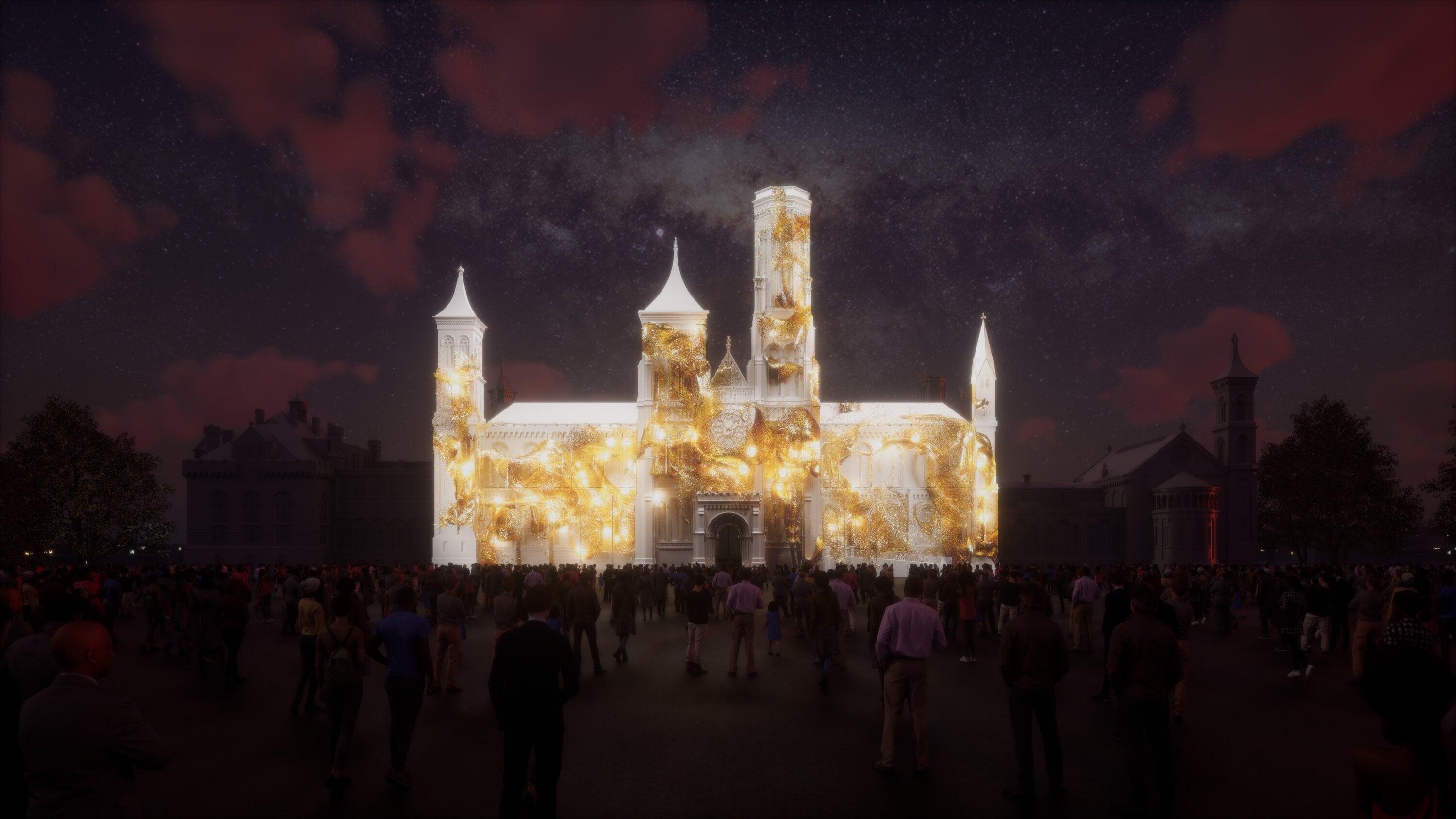
The Smithsonian Castle is transforming into a massive canvas for projected videos on July 17 and 18. Designed by data artist Refik Anadol, “Smithsonian Dreams” uses artificial intelligence tools to create moving visuals, starting with data and images in the Smithsonian’s vast open-data collection. The digital art display will be projected on the facade of the castle starting at 9 PM on both nights.
In 2020, the institution launched Smithsonian Open Access, which released millions of digital images from its collection into the public domain. Lisa Sasaki, the Smithsonian’s deputy under secretary for special projects, says the Smithsonian approached Anadol about using the collection for this project. The artist is no stranger to machine learning in his work and recently opened AI art museum Dataland in Los Angeles.
From there, Anadol developed the concept. His guiding question: What would it would look like if the Smithsonian Castle could dream? After all, the building has been around for 171 years and seen its fair share of history.
The projection show includes digitized fossils from the Museum of Natural History’s paleontology department, images of orchids from the Smithsonian Gardens, and more items, interpreting them as washes of color, moving mosaics, and 3D model building blocks.
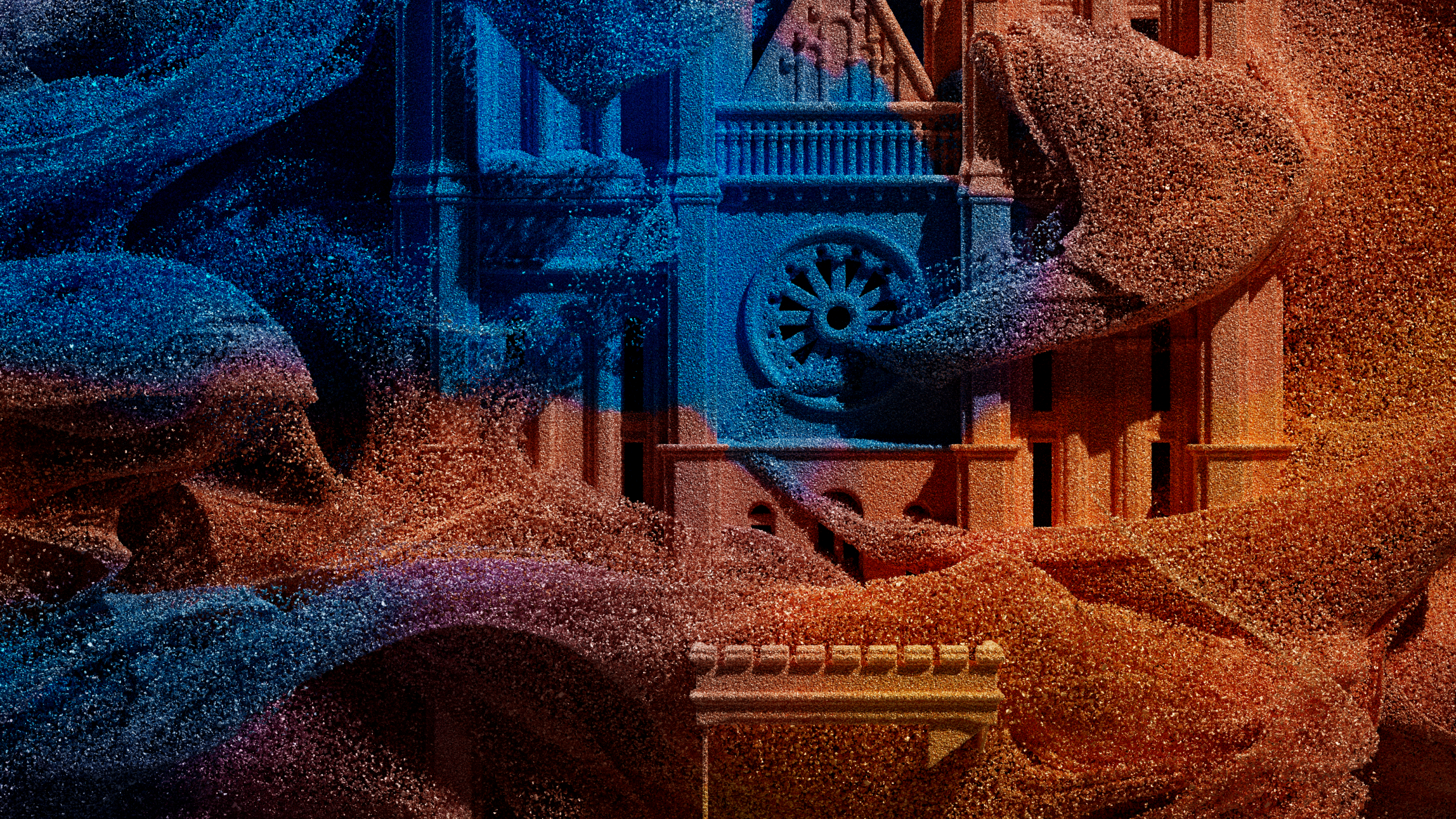
According to Sasaki, there’s hope the display will create conversation about the use of AI as an art tool. Given the vast amount of data in the Smithsonian’s collection, she says the project wouldn’t be possible without technological tools.
Still, AI usage—particularly in creative fields—is subject to spirited debate. Sasaki points out the AI tools only used non-copyrighted material in the Smithsonian’s collection, and Anadol remains the artistic mind behind the project. In terms of environmental impact, Sasaki says Anadol worked with data centers that minimize their footprint.
“Having somebody like Refik who seems to be at the forefront of the use of AI was really intriguing for the Smithsonian,” says Sasaki. “What does it look like as we go into the next 250 years of the Smithsonian as an institution but also in these different areas of art history, culture, science?”
In addition to the projections, there are accompanying events at the Arts and Industries Building from 6 PM to 11 PM on July 17 and 18. Visitors can enjoy music, drinks, and snacks ahead of the projections. If you’re curious about the role data played in Anadol’s creative process, the artist is discussing the topic during a conversation at the National Museum of Asian Art museum director Chase F. Robinson.