The “bluenami” that swept the nation on November 3 will give Democrats firm control of Congress and a popular mandate to push back against the Trump administration.
Many issues will be on the table when the new Congress is sworn in on January 3. Democrats may look to force a vote on the Iran war, attempt to ban congressional stock trading, push for the full release of the Epstein files, or all of the above.
In contrast, shutting down Trump’s DC vanity projects seems like it might be low on the list of priorities. But three local House Dems who spoke to Washingtonian said stopping local construction would be an important step for their party.
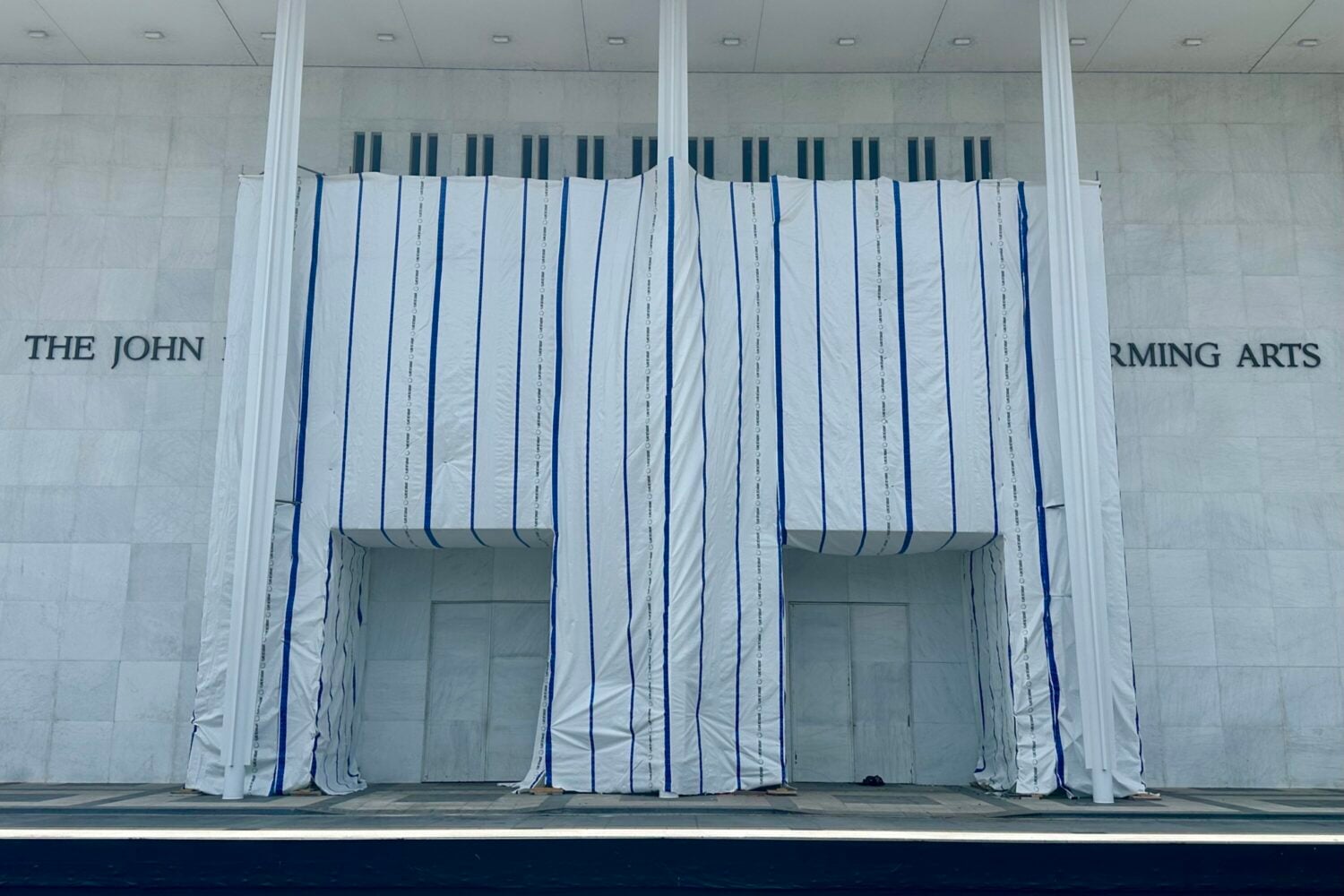
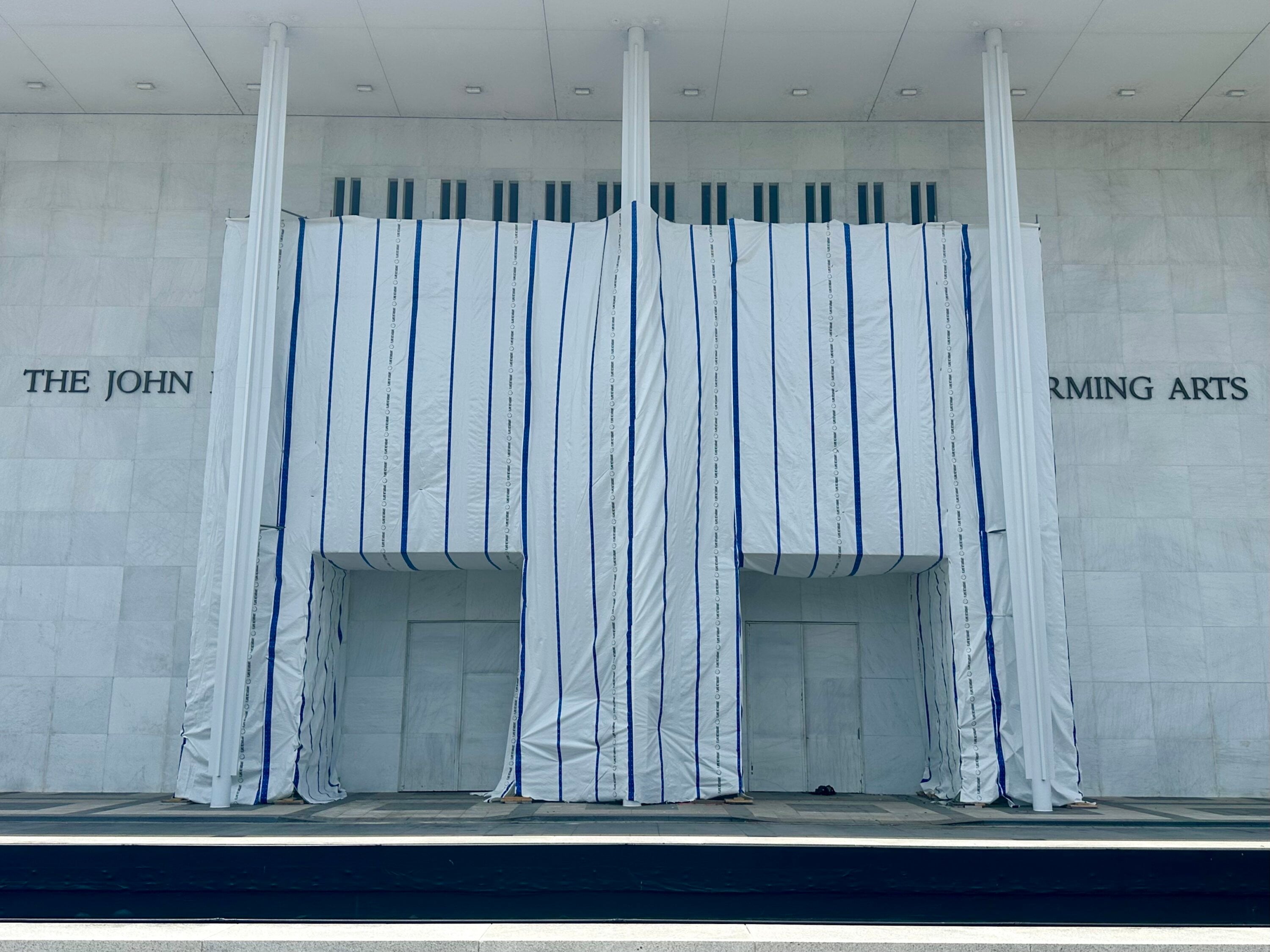
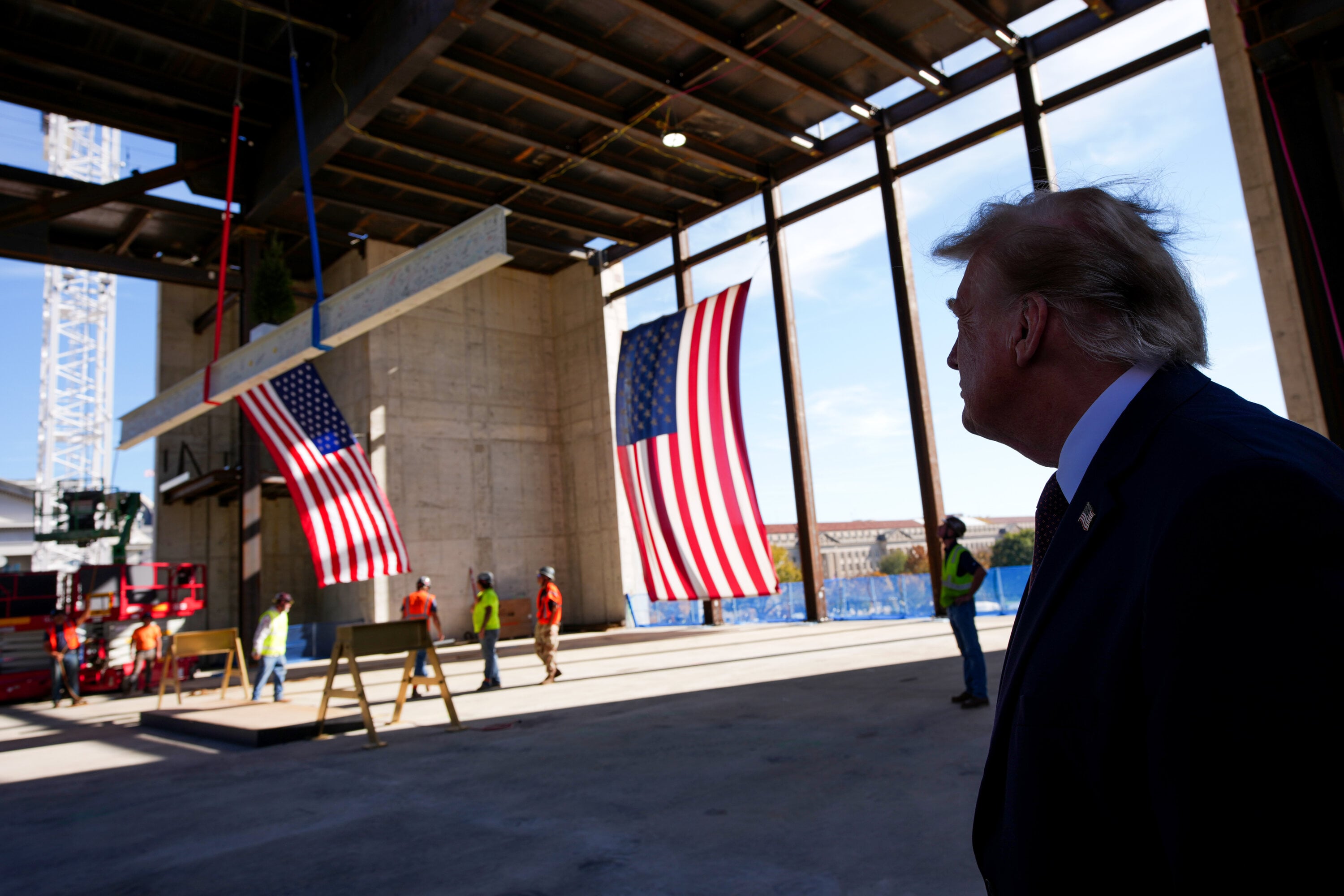
Trump has altered or attempted to alter spaces including the Reflecting Pool and the Kennedy Center; he’s also taken steps to build a luxury golf course in East Potomac Park, a triumphal arch, and a ballroom that would replace the East Wing of the White House. The projects have garnered criticism for variously employing no-bid contracts and using, collectively, over a billion dollars in taxpayer money.
Incoming DC Representative Robert White has a personal connection to many of the construction sites, and lambasted the president’s decision-making.
“My maternal grandfather is buried at Arlington,” White said of Trump’s proposed arch, which would overlook the national cemetery. “To see efforts to rush a project that really is a vanity project for one man that would cast a literal shadow over the graves of American war heroes most mornings of the year—that is really tough to swallow.”
East Potomac Park is also dear to White. The park “is a place where my mom, before she passed away when I was eight, used to take me and my brother on picnics,” he said. “My brother and I took up golf in our 20s, and that was the place that we could play early in the mornings because we could afford it.”
Over the past two years, Democrats in Congress occasionally brought the issue of Trump’s construction projects to Capitol Hill. But the Republican majority showed little interest in confronting the president. “We’d never get a vote in a committee nor a vote on the floor,” Representative Don Beyer of Virginia said. “We could introduce a bill, but many bills just languished in limbo.”
That will change come January.
Oversight and Legislation
A true-blue Congress can commission oversight actions to investigate different construction projects and restrict more money going toward them. “You use hearings to shed light on what happened,” said Jonathan Nash, a professor at Emory Law School. “Find out how this was done, whose idea it was, which funds were actually spent.”
Congressmembers could also try to pass specific legislation blocking the projects. For example, Beyer is recirculating a bill that would prevent Trump’s arch from becoming reality. “I’m optimistic that with a little effort with the new people I can get to north of 200 [signatures],” he said. “It can easily pass the House.” The problem is the rest of the legislative process. “Even if it passes the Senate, which is more doubtful, Donald Trump will not sign it,” he said.
Nonetheless, the bill can serve to show where Congress stands, or be included as leverage in a government funding package. GOP members could also make headlines by going against the president and backing the bill; Beyer said he spoke to Hill Republicans who “promised they’re going to be a lot less intimidated by the president than they were.”
The Courts
Lawsuits filed against the Trump administration in DC courts are already doing some of the Democrats’ work for them. Judges have forced Trump to pause work on his arch, golf course, and ballroom, though the Supreme Court later ruled that work on the ballroom could continue while the case continues to be litigated.
Beyer said the justice system is the “most plausible” way of stopping the construction, and Nash expects that one or both chambers of Congress will eventually take Trump to court. “The argument would be: ‘The president has infringed upon our legislative authority by undertaking these constructions,’ ” Nash said. The chambers could file new lawsuits against the executive branch, join ongoing ones, or both.
Trump may argue that he doesn’t need congressional approval for his projects if they’re funded by private donations, but that explanation has been rejected by courts before. Representative Jamie Raskin of Maryland, the incoming chair of the House Judiciary Committee, is similarly calling BS. “I don’t care whether Elon Musk is paying for it or a pardoned J6 criminal is paying for it,” he said. “They cannot alter the federal design and layout as enacted by Congress.”
However, there are limits to what lawsuits can accomplish. “Congress could cut off the spigot now, but that doesn’t actually stop the construction that’s already ongoing or the use of funds that the executive already has,” Nash noted. In speculating about an eventual ruling, he compared Trump’s ballroom project to a building found to violate zoning laws. “They don’t make you necessarily tear down what you’ve already done, but whatever has yet to be finished, maybe there’s a way to scale it back,” he said, adding that he’d be surprised if Trump was forced to fully tear his half-finished ballroom down.
The Planning Boards
Federal planning commissions may be another way for Democrats to effect change. Come 2027, two congressional Democrats will be appointed to the National Capital Planning Commission, a 12-person panel that Trump has stacked with loyalists, and which has approved construction plans for the ballroom and arch. DC Mayor-elect Janeese Lewis George will also appoint two citizen members to the NCPC; White said he was working closely with her on the decision. With those four flips, Democrats will have a majority on the board, and could use it to block future construction proposals.
Is All This Worth It for Democrats?
Beyer admitted that DC construction is not on top of all Americans’ minds. “Many suspect it distracts us from focusing on the more important problems in our lives: the tariffs, the price of gas and diesel fuel, the war, the corruption, Epstein,” he said.
However, ending the construction projects could prove a legislative win for Democrats. Lawmakers could tie the issue to an anti-corruption agenda and frame it as wasteful spending. An Ipsos poll released last week found that two-thirds of Americans and half of Republicans are against Trump prioritizing pet projects in the District. “I don’t think I’ve ever seen quite as much unanimity as there is in Northern Virginia right now about the arch,” Beyer said. “Democrats, Republicans, independents. I don’t know anybody that’s for it. I’m sure the same is true in Washington DC.”
As for whether Democrats have the time: “We’re perfectly capable of focusing on the large things, and all of the violations of law in the federal city as well,” Raskin said.
OK … But What’s Actually Going to Happen?
Nash expects Democrats to hold hearings on the projects and file lawsuits challenging their legality. They may also look to cut off any future money that Trump tries to spend on municipal construction. Projects where Trump hasn’t broken ground, such as the arch and golf course, could be cancelled, while projects like the ballroom may be left in a suspended state. (The Reflecting Pool is essentially done, and will likely be left alone, though Congress could investigate the contracts Trump awarded.)
You can’t predict the future, but many in Congress are dead set in making sure what happened to DC over the last two years never happens again.
“We will make sure Donald Trump stops finger-painting all over the federal government,” Raskin said. “We will use our oversight power quickly to find out what kinds of bulldozing damage and desecration have taken place. We will use the power of the purse to reclaim the original statutory meaning of particular creations.” He concluded with a rallying cry reminiscent of another congressmember, Robert Garcia, who called on Republicans this month to “lawyer up.”
“The law is coming,” Raskin said.