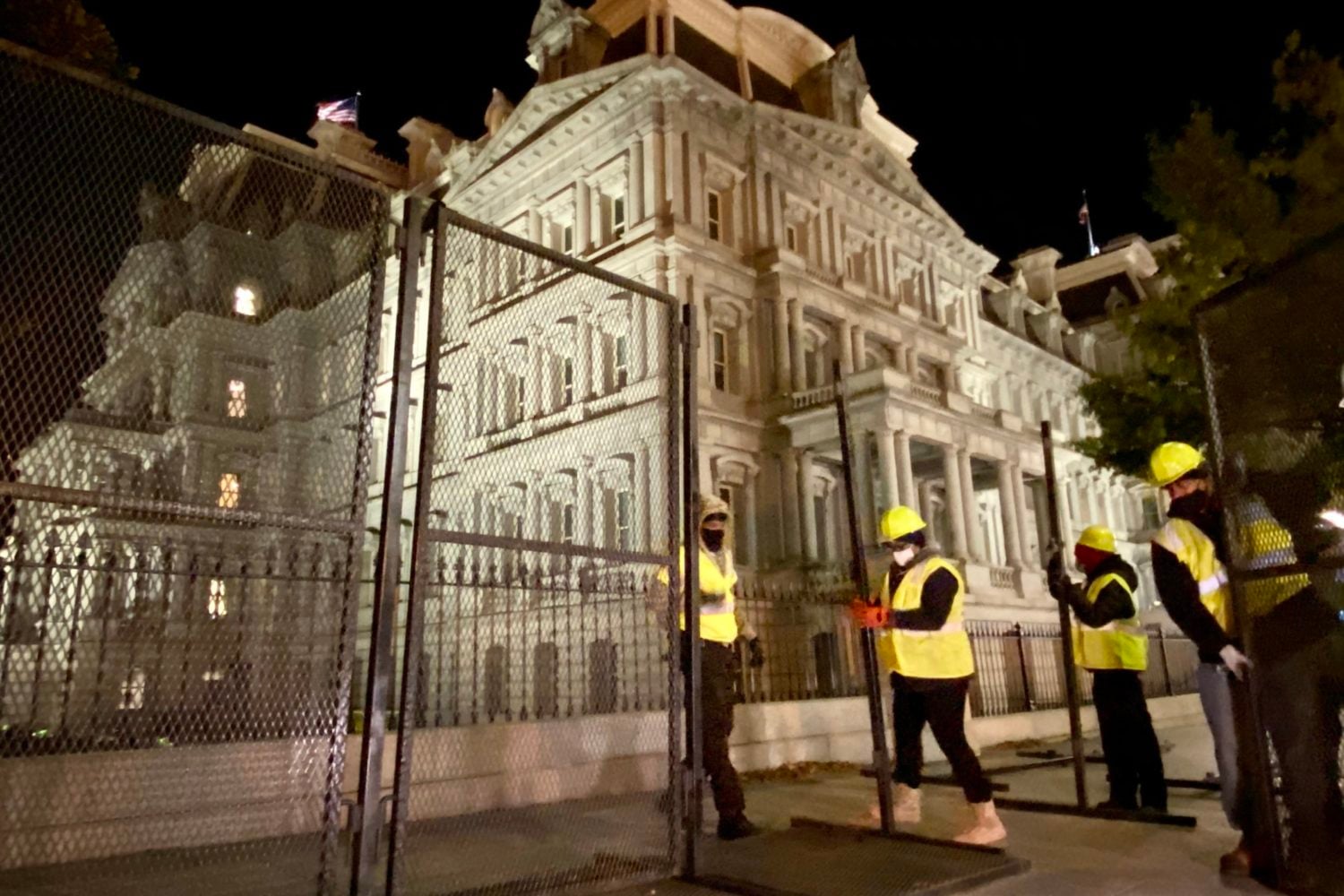
For months, DC residents have watched federal officers and out-of-state National Guard units patrol their neighborhoods, fueling a surge in arrests that has burdened court dockets and pushed the city’s jail population steadily upward.
Now, with the government only just reopened after a record-long shutdown and Washington still buzzing over Congress muscling through a bill compelling the Justice Department to release portions of the Epstein files, lawmakers have returned to one of Donald Trump’s favorite targets: crime in the District of Columbia.
On Wednesday, House Republicans, joined by a small bloc of Democrats, approved two bills that would bring back cash bail, expand automatic pretrial detention, and roll back much of the police accountability framework DC adopted in 2022. The proposals would change how cases move through the courts and how police are overseen, amounting to the biggest federal reach into DC’s justice system in years.
The legislation still must clear the Senate, which requires 60 votes and at least seven Democrats willing to break ranks. For now, it’s unclear whether there is enough support from Senate Democrats to meet that threshold. Still, the reaction from councilmembers and criminal-justice advocates points to what’s really at stake: a fight over who gets to decide the future of public safety in DC, and how little say the people who live here may ultimately have.
“We need representatives to stand up and say what’s right is right and what’s wrong is wrong; and this is wrong. This is about home rule. This is about democracy. This is about self-governance. What it ain’t about is safety,” At-large Councilmember Robert White said on the steps of the Capitol building on Wednesday.
Cash Bail and Pretrial Detention
If either bill advances, DC’s criminal legal system would look very different from the one residents know today.
One of the proposals—known as the District of Columbia Cash Bail Reform Act of 2025—would bring back cash bail and require judges to automatically detain people before trial for a much broader set of offenses, replacing the District’s long-standing system that relies on judicial discretion and supervised release.
Under current law, only a narrow set of serious violent offenses, such as armed robbery, assault with a dangerous weapon, or first-degree burglary, require judges to hold someone while the case moves forward. And even in those cases, judges must still weigh the strength of the evidence, a person’s stability, and any public-safety concerns before deciding whether detention is necessary.
The House bill dramatically expands that list to include a wide range of lower- and mid-level charges, including destruction of property, rioting, fleeing from police, obstruction of justice, stalking, and unarmed burglary or robbery, which are currently evaluated on a case-by-case basis.
Candace Mitchell, a senior expert at the Texas-based criminal-justice reform group Wren Collective and a former DC and New York public defender, says the practical effect would be simple: far more people held behind bars while they wait for their day in court.
“Without DC’s due process procedures in place, judges will no longer have the ability to make informed assessments about the strengths of a case,” she told Washingtonian. “So, there’s a real risk that innocent people will be stuck in jail waiting for trial on a weak case.”
The bill would also restore cash bail, meaning a person’s release would once again depend on whether they can afford to pay. Today, DC does not use cash bail. Instead, judges can release people under supervision, using tools like GPS monitoring, curfews, and regular check-ins to manage risk. Under the House proposal, which mirrors the White House’s recent push to end “cashless bail” in the District, people charged with offenses such as destruction of property, rioting, fleeing from police, or unarmed burglary or robbery would have to pay to get out of jail before trial.
According to a study by the nonpartisan Prison Policy Initiative, most people held before trial have not been convicted of a crime but remain in jail simply because they cannot afford bail. A national analysis by the Brennan Center for Justice reached a similar conclusion, finding no evidence that cash bail makes communities safer or reduces crime—even in cities that scaled back or eliminated the practice.
“The data does not support the claim that cash bail improves case outcomes, in either case appearance or reoffense rates,” Mitchell said. “What cash bail does mean, though, is that your freedom is contingent upon whether you can pay for bail. So it just punishes poor people.”
And it may not be in the city’s best interest to have more people locked up at a time when overcrowding remains a serious problem. Recent snapshots from the DC Jail population shows the population has been climbing for months, driven in part by the federal arrest surge, with some facilities operating well above recommended capacity.
Targeting DC’s 2022 Police Reform Law
At the same time, lawmakers are planning to unwind much of the District’s 2022 Comprehensive Policing and Justice Reform Act.
Passed in the wake of nationwide protests over the murder of George Floyd, the law is intended to make the police department more transparent by expanding access to body-camera footage, making more disciplinary records public, limiting certain use-of-force tactics such as chokeholds, and adding independent civilian voices to oversight boards. It also restricted consent searches, tightened rules for how police respond to protests, and placed guardrails on the department’s acquisition of military-grade equipment.
The House bill would wipe out most of those reforms. Under the proposal, officers could again review body-camera footage before writing reports, fewer disciplinary files would be available to the public, and several of the limits on consent searches, crowd-control tactics, and military equipment would be rolled back.
Only two parts of the 2022 law would remain: the ban on chokeholds and asphyxiating restraints, and the strict limits on police vehicle pursuits.
Mitchell says rolling back the 2022 reforms would come at a time when trust between residents and law enforcement is already strained. With so many federal agencies policing the city, she argues the 2022 transparency measures are often the only way residents can tell who was involved in an incident and how force was used. Removing those safeguards, she warns, risks making Washington less safe by discouraging people from calling police or cooperating with investigations.
“I think it’s really important for visions of safety, visions of justice, to be crafted by the people who live in those communities and care about those communities, I don’t think it should be based on partisan agendas,” she said. “I don’t think it should be crafted by people who don’t live in DC. And I think this is an affront to self governance, to autonomy, to the ability to decide what your community looks like.”