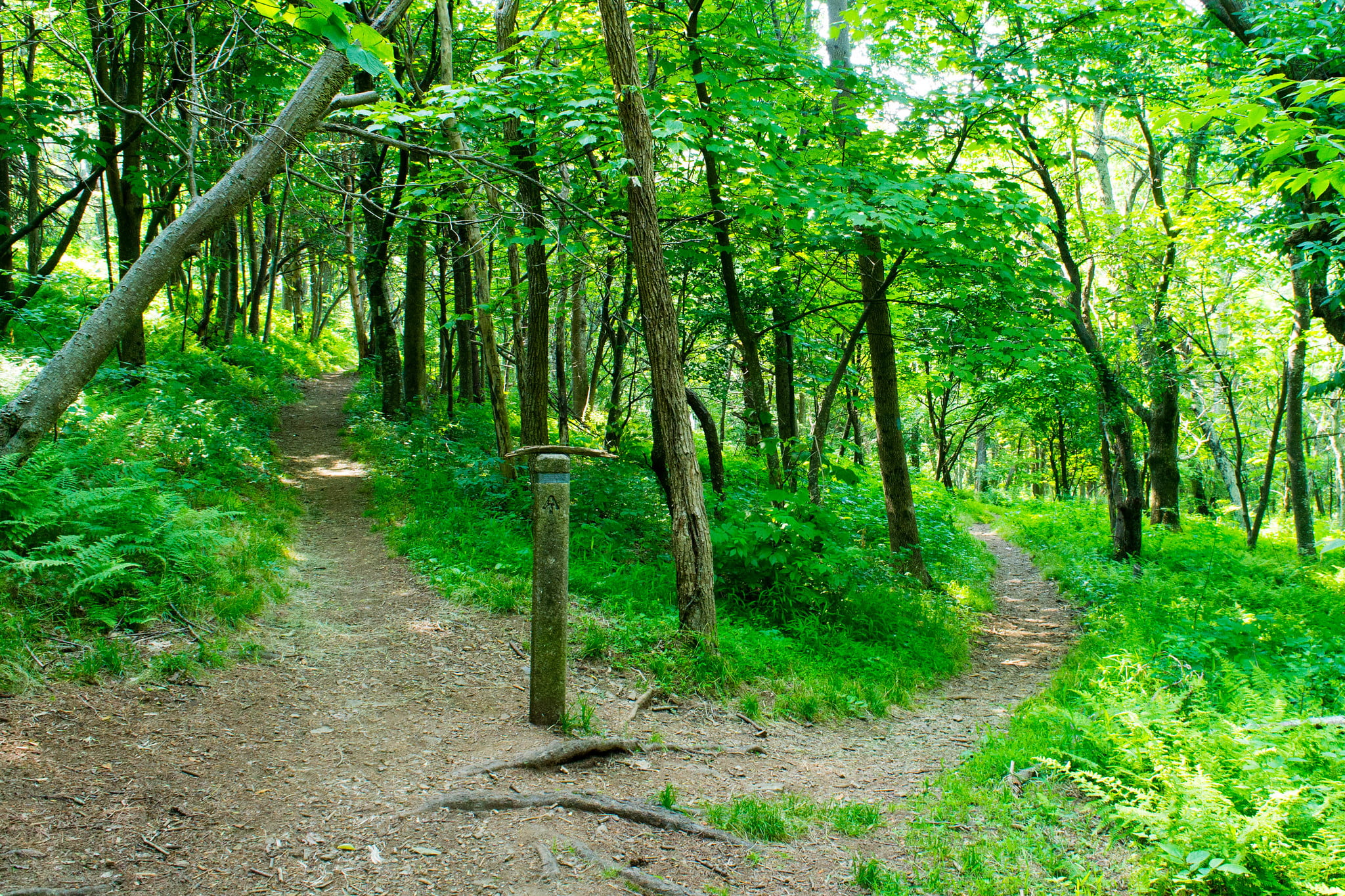
Were you thinking of hiking the Shenandoah National Park section of the Appalachian Trail anytime soon? That’s cute. There appears to be a norovirus outbreak in that area, the National Park Service announced yesterday.
Cases of “severe diarrhea and vomiting” have been reported along Shenandoah’s 101-mile stretch of the trail, and officials believe norovirus is the cause. If you are fortunate enough not to know, norovirus is a highly contagious infection that makes you aggressively poop and throw up, sometimes to the point of dehydration. Symptoms usually start anywhere from 12 hours to two days after exposure, and last between one and three days.
Norovirus is spread via infected people, food, water, or surfaces—more specifically, when little particles of diseased puke or feces find their way into your mouth—and outbreaks typically occur in crowded areas, like daycares and retirement communities. So why is this happening on a hiking trail? We asked Virginia Department of Health epidemiologists Clarissa Bonnefond of Lord Fairfax Health District and Kenneth Gordon of Blue Ridge Health District. “We cannot always identify a source of infection in these types of issues, however, recommendations for norovirus have been shared from VDH with multiple agencies and groups that work with hikers on the Appalachian Trail,” Bonnefond and Gordon said in a collaborative emailed statement. “Not having enough soap and water for handwashing while hiking can also contribute to illness.”
Officials are not entirely sure how many people have been affected by the suspected outbreak. The park service and the Appalachian Trail Conservancy have a process through which hikers can report illness to the health department. “We do have a few of those reports, however, all hikers may not utilize this system,” Bonnefond and Gordon said.
I’m about to write the word “poop” several times, so if you are currently eating, maybe stop. Famously, when a person is hiking, they have no choice but to poop in the woods. This gets rather dicey when one’s poop might be infected with a virus that causes excessive pooping. The park service reminds visitors to bury their poop at least eight inches deep in the ground and a minimum of 200 feet away from water sources. Some Einstein might miss this memo, so boil any drinking water for at least a minute to sanitize it. (Water filters are generally not powerful enough to divert viruses.) And while hikers typically do well to share food and supplies, you might want to keep to your own peanut butter for now.
“Good handwashing is the key to preventing the spread of norovirus,” according to Bonnefond and Gordon. Hopefully you already know this, but you should be washing your hands with soap and water for at least 20 seconds. Hand sanitizer isn’t really going to help you here. Pack some bleach wipes to use on privy handles, bear boxes, and other spots you’re likely to touch.
And if that dreaded tummy-rumbling sets in: tent alone, report your symptoms to the park service at publichealthprograms@nps.gov, and go to the doctor if dehydration sets in or your illness lasts for more than a few days. “There is no specific medication or vaccine for norovirus infection, and it cannot be treated with antibiotics,” Bonnefond and Gordon said. “Drinking plenty of liquids, such as water or juice, is important to replace fluids lost from vomiting and diarrhea and prevent dehydration.” There you have it. May you avoid succumbing to unspeakable bodily functions on your next vacation.