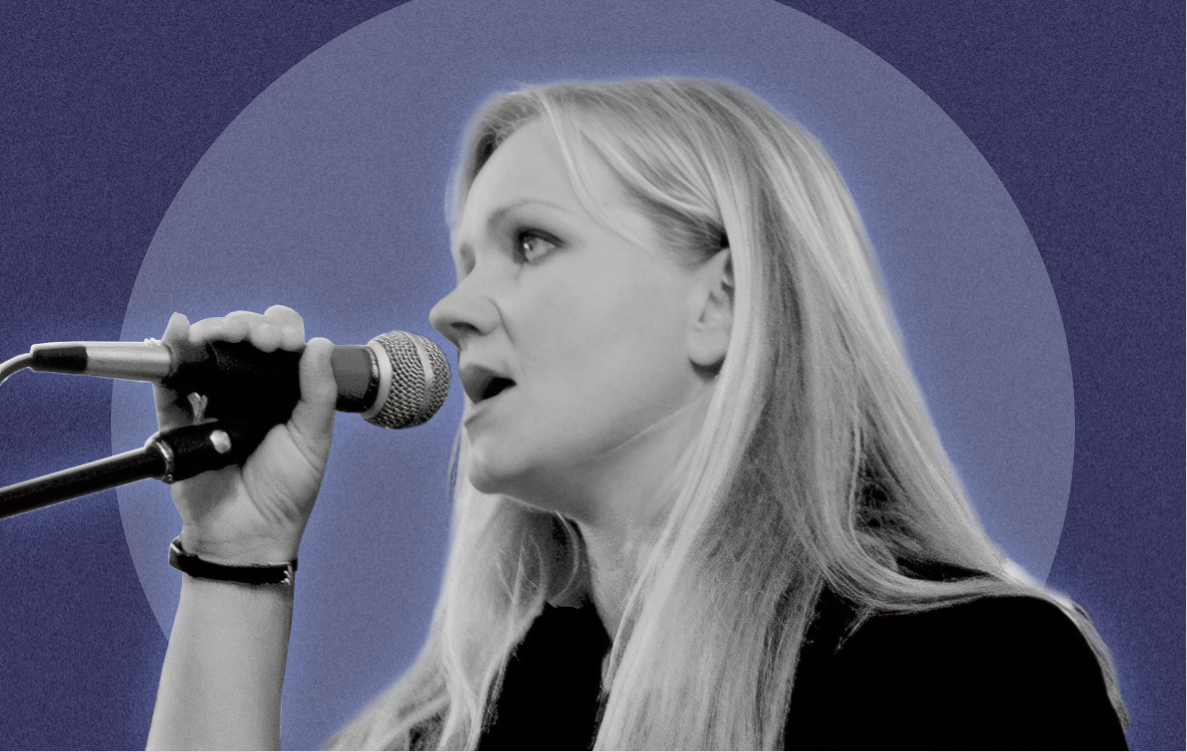
Natalie Buda Smith is the Library of Congress’s first-ever leader of AI innovation. What does that mean when it comes to the world’s largest collection of printed material? We recently met up with Smith in her cozy office on the sixth floor of the library’s James Madison building to learn more about how the LoC is tapping of-the-moment technology.
In addition to storing more than 181 million physical items, the library has a lot of data—about 200 million gigabytes. At Smith’s encouragement, the staff is increasingly using AI to work with all that digital material. For example, if the library’s Congressional Research Service gets a request to research trends in its agricultural data, a bot can do that more quickly—and might notice things a human wouldn’t. AI is also being tapped to prepare materials in the collection for public use, perhaps as a tool to translate documents that might not otherwise have been converted to English. (All work produced by AI is still reviewed by humans, Smith says.)
The library has actually been experimenting with machine learning for nearly a decade to do things like turning old manuscripts into digital text and identifying what’s happening in images. However, AI is now so much better at these tasks that Smith’s team is re-uploading many of the same items. At first, “the computer vision was starting to identify someone holding a book as a cellphone, and we’re like, ‘No, no, there were no cellphones in the 1600s,’ ” Smith says. “It doesn’t make those mistakes anymore.”
But the AI revolution has also brought challenges. Third-party bots are scraping the library’s database incessantly, which slows down systems and costs money. “We have to balance giving the public access with the bots,” say Smith. “That’s what’s frustrating—we have to use a lot more resources to manage that.” But blocking access isn’t really an option: “A lot of people are moving from a web browser to their AI tool. If we’re not giving these big companies access to our content, then that means we’re not serving a lot of people.”
Smith doesn’t push AI on staffers who are resistant to the idea (“people have to feel comfortable—you want them to use it effectively”), and she’s hesitant to launch a public chatbot for the Library of Congress at this stage. “We haven’t seen anything that is trustworthy and authoritative enough to do that,” she says.
Meanwhile, Smith is excited about other innovations in the library world, and she’s working on a project that involves storing data in synthetic DNA, a method that could last thousands of years while using zero energy. “When you have a meaningful job,” she says, “you try to do everything to make sure it keeps moving forward.”