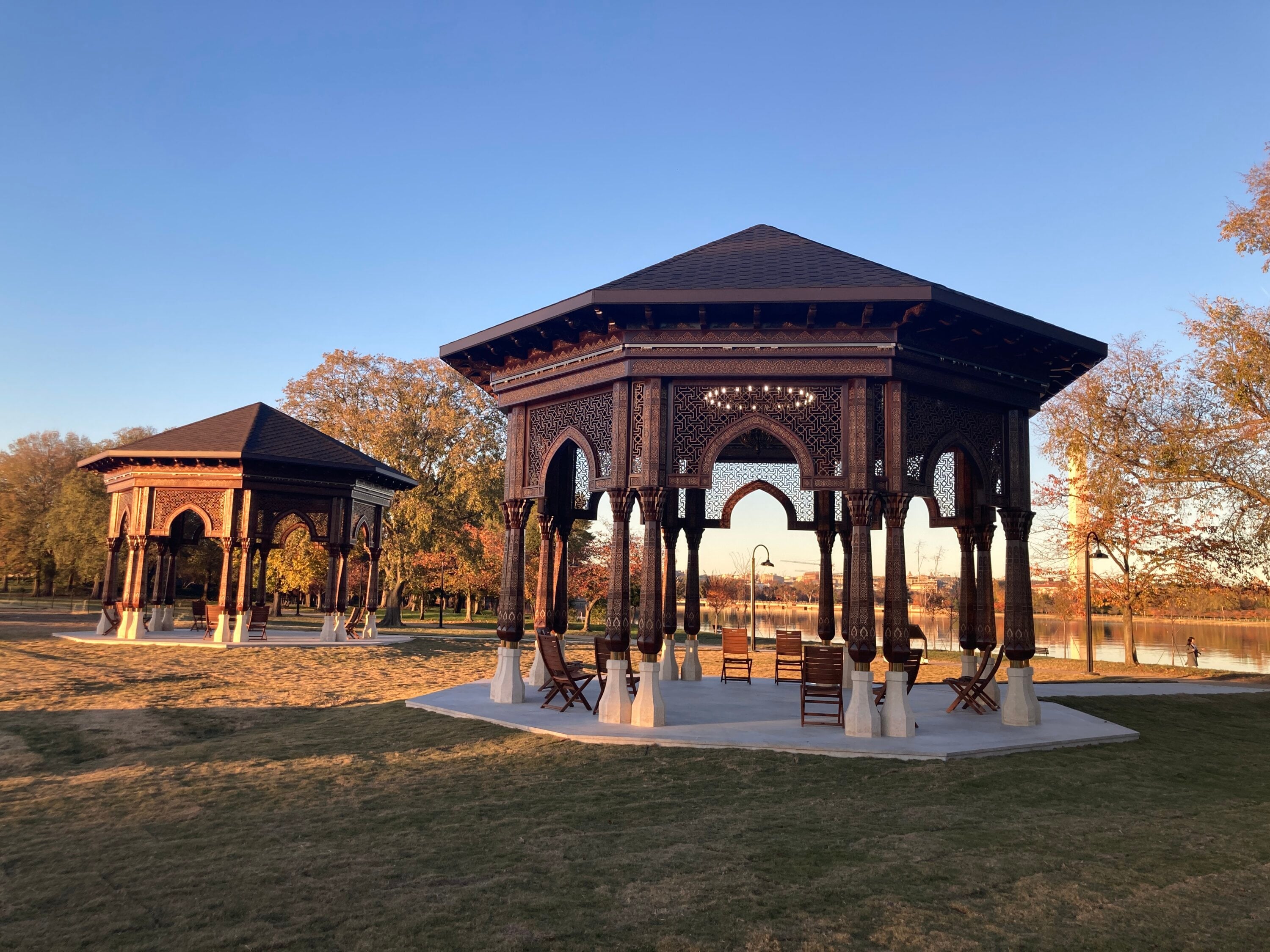
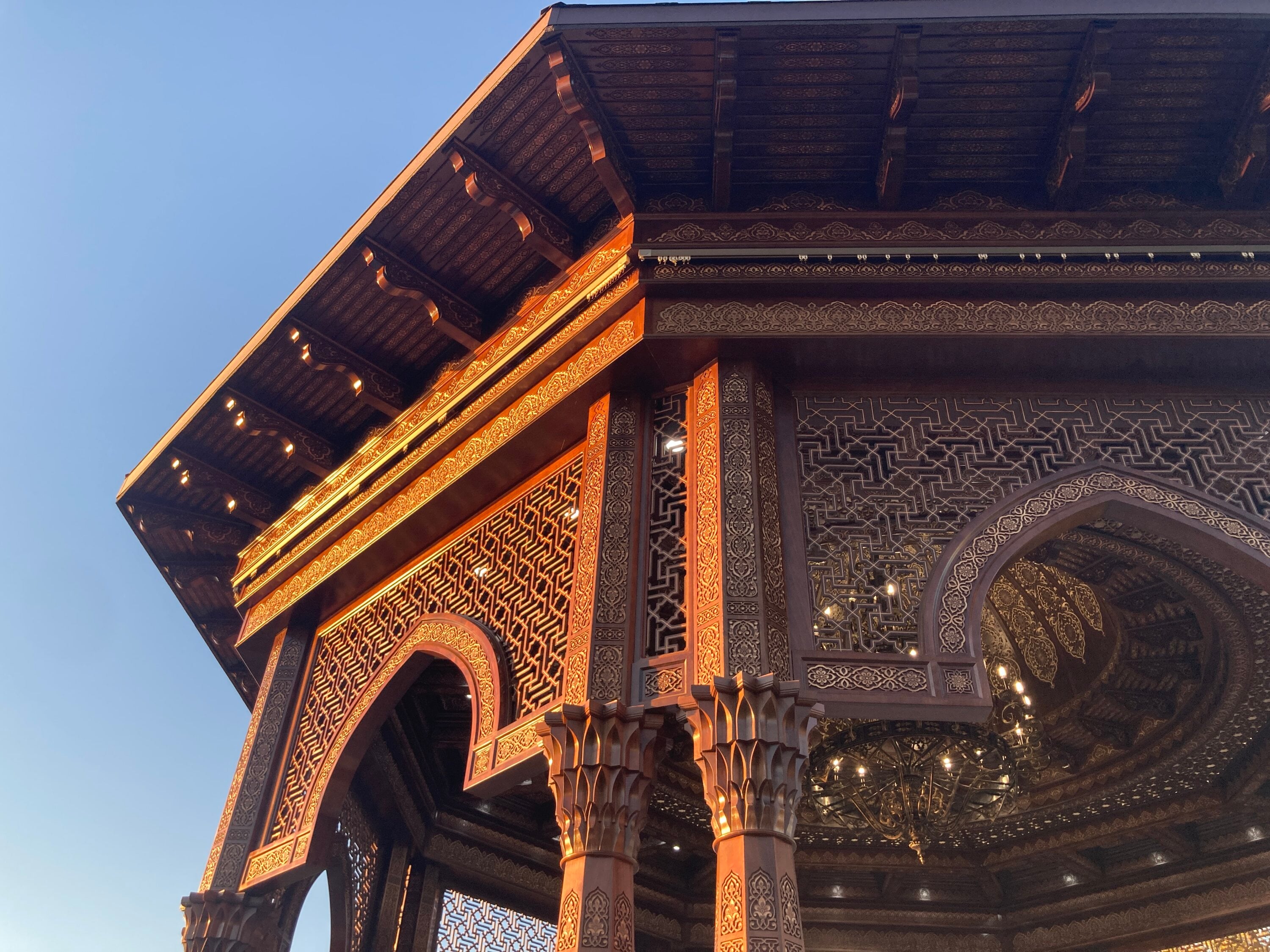
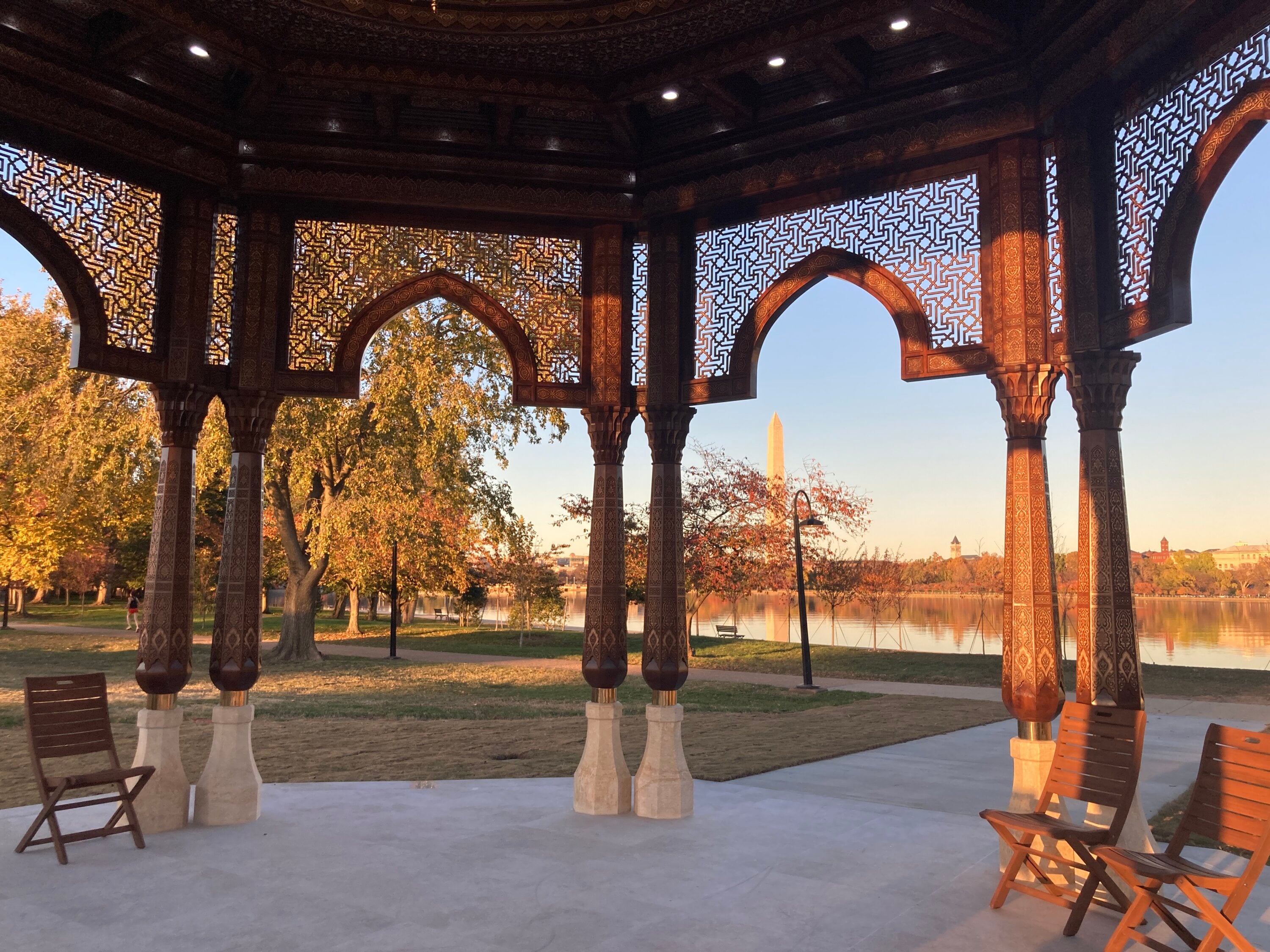
Over the weekend, two wooden gazebos–gifts from Shavkat Mirziyoyev, the president of Uzbekistan, to President Donald Trump—were installed near the Tidal Basin in DC’s West Potomac Park.
The gazebos were elaborately carved from 200-year-old mountain walnut trees and gifted to the US in honor of America’s 250th as well as the 35th anniversary of Uzbek independence. According to Anthony Kim, a researcher and editor at The Heritage Foundation, a conservative think tank, the gifts are part of a broader effort to strengthen ties between the US and Uzbekistan, which was once part of the Soviet Union, as it tries to modernize its economy.
“Washington, in a sense, realized the strategic importance of Uzbekistan on many different levels,” said Kim.
In June, the countries announced joint trade commitments: Uzbekistan committed to reducing or eliminating tariffs on goods from the US, while the US promised to “provide favorable consideration in tariff actions” for Uzbek goods. Last month, Secretary of State Marco Rubio dined with the president of Uzbekistan on a trip to Asia.
With a president that has held office for almost 10 years, an authoritarian government, and stifled freedom of expression, this deepening bond might raise some eyebrows.
“Don’t get me wrong, Uzbekistan still has a lot of homework to do but the orientation and the direction of the country’s pathway forward is increasingly, I think, positive,” said Kim, noting the Uzbek government’s recognition of the need for more transparency and openness.
Uzbekistan, a country laden with natural resources, has perhaps captured Washington’s attention with its rare earth metals. Meanwhile, its gaps in infrastructure development have created an opportunity for US assistance and investment, explained Kim.
Uzbekistan, he says, has “been signaling its desire, intention, and interest in getting closer to Washington.”
Historically, gazebos, or shiypans, as this style is called in Uzbekistan (although official signage in West Potomac Park calls them aywans), were places where farm workers could rest, relax, and have lunch, explained Akram Habibulla, the librarian for Middle Eastern, Islamic, and Central Eurasian studies at Indiana University Bloomington. Gazebos later started showing up in some parks and neighborhoods, where everyone could use them to sit, drink tea, chat, and sometimes play chess, said Habibulla.
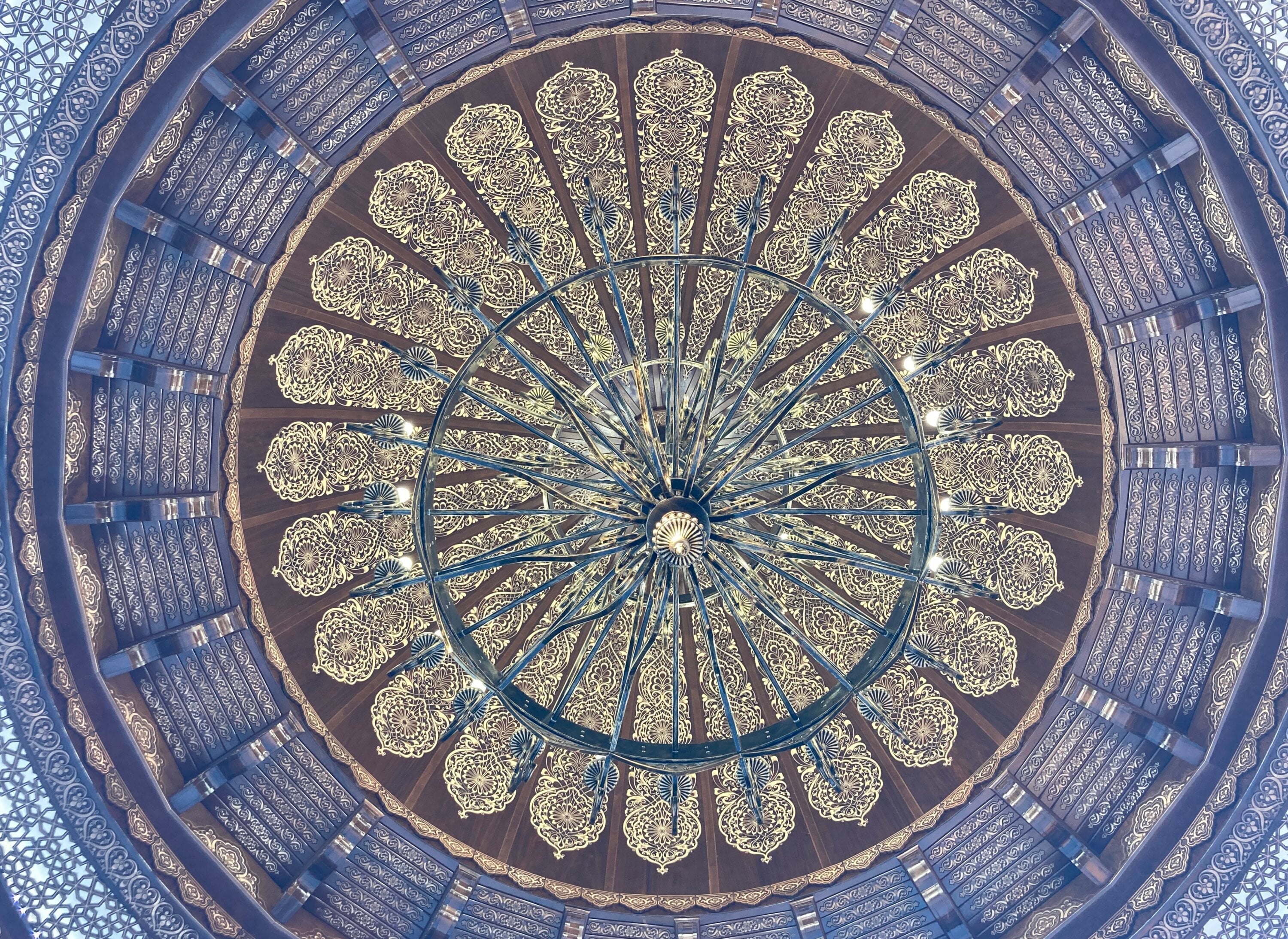
While Uzbek gazebos can be simple structures, the two now in DC are very artistic. Habibulla says that although gazebos are not the most typical of gifts, nor are they widely popular in Uzbekistan, you might find them in the front or back yards of wealthy families.