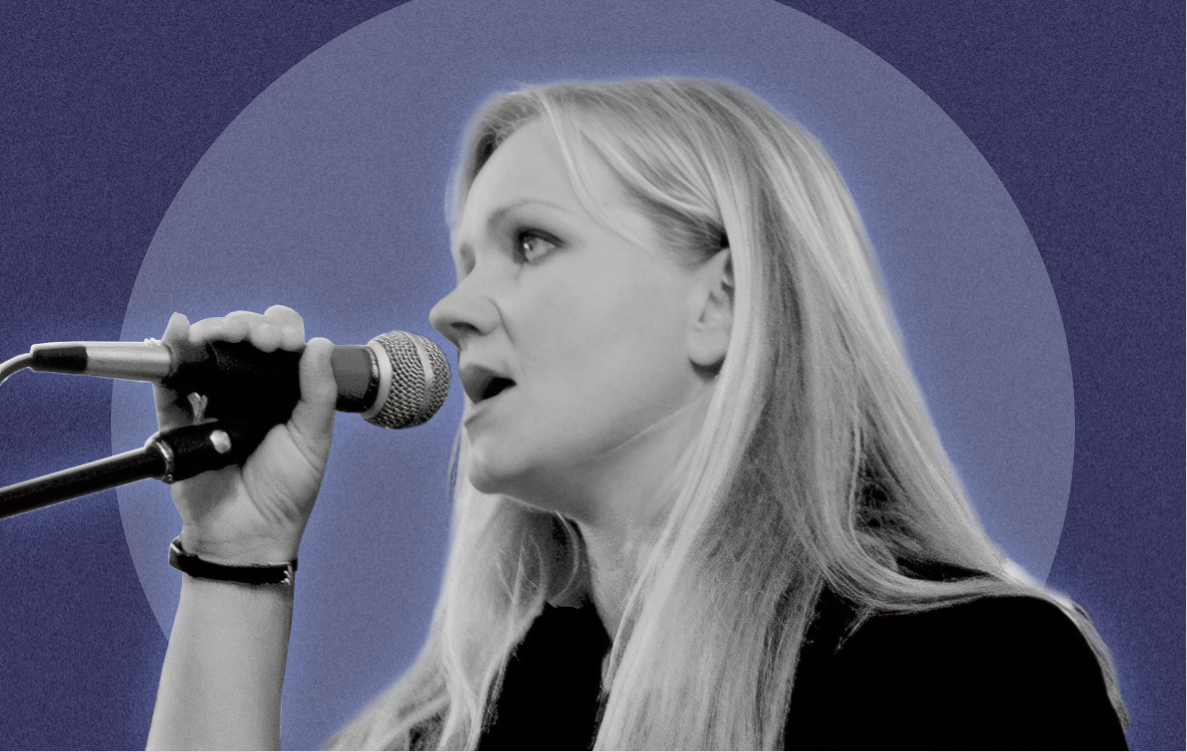
Fans of the late singer Eva Cassidy understood for years that they’d probably have to be satisfied with the handful of albums they already had. The DC jazz and folk musician died from melanoma in 1996 at age 33, and the recordings bearing her name are something of a mishmash. The posthumous compilation Songbird gained her millions of fans, but other offerings are a quirkier bunch. Live at Blues Alley, for example, has the energy and intimacy of the jazz club but finds Cassidy’s beloved voice muddied by loud drums and clinking glasses.
Yet even listeners accustomed to Cassidy’s catalog might be surprised by her latest release, Jazzed. The album uses AI to put new tracks (all performed by humans) behind old recordings of her voice. One song from the album, “Blue Skies,” is a duet with Max Cooper III, who was born several years after she died. Jazzed was made using a technique first developed by film director Peter Jackson for his documentary about the Beatles. The process uses AI to separate out each instrument and vocal of a recording so they can be remixed or reworked.
Jazzed is the brainchild of Bill Straw, who put together Songbird and now runs the label Blix Street Records. In 2023, Straw put out a similar album that stripped Cassidy’s voice from nine recordings and added cinematic backing tracks played by the London Symphony Orchestra. With Jazzed, the idea was to wrap her voice in arrangements that recall classic recordings of singers like Frank Sinatra and Ella Fitzgerald. “When I heard Eva, that’s the first thing I thought of: Could we somehow put one of the best singers ever with some of the best pop arrangers ever? That’s what I wanted, but it took 30 years for it to be possible.”
Though Jazzed owes its existence to AI technology, the new backing tracks that you actually hear—overseen by composer Christopher Willis—are all made by human musicians. “Make no mistake about it, there’s no AI on this album,” Straw says. “All the music is real, as opposed to creating music with AI,” which is something Straw says he’s strongly opposed to.
What to make of a record that recontextualizes Cassidy’s voice using this new technology? Some fans will no doubt recoil at posthumous efforts to squeeze new music out of Cassidy’s limited pool of recorded material. But Cassidy’s half sister Anette, who handles rights to the singer’s music, has worked closely with Straw over the years and okayed the project. “Can I predict how Eva herself would have felt about it?” Straw says. “No. You don’t know how she would have felt about the way we picked the songs and sequenced them. That was our call and not hers. She wasn’t here to negotiate.”

Ike Allen covers politics, food, culture, and transportation in DC and writes the monthly Hidden Eats column for the magazine. He grew up in DC.