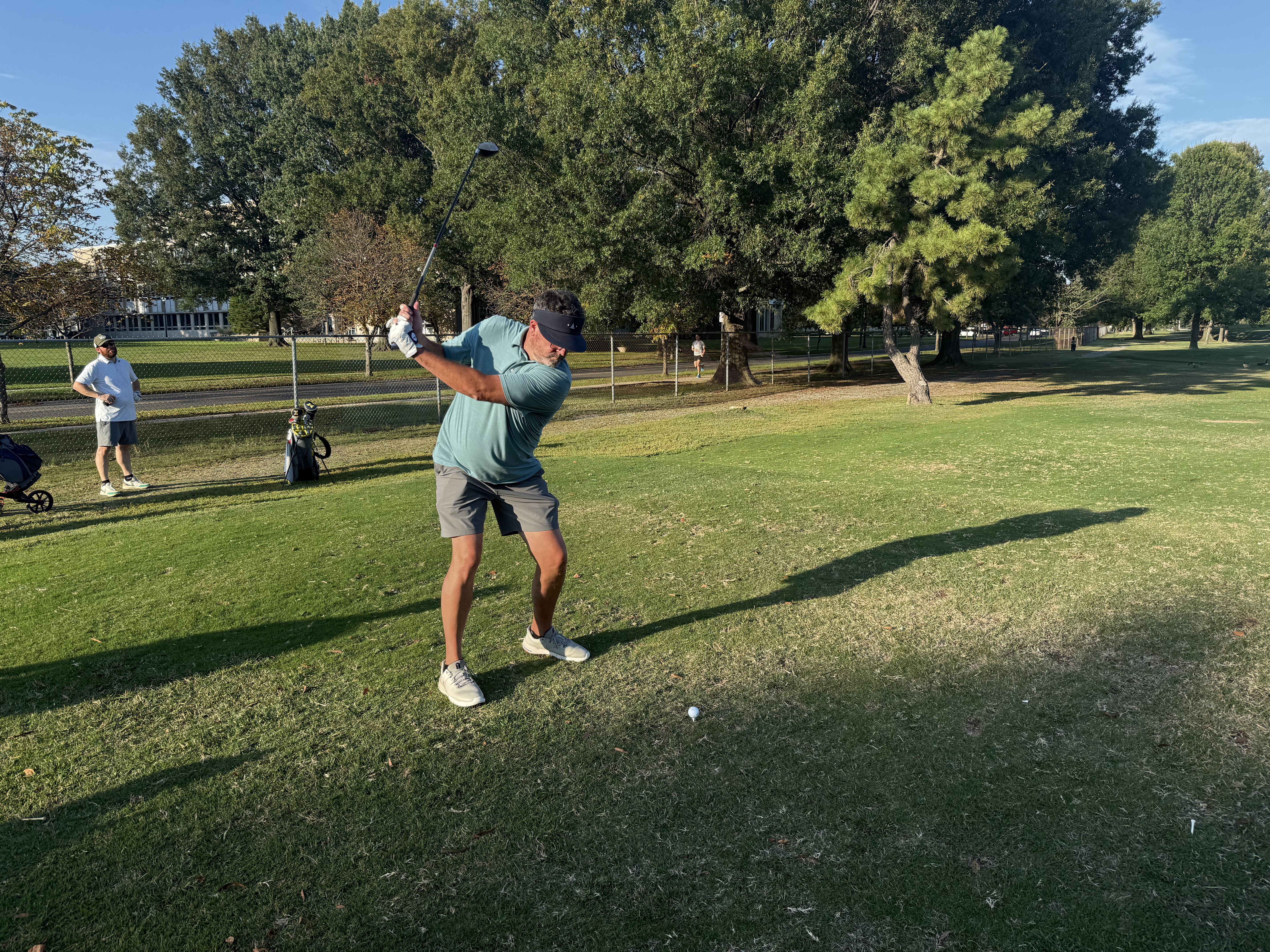
On a recent and unseasonably warm day, Alex Dickson and other members of DMV’s golf community walk the nine holes of East Potomac Park’s white course. Dickson knows it well. The man behind the blog and podcast Beltway Golfer, he taught his oldest son how to play here, and plans to teach a younger son as well.
That is, assuming the park’s courses are still here when the boy is ready to learn.
President Trump has ambitions to turn the park’s rundown-but-beloved public courses private in hopes of attracting a PGA Tour event, and he has kept renovation plans close to the vest. How much of the park will be torn down to make space for Trump’s vision? Will the nine-hole white and red courses remain? Will the mini-golf course? The bike path?
Nobody knows. The President’s first step was, in late 2025, to terminate the National Links Trust’s lease on East Potomac Golf Links and the District’s two other public courses, Langston Golf Course and Rock Creek Park Golf. At the time, Dickson assumed that the National Links Trust—a nonprofit set up in 2019 to preserve and maintain municipal golf courses, particularly those in DC—would sue the government to make sure any changes happen in the public eye and maintain the shape and character of the courses.
No such lawsuit happened, so Dickson and some friends stepped in to fill the void. Together with another golfer and the DC Preservation League, an advocacy group that aims to maintain the District’s historic buildings and locations, Dickson became a plaintiff in a suit against the Trump administration that aims to slow or even halt the President’s plans for East Potomac Park.
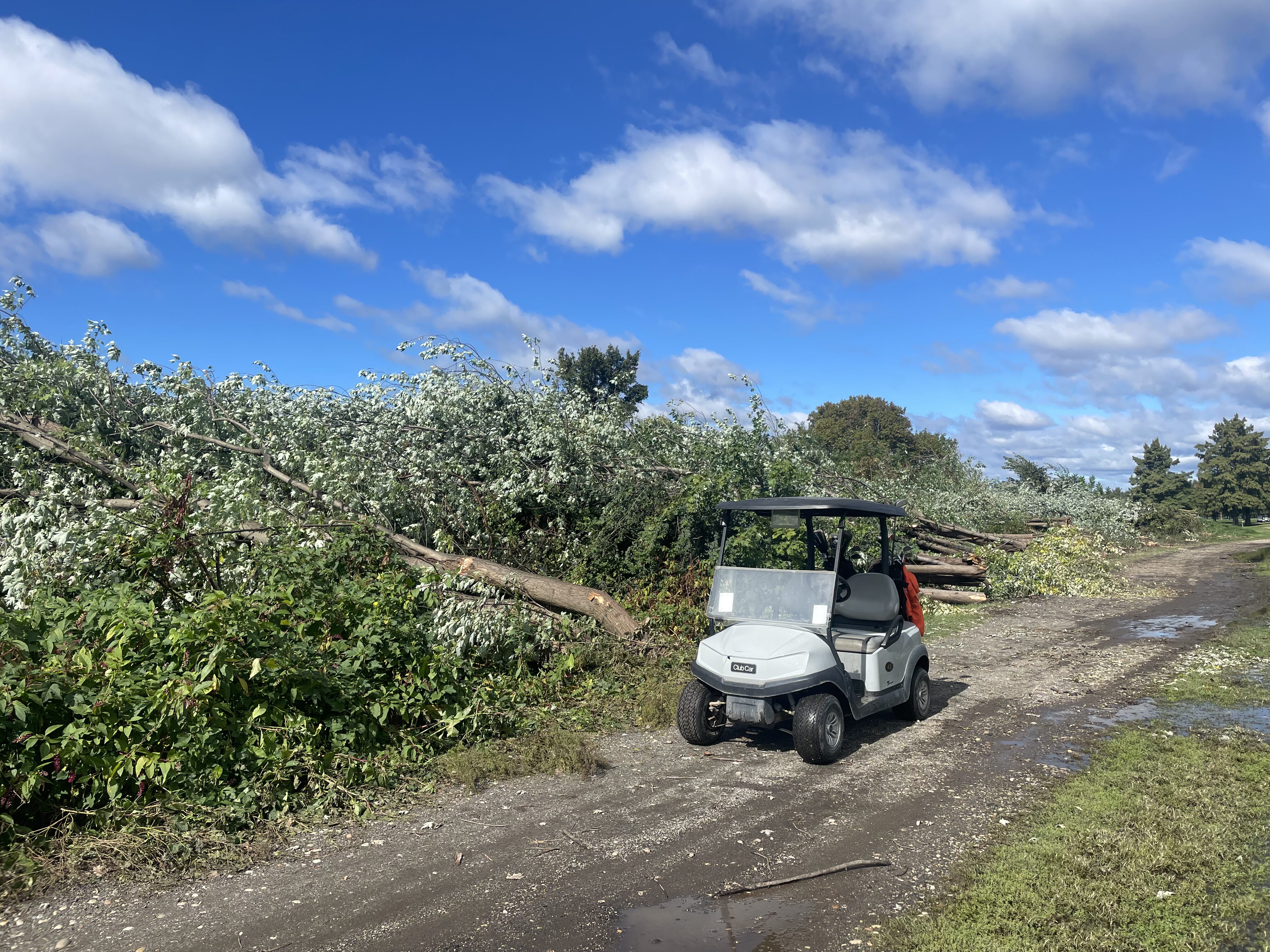
So far, efforts to preserve the park have produced mixed results. A hill of toxic dirt and debris that once was the East Wing of the White House now sits, fenced off, in the middle of the white and red courses. Just last weekend, over 500 trees were suddenly cut down by the National Park Service.
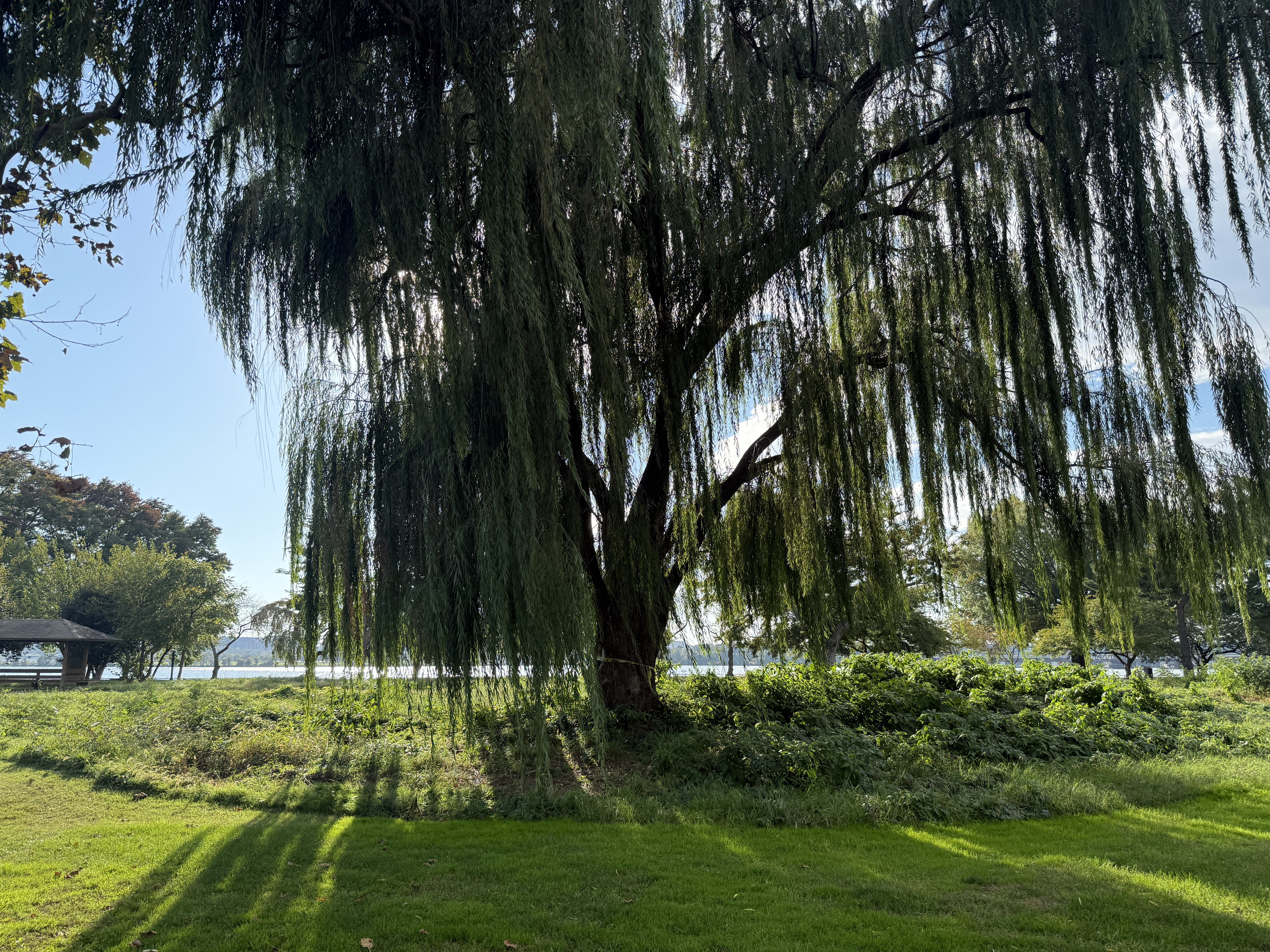
The way the tree-felling took place only added to the concern and confusion Dickson and other local golfers have about Trump’s plans. At 4:55 PM on Friday, October 9, the National Park Service quietly filed a notice that it would be cutting down up to 529 trees on the East Potomac courses—despite a court order that the Department of Interior must give prior notice before executing any changes to the park.
This perceived end-around led to a heated day in court the following Monday, which saw Judge Ana C. Reyes tell the government’s lawyers that they “did [their] absolute worst” at keeping the court informed of its actions. Reyes has ordered that no trees be cut until October 26.
Gregory Wischer and Jessica Bowron, key figures at the Department of Interior who were involved in the sudden order to cut down the 500 trees, are scheduled to appear in court on Monday to explain the government’s actions.
The concern among Dickson and the golfers accompanying him for what they call the “Summit at East Potomac” is potentially losing the area’s cheapest and most diverse place to golf. “It’s the people’s course of DC,” says Andrew Uhlman, the group’s lone southpaw. Replacing it with a private course, the group worries, would drastically constrict the sport’s local accessibility—taking away a launchpad for young people like Dickson’s sons and countless high school golf teams, who, overwhelmingly, learn and then play at East Potomac.
The publisher of Beltway Golfer, Dickson knows just about every Washington-area course, the people who play there, and the history of both. Over the years, he’s played rounds at East Potomac with all sorts of people: congressional staffers; visitors in town for diplomatic events and State Department and National Guard trainings; and, on one memorable occasion, an elderly African-American local who spent the round regaling Dickson with tales of the course’s 1980s heyday, when the greens were hotbeds of gambling.
While Presidents Harding and Coolidge were known to play at East Potomac, Dickson says he doesn’t think “a President has played one of DC’s public courses since [Gerald] Ford.” Most recent presidents, he continues, have preferred to golf at the courses at Joint Base Andrews, home to a pair of 18-hole courses.
(Uhlman says that golfers sometimes see three helicopters hovering over East Potomac and assume Trump is monitoring and planning from the skies. The Atlantic reports that these are flights to Joint Base Andrews, perhaps making them golf-related).
Dickson says Trump is also attempting renovations to the Andrews courses, something made possible by a presidential declaration easing environmental laws for the project. With all the attention given to East Potomac Park, he adds, this other local course is not getting enough coverage.
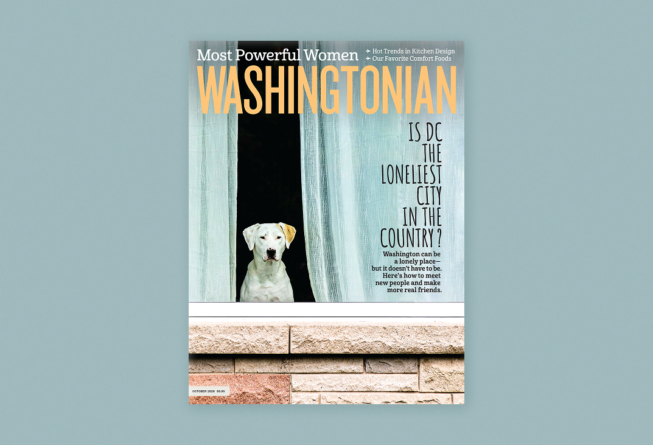
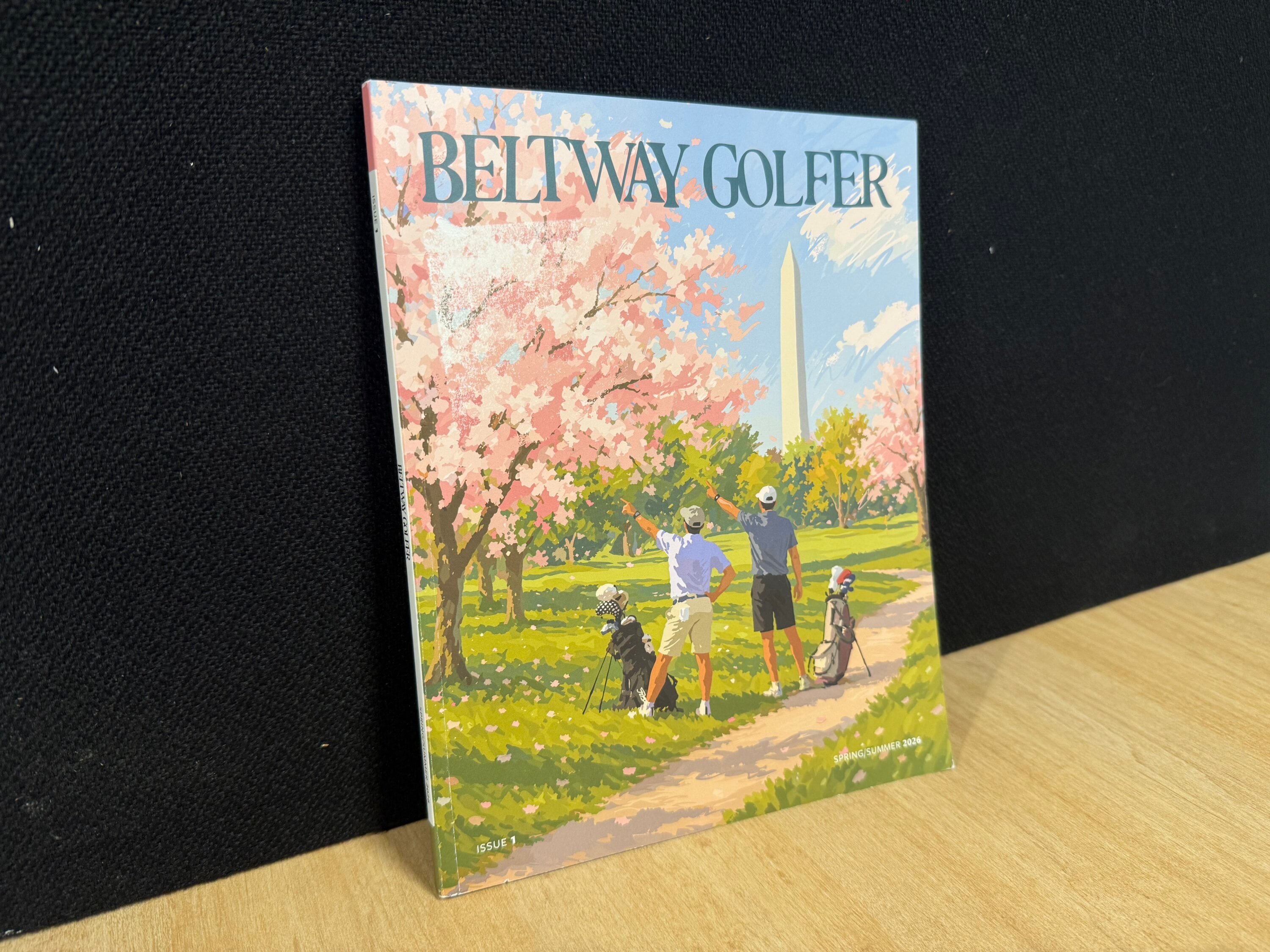
Dickson’s propensity toward the historic and big-picture led him—after over a decade covering the region’s golf community online and via podcasts—to launch a print magazine this year. There used to be another DMV-specific golf magazine, Washington Golf Monthly, later called GolfStyles, but it folded. (Its former website now links to an illegal sports streaming site in Vietnamese).
The golfers accompanying Dickson are readers, podcast guests, Instagram followers, and print subscribers of Beltway Golfer. Some have actually golfed with Dickson before; for others, this is the first time. The group is playing as a team. On each hole all of them attempt a drive, and they choose the best shot to represent them all, and so on, until they put a ball—any ball—in the hole. Particularly good shots are rewarded with Beltway Golfer merch.
The guys are universally appreciative of Dickson. They ask him about the trees hugged by yellow caution tape, and turn in his direction as he tells me about reports people shared with him that some of the trees cut down last week materially changed the shots one can make on the 18-hole blue course.
“It takes a lot of balls really to stand up to the government,” says Jason Miller, who has been coming to East Potomac Park since he was a kid, “and the fact that he’s willing to do that is amazing.”
Miller golfed when he was younger, and picked it back up as an empty-nester. He hosts a tournament on the blue course every spring. One element to getting back into the DC golf scene was following Beltway Golfer. He’s now a print subscriber. Dickson says his initial goal is for local golf clubs and courses to carry the magazine in their clubhouses. That’s where local golfers hang out, so that’s where he wants it to be. Dickson says he’s got about a thousand magazines out to readers and clubs so far.
In the first—and so far only—issue of Beltway Golfer, Dickson shares reportage on the future of golf in Northern Virginia, unique food at an area clubhouse, and a service piece about the best golf on either side of the Potomac River, alongside which there are two stories about DC’s municipal golf courses, a photo essay about historic Langston Golf Course, and predictions for what could happen to East Potomac Golf Links in light of Trump’s interest. Somehow, this magazine’s publisher will sue to stop the president didn’t make it into the article.
As the group meanders around the course, I hear smatterings of complaints. Some about the tens of thousands of dollars they would have to pay annually to golf at a private club if East Potomac is closed, others about the trees that were cut down, others about the lack of transparency throughout the process.
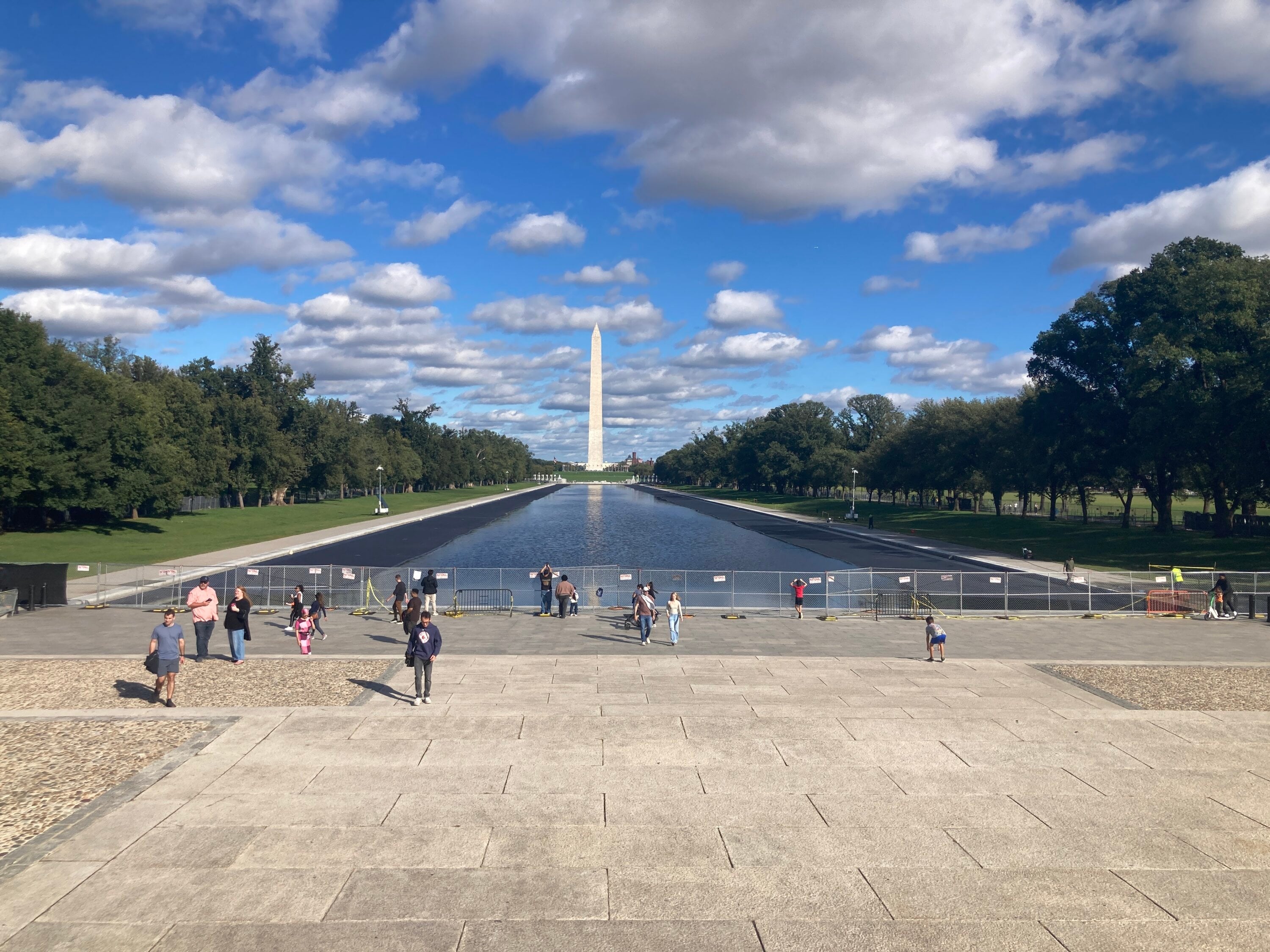
Then, the group approaches the third hole. Nearly every golfer announces that if they shank their shot, they will hit the White House. Just to the right of the tee is the mound of rubble and dirt that used to be the East Wing. They all turn to Miller and point to the image on his T-shirt: a drawing of the debris mound and a golf hole with the Washington Monument in the background, all below the words “say no to Trump’s dump.” “If you went into your backyard and dug up a bunch of dirt, you couldn’t just drop it in a national park,” Miller says. “I felt like I should do something. So I made a shirt.”
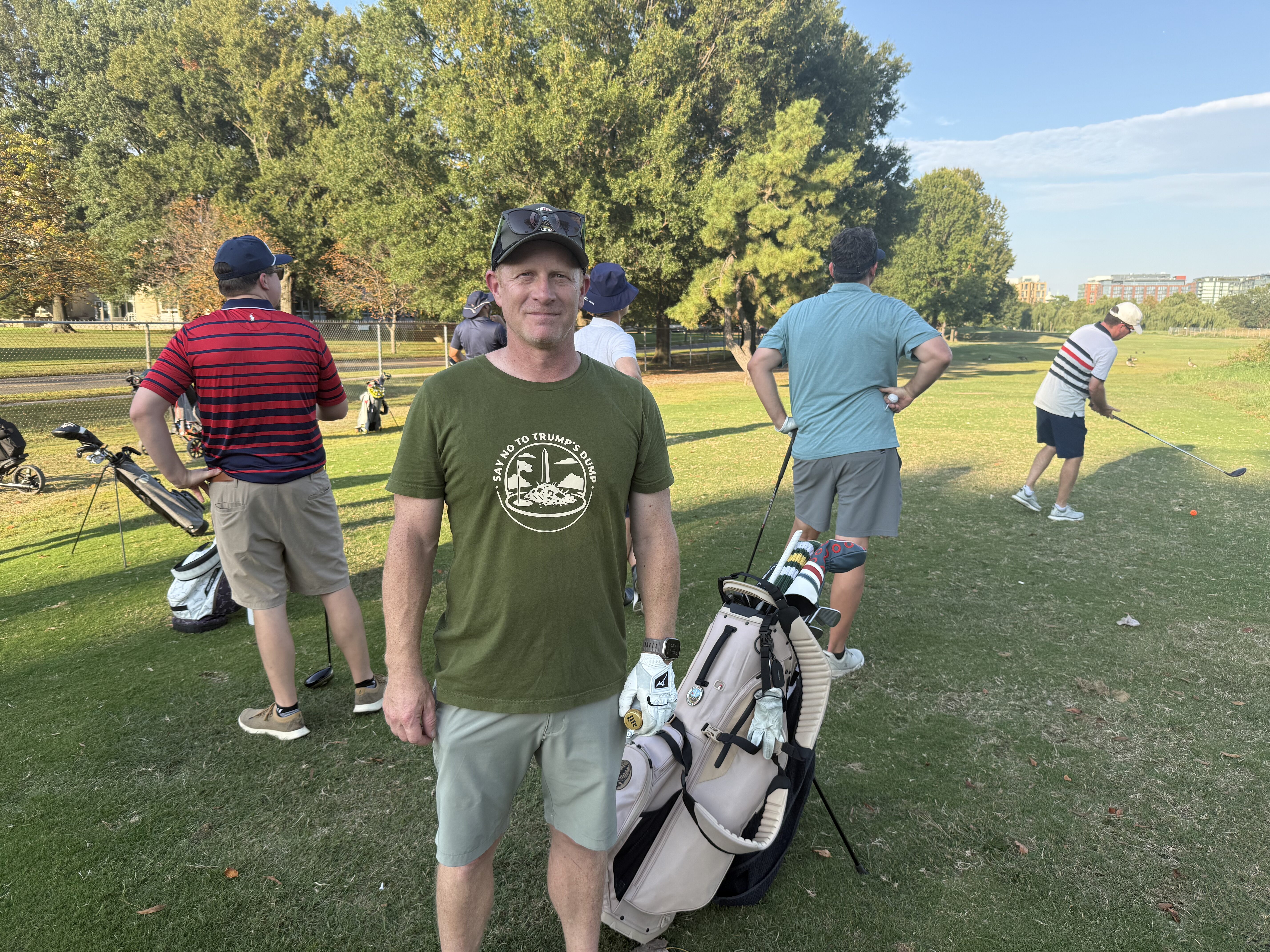
Miller seems discouraged by the extent of the shirts’ impact: “I sold probably 15 of them to a few people.”
Since filing his lawsuit, Dickson has been getting tips from his readers and supporters. When the East Potomac tree-clearing operation began, he “woke up to pictures and videos of the trees cut down in my DMs.” Golfers who otherwise would have no outlet for the photos, presumably taken in frustration and anger, assumed that Dickson could use them.
Near the end of the round, the golfers make plans to share “trunk beers,” since the clubhouse’s Potomac Grille closes early this time of year. I ask Dickson if suing the federal government has hurt or helped sales of his magazine. He says he’s not sure—he worried about it before joining the suit, but ultimately felt he had to do what he could to protect East Potomac. After all, it’s his home course. And what would Beltway Golfer be without one?