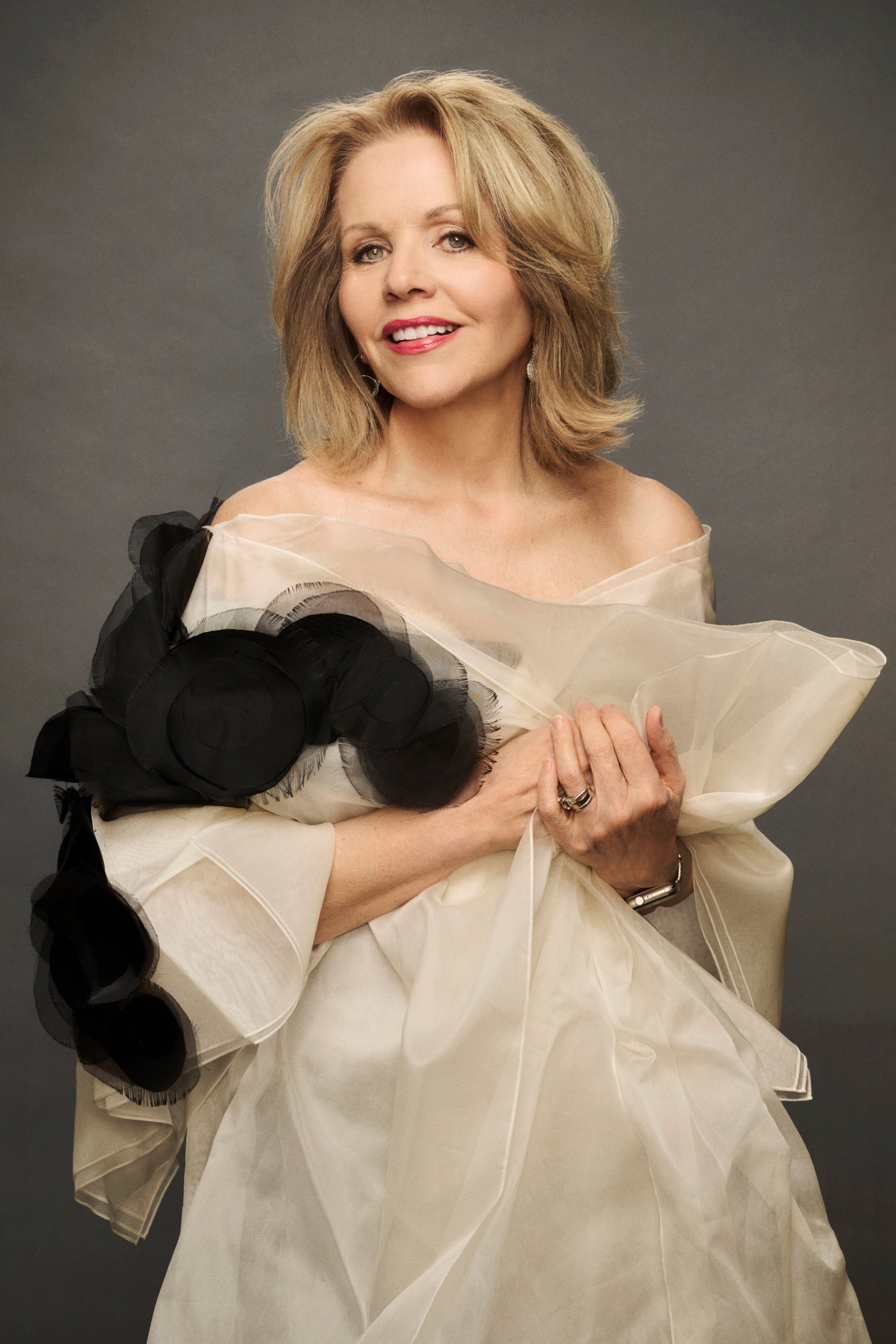
One of the world’s great opera singers resides on a pretty street in a quiet part of McLean, a surprisingly normal existence for a superstar. “The diva next door,” 60 Minutes called her in its 1999 profile, and for some residents of Virginia, that has, for the last seven years, literally been the case.
Renée Fleming answers the door of her spacious contemporary house wearing a light-blue blazer and comfy shoes. To the left hangs a huge Chuck Close tapestry of Fleming’s face, just across from a portrait of the singer by Francesco Clemente. She feels a bit sheepish about these uncharacteristically diva-ish decor choices. “I worry people come in and go, ‘Look at all these portraits of her!’ ” she says as she shows me around. There’s a 1924 Steinway baby grand in the living room, but Fleming keeps her five Grammys locked up out of sight. She’s far more excited to show me her kitchen renovation (she and her husband mostly use the microwave and coffeemaker, she jokes) and the lovely Japanese red-pine tree she planted next to the house that morning.
Fleming has a reputation for being approachable, but she’s as towering as divas get—not just an opera star but the kind of classical musician whose name people know even if they’ve never heard an aria. “She’s one of the major box-office draws of the last half century,” says Washington National Opera general director and CEO Timothy O’Leary. “If you’ve heard of any opera singer, you’ve heard of Renée Fleming.”
On more than 60 albums and during countless performances, she’s wrapped her soprano around everything from Mozart and Strauss—for which she’s best known—to new work like The Hours, as well as classical song, jazz, indie-rock, Broadway, and bluegrass. “Her voice has always felt like you’re taking a bath in heavy cream,” says Washington National Opera artistic director Francesca Zambello. “She makes you feel like she’s singing it for you, and that you’re hearing it for the first time ever.”
This fall, Fleming will star, with baritone Thomas Hampson, in a new WNO production of John Adams’s 1987 opera, Nixon in China, directed by Elkhanah Pulitzer at DAR Constitution Hall on November 14, 19, and 21. The big-name cast combined with Adams’s spectacular modern opera makes it one of fall’s hot tickets—especially because it’s part of WNO’s first full season since its acrimonious departure from the Kennedy Center.
Fleming comes across as friendly but quiet, with a lingering shyness that’s been there her whole life. When she speaks, there’s a muted quality—an introvert reserve that at times makes her hard to hear. Onstage, that voice is an astonishing instrument, saturating a huge hall in unamplified sound. She balances technical precision with emotional power, while communicating all the meaning and nuance of the words—typically in French, German, Italian, or Russian. She can pin back ears in the Lincoln Center cheap seats, but in her living room, you have to lean forward to make out the words.
Fleming has always been an advocate for more challenging modern music, and Nixon in China is definitely a steeper climb than, say, La Traviata. But the opera is both provocative and rich—a big production full of dancing and choral climaxes that has grown into a modern classic since it premiered almost 40 years ago. “This is a masterpiece,” Fleming says of the opera, and you get the sense she doesn’t use the term casually.
Composed by Adams with a libretto by Alice Goodman, it depicts Richard and Pat Nixon’s historic trip to China in 1972. Though the opera is modern and the sounds can be dense and adventurous, “it’s not pots-and-pans-crashing bad contemporary music,” says Zambello. “It has a cumulative effect where, by the time you get to the end, you feel the incredible weight of history and the majesty of this composition. There is a propulsive feeling to the music, which draws an audience in.”
Still, fans of more traditional opera will have to open their ears to Nixon in China’s distinctive rhythms and minimalist synths. It’s worth it: The immersive music works its way into you, with rewards that are both intellectual and surprisingly emotional. But Fleming says even her husband, Tim Jessell—whose tastes run more toward Springsteen and Dylan—had to warm to it when he saw her perform the Pat Nixon role in a different production that was staged at the Paris Opera in 2023 and 2026. “My husband’s the best guinea pig ever,” she says. “And he didn’t get it at first. The French audience was thrilled, laughing at everything, stomping, standing, and he kept looking around, going, ‘Wow, they love it. What am I not getting?’ ” But a friend’s contagious enthusiasm for what they were seeing changed his mind. “Sometimes,” Fleming says, “you just need someone to open the door.”
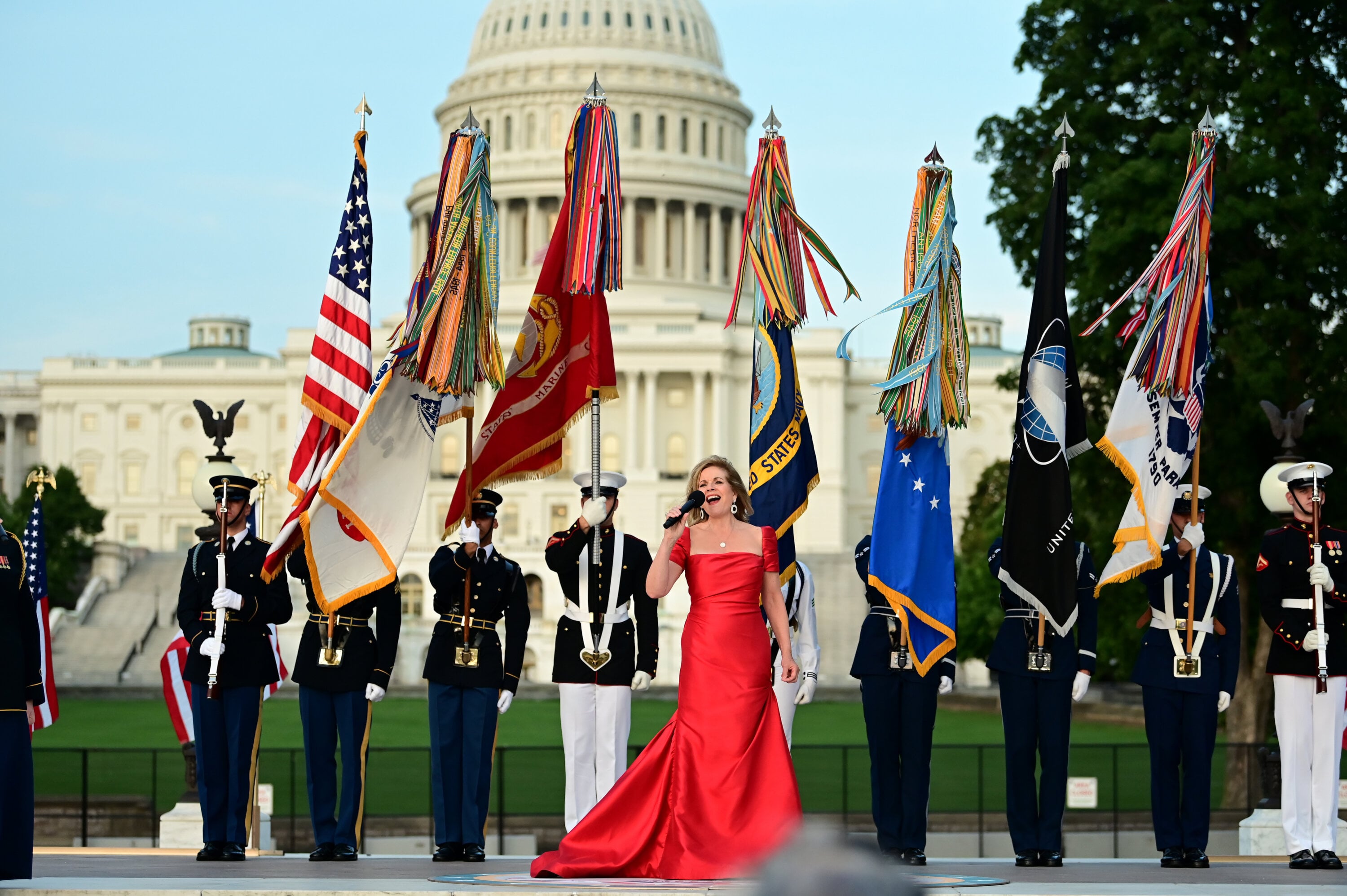
Fleming doesn’t star in a lot of fully staged operas these days— Nixon in China is the only one she’s doing in 2026. But she’s still quite busy, performing concerts and recitals around the world. On November 22, she’ll appear in WNO’s “We the People,” a concert on themes like liberty and independence. And her Appalachian-music project with Béla Fleck, The Fiddle and the Drum, hits Carnegie Hall in December. An album with the same name came out earlier this year. The record features Fleming and Dolly Parton duetting on “In the Pines,” one of the late country star’s last recordings. Though they didn’t sing it together in the studio, Fleming loves how it turned out. “Her voice is gorgeous,” she says. “What she recorded over my part was so good, so refined, and also generous. She really blended in and also brought her own personality to it.”
Musical curiosity has marked Fleming’s entire career. “There’s very little music that I don’t like,” she says. Early on, she thought she might be a professional jazz singer. She’s released a record full of indie-rock covers and made an album with renowned jazz musicians Bill Frisell and Fred Hersch. “Even in high school, when I’d go to a concert, I didn’t like predictable music. I wanted to be surprised all the time. The brain likes surprises, it really does. There’s a lot of science now around music and prediction. We love to be able to predict what’s going to happen, but we’re also especially delighted when it doesn’t go the way we thought it would.”
For Fleming, Nixon in China isn’t just a chance to play Pat Nixon in the city where she once lived. It’s also an opportunity to support WNO, which is embarking on a risky new phase as a fully independent entity. The challenges are plentiful, as WNO’s O’Leary explained recently in a conference room at the opera company’s offices and rehearsal space in Takoma DC.
WNO announced its split from the Kennedy Center in January, ending a 55-year relationship and throwing every aspect of its operations into chaos. Gone was its regular venue, but also its administrative infrastructure: the fundraising, sales, publicity, marketing, and other staff required to stage and sell hugely complex performances.
Now O’Leary and WNO have put together the company’s first full season since the split, with eight productions at five venues around the Washington area. “We had no employees. We had no insurance. We had no money,” he said. “We had to rebuild the entire thing, quickly. It looked impossible.”
Part of the reason leaving the Kennedy Center became necessary, Zambello says, is that she’d started getting pressure from the Trump-appointed head of the Kennedy Center, Richard Grenell, and his “coterie of Politburoites,” as she describes his team. “It was an intense time because we were being subjected to incredible censorship by the management. [Audiences] weren’t coming, people weren’t giving, and they were suggesting what we do, and don’t do, and how we do it.”
Zambello says she was scolded for “woke” programming like Gershwin’s Porgy and Bess (“I had to explain that it was written by George and Ira Gershwin 90 years ago”) and criticized for not programming popular operas, despite crowd-pleasers on the schedule like The Marriage of Figaro and Aida . “It was those kind of comments all the time,” she says. “All the time. And they accused me of being lefty and woke and not being polite to Republican donors. They said I don’t know how to talk to a Republican. I said I’ve been working in the arts for 50 years. I know how to talk to everybody.”
Last year, Zambello gave a surprising interview in which she said that the opera might have to leave the Kennedy Center—which soon came to pass. “I don’t know any other way to live,” she says of the decision to go public. “I just don’t. I felt that I couldn’t compromise myself, or the company. It’s really important people realize nothing will change if you don’t speak out.”
The ensuing period of uncertainty “was rocky,” Zambello told me. “I definitely rocked the boat in a big way. But I knew in my heart that it was going to get worse and worse. I am too proud of the legacy of the building and of myself as an artist to allow myself to be subjugated.”
Fleming pulled out of a Kennedy Center concert after Trump’s name went on the building. “You have instincts about right and wrong,” she says. “It’s about following your conscience. I was going to sing, but then I said, ‘I can’t. I just cant!’
Fleming herself resigned from her position as an artistic adviser to the Kennedy Center in 2025, responding to Trump’s decision to install himself as chairman of the board and replace her friends David Rubenstein, the previous board chair, and Deborah Rutter, the president. “It was just so shocking,” says Fleming, who’s now an artistic-development adviser at Wolf Trap Opera, working with its young singers. “I just couldn’t, in all good conscience, stay in that position.” Then, after Trump put his name on the building, she pulled out of a scheduled concert with the National Symphony Orchestra. “You have instincts about right and wrong, and most of us follow them,” Fleming says. “It’s about following your conscience. I was going to go ahead and sing with the National Symphony, but then I said, ‘I can’t. I just can’t!’ ”
Now, with the Kennedy Center shuttered and its future in grave question, WNO’s and Fleming’s departures look smart. This season’s ticket sales have been unexpectedly robust, O’Leary said, and he’s been surprised by a nationwide surge of donations, ranging from $5 to an anonymous $500,000 contribution. There have been plenty of challenges, of course. O’Leary recalled standing in the lobby of Lisner Auditorium during one performance this spring, speaking to people who were waiting in a huge line for the bathroom. “I was by the ladies’ room, talking to people and saying, ‘I’m so sorry about this situation.’ People were incredibly understanding.”
So far, the company has managed to pull it all off. “We accomplished what we did through sheer human will,” O’Leary said. “The late nights and long weeks were extraordinary. You know, people in the opera business are show people. We go on with the show.”
Fleming’s close friend Ann Patchett got to know the singer after her novel Bel Canto featured a Fleming-like character. “So many people thought Bel Canto was based on her,” Patchett says, “and it’s kind of a joke because it wasn’t, and yet over time, even I now believe that it was.” Patchett describes Fleming’s personality as “a combination of great warmth and friendliness, and remove. After 30 minutes it goes away, but it takes a couple of beats to drop the polish and just be like, ‘Oh, here we are.’ ”
Actually, it was Patchett who brought Fleming to McLean, in a roundabout way. Fleming got divorced from her first husband in 2000. Living in New York and Connecticut, she’d focused on her career and raising her two daughters. By 2008, she was ready to give up on finding a partner, “or do a dating app, which I was kind of mortified by,” she says.
Jessell, a divorced DC lawyer, had been struggling with dating as well. One day, he was at a neighbor’s house, venting his frustrations. He pointed to a CD that happened to be on the counter and joked, “I’d go out with her, but otherwise, forget it.” It was an album by Renée Fleming.
As Fleming tells the story, Jessell’s friend knew Patchett, who passed along the funny anecdote. Soon, Jessell got a call: “Renée said she’d have lunch with you.” “Renée who?” he replied.
Fleming was in DC to perform in a WNO production of Lucrezia Borgia at the Kennedy Center, and they arranged to have lunch at the Four Seasons in Georgetown. The date went “well enough,” Fleming says, and they kept seeing each other. Patchett approved: “I said, ‘What you want is somebody who’s crazy about you, not somebody who’s crazy about Renée Fleming.’ He was not a lifelong opera fanatic. He was nuts about Renée, this smart, beautiful, fascinating woman he had met.”
Fleming and Jessell ended up getting married, and they bought the McLean house together in 2019. “Tim didn’t believe me that I wanted to move here,” says Fleming, who was born in Pennsylvania and spent her childhood in upstate New York. “He said, ‘You’re going to miss New York. You’re going to be unhappy.’ I said, ‘Stop! I know what I want. I want a suburban existence. I want a car and a garden.’ ”
Now Fleming orders local takeout and shops at Merrifield Garden Center. She and Jessell are big fans of DC’s theater scene, checking out productions at Arena Stage, Signature, and Shakespeare Theatre Company (where she recently went to see Brian Cox in The Score ). And they like to socialize locally. “I love all my neighbors,” she says. “I’ve made a point to get to know a lot of them. I love the idea of being in a neighborhood.”
Fleming says that unlike in New York, she almost never gets recognized around DC. Perhaps there aren’t that many opera fans here, or maybe it just doesn’t occur to residents of Northern Virginia that the woman who looks a lot like Renée Fleming actually might be Renée Fleming. But mostly it’s just how she carries herself around town. “You know, I was standing with Robert De Niro on a corner once in New York,” she says, “and not a single person noticed him. He wasn’t drawing attention to himself—he was just being. And I went, ‘Oh, that’s the secret. Just don’t think about it.’ ”
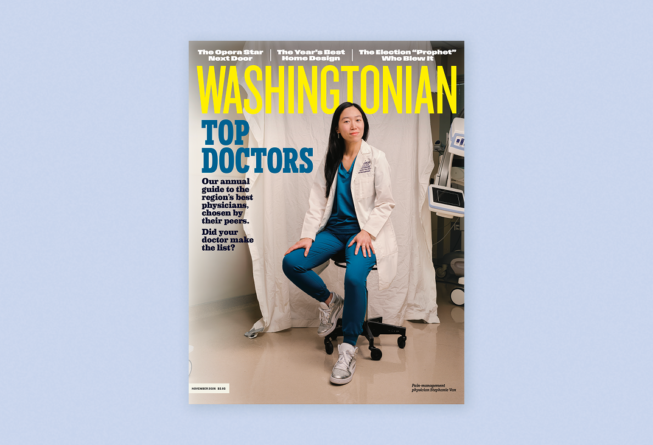
This article appears in the November 2026 issue of Washingtonian.

Rob Brunner grew up in DC and moved back in 2017 to join Washingtonian. Previously, he was an editor and writer at Fast Company and other publications. He lives with his family in Chevy Chase DC.