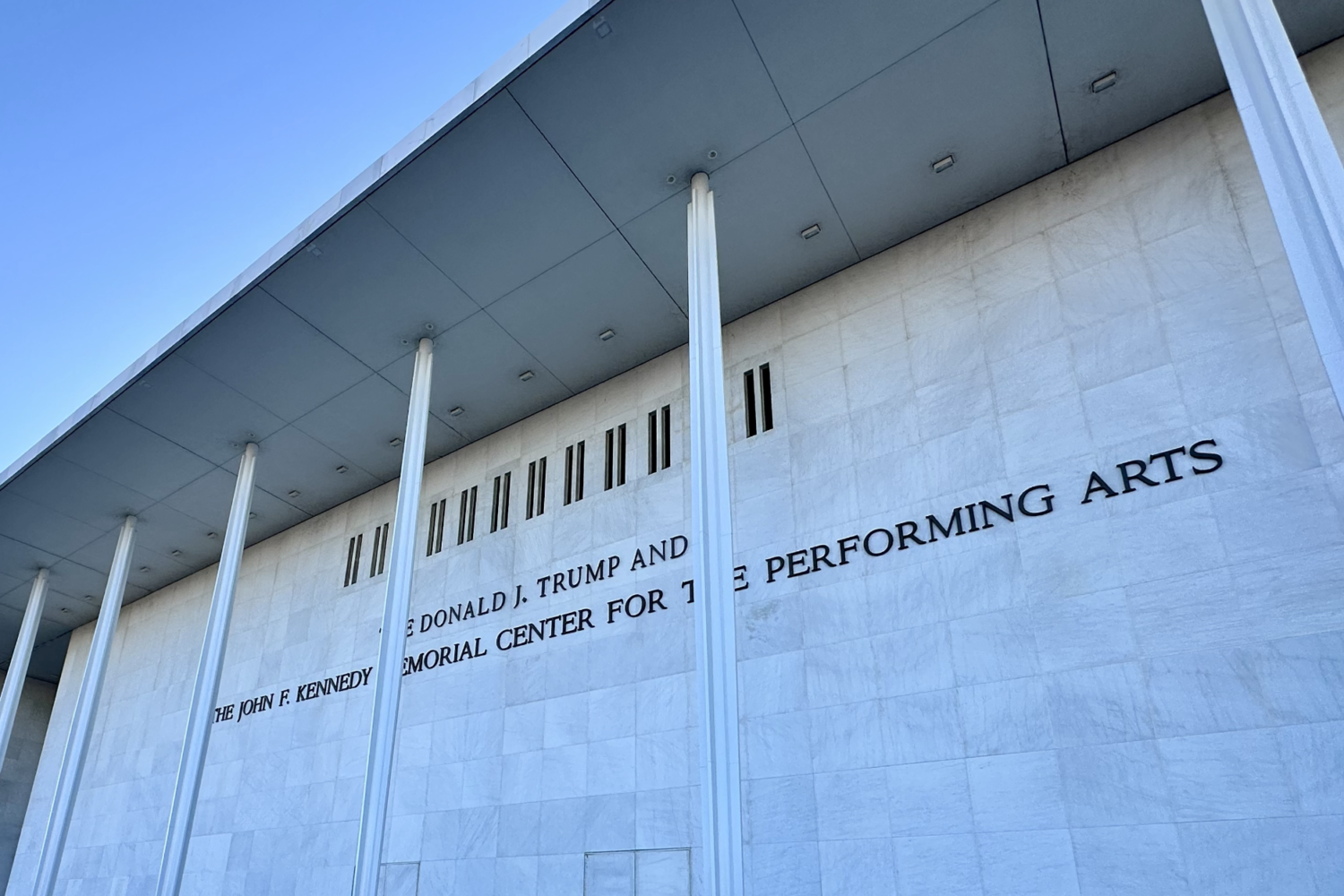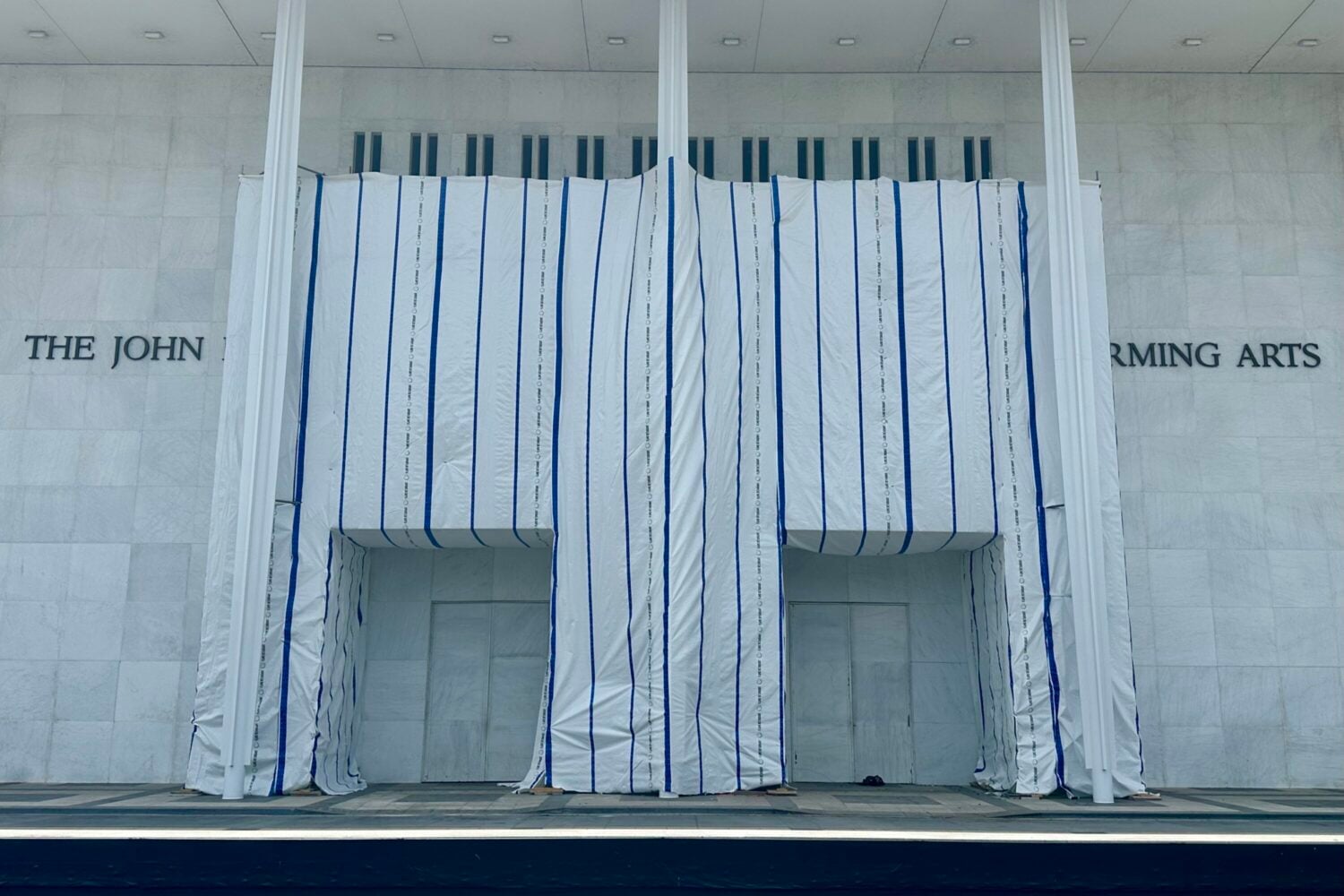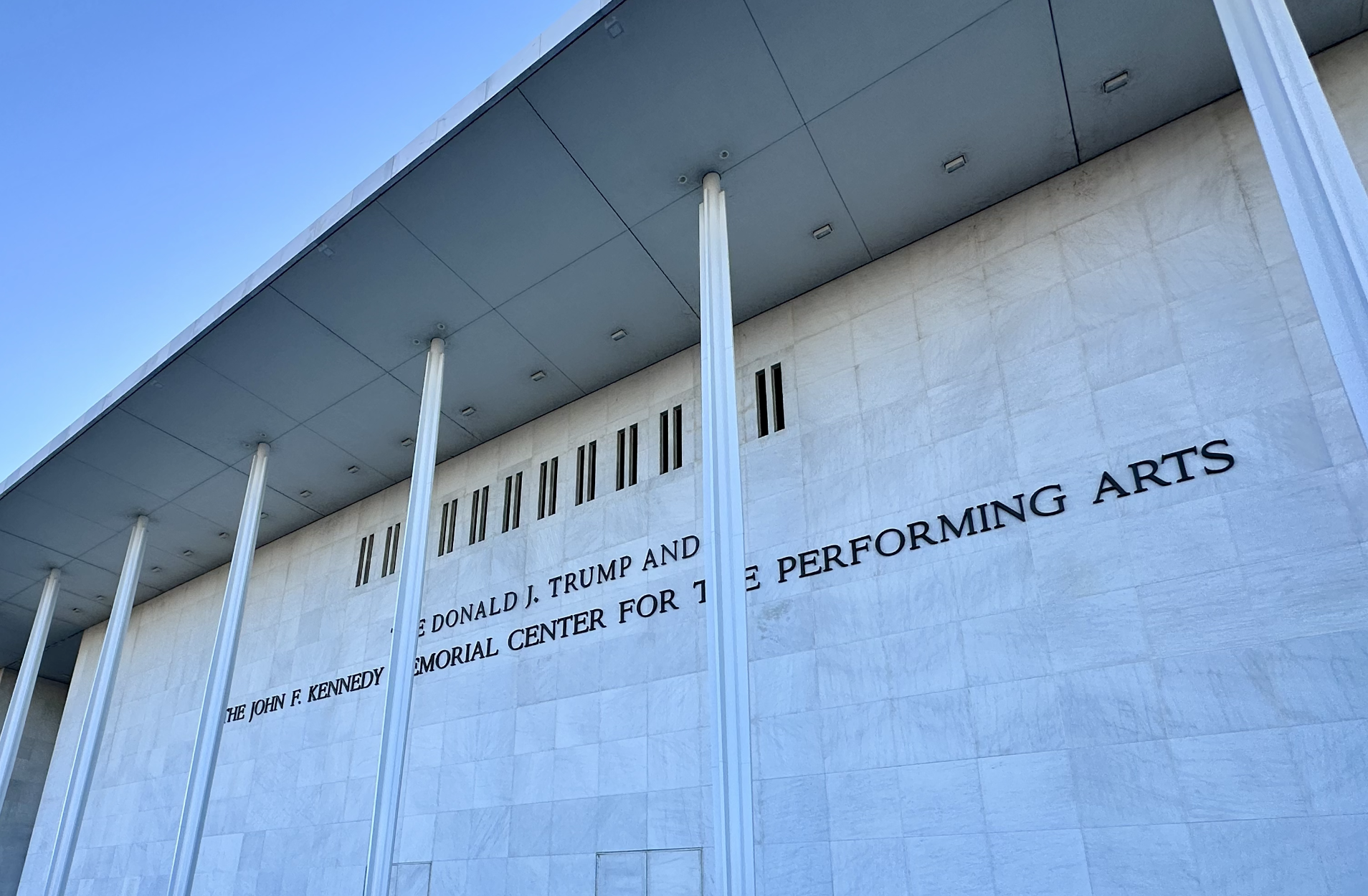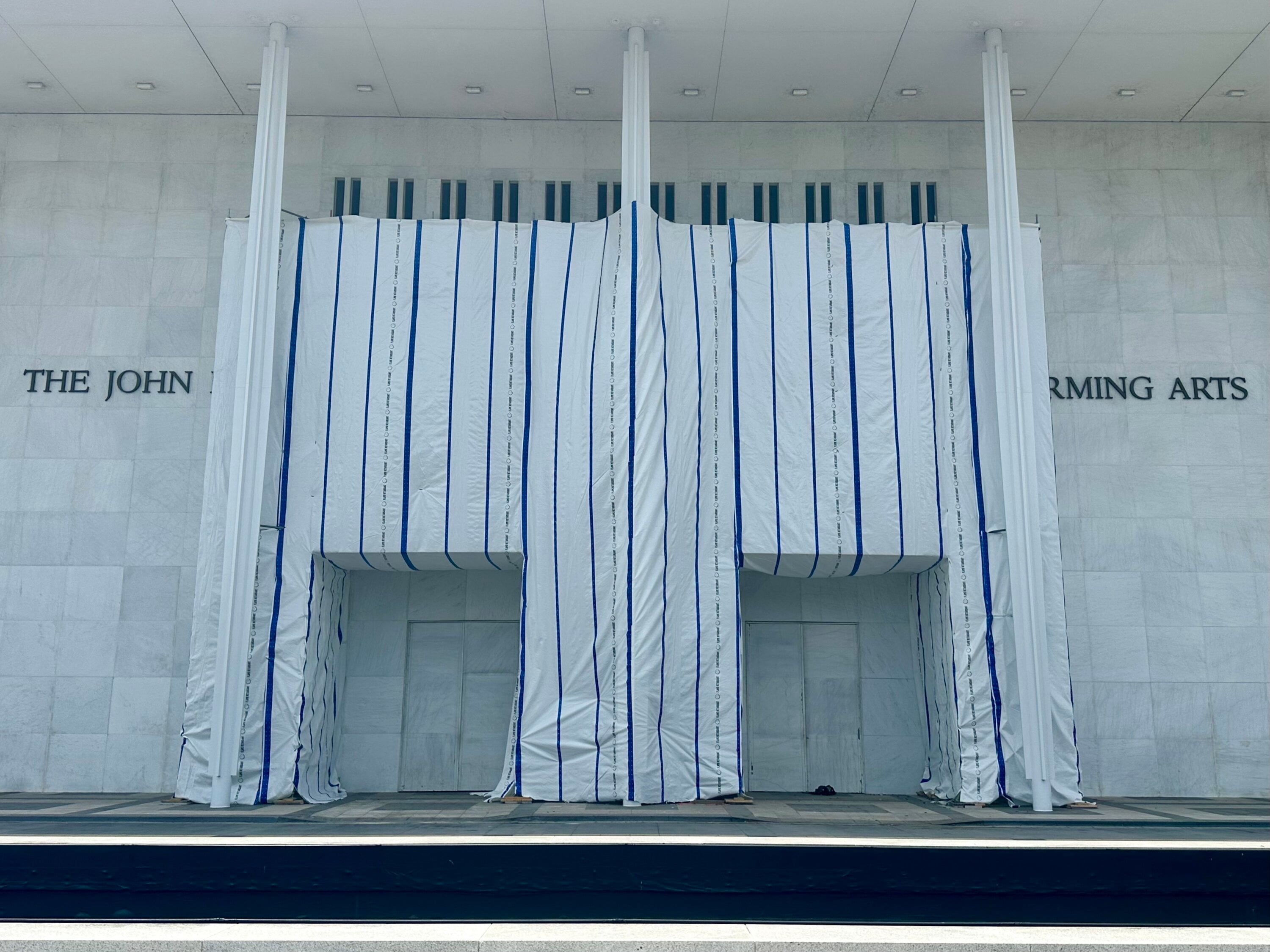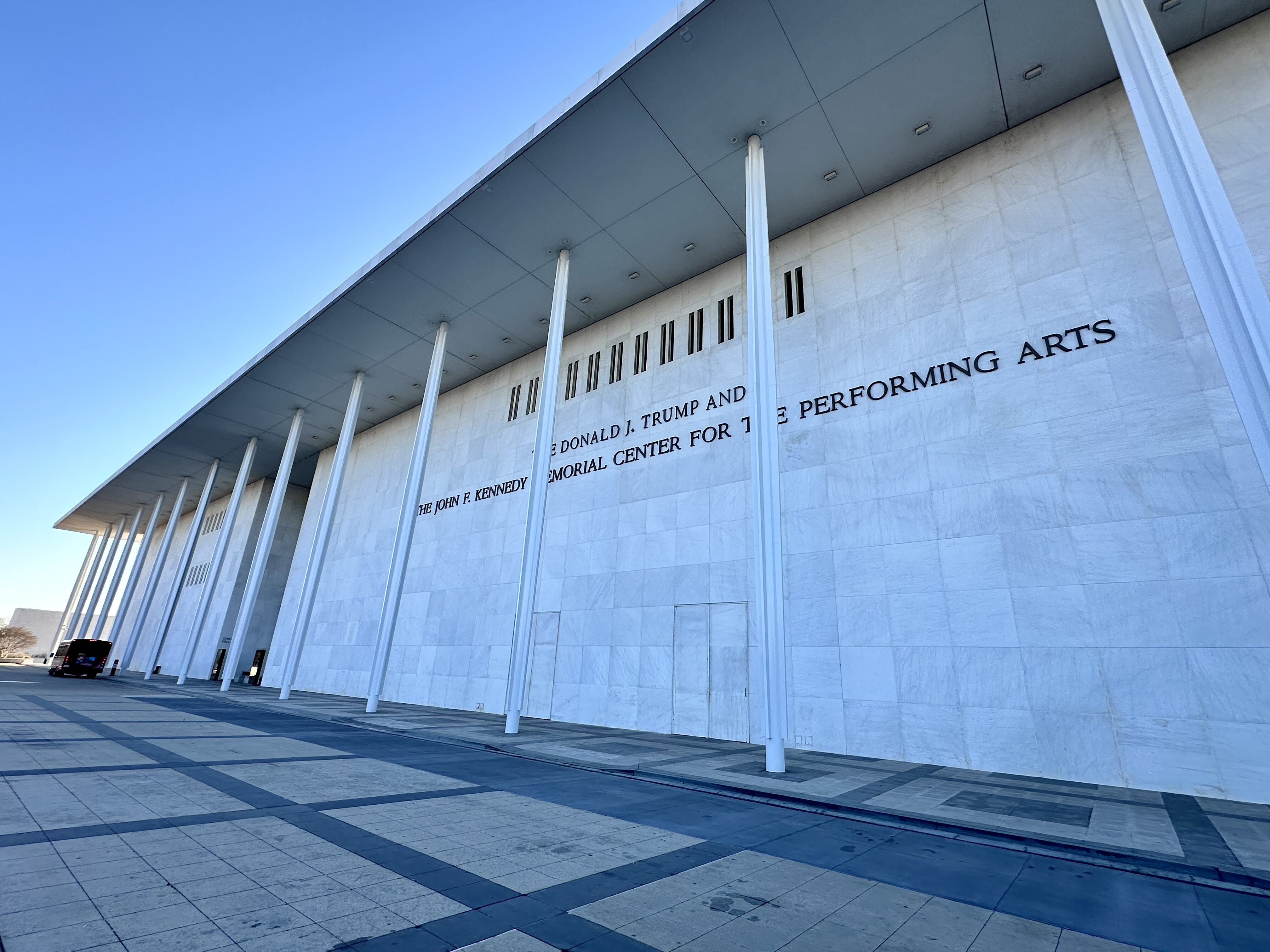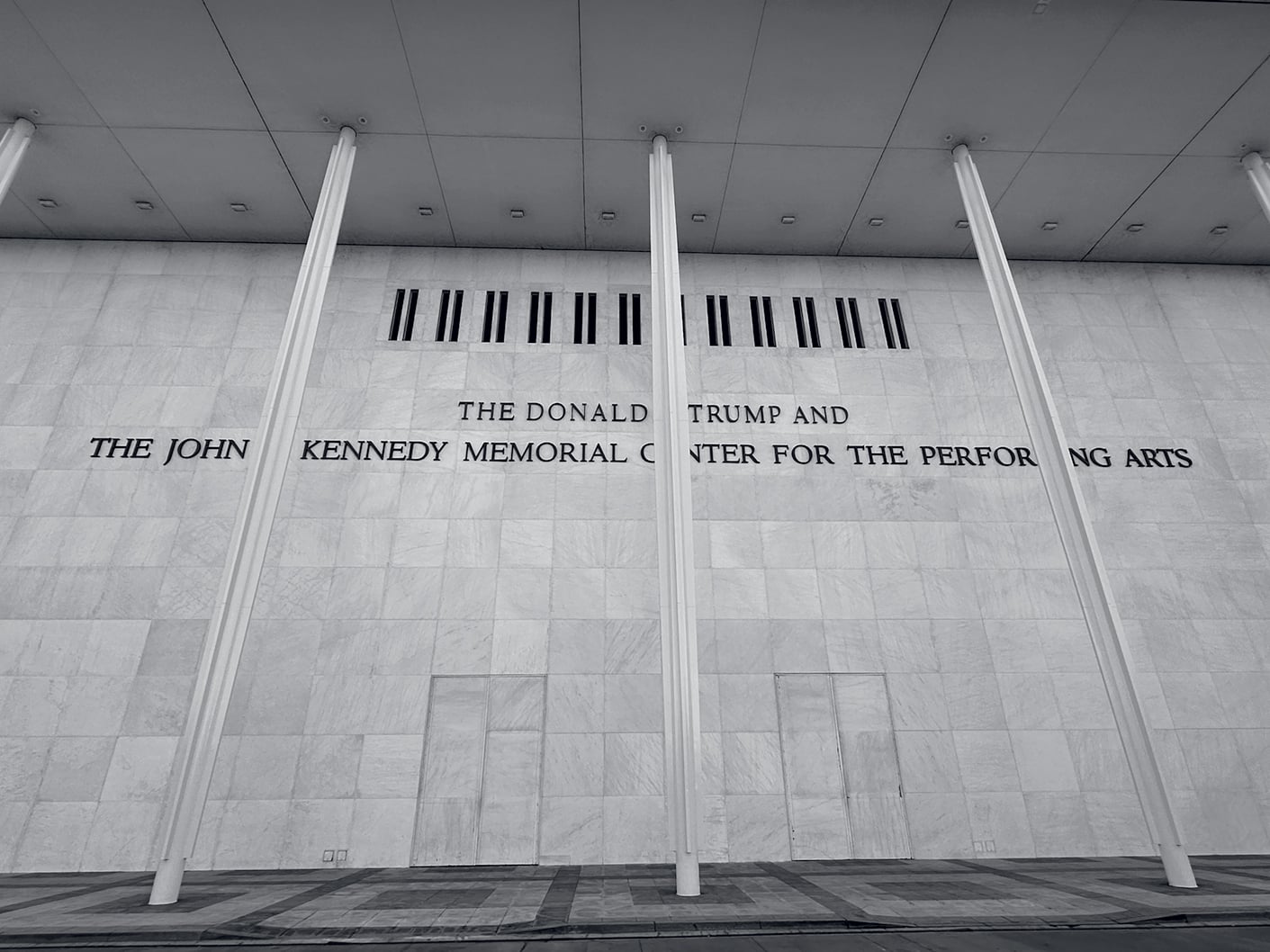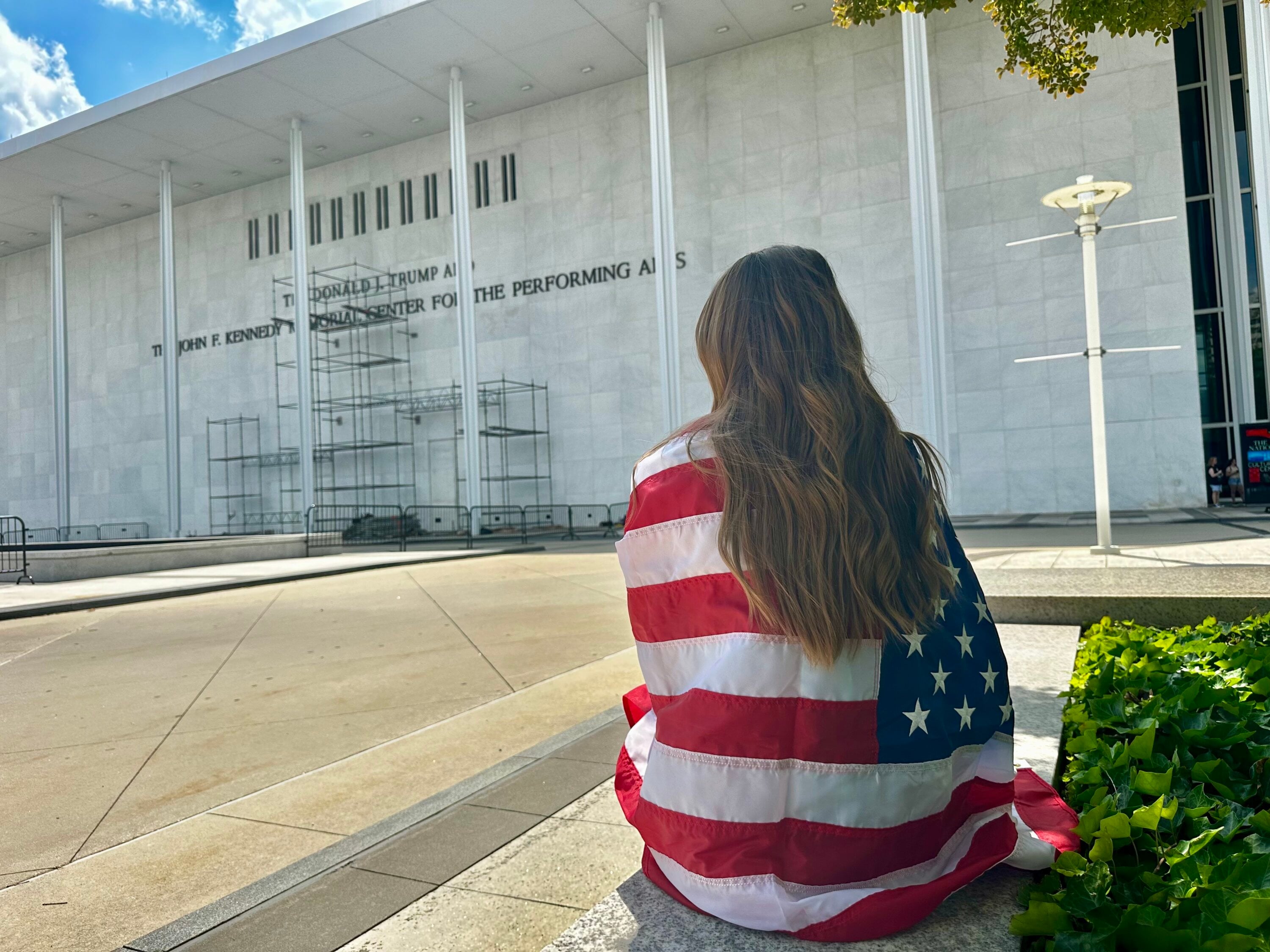
On Tuesday, President Trump was once again blocked from putting his name on the Kennedy Center—and because of that, he’s threatening to tear it down. It’s anyone’s guess how serious he is, but his rhetoric has certainly been escalating. For example, he seems to have staged a photo-op in which he was captured in the illuminated windows of Air Force One examining an enormous placard that said “Kennedy Center DEMOLISHED.”
In light of this, Congresswoman Joyce Beatty—who is currently suing to stop the renaming and closure of the Kennedy Center—asked a federal judge to order the Trump administration not to tear down the building. On Thursday, the judge essentially complied. But, of course, lots of questions remain: What happens if Trump bulldozes the Kennedy Center in defiance of the court? Would there be consequences? Are we actually facing a constitutional crisis over the lettering on the front of the Kennedy Center?
To answer these questions, we called multiple attorneys for a series of conversations both grim and absurd. It’s fairly difficult to believe that any of this is actually being discussed, but here we are, and here’s what you can expect.
First of all, is it illegal for Trump to tear down the Kennedy Center?
In this situation, tearing down the Kennedy Center would be 100 percent illegal. It would be a direct and flagrant violation of an order by a federal judge. That order requires the Trump administration to give 30 days written notice of any plans to demolish the Kennedy Center. This effectively enjoins the administration from demolishing the building unless a court approves the plans.
So, Trump can tear it down if he gives 30 days notice?
Almost certainly not. If the court were presented with demolition plans, then the judge would have to determine whether those plans were lawful. There are several reasons to think that they wouldn’t be. For one, the Kennedy Center’s founding statute, as laid out by Congress, authorizes the board to construct and maintain the building—but it does not authorize trustees to unilaterally tear it down. Georgetown Law professor David Super, an expert in administrative law, says that in order for a Kennedy Center demolition to be lawful, Congress would have to modify the statute. So far, it has not.
Second, as Beatty’s attorneys have argued, demolishing the Kennedy Center would seem to be an eye-popping fiduciary breach. Members of the Kennedy Center’s board have a legal obligation to act responsibly and in the institution’s best interest. The Trump administration would probably argue that the building is in such terrible disrepair that it makes more sense to tear it down than to fix it—but the court already has evidence to the contrary (consultant reports, renovation plans) and Congress has already appropriated the money for repairs. It would be very hard, in this context, to demonstrate that tearing down the Kennedy Center benefits the institution.
So why is there a 30-day notice period? Why didn’t the judge just tell them not to tear it down?
US District Judge Christopher Cooper, who issued the order, seems to be walking a delicate line: making it clear that the demolition can’t proceed, while not yet weighing in on whether it’s fundamentally legal. “Judge Cooper has a reputation in the DC legal community as being a very thoughtful, very level-headed judge,” says Sean Marotta, an appellate lawyer who closely follows the DC courts. “I think he wants to rule on a complete record rather than these emergency filings.”
Super thinks the order was wise. “All of us are being bombarded with rumors and Truth Social posts,” he says, “but [Cooper] has ordered the defendants to submit a detailed status report under oath about what exactly they’re doing.” The status report will force the government to clarify its intentions and reasoning. Presumably, they’ll have to declare whether they actually intend to tear down the building, and if so, they’ll have to justify that decision.
Marotta adds that the possibility that this case will go to the Supreme Court (which Trump himself has invoked) might make Cooper extra careful. In general, courts give lots of deference to the decisions of corporate and nonprofit boards, even when those decisions seem bad. To break with that norm and intervene in the operations of the Kennedy Center, Cooper won’t want to rule based on vague insinuations from social media or off-the-cuff quotes to reporters. He will want to make sure that he has considered the best arguments from both sides and been unimpeachably thorough and fair.
Okay, but what if Trump tears the Kennedy Center down despite the court order?
Then he and everyone who helped him do it—from the leadership of the Kennedy Center to the operators of the bulldozers—could be held in contempt of court.
And what would that look like?
If Trump sent in the bulldozers, here’s how things would probably unfold. First, somebody would see it—a passerby, a Kennedy Center employee—and notify Congresswoman Beatty, who would then immediately ask the judge to hold the offenders in contempt of court. But in general, a judge has to hold a hearing to find contempt—so the next step would be for Cooper to order the people involved to appear in his courtroom. At that hearing, if they didn’t have a legally valid justification for what they’d done, then he could send them all to jail.
But if the hearing isn’t immediate, then wouldn’t the Kennedy Center already be torn down?
Probably yes, Super says. If the Trump administration starts bulldozing the Kennedy Center, he believes they’re likely to finish the job. “Once they start, they’ve already decided that they’re going to disregard the judge, and disregarding two judicial orders does not really have different legal consequences from disregarding one.” In other words, once they’ve begun demolition, then they’ve probably decided that they don’t care about contempt. “At the end of the day,” Marotta says, if Trump really wants to tear down the Kennedy Center, “there’s only so much that lawyers can do.”
What would the consequences be for Trump?
To him personally? Probably none, at least from a legal perspective. He’s the President of the United States and the Supreme Court ruled in 2024 that he can’t face criminal consequences for anything he does in an official capacity.
What about for anyone who assisted him?
Before answering that, it’s worth noting that Trump might have a difficult time finding people who are willing to violate the court order. It’s possible that Kennedy Center officials would resign rather than facilitate a demolition, and outside contractors might decline to take on work that violates the law. Disobeying a court order is a crime, so anyone who participated could be referred for criminal prosecution. In general, the legal risks here are grave.
But the problem in this specific situation, Marotta says, is that the prosecutor would be the Department of Justice, and it’s not clear that Trump’s DOJ would take up such a case. And even if it did, Trump could issue pardons, which he’s often done when people break the law in service of his ends. The pardons aren’t a sure bet: “The president’s record there is uneven,” Super says. “There certainly were a number of people who thought they would get pardons when he left office the first time and didn’t.” Still, the possibility of pardons somewhat undermines the power of the court order.
Okay, but what about civil contempt?
Trump’s pardon powers don’t cover civil offenses, so it would be possible to pursue civil contempt. One option would be for Judge Cooper to issue fines to reimburse the injured party for its losses. But for various reasons, the government may be immune from a money judgment like that—and also who’s the injured party here? The Kennedy Center’s board, which presumably authorized the demolition?
Civil coercive contempt, in which offenders are jailed, is another possible option. But the problem is that the jail time is meant to force future compliance with a court order, not redress past wrongs. If the demolition were still in progress, then sure, Cooper could send some bulldozer operators to jail to prevent them from returning to work. But if the demolition were already complete, then he would probably lose that lever, since there would be no more compliance to coerce.
And if someone were sent to jail, what would happen?
Presumably, the US Marshals stationed in Cooper’s courtroom would be asked to haul the offenders away.
But don’t the US Marshals report to Trump?
Yes, and that’s a significant wrinkle. The US Marshals Service is an executive branch agency, and if the head of the executive branch—the President—ordered the Marshals not to enforce a court order, then we’d be in fairly treacherous constitutional waters.
“This is why judges don’t like being in direct standoffs with the government,” Marotta says. The judicial branch doesn’t have its own independent enforcement apparatus—it relies on the executive branch (the US Marshals and the DOJ) to force compliance with the courts. When the executive and judicial branches are in conflict, “it gets very complicated very fast.”
Is that a constitutional crisis?
Yes, that would be a classic constitutional crisis.
Violating a court order about the Kennedy Center, Super says, could open the floodgates to all kinds of other illegal actions—like violating court orders on mail-in voting, or tariffs, or the independence of the Federal Reserve. The crisis, as Super puts it, would be that “the courts have stopped mattering and everything’s on the table. They can do anything they want.”
Is that not, to some degree, already happening?
Certainly, the Trump administration has violated court orders in the past, particularly in matters related to immigration. To Marotta, those situations have been significantly different—frequently, judges found that the violations probably weren’t intentional, but more a result of a system that was overwhelmed. In general, Marotta has seen the Trump administration’s lawyers “trying to find loopholes and pushing at the edges of the language of orders in ways that the government hasn’t done in the past.” But a Kennedy Center demolition would strike him as a substantial escalation. “We’ve never seen that sort of willful defiance of a specific and direct court order.”
Super sees the immigration violations as more relevant precedents than Marotta does. But he points out that the Kennedy Center situation might feel more viscerally alarming to some people because, as odious as one might find the administration’s actions on immigration, they’re in service of a reasonably coherent policy agenda. By contrast, the brouhaha over the Kennedy Center is literally about Trump’s vanity. In other words, when the administration has previously broken the law, it’s not been so nakedly for the President’s personal gain—and it’s also typically been done by lower-level officials, rather than by the President himself.
What is the likelihood that the Kennedy Center actually gets torn down?
“I think it’s very low,” Marotta says, “particularly given the most recent order. I just don’t think anybody at the Kennedy Center or any contractors would want to take on that job.” And Super believes that “there’s a real chance that the administration is bluffing.”
But to Super, the biggest question at this point is psychological, not legal: “It really comes down to how determined the President is to destroy the Kennedy Center.” If Trump really wants to do it, Super thinks he probably can. “It won’t be legal, but they’ll get it done. And if he’s willing to pardon everybody involved, no one will go to jail.”