While Virginia’s numerous vineyards have long dominated the Mid-Atlantic wine conversation, Maryland is writing a compelling story of its own. For siblings Drew Baker, Lisa Hinton, and Ashli Johnson, that narrative has been long in the making. Fifteen years ago, the trio transformed a former juniper nursery into Old Westminster Winery, now one of Maryland’s most acclaimed. National recognition followed, with their natural wines (particularly the rosés) earning praise. At Burnt Hill Farm, their latest venture, the siblings are again crafting bottles worth traveling for, while operating a regenerative farm that extends beyond the traditional winery visit.
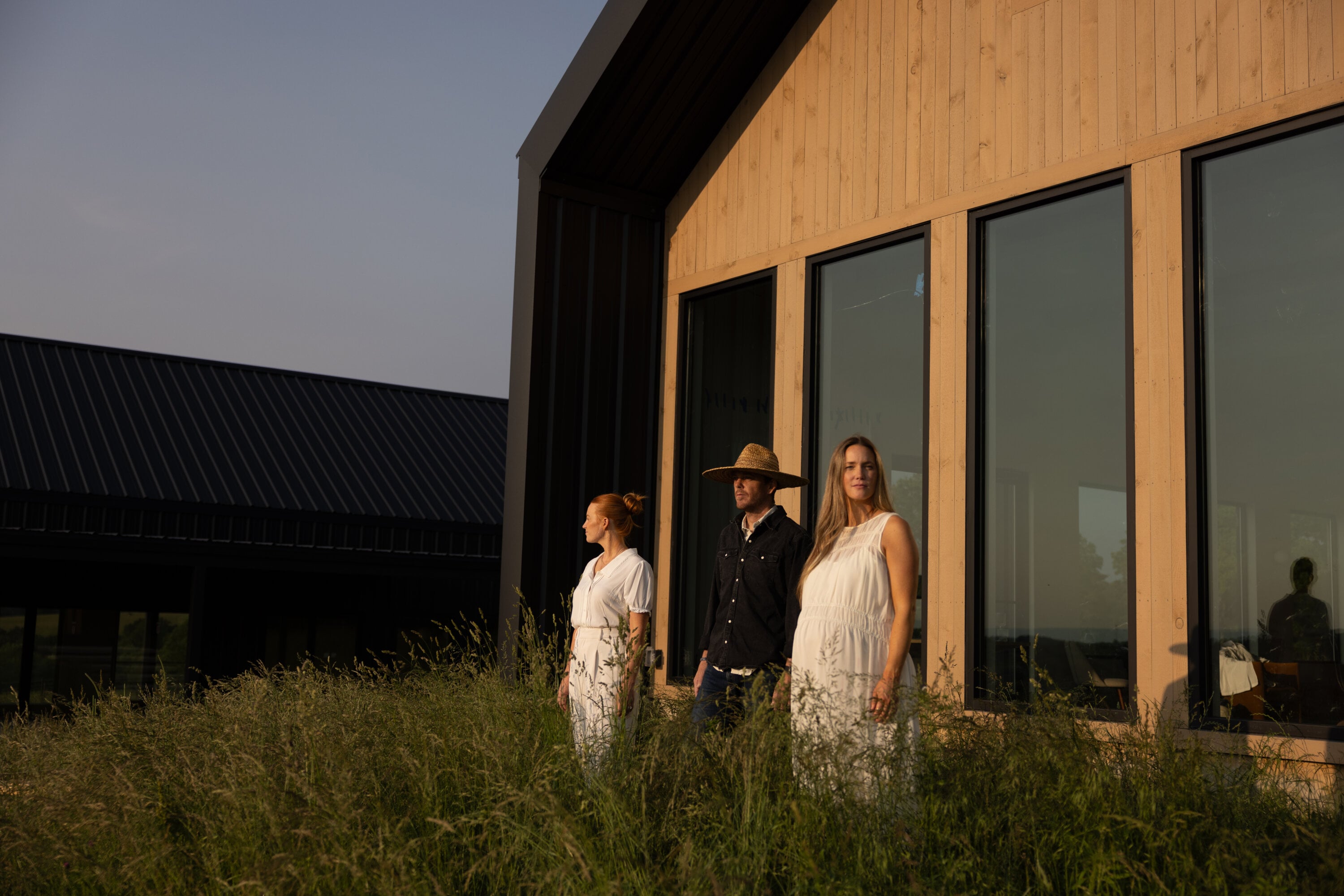
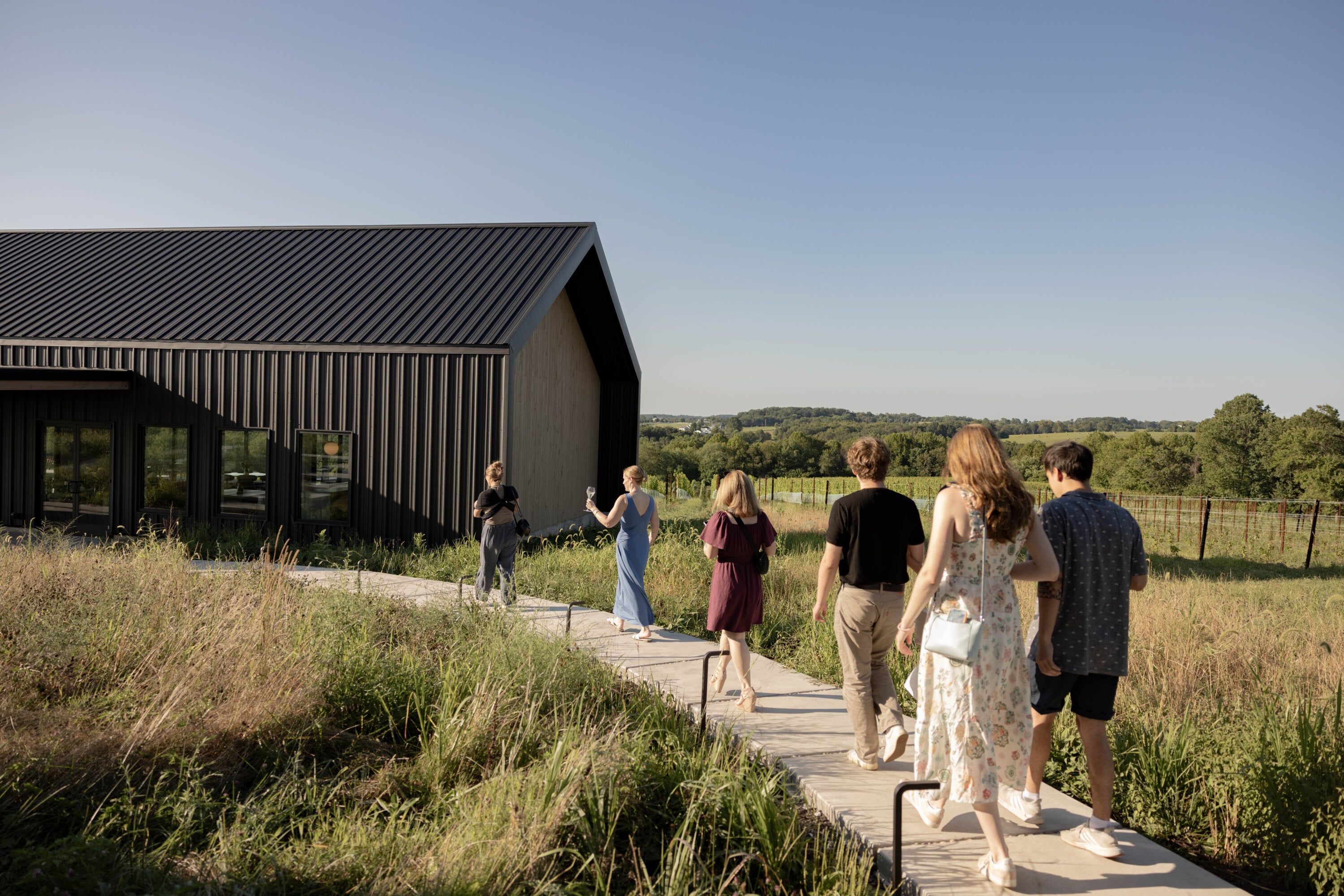
If Old Westminster helped put Maryland wine on the map, Burnt Hill is drawing a new set of boundaries. Across 117 acres in Clarksburg, the siblings planted 50,000 grapevines, all tended by hand. Yet the vineyard is just one piece of what they call “the Burnt Hill Project,” a working farm that also includes an apiary, an orchard, pasture-raised poultry, Mangalitsa pigs, Leicester Longwool sheep, and fields of grains. “It’s much bigger than wine,” Baker says. “It’s about leaving the land better than we found it, making people happy, and hopefully creating some beautiful bottles along the way.” At the center of it all are three strikingly minimalist buildings—a lounge, tasting room, and chef’s counter—that feel just at home in the Maryland landscapes as they would in Sonoma or the Willamette Valley. The lounge and tasting room are spaces to sample Burnt Hill’s estate wines alongside a seasonal à la carte menu featuring dishes such as focaccia pizzas made with heir-loom wheat grown and stone-milled on the property.
The lounge and tasting room have quickly become popular gathering spots, but the chef’s counter is the true destination. Opened in April, the intimate 12-seat dining room is helmed by former Momofuku CCDC chef Tae Strain, who serves seven-to-nine-course tasting menus that marry Mid-Atlantic ingredients with Asian American flavors. Expect dishes such as yellowfin tuna crudo with rhubarb, strawberries, and cucumber or Burnt Hill’s own Mangalitsa pork paired with apricot mustard.
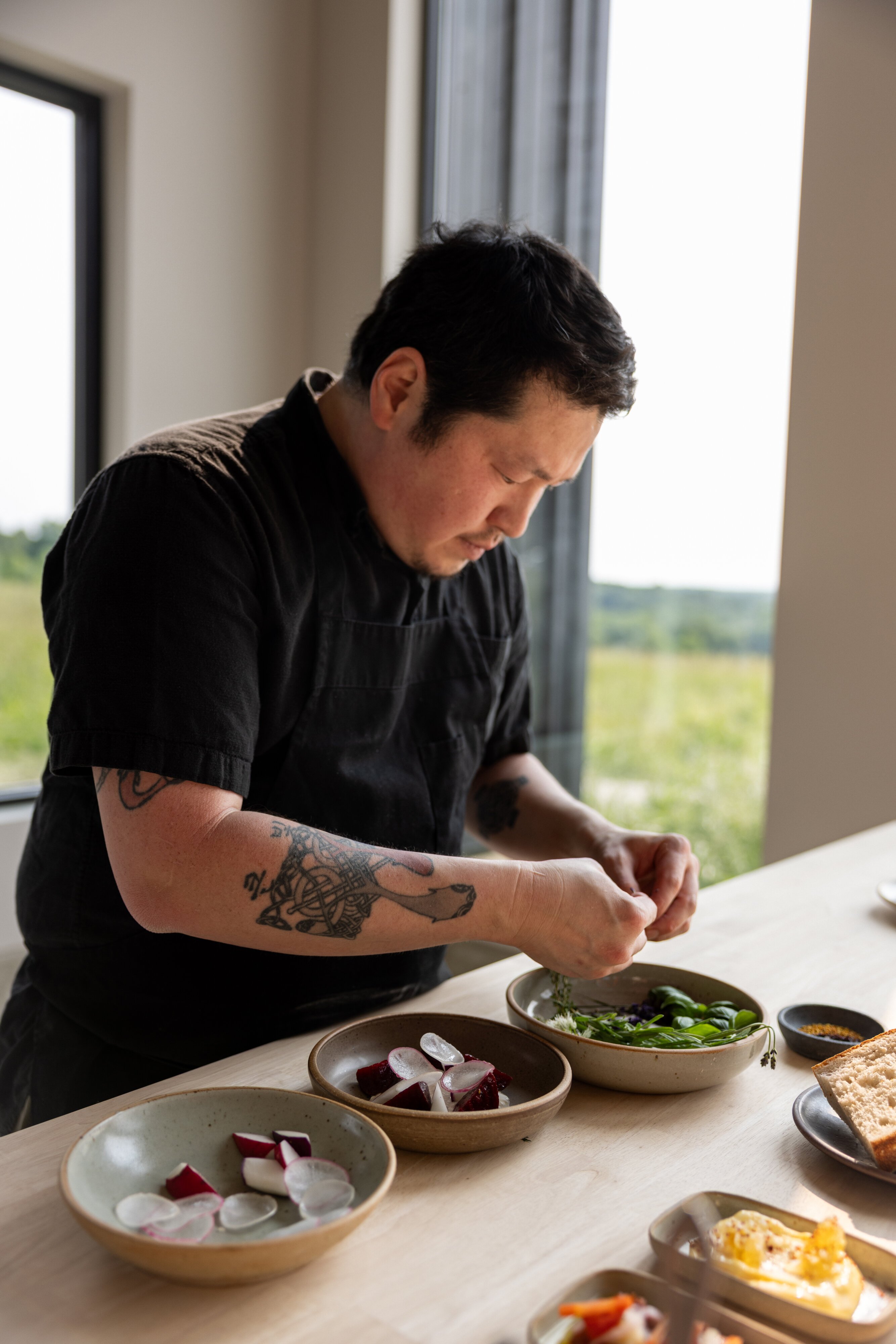
Guests are encouraged to wander the grounds, soak in the views of the Appalachian foothills, meet the animals grazing the pastures, and then taste how it all shapes the bottle and plate.
Burnt Hill’s broader vision begins with the farm, but it’s ultimately expressed through the wine. The winemakers blend Old World European varietals such as Gamay, Malbec, Syrah, and Merlot, but they’re also cultivating distinctive American hybrid grapes such as Valvin Muscat and Chardonel. As the siblings have discovered, working outside America’s established wine regions comes with an advantage: freedom to experiment without being confined to a specific identity. “It allows for maximal creativity,” says Baker. The resulting flavors feel fresh and unfamiliar yet deeply expressive of the rocky mountain soil. It’s part of Burnt Hill’s ambitions for its slice of American wine, one unrestrained by geographical rigidity while still embracing a sense of place.
“Our aim is to farm regeneratively, cultivate beauty, and produce transparent wines that bring people joy,” Baker says. “If that helps move Maryland wine forward, we are proud to be part of that story.”
Drive time from DC: Two hours and ten minutes