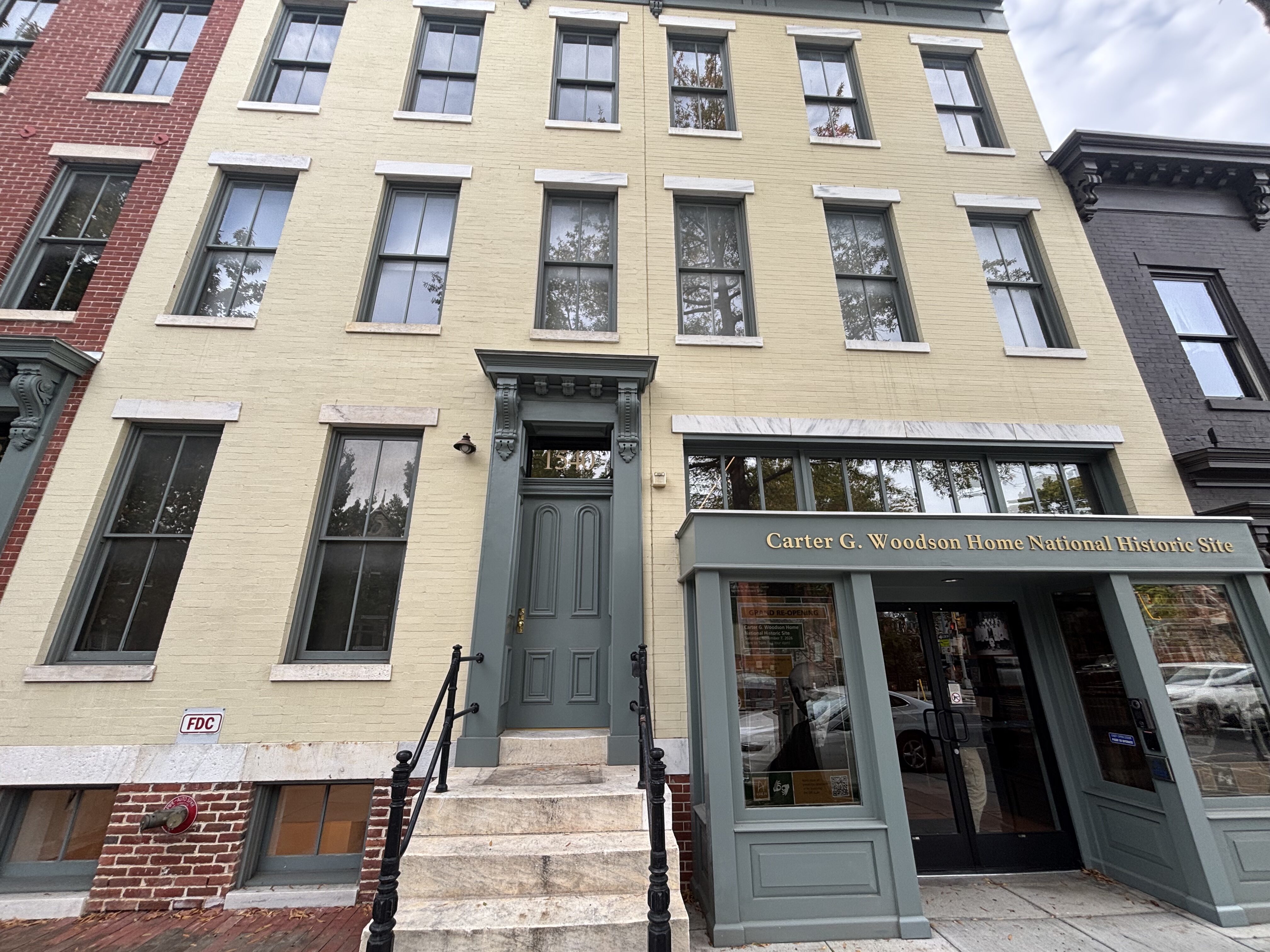
It was in a rowhouse at 9th and Q streets, in DC’s Shaw neighborhood, where historian Carter G. Woodson first got the idea to educate people near and far about Black history. In 1926, in the face of segregation, he launched Negro History Week. The mass movement organized student and adult gatherings around Black literature, theater, and heritage to uplift Black pride and racial equality.
Today, of course, we know it as Black History Month. A piece of that history is Woodson’s house, where the idea took root. And now, after a full renovation, the house reopens to the public on November 7.
Woodson’s dwelling, which bustled during DC’s Black Broadway renaissance with eager students, research apprentices, booksellers, and African American stars such as poet Langston Hughes and writer Zora Neale Hurston, has been closed since the pandemic. The closure prompted the National Park Service—which operates the house as a historic site—to undertake a major restoration of the author’s home and office, at 1538 Ninth Street, NW, and two adjacent properties. The set of rowhouses has been transformed into a museum, visitor center, gift shop, classrooms, and headquarters for the Association for the Study of African American Life and History.
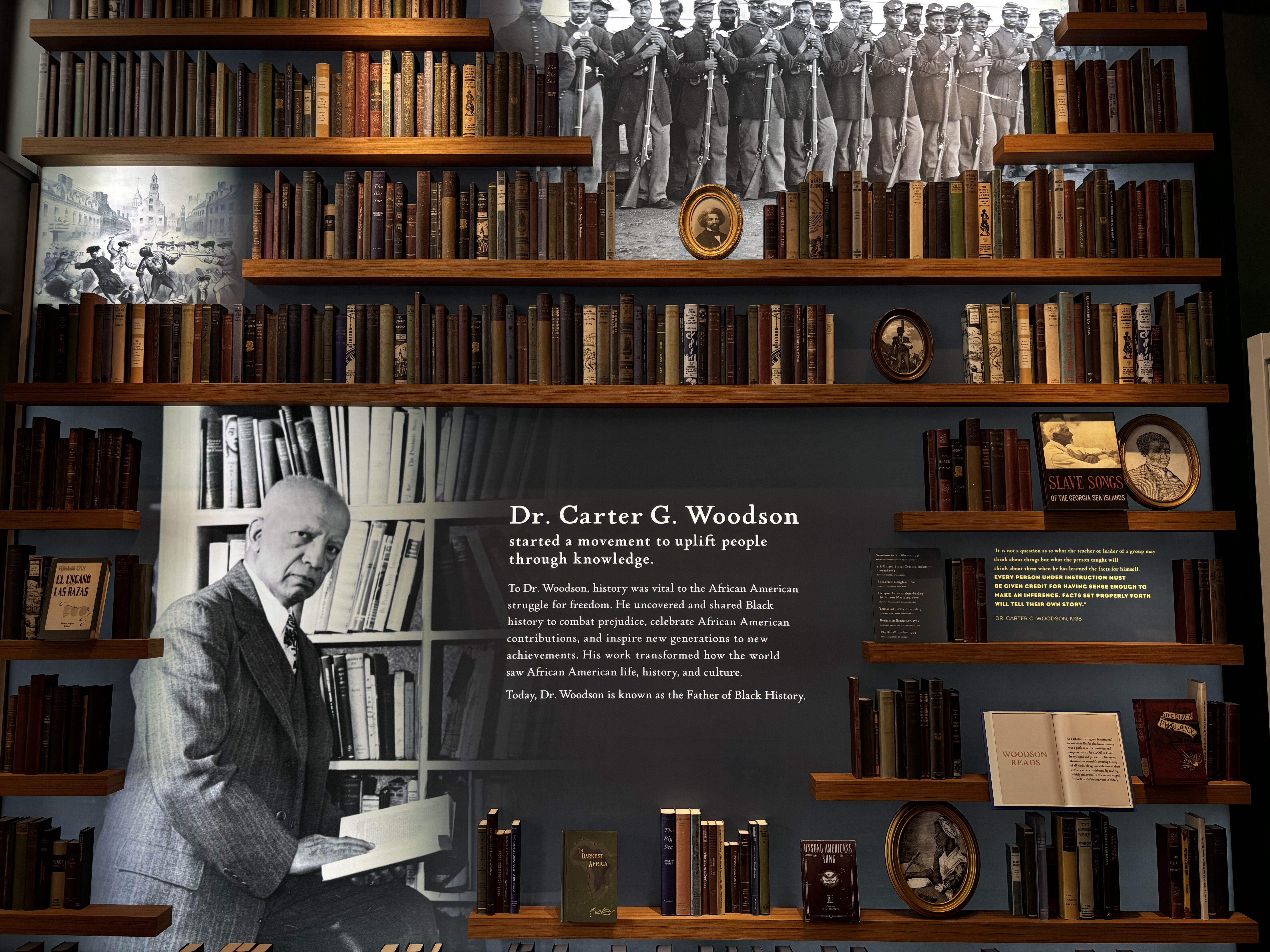
John Fowler, the site’s supervisory park ranger, says Woodson was a forerunner in multiculturalism. Inside the home, visitors can journey through three preserved floors where Woodson collected ceiling-high stacks of books on topics such as women’s, Jewish, Indigenous, and African American histories.
Fowler hopes all people, especially young people, will be inspired by the activists and leaders recognized at the museum. “Tour the house, get lost in the history, and then be transported into the present,” he says.
The restored landmark chronicles Woodson’s career and achievements, including his time at Harvard University, where he made history as the second Black scholar to earn a PhD from the institution, after W.E.B. Du Bois. The first exhibition room screens a 10-minute biopic that narrates the coming-of-age story of the son of formerly enslaved people growing up in Buckingham County, Virginia. Next comes a walk through interactive installations on the author’s groundbreaking publications such as The Mis-Education of the Negro, rare video footage of Woodson at work in his office, and original artifacts from the publisher’s wrapping and printing station.
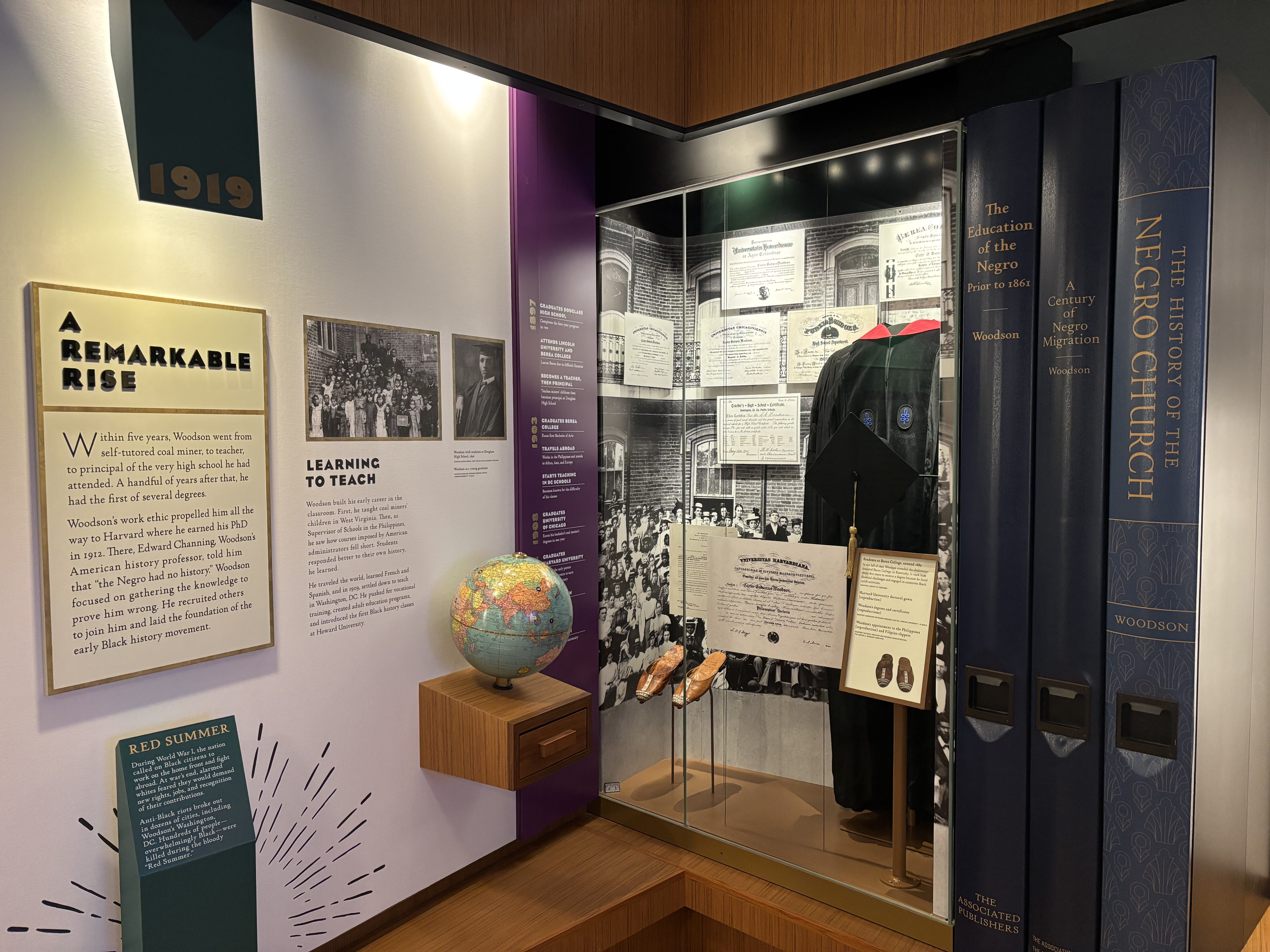
A perfectionist and overachiever, Woodson was known to work 18-hour days on a regular basis to ensure people were empowered with knowledge of Black history. Fowler says Woodson’s choice to center his studies in DC was intentional. “He could’ve gone on and taught anywhere in the world, but stayed with the community, with Black people, with the working-class people,” Fowler says.
The exhibit concludes on the third floor, where six videos and a floor-wide neighborhood map of Shaw dive into the impact of sharing and preserving history. At the end of the tour, a final charge from Woodson echoes from a wall projection: “Let us press forward.”
On Saturday, November 7, visitors are welcome to tour the historic site during an open house between 9 and 5, no reservations required. Beginning November 10, The Carter G. Woodson Home National Historic Site will open Tuesday through Saturday from 9 AM to 5 PM. Admission is free, but advanced tour registration requires a $1 booking fee. Tickets can be reserved at https://www.recreation.gov/

Briana A. Thomas is a local journalist, historian, and tour guide who specializes in the research of D.C. history and culture. She is the author of the Black history book, Black Broadway in Washington, D.C., a story that was first published in Washingtonian in 2016.