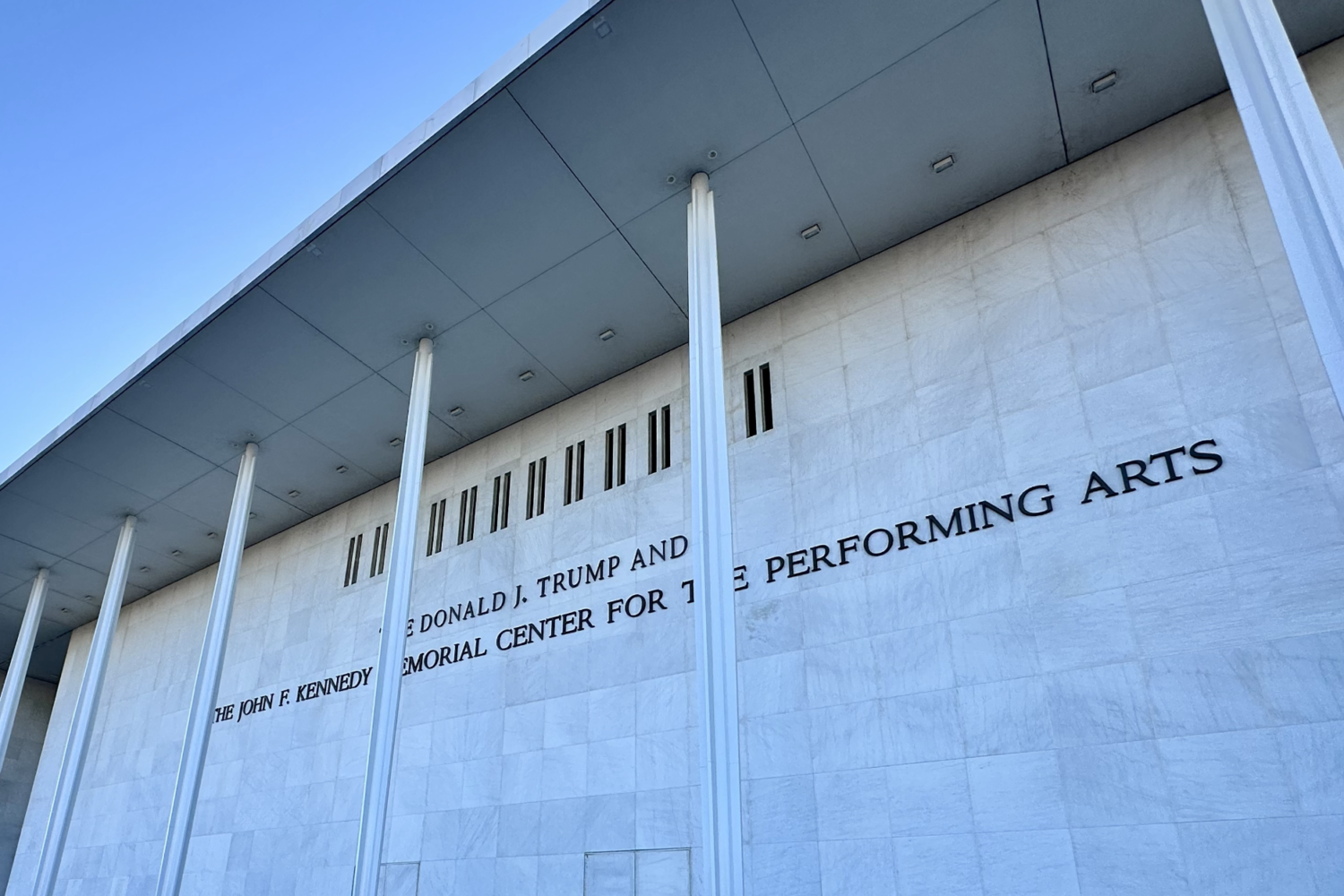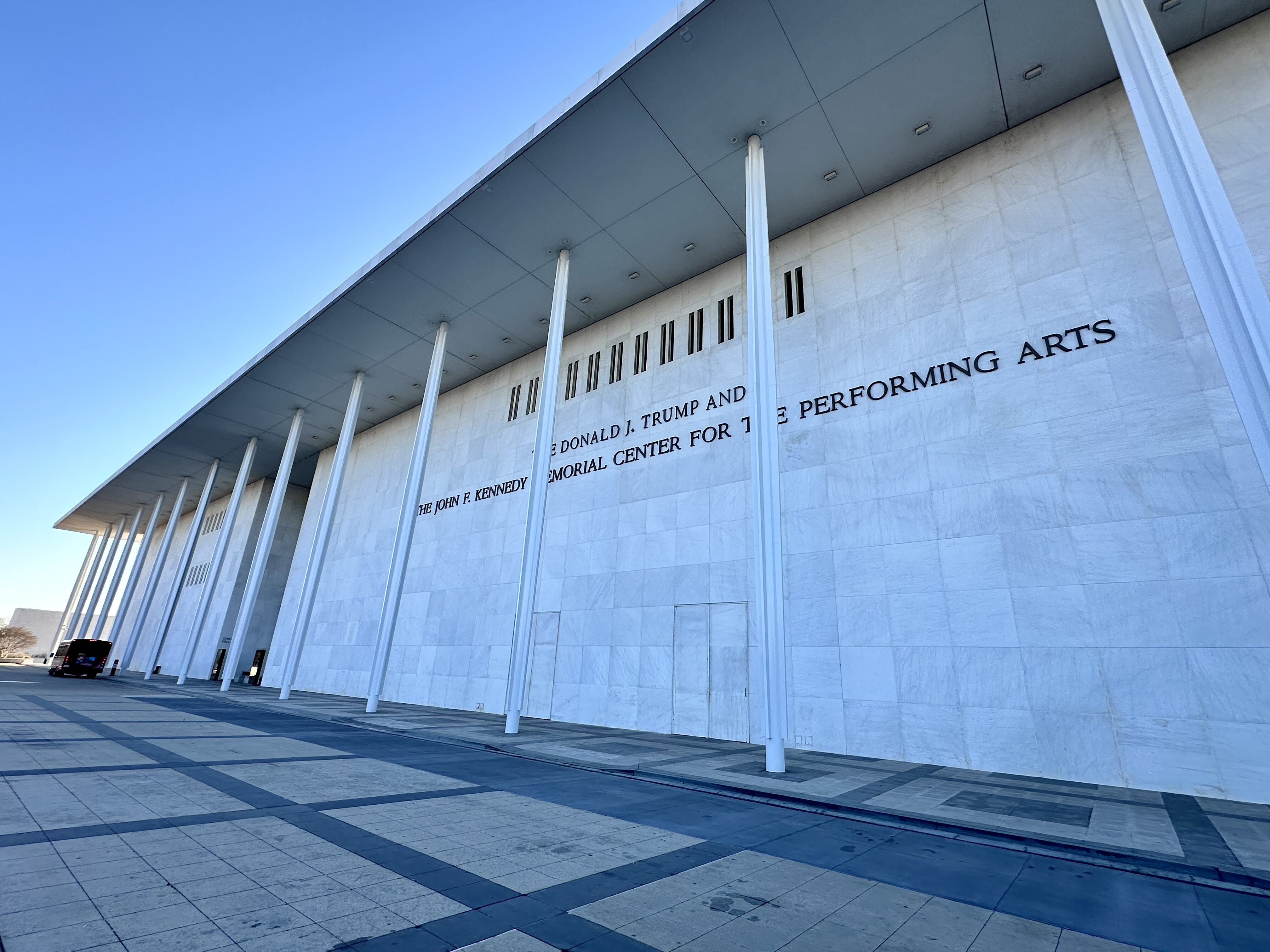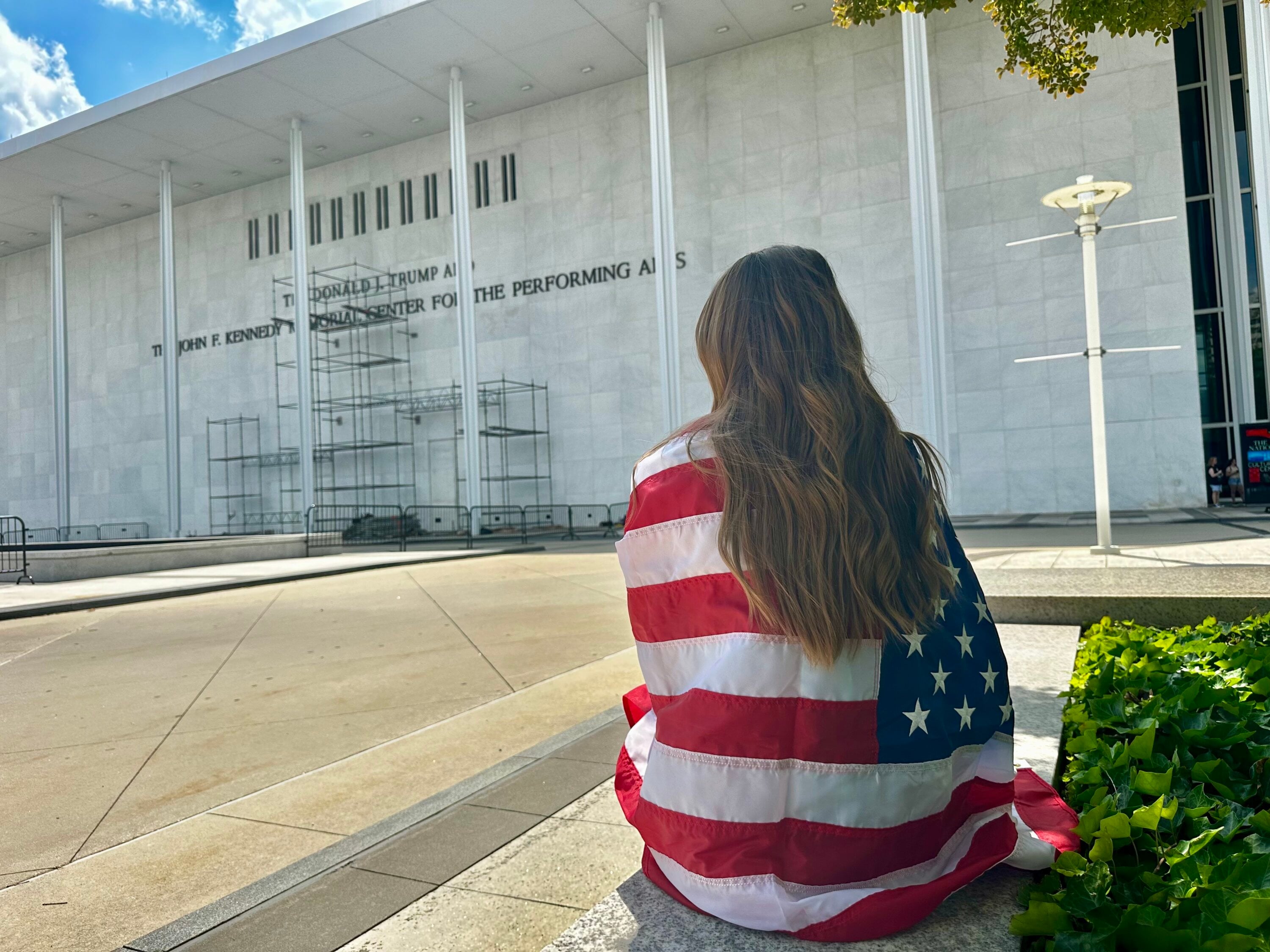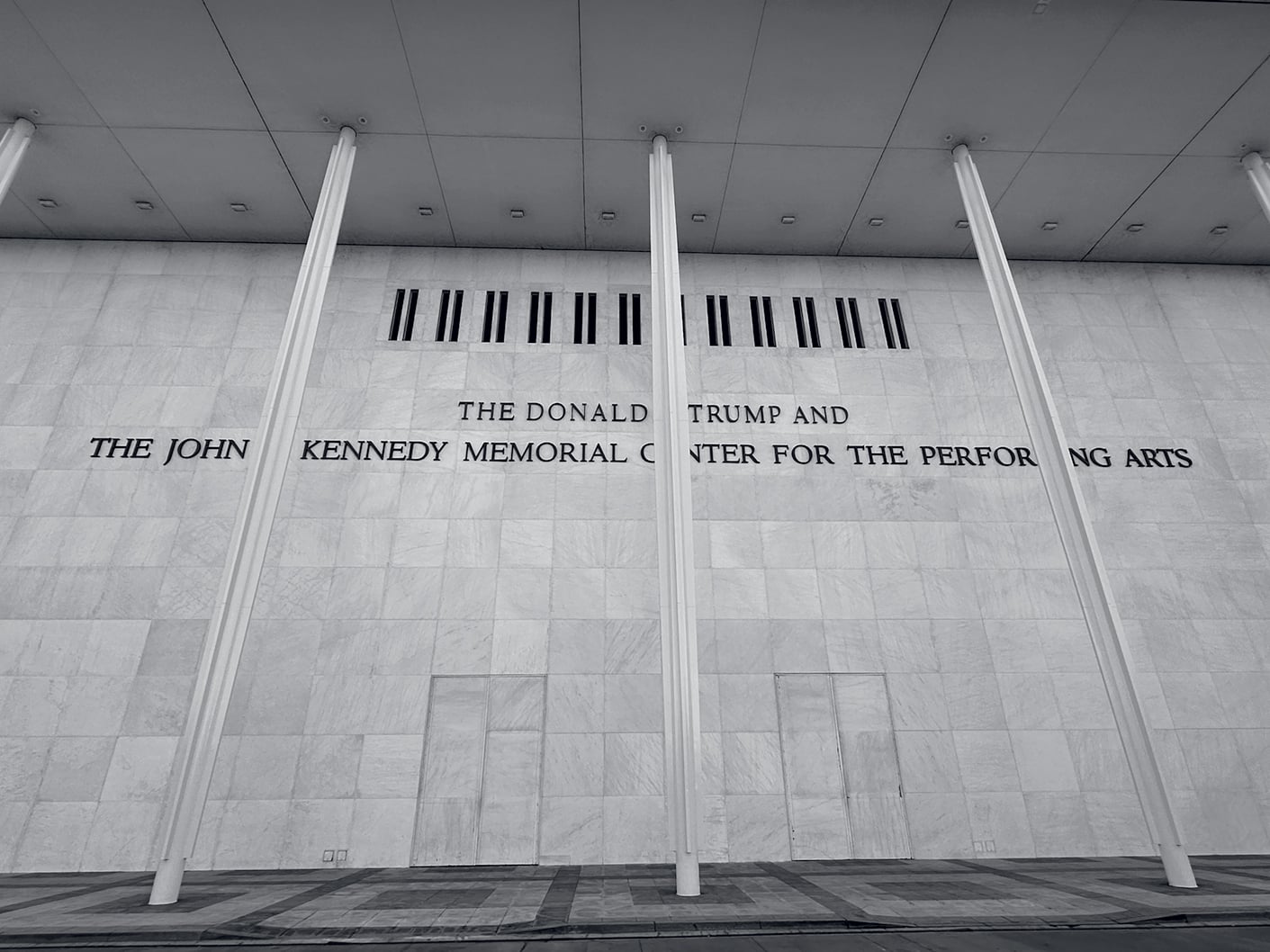
Right now, the Trump administration is essentially holding the Kennedy Center hostage. The President wants his name on the building. A federal judge has ruled that this would violate the law. So now the administration is telling the court that the Kennedy Center’s future depends on installing the Trump sign. The argument, essentially, is that Trump is a builder and fundraiser of world-historical stature and without acknowledging his extraordinary contributions to the Kennedy Center—in the form of an enormous sign with his name on it—then he will lose interest in the institution and walk away, making it impossible for the Kennedy Center to raise money and do necessary repairs. Installing the Trump sign, they argue, is therefore the only way to keep the Kennedy Center from financial and structural collapse.
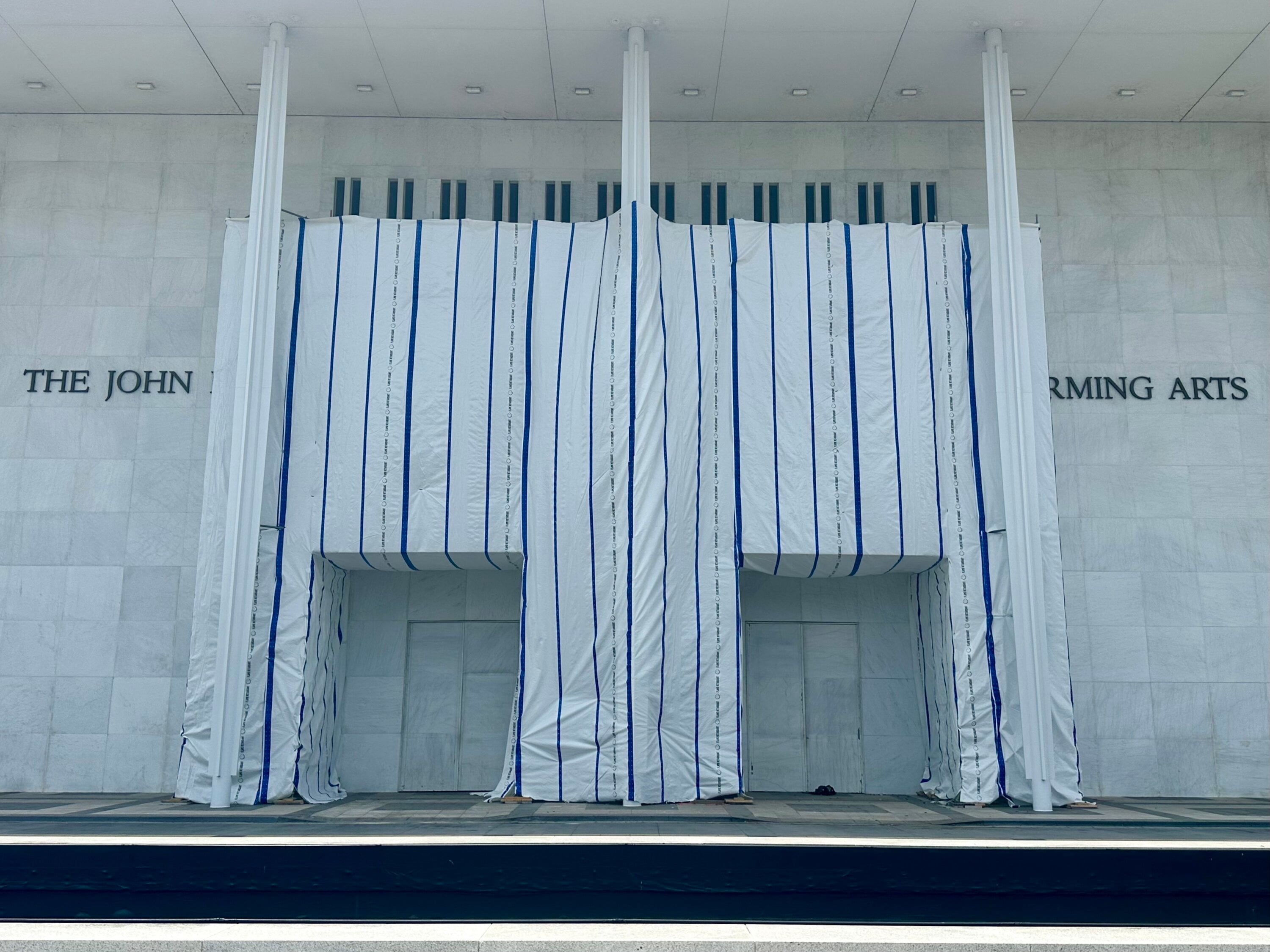
Prior to Trump’s takeover, of course, the Kennedy Center was a solvent and functional institution of global artistic renown that was capable of pulling off a half dozen well-sold performances per night. Eighteen months later, the building is shuttered, its finances are apparently decimated, the National Symphony Orchestra is homeless, the Washington National Opera has permanently relocated, and hundreds of extremely capable arts professionals have been laid off or fled. And yet, in recent court filings, the government has insisted on an Orwellian down-is-up anti-logic in which Trump is the only person who can save the Kennedy Center from ruin, when the ruin is something his takeover sure seems to have caused.
The Trump administration’s position is “absurd on so many levels,” says David Super, a professor of administrative law at Georgetown University. “It’s the crudest form of extortion and completely lawless.” And now this bewildering legal gambit includes the explicit threat that the Kennedy Center will go bankrupt if the Trump sign isn’t installed. This seems intended to put the judge in a difficult position. If the court continues to block the sign—which it seems inclined to do—then the Trump administration could walk away and let the Kennedy Center rot while trying to shift blame to the judge. At this point, there are not a lot of good outcomes for the Kennedy Center, at least in the near term. We called Super and read hundreds of pages of court filings to see how it could all play out.
Does it seem like Trump’s sign will go up?
No. The judge overseeing this case has interpreted language in the Kennedy Center’s founding statute as a fairly sweeping prohibition on honoring anyone besides President Kennedy. You can read more about the legal reasoning here, but for lots of reasons, the judge seems unlikely to allow the new sign.
And what happens if the court blocks the sign?
We can’t know exactly what will happen, but we do know what the government has threatened. Here’s a direct quote from a recent court filing by the Department of Justice: “An order blocking the Board from appropriately recognizing President Trump [with the sign] will cause donors to flee, financial contributions to dry up, and structural rehabilitation to stop. There will simply not be the expertise or funding necessary to rebuild and renovate this decimated structure. The Trump Administration is ready to go but, without [the new sign], the Kennedy Center cannot be saved.”
In that same filing, the Department of Justice warned that if the renovations could not proceed—due to the lack of Trump signage—“the Center will deteriorate further into an unsafe, decrepit structure that will be required to be taken down, with a determination to follow on what to build on the site.” Essentially, the threat is that if Trump’s name doesn’t go onto the building, the administration will tear it down.
Can they actually demolish the Kennedy Center?
Not legally, no—which is not to say they wouldn’t tear it down anyway. But so far, demolition of the Kennedy Center appears to be more of a rhetorical cudgel than an actual plan. The judge, for instance, has not engaged with it as a serious threat.
What about the East Wing?
Great point! But these situations aren’t totally parallel. In the case of the East Wing, Super explains, the administration tore it down before anyone could sue. By contrast, multiple lawsuits have already been filed to protect the Kennedy Center from various harms. If the administration seemed ready to seriously begin demolition—or if it actually began to demolish the building—litigants could immediately get a restraining order from the court without having to prove that they have standing. “Given how this case has progressed, I’m guessing that the court would be ready to act very, very quickly,” Super says.
Of course, demolishing the Kennedy Center in explicit defiance of a court order is possible, but it would be an extreme escalation from what happened with the East Wing. So far, the administration has not been that brazen.
What is a likelier outcome?
Insolvency. On Sunday, the Washington Post reported on a 57-page packet that the Kennedy Center’s Trump-installed leadership distributed to its board members ahead of a planned meeting on Tuesday. The packet claims, according to the Post, that the Kennedy Center is “on the brink of bankruptcy” and that “within a matter of weeks” the institution could find itself “unable to make payroll or pay routine maintenance contracts.” This dire financial assessment seems likely to be true—it’s backed up by months of excellent reporting from the Post on the Kennedy Center’s troubled finances.
But the packet also makes a more dubious allegation, which is that Trump could plug the Kennedy Center’s financial holes through fundraising, and that he’s only willing to do so if he gets his sign. The Post’s reporting strongly suggests that fundraising has been substantially worse since Trump’s takeover, and there’s no evidence to indicate that installing the sign would turn things around. This means that whether the sign goes up or not, the Kennedy Center might soon run out of money.
Does that mean the Kennedy Center would declare bankruptcy?
It’s a contested legal question, but declaring bankruptcy probably wouldn’t be possible. There are bankruptcy chapters for individuals, corporations, and municipalities—but there is no bankruptcy chapter covering federal entities like the Kennedy Center. The bankruptcy talk, Super says, seems like “an empty threat, as far as I can tell. I think it’s just a power play. It’s coercion.” His Georgetown Law colleague Adam Levitin—a bankruptcy expert—agrees that it’s unlikely that the Kennedy Center would be eligible to file for bankruptcy, but he adds that “it might be possible for the court to appoint a receiver who would take over its management in order to preserve its assets.” (Update: At a hearing on Tuesday, the judge in the case seemed to agree that the Kennedy Center probably couldn’t declare bankruptcy, but he raised the possibility of receivership.) Of course, when the Kennedy Center ran out of money in 1977, the issue was resolved by Congress. Legislators essentially bailed the Kennedy Center out.
Would Congress do that again today?
Maybe! But the chairman of the Kennedy Center’s board is also the President of the United States, whose party controls both chambers of Congress. So Congress wresting control from Trump seems pretty unlikely. If Trump wanted to get Congress on board to appropriate additional funds in order to make payroll, he could presumably try to do that. But it’s not clear that he’d actually want to. Trump seems currently to be using the Kennedy Center’s financial woes as leverage to get his sign. He’s made clear that without the sign, he’s not lifting a finger on the finances.
So what happens if the Kennedy Center runs out of money?
If the Kennedy Center fails to make payments to its vendors or meet payroll for its employees, then it would be in breach of contract and anyone to whom it owed money could sue. That might include, for example, members of the National Symphony Orchestra, who just ratified a new four-year contract on Friday.
Lawsuits take time to play out, of course, so this is not amazing news for the hundreds of musicians, arts administrators, stagehands, etc., who depend on their paychecks to live. “I would be worried if I were them,” Super says, “because this administration has spent the last year and a half withholding money that it clearly was obligated to pay. I would be concerned that they might be planning to do that with me.”
If the judge blocks the Trump sign, will the administration still renovate the Kennedy Center?
There’s no clear answer to this question, but the government seems to be laying the groundwork to walk away from the renovation. For one, at a recent board meeting, Commerce Secretary Howard Lutnick explicitly made the argument that Trump—because he is such a talented and experienced builder—is the only person who could oversee the renovations for a cost in the ballpark of the $257 million that Congress has appropriated. If anyone else oversaw the project, Lutnick argues, the cost would balloon, making the renovation impossible. So if Trump doesn’t get his sign and therefore declines to oversee the project, then the renovations seem like they might simply stall.
But Congress appropriated the money to renovate the Kennedy Center. Isn’t the Kennedy Center obligated to spend it?
Probably not, Super says. Sometimes Congress requires appropriated money to be spent, and other times, the spending is optional. With programs like Medicaid and Head Start, for example, the government is legally required to fund them (though there’s been some difficulty lately surrounding both). But money for federal disaster relief is not required to be spent if there’s no disaster to address.
In Super’s reading of the law, the Kennedy Center’s founding statute does require money to be spent on basic projects like building maintenance. But the language of the recent $257 million renovation appropriation, Super says, seems not to require that money to be spent. So as long as the basic upkeep is occurring, the planned renovations probably do not have to move forward.
Is it lawful for Trump to refuse to fundraise or oversee renovations if he doesn’t get his sign?
On multiple levels, no. For one, Super says, the Kennedy Center’s founding statute has “several fairly lengthy provisions about the duties of the board,” including maintaining the building and offering arts programming. Refusing to carry out those duties is unlawful. If Trump does not want to carry out his legally mandated duties, he could resign as chairman and install someone who’s willing to do the job. But if he remains chairman of the Kennedy Center while essentially refusing to do what the statute obligates him to do, then he would be in breach of his fiduciary duty. A functioning board might oust the chairman. But the members of the board are appointed by…the President of the United States.
Second, Trump appears to be threatening to do something unlawful (neglect his statutory duties as chairman) if he’s not allowed to do something else unlawful (install his sign). That kind of argument, Super says, isn’t legal (“Generally, threatening to do something unlawful is itself unlawful”) and also doesn’t tend to go over well in court. (“Anyone threatening to do harm to avoid complying with the law is, in fact, making their legal situation even worse.”)
Legality aside, a primary responsibility of the chairman of a nonprofit’s board is to fundraise. It’s fairly bizarre to refuse to do so, particularly as a way to leverage the fate of the institution for your own personal gain.
So basically, if the Kennedy Center remains shuttered but basic maintenance is happening—the lawn is mowed, the snow is plowed—and there are some token performances at the Reach, then the Kennedy Center can indefinitely remain closed, even if it’s not being renovated?
Yeah, it seems that way. At this point, the best hope for the Kennedy Center is that someone else becomes president in 2029.
This article has been updated since its original publication.