On Thursday, the Trump-controlled board of the Kennedy Center voted to inscribe Trump’s name on the building’s facade and close it for renovations. One might ask: Didn’t a federal judge recently block the board from doing precisely those two things? Well, yes. In May, US District Judge Christopher Cooper issued a fairly lengthy—and somewhat peeved-sounding—ruling on these very issues. So here we are with yet another legal explainer, to tell you whether the President can actually do any of this to the Kennedy Center and how it all might play out.
Why does the Trump administration seem to think they can put his name back on the building when a judge ordered it to be taken off?
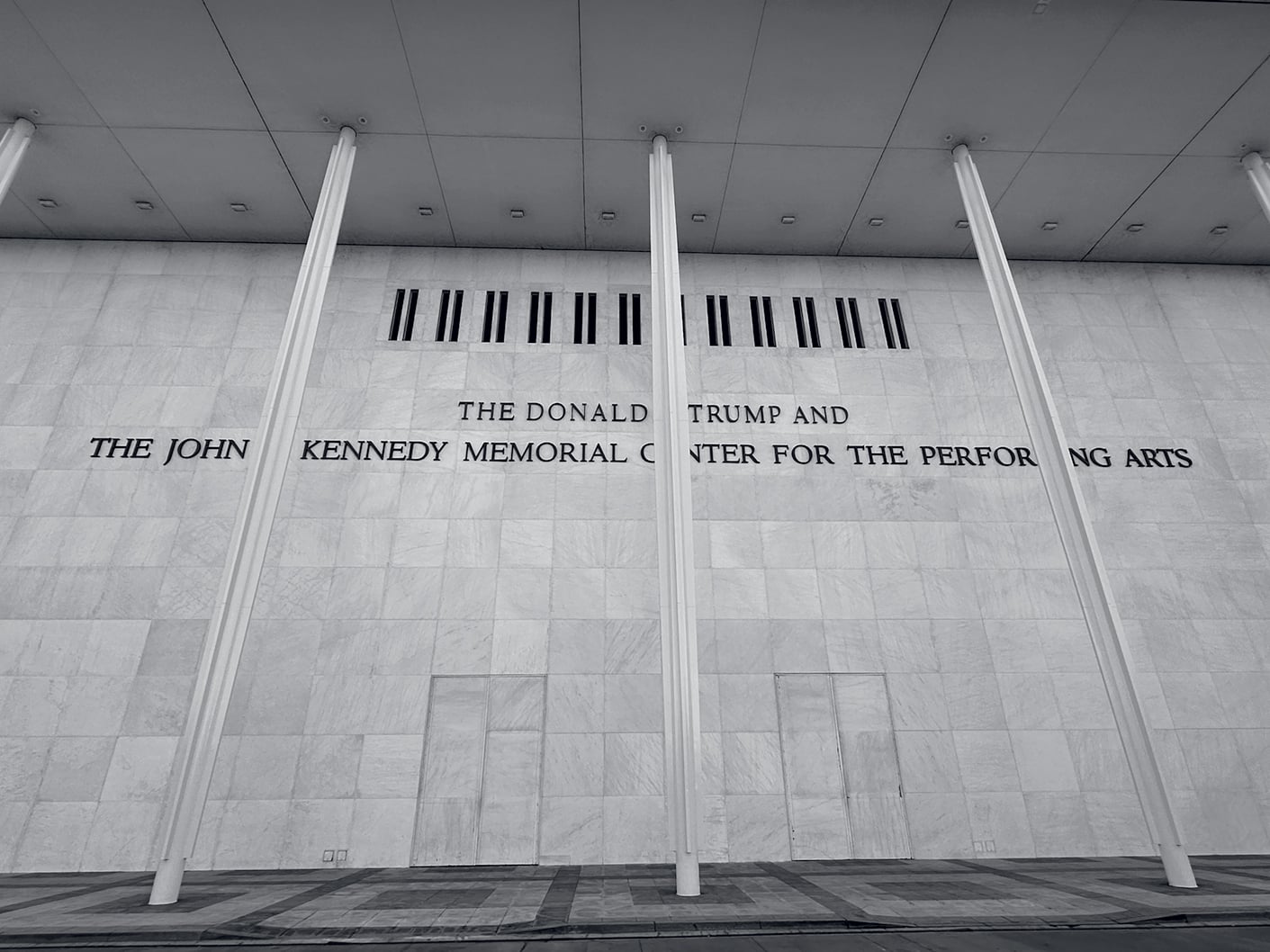
Because this time it’s not being framed as a renaming, and the renaming is what the court rejected. The language that the board approved on Thursday would read “Restored and Renovated by President Donald J. Trump,” which is different from the previous effort to fully rename and rebrand the Kennedy Center as the “Donald J. Trump and John F. Kennedy Center for the Performing Arts.”
Of course, depending on what the signage looks like, the inscription may end up being basically equivalent to the illegal renaming—for example, the administration may make Trump’s name as big as president Kennedy’s. One trustee told the New York Times that he’d like to see Trump’s name “as big as it can get.” That same trustee told the Atlantic that he’d like to see Trump’s name “everywhere that it could be possible” at the Kennedy Center.
And would that be legal?
That will be up to the courts, of course. But the Kennedy Center’s founding statute says that the board cannot add “memorials or plaques in the nature of memorials” to “the public areas” of the Kennedy Center. That is, in part, why the court found the renaming to be illegal. Installing another huge Trump sign on the Kennedy Center’s facade, whether or not it’s officially renaming the building, may also violate this part of the statute, because the statute appears to prohibit honoring anyone—in any capacity—besides Kennedy.
Notably, the statute enumerates three exceptions. It’s permissible to install plaques at the Kennedy Center acknowledging gifts from foreign countries, or plaques on theater chairs/boxes acknowledging donors, or inscriptions in the marble walls in specific spots inside the Kennedy Center (not the facade) acknowledging a major contribution. None of these exceptions would seem to apply to plastering Trump’s name alongside Kennedy’s on the outside of the building.
But if it’s illegal, then what can be done?
Ohio Congresswoman Joyce Beatty is currently suing the Kennedy Center over the previous closure vote and the renaming. Nathaniel Zelinsky, who is among her attorneys, said on Thursday night that he intends to fight the board’s vote. “We view this as a transparent effort to evade the court’s [May] ruling,” he said in a phone call. “We believe that this is unlawful. We think it violates the statute, and we’ll be back in court.” The judge has requested a status report from the plaintiff and defendants within five days of the board meeting, and Beatty’s legal team is expected to bring this matter to him then. The Kennedy Center did not immediately respond to a request for comment for this story.
Is there any indication of what the judge might decide?
Only in his previous filings, which are not necessarily predictive. But in his May ruling, the judge wrote that the statute’s prohibition on additional memorials is “unambiguous,” and he noted that “the narrow exceptions” that Congress laid out “only serve to reinforce the breadth of the bar on public memorials and plaques.” He also pointed out that in 2012, when Congress authorized construction of the Reach (an ancillary building on the Kennedy Center’s campus), lawmakers were “so wary of diluting” the “public dedication” to president Kennedy that they explicitly required private donors to be honored inside the building, not on its exterior.
Based on that language, the judge certainly seems to interpret the statute as a sweeping prohibition against honoring anyone but Kennedy—whether that’s renaming the center outright, or merely acknowledging Trump’s efforts to renovate it. And don’t forget that this was the same judge whose order brought the “Donald J. Trump” sign down from the facade in the first place, so he has a record of intervening on this issue.
The board also voted to rename the plaza “the President Donald J. Trump Plaza.” Is that legal?
Again, that will be up to the judge to decide, but the same logic would seem to apply. The statute is very specific that the Kennedy Center should honor president Kennedy alone, and among the narrow exceptions that Congress has authorized, there is nothing even remotely resembling “renaming the plaza.”
What about the two-year closure? Didn’t the judge say the board couldn’t close the Kennedy Center?
Not exactly. In his May ruling, the judge did not categorically prohibit the Kennedy Center from closing, he just found that the board’s vote in March was unlawful. Members of the Kennedy Center’s board have a legal duty to behave prudently and act in the best interest of the institution, and the judge ruled that the board violated that duty by voting to close without weighing any other options or considering the possible adverse effects of a closure. He wrote that the board had made its decision based on “woefully insufficient information” and that its members had received only a “one-sided justification for full closure.” In essence, he found the board’s decision-making process to be so irresponsible as to be illegal.
But notably, the judge left the door open for the board to vote again after more carefully weighing the options. If the board were to undertake a genuinely deliberative process in the best interest of the institution, he wrote, it might lawfully arrive at the same decision to close—and that’s what the board is hoping it has done.
But will this new vote pass muster?
Maybe! Again, the judge will have to decide.
On the one hand, this time the Kennedy Center does appear to have at least nominally considered different renovation plans. Axios reported this week that a Virginia-based consulting firm “prepared two renovation options” for the Kennedy Center, one being a four-year phased renovation (which would allow the National Symphony Orchestra to continue playing at the Kennedy Center during construction, but which would apparently double the renovation cost), and a cheaper two-year closure (during which the NSO would play offsite at various venues around the region). The board chose the second plan.
But various ex-officio trustees (ones who weren’t appointed by Trump) have raised concerns about whether the process was truly deliberative. Zelinsky, the attorney for Beatty, said that at least some members of the board never received the full consultant document that laid out both plans—only a two-slide presentation that gave a somewhat cursory overview of the partial versus full closure options, and then a lengthier document that Zelinsky characterized as a construction plan for the renovations based on the assumption that a closure would occur.
Senator Sheldon Whitehouse, a Democrat from Rhode Island and ex-officio Kennedy Center trustee, issued a statement on Thursday calling the vote “nothing more than a rubber stamp on a decision the President made months ago.” And Beatty characterized the vote as a “transparent effort to circumvent the court’s ruling” and indicated that she intends to fight back.
But on what grounds can Beatty fight this?
In the judge’s initial opinion, he was pretty specific about what information the board would need in order to lawfully decide to close. For example, this would likely include “extensive reports, cost analyses, construction plans, and third-party validated budgets.” Referring to that first vote, the judge criticized the Kennedy Center for only providing information to board members “two days before the closure vote” and wrote that the information itself was merely “a handful of vague documents penned by [Kennedy Center president Matt] Floca, a light-on-details budget document, and a few years-old CBPs and consultant reports.”
This time, board members once again received a packet of documents only 48 hours prior to the board meeting—and whether they were as comprehensive as the court requires remains an open question. Zelinsky plans to tell the judge that they weren’t. He characterized the documents as essentially treating the closure as preordained.
And the judge has to approve the closure before it proceeds?
Yes. In May, the judge issued a preliminary injunction prohibiting the board from effectuating a closure, and he has to dissolve it before the Kennedy Center can proceed. Lawyers for the Trump administration are expected to inform the judge of the board’s decision to close in the upcoming joint status report, which is required within five days of Thursday’s vote.
Is there any indication of what the judge will decide?
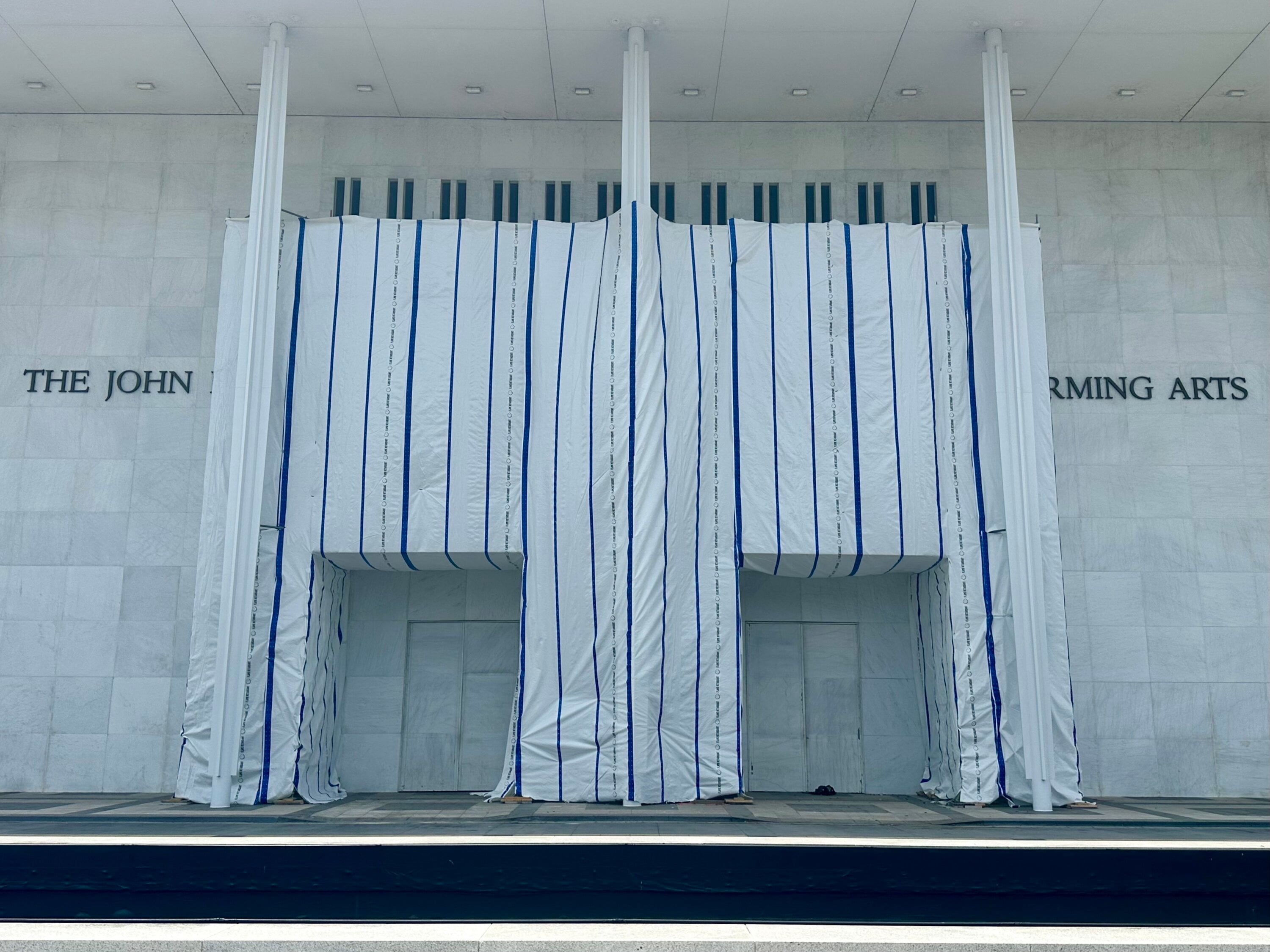
This is pretty unclear. In his May opinion, the judge was fairly strident about the illegality of the Trump sign, but he was a little more cautious about the closure. And since issuing that opinion, he’s continued to take a somewhat non-confrontational stance on the closure, deferring to various requests from the Kennedy Center—including giving it more time to explain the tarp that’s now covered the facade for months, and declining to require documentation of its efforts to book arts programming.
It is possible that the judge will find the board’s Thursday vote to have been genuinely lawful, and it’s possible that he’ll be skeptical but choose not to pick an unwieldy fight with the Kennedy Center. It’s also possible that he’ll refuse to dissolve the injunction—finding that the process still wasn’t adequately deliberative—thereby preventing the planned closure from proceeding. But the judge may be telegraphing that he has less appetite for a fight on the closure than he does on the sign, so this is an area where Beatty seems perhaps less likely to prevail.
If the judge did find the vote unlawful, could he really prevent the Kennedy Center from closing?
There’s not a great answer to that. The judge previously ordered the Kennedy Center to stop its planned closure, and the Kennedy Center has essentially closed anyway. The building is mostly empty at present, aside from some small tour groups and Italian field mice. It doesn’t seem like the judge really wants to make the Kennedy Center offer arts programming; if he did, he may have granted Beatty’s request to require documentation of the center’s efforts to book acts. So even if he doesn’t find the board’s Thursday vote to have been lawful, that doesn’t mean there will be concerts.
If nobody is going to the Kennedy Center, then why should we care if the Trump sign comes back?
Here’s Zelinsky’s take: “This case matters because it’s not just about letters on a building—it’s a tangible, visible symbol of the rule of law. Every day in this country, the executive branch is trampling over the rule of law in matters big and small. This case is a symbol of that.”