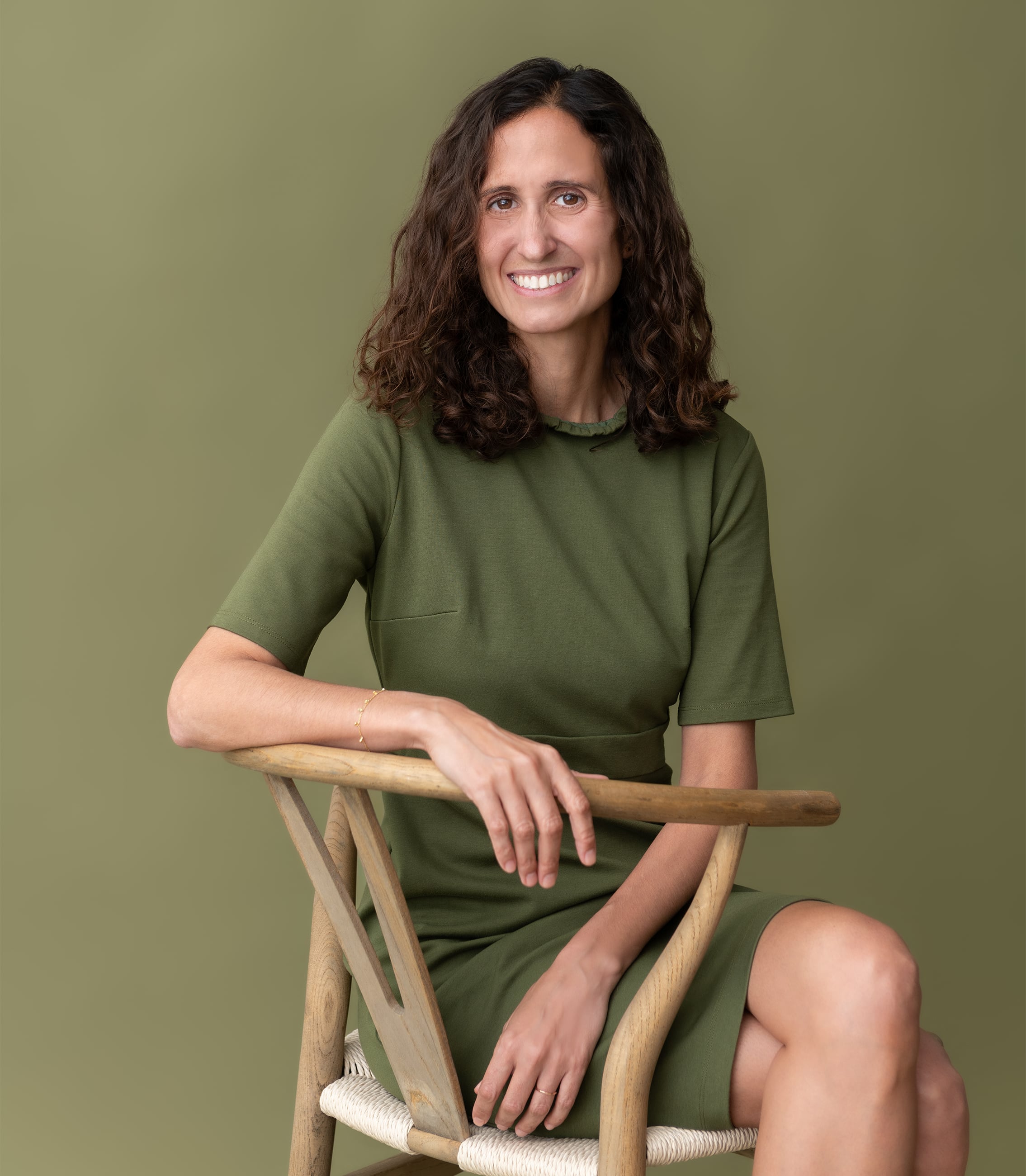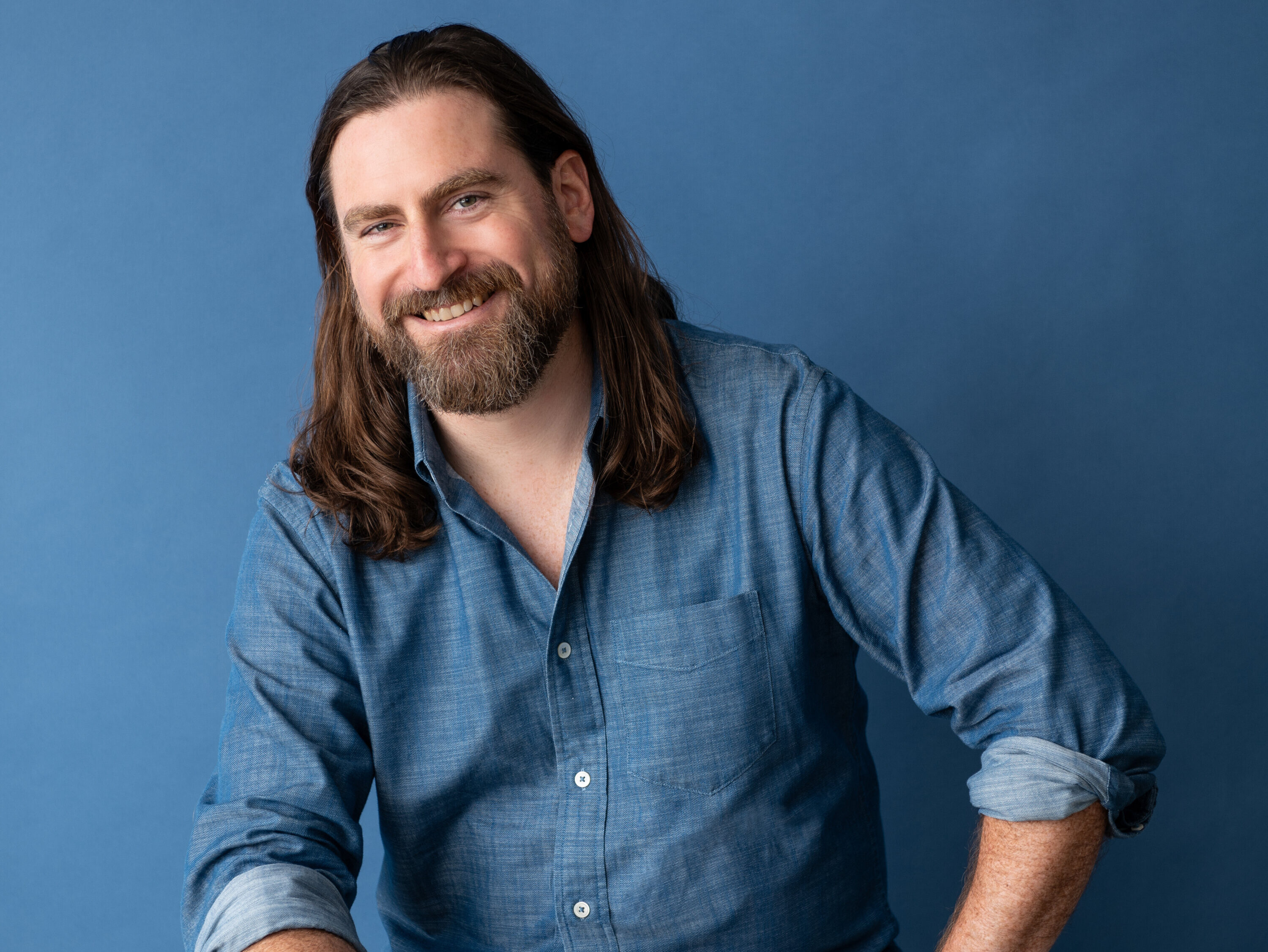
Adam Jentleson is the kind of Democrat who believes that winning elections is the party’s primary moral imperative—that in order to fight rising authoritarianism and enact an ambitious policy agenda, Democrats first have to crush at the polls. His new book, Supermajority, lays out an idea about how to do so: embrace candidates who sometimes buck the party on issues like gun control or fracking, demonstrating independent thought.
It’s not new to suggest that Democrats should be more ideologically flexible and less beholden to the demands of progressive interest groups, but Jentleson—a former Senate staffer who spent years as a top aide to Harry Reid—is a particularly vocal combatant in that sphere. Critics think he’s trying to push the party to the right; Jentleson thinks he’s found the path to the kinds of House and Senate supermajorities that could pass the next Great Society or New Deal. We talked to him about his unusually public resignation from John Fetterman’s office in 2024, the purpose of the think tank he subsequently founded, and his theory of how Democrats can win in 2028.
A supermajority requires winning moderate voters, but data suggests that moderate voters aren’t centrists. They’re not taking the middle position in the left-right binary. Instead, you believe that most moderate voters are “heterodox,” which means taking an eclectic mix of positions from different ideological poles.
Heterodoxy is the defining feature of the American voter, especially the swing voters who decide elections. These voters will say, “I think all CEOs who caused the 2007 financial crisis should be thrown in jail,” and then, “I also think all immigrants should be deported immediately.” Neither of those positions are moderate—they’re both pretty extreme—but if you combine them, you have heterodoxy, because they’re being drawn from different ideologies.
You argue that heterodox voters like heterodox candidates, which partly accounts for Trump’s appeal.
Right. I think Trump is the worst President we’ve ever had, but he did create this heterodox appeal in 2016 by taking positions that people were surprised to hear from a Republican, like strongly opposing the Iraq War or talking about how people on Wall Street were getting away with murder. Those positions add up to an impression that this person is an independent thinker, so they trust him to make decisions on the merits rather than doing the bidding of interest groups or donors. You cannot get that reputation simply by taking ideologically consistent positions on every single issue, because then you just come across as an ideologue.
You’ve also praised Democratic politicians like Bernie Sanders and Barack Obama for running heterodox campaigns.
In 2008, Obama took a strong position against the Iraq War and secured the Democratic base—but then he ran to the right of his primary opponents on issues like healthcare. He also [argued] that there should be an increased focus on Black fatherhood, which elicited lots of pushback from the left. Obama succeeded in crafting a super-majority. He won 365 electoral votes and ushered in a Senate majority that hit 60 seats. That’s what Democrats need to do. We need to win competitive races. I’m not talking about deep-blue areas of the country. I’m talking about Texas or Ohio or Indiana or the Dakotas—all states where Democrats used to be competitive and can be competitive again if we adopt this heterodox approach.
But was Obama successful because he was heterodox? He was an extremely inspiring candidate. He had an ambitious vision for the country.
Absolutely, but the point is that heterodoxy allows you to appeal to a broader group of people. You’re providing access points for people who don’t typically vote for Democrats. Some might say, “I like Obama because he wants to enact universal healthcare,” and others might say, “I like him because he’s got an independent streak and he’s willing to stand up to interest groups on the left.” Both of those people are right, and this appeal invites all sorts of voters into the big Democratic tent. Heterodoxy is compatible with an inspirational and ambitious view of America—and in a lot of ways, it’s a precondition. A rigidly ideological approach is inherently narrower because it’s appealing to a smaller set of people.
What drew you to a career in politics?
My opposition to the Iraq War, basically. I grew up in a pretty political family. My dad was a professor, but he was also a foreign-policy adviser to Al Gore. For me, that meant politics was uncool and I didn’t want to do it because it was what my parents did. I got a degree in American history and was planning to get a PhD, but I was teaching at a charter school in the Bronx when 9/11 happened. It was a sort of radicalizing experience, watching the Bush administration use that as a pretext to take America into a disastrous war. I realized there wasn’t a ton I could do living in New York, so I decided to move to DC. I joined the [2004 John] Kerry campaign and I got the bug.
In 2024, you resigned as John Fetterman’s chief of staff and later gave an interview to New York magazine describing your concerns about his mental health. It’s pretty extraordinary for a staffer to be quoted like that about their boss. I’m curious why you decided to do it.
I struggle with this, because the staffer code is that you keep all of these secrets. But in this case, I thought the public had a right to know that I think he is not well. I was initially tasked with telling the public that he was well enough to do the job, and
at that time, I believed that he was. When he was discharged from Walter Reed [after a six-week hospitalization for major depression], he was sticking to the very strict routine that his doctors laid out for him. Then I am convinced that he went off it, and being off it profoundly impaired his judgment and his ability to do the job. [Fetterman’s camp has denied these assertions.]
We’ve seen recently what happens when staffers take the staffer code too far and cover for their bosses well beyond the point where transparency is warranted. We saw that with Biden, then with Dianne Feinstein. Working in the Senate and seeing how often this happens—where everybody in the building knows these almost open secrets about the health of certain elected representatives—it feels like a scandal that the people who are sending them to office don’t know. So the voters in Pennsylvania can do what they want with that information, but I think they deserve to know.
Was that the end of your Senate career?
I hope so. I don’t plan to go back.
How come?
The institution is pretty fundamentally broken and needs massive reform. I will do what I can to help make that possible, but I think I can best advance that cause from the outside.
Last year, you founded a think tank, the Searchlight Institute. Why?
I started it because the other half of my career was spent working in nonprofits and think tanks like the Center for American Progress, and I think that space has gotten paralyzed by the rigid ideological thinking that I criticize in my book. What we need is an organization that is not bound by any strict ideology. The mission is to inject heterodoxy into the bloodstream for the 2026 midterms, but the bigger goal is to have it be a concept that governs the 2028 race.
You’ve described Searchlight as essentially a messaging lab. You poll issues and then try to steer Democrats towards positions that are popular with voters. Is that right?
There’s this problem where [interest] groups will never show you any polling that reveals the unpopular aspects of what they want to do. They try to tell you that you’re only ever building political capital and you’re never spending it. We want to say, “Look, sometimes you build capital with popular positions, and other times you need to spend it on things you care about.” Sometimes candidates will have to be out in front of public opinion, trying to shape it. But it’s very important to know when you are spending capital.
Trans rights are an example. Searchlight’s polling suggests that it might help Democrats to talk about that less.
What our polling essentially shows is that there is actually extremely broad support for most basic civil-rights issues when it comes to the treatment of trans people. There is a solid foundation for building a very aggressive pro-trans agenda. But when you get to some of these narrower issues—kids in sports and medical treatment for minors—there are legitimate questions being raised, and we have to take those seriously. There’s no question that when you’re dealing with trans issues, the most important thing is to come at it from a compassionate point of view. But Democrats have acquired this reputation of becoming censorious towards people who raise legitimate questions, and that has left them out of step with the American people.
Does taking those questions seriously undermine trans people’s civil rights?
I think the worst thing for trans people is for Republicans to win elections. Giving Democratic candidates in red and purple states some leeway on these issues is going to make it more likely that they’re able to win. And having Democrats in power ultimately is what’s most effective at protecting trans rights.
When you look at the compromises that people made in the past in order to enact the kind of change that we now celebrate—these were gut-wrenching, morally dubious compromises. FDR acquiesced to the demands of white supremacists to cut millions of Black people out of the benefits of many New Deal programs, and he blocked—or at least sat idly by—as anti-lynching legislation failed. Saying that there are legitimate fairness issues on narrow questions of [trans] kids playing sports is not exactly that type of morally dubious compromise. I think it’s important to keep that context in mind.
But where do you draw the line? Are there popular positions that Democratic candidates simply shouldn’t take?
I think it’s: Do you believe in using the power of government to improve the conditions of average Americans, particularly those who are struggling? And do you believe in using the power of government to protect their fundamental civil rights and expand the scope of who we include in the American community? Those basic questions are what make a liberal a liberal, and none of the things that you would adopt as a heterodox position run counter to that. James Talarico in Texas decided that he’s going to embrace the oil-and-gas industry because it employs hundreds of thousands of working-class voters. It does not mean that he’s not a staunch liberal who will uphold our deepest and most cherished values. Someone like Talarico might not always vote the way you want, but he’s still going to vote with Democrats 80 or 90 percent of the time.
So I think a big part of this is taking a step back and focusing on these core values that we all agree on, and being a little bit more forgiving to people who might disagree with us on a handful of issues.
Who is a heterodox 2028 candidate that you’d be excited about?
Going into a primary, I always try to tell myself to keep an open mind. But just evaluating this in terms of heterodoxy, I think somebody like Jon Ossoff is making a powerful appeal based on his opposition to Trump’s corruption but is also releasing ads about being tough on crime and breaking up crime rings. That combination of a liberal appeal with a focus on security is certainly a heterodox combination.
This interview has been edited and condensed.