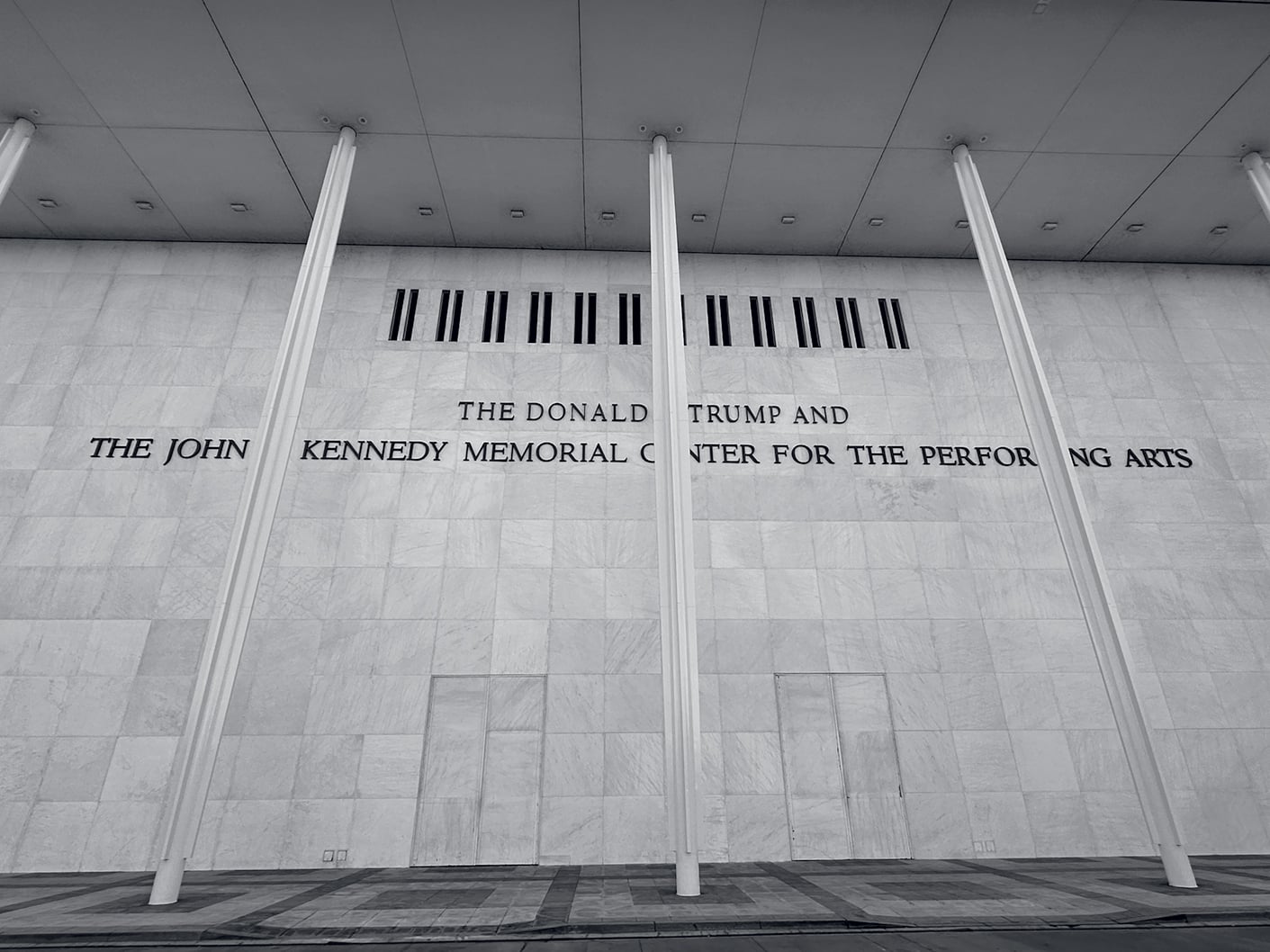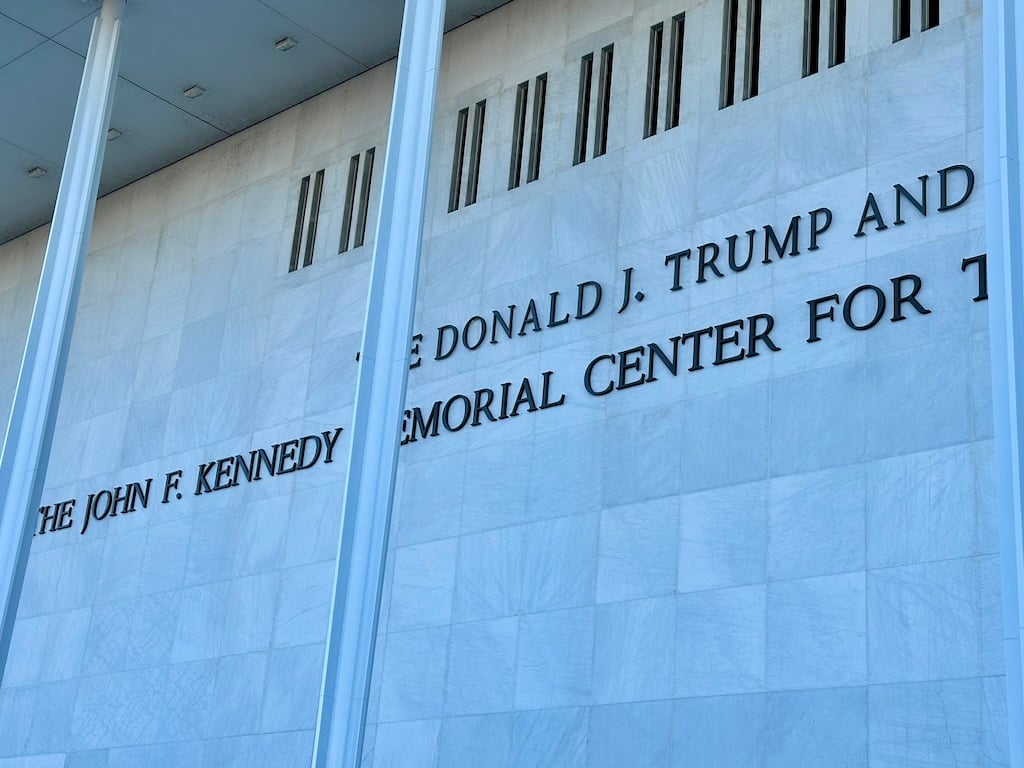
Yesterday afternoon, preparations seemed to be underway to scrub Donald Trump’s name from the Kennedy Center’s facade: Fencing had appeared around the lettering, and rumors were flying of a dark-of-night removal, one that would comply with the recent court ruling that declared the renaming illegal. But as media and onlookers gathered around the building’s steps, hoping to witness the sign removal, the saga of the Trump-addled Kennedy Center took another odd turn; at a 4 PM meeting, members of the Kennedy Center’s board voted to appeal the court order. They intend to keep Trump’s name. As of Friday morning, the sign is still there, though the judge ordered that it come down by tonight.
But what are the grounds of this appeal? And what happens if the sign stays up in defiance of the judge’s deadline? The court order also mandated that the Kennedy Center stay open, so what is the status of that? The litigation surrounding the Kennedy Center has lately been ferocious and confounding, so here’s an attempt to answer these questions and more. This information is current as of Friday morning, June 12—but as we’ve been seeing, things can change fast.
What is a basic rundown of the litigation engulfing the Kennedy Center?
In December 2025, when the board voted to rename the Kennedy Center after Donald Trump, Ohio Congresswoman Joyce Beatty filed suit. (If you are curious why, you can read our recent interview with her here.) Then, in March, the board voted to close the Kennedy Center for two years, and Beatty amended her lawsuit to oppose the closure.
On May 29, US District Judge Christopher Cooper ruled largely in Beatty’s favor, agreeing that the name change was illegal and ordering it to be reversed, while also voiding the board’s decision to close the Kennedy Center for repairs. (He left the door open for a future closure, should the board approve it after more comprehensive deliberation.) Cooper gave the Kennedy Center two weeks to comply with the name change portion of the ruling, and those two weeks expire at midnight tonight.
So what happened yesterday to derail this?
At a Thursday meeting of the Kennedy Center’s board, members voted to fight the court order— specifically, they want to preserve the Trump signage on the Kennedy Center’s facade. As of Thursday night, lawyers for the Kennedy Center have filed the paperwork to appeal the court order, plus a motion to stay the court order until their appeal can be litigated. In other words, they want the Trump signage to stay—regardless of tonight’s deadline—until a court weighs in on their appeal.
And why does the Trump team believe they should be granted a stay?
Without the stay, the lawyers write in their motion, the Kennedy Center will be “forced to squander time and money” on taking down the Trump signage and then potentially re-affixing it once they win. They argue that this would constitute irreparable harm. The lawyers also argue that taking the name down “threatens to impede the Center’s fundraising efforts and contribute to the financial decline of the Center.” (Robust reporting suggests the opposite.) In their filing, the Trump folks also express a worry that removing the sign and then putting it back up might be “incredibly confusing for the public.” Therefore, the lawyers conclude, it would be “sensible” for the court to preserve the status quo—to allow the Trump signage to remain—until the appeal moves through the court.
As of right now, though, is the Kennedy Center still required to take the sign down?
Yes. Until and unless the court grants that stay, the initial ruling still stands and all the Trump branding must be removed from the Kennedy Center by midnight. This includes the signage on the facade.
But what happens if they don’t remove the signage?
Without a stay, if the signage is still up at midnight, then the Kennedy Center is in contempt of court.
And what would the consequences be if they were held in contempt?
The consequences would be decided by the court. “It’s a very serious matter not to comply with a court order,” explains Norm Eisen, an attorney for Joyce Beatty who has tons of experience suing Trump. In a phone call late Thursday night, Eisen declined to speculate about what the specific consequences might be, saying only that there’s a “broad array” of penalties available to the court and that defiance of the order could be grave.
On the other hand, another legal source said that, should the administration be held in contempt, it could become a constitutional crisis. Executive branch agencies, particularly the US Marshals Service, typically enforce court orders, which means that any enforcement would be indirectly overseen by Trump. And would Trump’s own executive branch enforce a court order against him? “What you’ve just asked is the $10 million question that all of us want to know and we’ve been hoping it never happens with this administration,” the source said, adding that they suspect that if such a crisis were to arise, it probably wouldn’t be over the name of the Kennedy Center. (The Kennedy Center did not make any of their attorneys available for comment.)
Eisen, too, predicts that the Kennedy Center will ultimately comply. “I anticipate that we’ll see some more moves from them to avoid the seriousness of defying a court order,” he says. “If there is no stay, I anticipate that they will take the sign down. But we’re prepared to expeditiously seek every remedy in the book if they don’t.”
The court ruled on this two weeks ago. Why wasn’t the ruling appealed sooner?
The short answer is, who knows. In the initial aftermath of the ruling, the administration signaled its intent to appeal, but then never filed anything in court. Meanwhile, the Kennedy Center’s general counsel sent a memo to staff instructing them to comply with the name change. Staff were asked to immediately remove the Trump name from “email signatures, letterhead, and other documents” while laying out a timetable for more complex changes, such as to “templates and forms, signage, brochures, and website pages.” Many of those changes have already been implemented, and in an attached timetable for compliance, “outdoor signage” was listed as needing to be changed by June 12—so it seemed like everything was proceeding apace.
But then, on June 11, the board voted to file an appeal. According to one person present for the board meeting, the Kennedy Center’s general counsel briefed attendees on the status of the lawsuits, indicating that the Kennedy Center was complying with the name change—and had plans to remove the Trump signage on the facade. But various Trump-appointed board members objected, finding the removal disrespectful to Trump, so the board subsequently voted to appeal. Eisen seemed baffled by this turn of events, noting that the name change “had already substantially been complied with before they bizarrely reversed course.” He added, “I long ago gave up attempting to discern the logic of this administration’s legal behavior.”
The court also voided the decision to close the Kennedy Center for renovations. What’s the status of that?
This one is complicated. The Kennedy Center’s lawyers do not appear to be appealing the closure part of the ruling—they’re only appealing the name change as of right now—but whether they’re actually complying is a totally different question.
Last week, the general counsel’s memo indicated that the Kennedy Center might still close, despite the judge’s order that it remain open. (We wrote about that in more detail here.) After the memo leaked, Beatty’s lawyers filed a motion arguing that since the court ordered that the Kennedy Center stay open—and that staying open didn’t simply mean keeping the doors open, but also presenting arts programming for the public—then the Kennedy Center had a legal obligation to begin booking acts for the period when the building was previously scheduled to be closed. (Currently, there is nothing on the calendar there after July 5.) In essence, Beatty’s lawyers argue that the Kennedy Center is effectively closed—and not complying with its statutory obligations—if there are no performances there for the public to see. Trump’s legal team indicated that they disagree, which Beatty’s lawyers detailed in their motion. But as of now, they’ve not indicated that they will appeal.
So wait, is the Kennedy Center closing?
A de facto closure, in which the Kennedy Center remains open but offers little-to-no programming, seems almost inevitable at this point, at least in the short term. There’s nothing on the calendar after a 3 PM performance of Bluey’s Big Play on July 5. Under the best of circumstances, it would be difficult to build out a robust performance calendar on such short notice—but that undertaking would seem particularly challenging given the Kennedy Center’s reported financial woes and its skeletal programming staff. (Many programming staff left or were laid off, and there’s no indication that the Kennedy Center plans to beef up the department now; currently, the careers page on the Kennedy Center’s website lists zero open jobs.)
Perhaps the easiest way to book performances would be to schedule the National Symphony Orchestra, which has played at the Kennedy Center since it opened in 1971. But the NSO is in some kind of purgatory where its musicians do not currently have a contract and its budget for next season has mysteriously not been approved, and therefore it cannot announce its new season, which is supposed to begin in September. Some have speculated that the orchestra will simply fold. (The fate of the NSO was not discussed in Thursday’s Kennedy Center board meeting, according to the person who was there.)
Might the Kennedy Center still officially close?
It’s not impossible that the Kennedy Center would still officially close its doors for renovation. Judge Cooper did leave open the possibility that the board could lawfully elect to close for renovations in the future, as long as they more carefully deliberated over the closure’s benefits and costs. Should the board arrive at the same decision again, after reviewing a broader array of materials, then perhaps the Kennedy Center would close.
The other possibility is that the Kennedy Center could unlawfully close, without a new decision from the board. Once again, that would raise the issue of being in contempt of court. Eisen says that Beatty’s legal team is pushing for “full compliance” with the court order—both on the renaming and the closure—and that they’ve already “put the first shot across the bow” with their recent motion asking that the Kennedy Center demonstrate that they’re proactively booking performances. “We’re prepared to continue pursuing that issue,” he said, “particularly now that they don’t seem to be appealing it.”
Okay, so what happens today?
Today, we wait. We wait for further filings from both legal teams, and for further information from the court. The most pressing issue is the signage, which the court said must come down by tonight, so we’ll see if the Kennedy Center complies with the court order, or if a court grants their request for a stay.
“If there’s no stay,” Eisen says, “we expect that the name will be removed and the Kennedy Center will be restored to its legally required status as a memorial to President Kennedy and no one else.” His team, he adds, “will vigorously work to make sure that the court’s order is followed, and if it is flouted, we’ll seek serious consequences.” He declined to speculate about what that would look like. “We’ll leave that for tomorrow,” he said, adding that we’ll all know more at 12:01 AM.