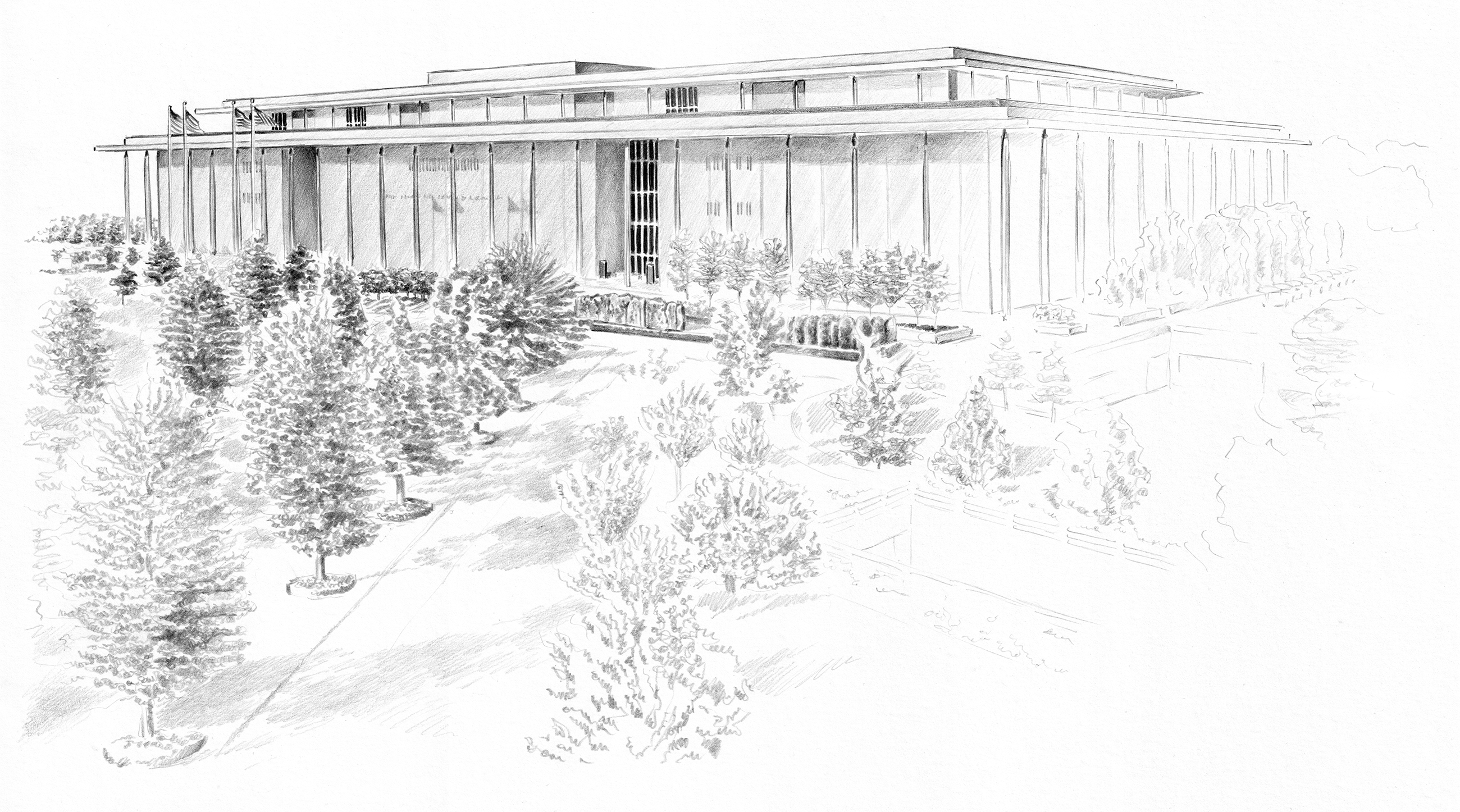
As of this writing, the Kennedy Center is in limbo. No programming is scheduled after July 5, though a court said the institution couldn’t close. President Trump announced that he wants nothing more to do with the place, yet he remains the chairman of its board. We have no idea what will happen next. Will the opera company return? Will the National Symphony Orchestra play there this fall? Will anyone play there, or will the center languish while remaining nominally open? What we do know is that the chaos this administration has wrought—the politicized takeover, the exodus of staff, the plunging ticket sales and reputational devastation—will take years and years to undo. And we also know that the Kennedy Center is beloved. It’s an institution that incubates great artists, delights audiences, and reminds our nation of its highest ideals: free expression, individuality, curiosity across difference, shared joy. Here’s our tribute to the Kennedy Center, a series of stories about what’s happening there and how it all feels to those who care deeply about the place.
The Superfan
Don Carlsen Has Seen It All
A former cab driver has spent the past 50 years attending basically every NSO performance
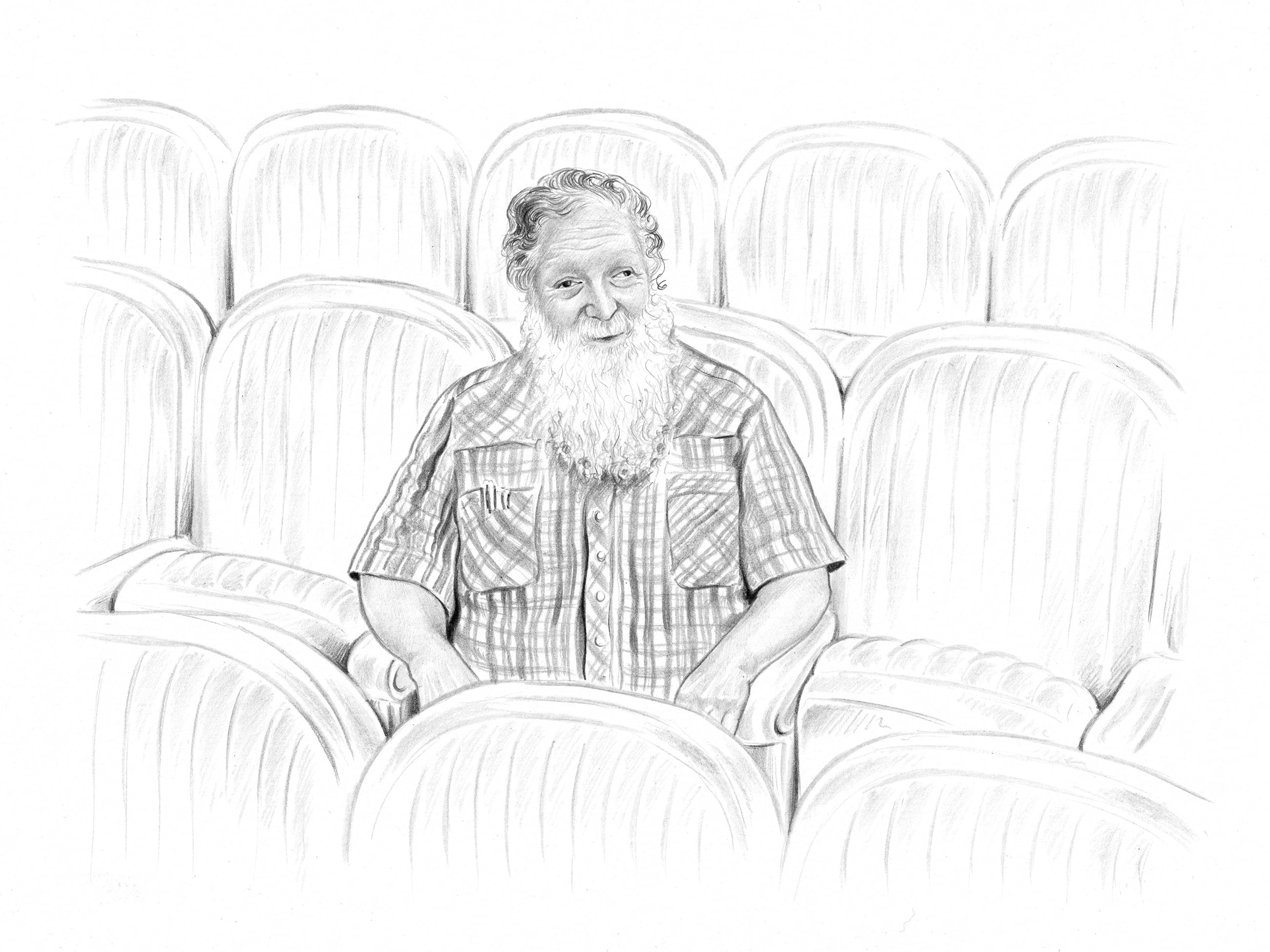
n Gianandrea Noseda’s final night conducting at the Kennedy Center before its planned closure, the first person who stood to applaud was an elderly man at the front of the hall. He looked a bit like Tiresias, with a white beard and rheumy eyes, pants cinched over his ample frame. This was Donald Carlsen, age 78, a retired cab driver who’s perhaps the National Symphony Orchestra’s biggest fan.
For more than 50 years, Carlsen has been a fixture at the Kennedy Center. Night after night, he sits in the same seat—at the very front, in the very center—basking in the orchestra’s sound, hoping he’ll be transported to heaven. That’s how he puts it: that sometimes at a concert, “there’s a greatness where you feel like you’re going to heaven, which happens once every ten or 12 times.” He lives for it. That night, he found the NSO’s performance of Puccini’s Suor Angelica breathtaking but not quite celestial, though he said that for one exquisite moment at the end, he’d felt tugged in a heavenward direction.
Members of the orchestra look out and see him in the audience, gauging the vigor of his applause.
Music permeates every aspect of Carlsen’s life. He lives on Mozart Drive in Silver Spring, just off Brahms Avenue. Growing up in Petworth, Carlsen sang in his church choir and played the French horn, at which he was “fairly competent” but “didn’t practice enough to get really good.” Now he describes himself as a “frustrated conductor” who sits up front at the Kennedy Center because he wants to hear the music the way Noseda does. Carlsen is familiar to members of the orchestra. They look out and see him in the audience, gauging the vigor of his applause, waiting for his occasional cries of “Brava!” They’re fond of him. He’s the subject of speculation and lore.
Carlsen first saw the NSO in the 1960s, before the Kennedy Center opened, when the orchestra was playing at Constitution Hall. He did not hold the venue in high regard. (“That place is a barn!” he said.) In 1971, the NSO moved to the Kennedy Center, which Carlsen didn’t love, either; he found the acoustics middling until the hall’s 1997 renovation. But he did love the NSO’s then–music director, Antal Doráti, who he says was “the greatest conductor I’ve ever heard live.” In 1978, Doráti conducted Mahler’s second symphony, a meditation on death and resurrection, which was “one of the most moving experiences” of Carlsen’s life. “It’s so vivid, it’s unbelievable,” he said. “That was a case of not just sounding heavenly; it was literally intended to be heaven.”
In the 1970s, Carlsen was fired from a string of jobs. (“I’m not a worker, I’m a player,” he explained.) Finally, he had the “great fortune” of being let go from a burglar-alarm monitoring company, and with his unemployment money he bought his first subscription to the NSO. Around then, he decided to become a cab driver, a job that gave him autonomy; he could set his own hours and listen to music on the radio while he drove. This sometimes provoked conflict. “As a cab driver, the radio is at the discretion of your customer at all times,” he said. “And of course, that didn’t work for me, because I’m not going to be listening to the 1812 Overture and have to turn it down for the climax. I was not belligerent about it, but I’d say, ‘I’m listening to that and I’m not willing to turn it down.’ On occasion, people would get out. I didn’t charge them, of course.”
For almost 50 years, until he retired six years ago, Carlsen drove the taxi for money and spent his leisure time on music. He attends practically every Thursday NSO performance, then returns on Friday or Saturday if he finds the music compelling and he’s not otherwise engaged. Often, though, he’s at another concert. He’s a regular at classical venues like Strathmore and Sixth & I, but he also sees other kinds of music at places like Rhizome, Blues Alley, and the Black Cat. Carlsen says he attends almost 150 concerts a year, though his frequency falls off in the summer because he does not believe in hearing music outdoors. He will not set foot at Wolf Trap. There, he complained, “the sound is going off into space instead of into my ears.”
As for the Kennedy Center, Carlsen was upset about the renaming—he found it insulting to the Kennedy family—but he’s mostly worried about the effect that a closure could have on the NSO. An orchestra’s home base, he said, has a “huge impact on how good they can become, because that’s where they perfect their sound.” The NSO is currently very good—it’s among the best American orchestras—and Carlsen worries that shuffling between venues over the next two years could have deleterious effects. Nonetheless, he plans to follow the orchestra wherever it goes.
After the Puccini program, the audience talked and laughed and filed out into the night while Carlsen remained in his seat. Hearing great music, he told me later, feels like traveling to another plane, one he never feels eager to depart. That night, he sat at the foot of the stage, gently returning to earth, “savoring the vibrations in the hall.”
—Sylvie McNamara
The Stats and facts
First concert
Leonard Bernstein’s Mass, which opened the center in 1971
Last scheduled concert
The Freedom Gathering, a Christian-music event offering “a heartfelt celebration of God and country,” according to the Kennedy Center website
“YES!!!!!!!!!!!!!!!!!!!!”
Then–NSO music director Leonard Slatkin’s reaction to the acoustical changes in the Concert Hall after a $14 million 1997 renovation
630 feet
Length of the Grand Foyer, making it one of the world’s largest rooms—longer than the Washington Monument is tall
7,332
Total number of fixed theater seats in the center’s various performance spaces
$1.50
The price of a martini at the Kennedy Center in 1971, when it became the first major cultural establishment in DC to serve hard liquor
“What it has in size, it lacks in distinction. Its character is aggrandized posh. It is an embarrassment to have it stand as a symbol of American artistic achievement before the nation and the world.”
—Architecture critic Ada Louise Huxtable in her famous 1971 New York Times pan of the building

Number of chairmen the Kennedy Center has had since its 1971 inception, including:
Roger L. Stevens
Producer of West Side Story on Broadway and onetime owner of the Empire State Building
James A. Johnson
Former head of Fannie Mae
Stephen A. Schwarzman
CEO of Blackstone
David Rubenstein
Philanthropist and cofounder of the Carlyle Group
Donald Trump
Current Kennedy Center chairman
There have been about 250 honorees since the Kennedy Center Honors kicked off in 1978. Here are some of them.
Pop hitmakers
- Cher
- Elton John
- Diana Ross

Music pioneers
- James Brown
- Bob Dylan
- Joni Mitchell

Theater giants
- Edward Albee
- Stephen Sondheim
- Jule Styne

Movie-directing masters
- Francis Ford Coppola
- Steven Spielberg
- Billy Wilder

Country favorites
- Garth Brooks
- Dolly Parton
- George Strait
Classical greats
- Leonard Bernstein
- Philip Glass
- Yo-Yo Ma

Film stars
- Clint Eastwood
- Cary Grant
- Meryl Streep
Icons generated using OpenAI.
Lots of other countries have donated elements of the Kennedy Center. Here are just a few.

Australia
Aubusson tapestries in the Nations Gallery
Belgium
60-foot mirrors in Grand Foyer
Italy
3,700 tons of marble to construct the Kennedy Center

Japan
The Opera House’s red-and-gold stage curtain
Nigeria
Wooden doors from a 700-year-old tree for the Opera House’s African Lounge

Pakistan
Furnishings for the Eisenhower Theater lounge

Sweden
Orrefors crystal chandeliers in the Grand Foyer
Flags generated using OpenAI.
—Dara T. Mathis
The KenCen Defender
Joyce Beatty Won’t Be Muted
Why the Democratic congresswoman sued to get Trump’s name removed and to stop the closure
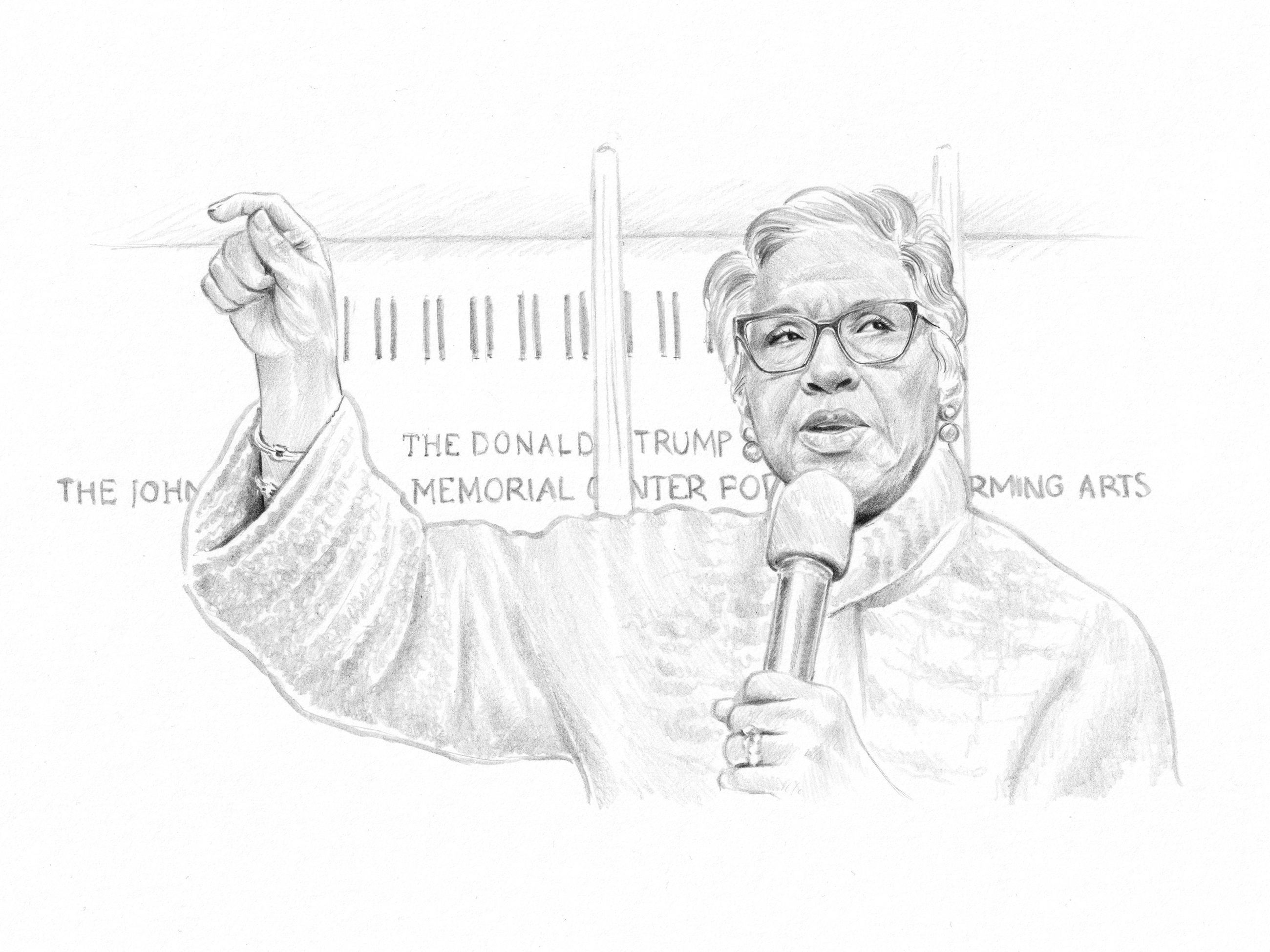
hio congresswoman Joyce Beatty has served on the board of the Kennedy Center since 2019, but her last six months have been particularly eventful. In December, Beatty called in virtually to a Kennedy Center board meeting and was shocked by a measure that hadn’t appeared on the agenda: a bid to rename the arts complex after Donald Trump. When Beatty tried to object, her line was muted, and the board went on to approve the renaming. That decision was later characterized as unanimous, but Beatty—along with the other non-Trump-appointed board members, who are called ex officios—hadn’t been allowed to vote.
This episode enraged Beatty, a passionate supporter of the arts who married into a family of civil-rights activists. She quickly filed a lawsuit to reverse the renaming, then later amended it to block the closure. On May 29, a federal judge ruled largely in her favor. We recently spoke with her about what on earth is going on over there and what might happen next.
You’re not the only ex officio board member of the Kennedy Center—there are a bunch from the Senate and House—so why were you the one to file the lawsuit?
I was the only ex officio on that virtual meeting, and I was the one that was muted. It was just unlawful for them to rename the John F. Kennedy Center for the Performing Arts. Only Congress can do that. When someone is doing something unlawful, you take it to the courts. This is a vanity project for [Trump], but for us it is our only living memorial to a well-revered President, so I decided that I would speak up.
In the moment when you were muted, what were you feeling?
When I realized it was intentional, I got enraged—like, how dare you do that? Because you’re now denying me my right as a board member to express my opinion. All I could get out is: “This is Congresswoman Beatty. I don’t agree.” I wanted to vote no. So that opened up a whole Pandora’s box.
In March, the court ruled that you must be allowed to participate in board meetings. Days later, the board met to vote on closing the Kennedy Center for renovations. What was that meeting like?
It was held in person at the White House, and I said that, yes, we need renovations, but we don’t need to close the Kennedy Center to do them. I said that it was unlawful.
Was the President there?
Yes, he was there for the entire meeting. And the meeting [where I was muted], he was there. He’s been on the last meetings that we’ve had—either in the meeting or there virtually. He sits in the meeting, but he’s not running it.
Did he respond when you voiced your dissent?
He did not. He didn’t say anything in opposition to it, but we had a look-stare at each other. In my opinion, it was clear that he didn’t like it, but he was not adversarial.
What did it feel like to say all of that to the President?
I felt proud that I was standing up for others, and for the rule of law. I felt that I had an obligation to do it. I was the only Black person, with 41 people sitting there staring at me, and I thought of what six-year-old Ruby Bridges must have felt like when she walked into that all-white school against the odds. But I was coming in there because a federal judge said not only that I had to be allowed to attend but that they had to let me speak, even in opposition.
What do you know about the financial situation at the Kennedy Center?
Well, I can’t give you specifics. But I can tell you that, obviously, performers have not wanted to perform, because Donald Trump made it political. We have lost contracts, and people have gone on to other venues. I’m not going to say that we are in a perfect world financially, but I think because of its great history, and with the [Trump] name being removed, that people will come back to the Kennedy Center. I think donors will come back. I think performers will, too.
What did the President mean when he said he would return control of the Kennedy Center to Congress? The board has control of the Kennedy Center, and he’s still the chairman, despite saying he wants nothing to do with the place. Who’s running the Kennedy Center right now?
Well, to give you an answer: Who knows? Donald Trump will say one thing in the morning, and before noon he will say something different. “Giving it back to the Congress”—one might assume that he is relenting, but I think it’s very difficult to determine. That’s what makes it dangerous for us to continue this way—no major operation would operate the way we’re operating.
Some of the renovations are currently proceeding without closing the building. How urgent do you think they are?
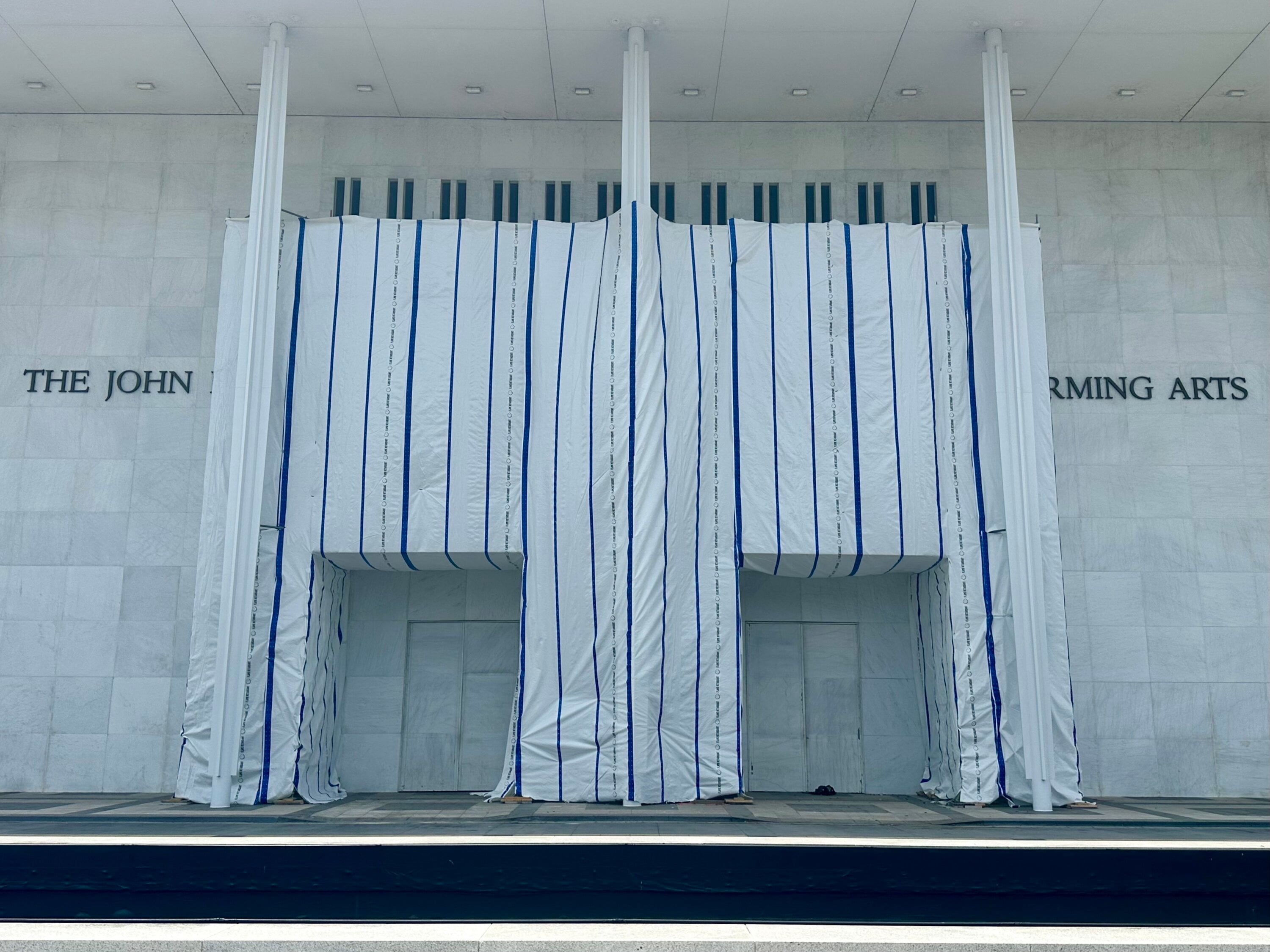
I support the renovations because they were [planned] with the board prior to Donald Trump. For example, you will hear about the [water-damaged soffit panels], the parking garage, and the watering system that’s leaking. Those things are needed. But I went on a tour and I asked, “Can we do these repairs and keep the center open?” Trump’s operational director said yes.
What has it been like for you since the judge handed down his decision?
The greatest thing has been the outpouring of people’s love for the Kennedy Center. I cannot tell you the number of people I’ve never met who have stopped me in the store or who have called saying, “I remember the first time I attended the Kennedy Center.” Look, this is bigger than me. This is about the American people. It’s about the artists, the performers, the institution, and the rule of law.
This interview has been edited and condensed.
—Sylvie McNamara
The Opinion
A Judge Orders the Center to Stay Open
The key parts of a decision about the facility’s future
In late May, just weeks before the Kennedy Center was scheduled to close, US District judge Christopher Cooper issued a decision in the ongoing lawsuit brought by Congresswoman Joyce Beatty. It has significantly affected the Kennedy Center’s fate. (The Trump administration is appealing it.) We read Cooper’s 93-page opinion, which is sometimes dryly funny and other times overtly scolding. Here are his three key rulings.
The renaming was illegal
“The Kennedy Center’s [founding] statute makes crystal clear that the Center is to be named for President Kennedy,” Cooper wrote, adding that “Congress gave the Kennedy Center its name, and only Congress can change it.” Therefore, Trump’s name has to go.
Beatty is entitled to vote
The Kennedy Center’s board—now packed with Trump loyalists—had previously stripped ex officio members (those not appointed by Trump) of their voting rights. Cooper found this to be illegal and ordered their voting rights to be restored.
The Kennedy Center cannot close—for now
Cooper temporarily halted plans to close the building for renovations. Congress gave the Kennedy Center’s board “several overarching responsibilities,” he explained: to maintain the building and also to operate it as a “performing arts venue and memorial to President Kennedy.” In deciding to close, Cooper ruled, the board was not considering all three of these mandates—just the facilities part—and, therefore, its decision “neglected to consider the full range of its statutory obligations.” Cooper was clear, however, that he’s not saying the Kennedy Center can’t close for renovations in the future if the board arrives at that conclusion in a more balanced and comprehensive way.
—Sylvie McNamara
The Crowd-Pleasing Institution
Shear Madness Has Gone Dark
Does the Kennedy Center’s most enduring phenomenon have a future?
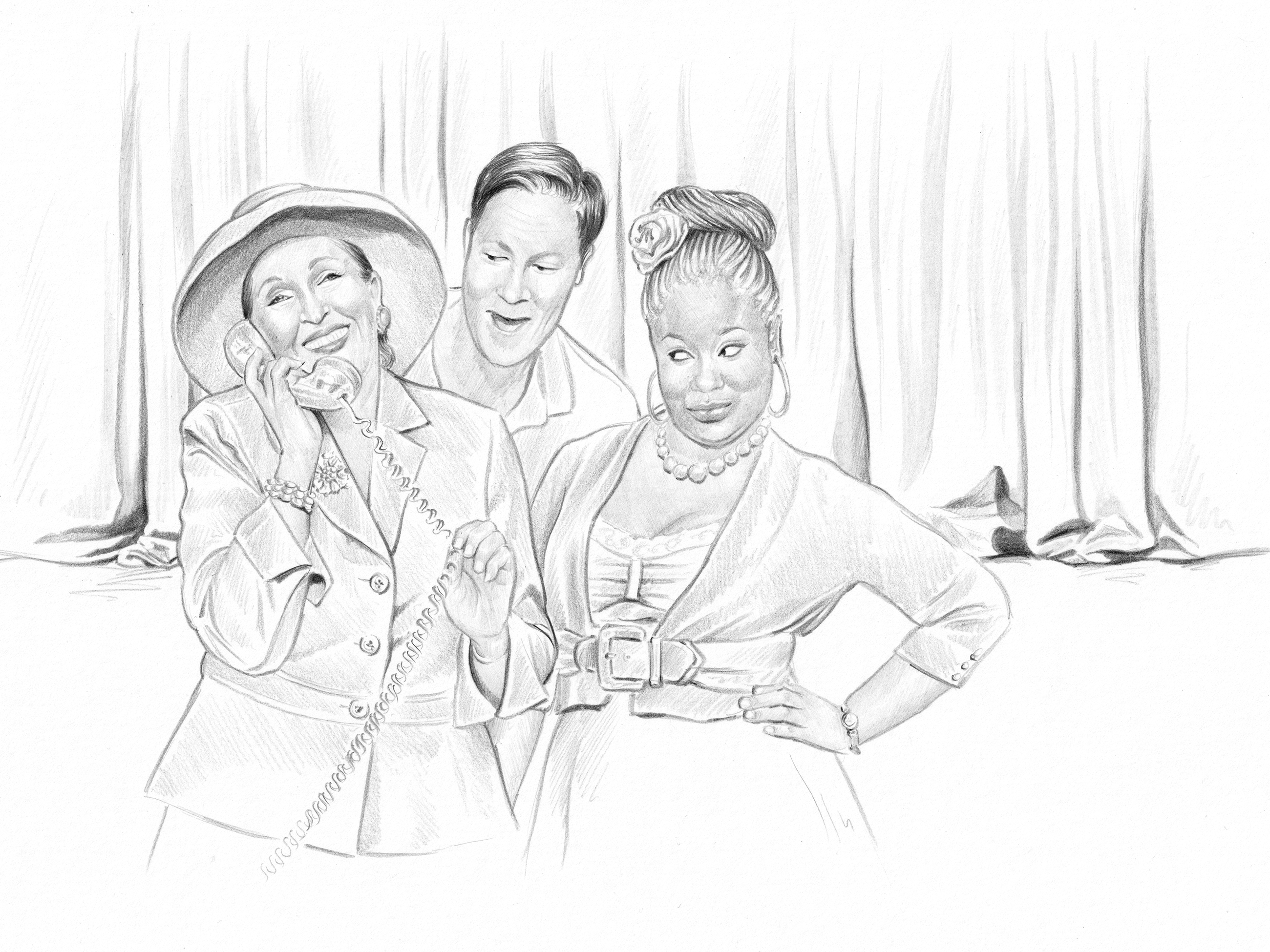
f all the changes Donald Trump has visited on the DC area since his second term began, one may be the most improbable: On June 7, the proudly campy comedy Shear Madness, which has run at the Kennedy Center since 1987, closed due to the center’s stated plans to shutter for two years. Efforts to find an alternate venue didn’t pan out, says producer Bruce Jordan, which means the play’s decades-long streak of performances has finally been broken.
So will it return? Jordan says he and the show’s other producer, Marilyn Abrams, would need at least a nine-month head start to spin up Shear Madness. They sell most of the show’s tickets at conventions for the student-trip industry in August. “All we know is they would like us back,” he says. “We’ve made a lot of money for them over the years.”
Roma Daravi, the Kennedy Center’s spokesperson, confirms that the center would love to have the show return: “We look forward to welcoming Shear Madness back upon reopening!” she told Washingtonian in an email.
But a judge has blocked the Kennedy Center from closing, and next steps are unclear. If the center does end up shutting for two years, the earliest Shear Madness could return is spring 2029, Jordan says. If it closes in parts for renovations, he says, “there’s a possibility—but a dim one—that it could return next spring.”
“Everybody wants to put in ten Trump jokes, and you just can’t. We’re very even-handed about it.”
Shear Madness was popular right up to the end of its run. Tens of thousands of students have seen it in the last year, Jordan notes. He and Abrams have steered the franchise over the last 39 years. Each production—there are around 20 worldwide—is torqued to local standards. The DC version was set in a Georgetown hair salon, and every night new jokes were drawn from current events. “It takes place today in Washington,” Abrams says. “It’s never dated.” Still, Trump’s controversial takeover of the Kennedy Center and the planned closure were never part of the proceedings. “That’s a no-no,” Jordan says. “Everybody wants to put in ten Trump jokes, and you just can’t. We’re very even-handed about it.”
The show ran in the Kennedy Center’s upstairs Theater Lab space, with a set so solid that it had running water. The producers are unaware of any renovation needs it might have. Local actors, who depended on the show’s financial stability, will now need to find workarounds. It was one of the best-paying theater gigs in town. “It gets them year-round health insurance, which is a big thing to actors today,” Jordan says. “One of the actresses that I talked to a month ago said, ‘Don’t forget that Shear Madness got me my house.’ ”
If the show comes back, Jordan says its tone will depend on what happens in the interim. But at the moment, he says, its future is unknown: “We’d like to return. They’d like us to. But nobody’s given us a plan.”
—Andrew Beaujon
The Lounge Pianist
Randoph Lee Strikes a Chord
A versatile pianist plays for Kennedy Center audiences—while they have dinner across the street
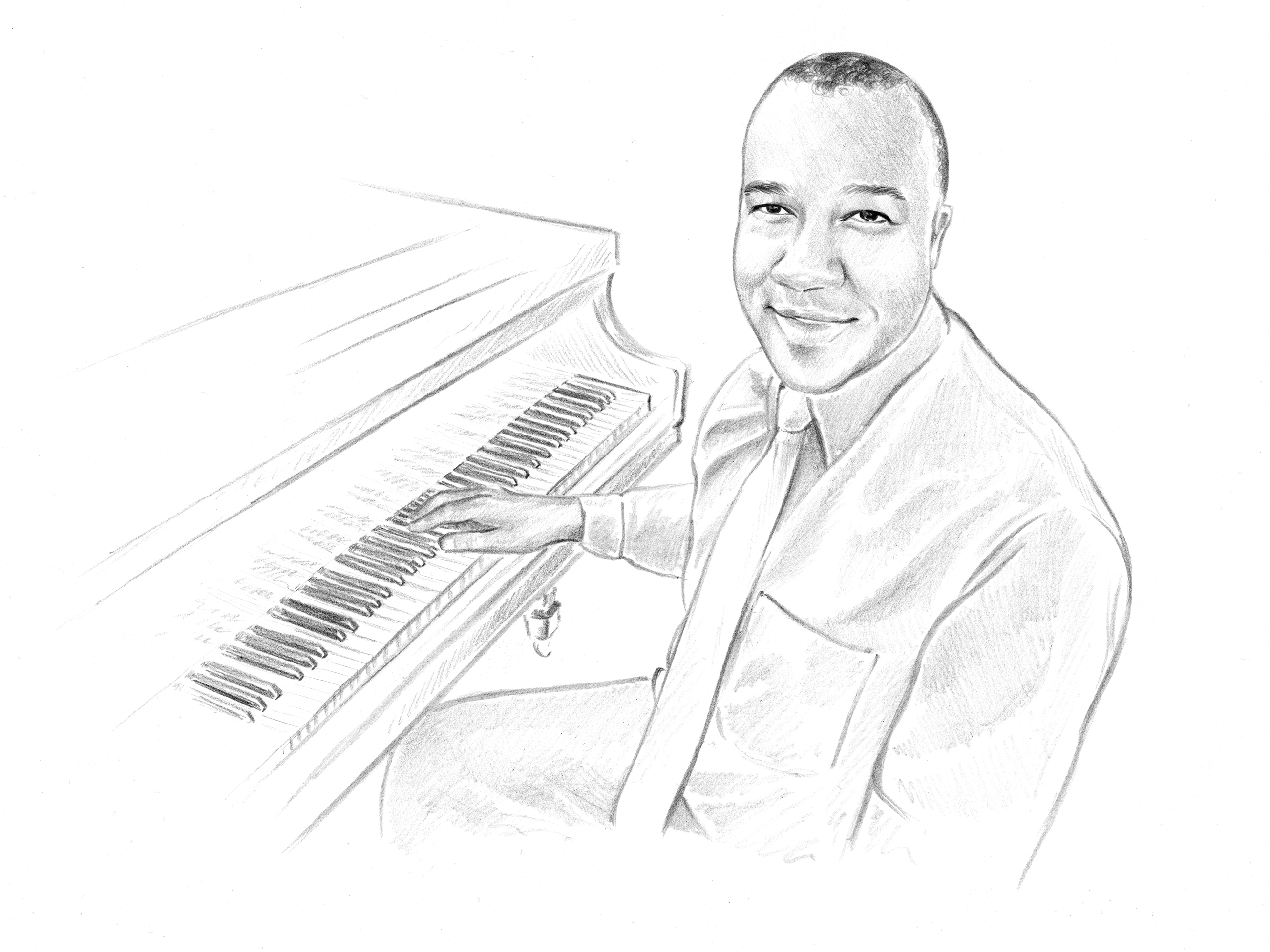
andolph Lee is wearing a blue-and-red Washington Capitals Hawaiian shirt while playing Lionel Richie songs on the piano. It’s a Saturday night in May, 7:37 pm, and he’s in the dining room of Tazza, a Mediterranean restaurant in the Watergate complex. As he plays, Lee stares out the window at the Kennedy Center. He’s about a hundred feet from its steps.
Around him, Tazza is closing. The final patrons are finishing their burgers and settling checks. One couple sips wine outdoors, watching flocks of bros in polarized sunglasses trudge toward the Kennedy Center for a Tony Hinchcliffe comedy set. There’s a rustling of busboys. The manager paces around. From the kitchen comes a great clamor of silverware and plates—but Lee is unperturbed, totally serene, tinkling out the notes to “We Are the World.” He seems to be playing for himself.
An Alabama native, Lee has been in DC for 25 years, working for the Army. He started playing at Tazza in 2022, when he came to the Kennedy Center early one morning to buy Hamilton tickets. Walking to his car, he needed to use the restroom, and though Tazza was closed, the manager let him in when he knocked. Absent-mindedly, Lee left his phone and wallet in the bathroom. When he came back for them that afternoon, he found that his cash was all there, and played some music on the piano out of gratitude. The manager told him he could return later and play for tips. Now he comes every Saturday night.
“It’s scary sometimes,” Lee says of performing for the musicians and critics and highbrow concertgoers who stop into Tazza for a drink or a tiramisu on the way to the symphony. He says he tries not to get in his head, just to do his own thing. When he was a child in Alabama, his mother would pay him a quarter for each song he memorized from her hymnal, and the skill stuck. Today, he knows an exhaustive amount of music, which he plays entirely from memory. His favorite is the George Michael song “Careless Whisper,” but he’ll always “look around the room and then play according to who’s there.”
On a Saturday, Lee might make only five or ten dollars. He’s playing for the love of it.
When Tazza’s manager walks by to hand Lee a boxed pizza, I ask if he’s worried about the upcoming lapse in Kennedy Center programming. “Yeah, yeah,” the manager says, somberly. “It’s going to affect us, of course. We’re going to try to survive with the neighbors, but we’ll see.” Lee is worried, too. He hopes it won’t be catastrophic—Tazza will still have its regulars from the Watergate—but he’s feeling unsettled and sad.
That sadness isn’t about diminishing tips. As he pulls a few scraggly ones from an aquamarine vase perched on the piano lid, Lee explains that on a typical Saturday evening, he might make only five or ten dollars anyway. He’s playing for the love of it, and also for his Saturday-night ritual, which commences once he’s done. At 8 pm, when Tazza closes, Lee ascends the steps of the Kennedy Center to put his meager tip money toward a rush ticket to whatever is on. He loves the NSO, but he’ll see anything—opera, Broadway, comedy, jazz. That’s what he’ll miss the most: feeling small in the plush lobby, then immersing himself in music in the dark.
—Sylvie McNamara
Stages of Chaos
How Donald Trump torpedoed one of DC’s most beloved arts institutions
-
2025
February 7
Donald Trump announces plans to fire the existing board of trustees and make himself chairman. He condemns previous drag programming, though a subsequent NPR analysis finds only a few drag shows on the prior year’s calendar.
-
February 10
Richard Grenell is named executive director. Trump stacks the board with allies—including Second Lady Usha Vance and then–attorney general Pam Bondi—who appoint him chairman, ousting David Rubenstein. Board treasurer Shonda Rhimes and National Symphony Orchestra adviser Ben Folds resign soon after.
-
February 13
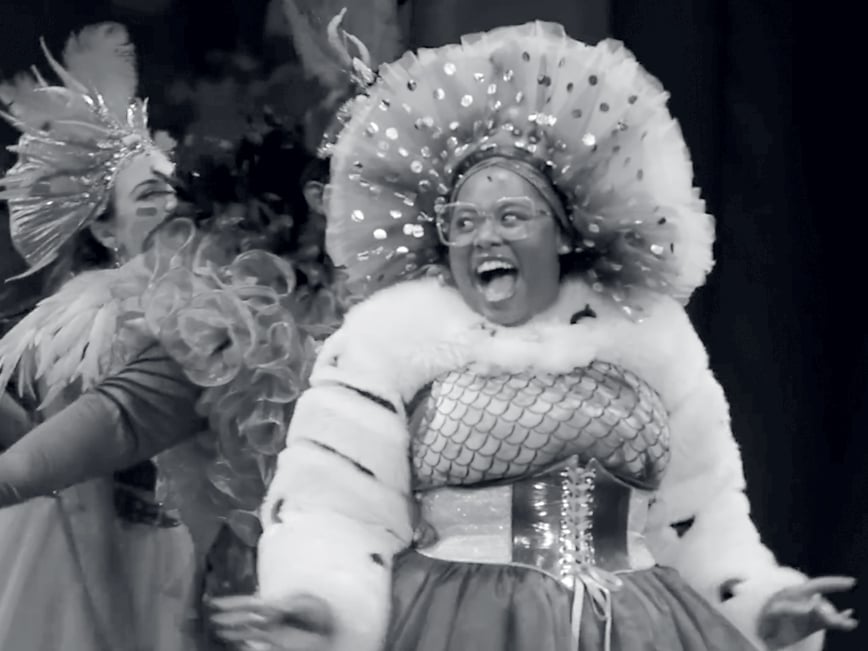
Photograph by Finn/Kennedy Center. The Kennedy Center cancels Finn, a children’s musical with themes of inclusivity. Five days later, the NSO’s WorldPride 2025 programming, featuring the Gay Men’s Chorus of Washington, DC, is scrapped.
-
March 13
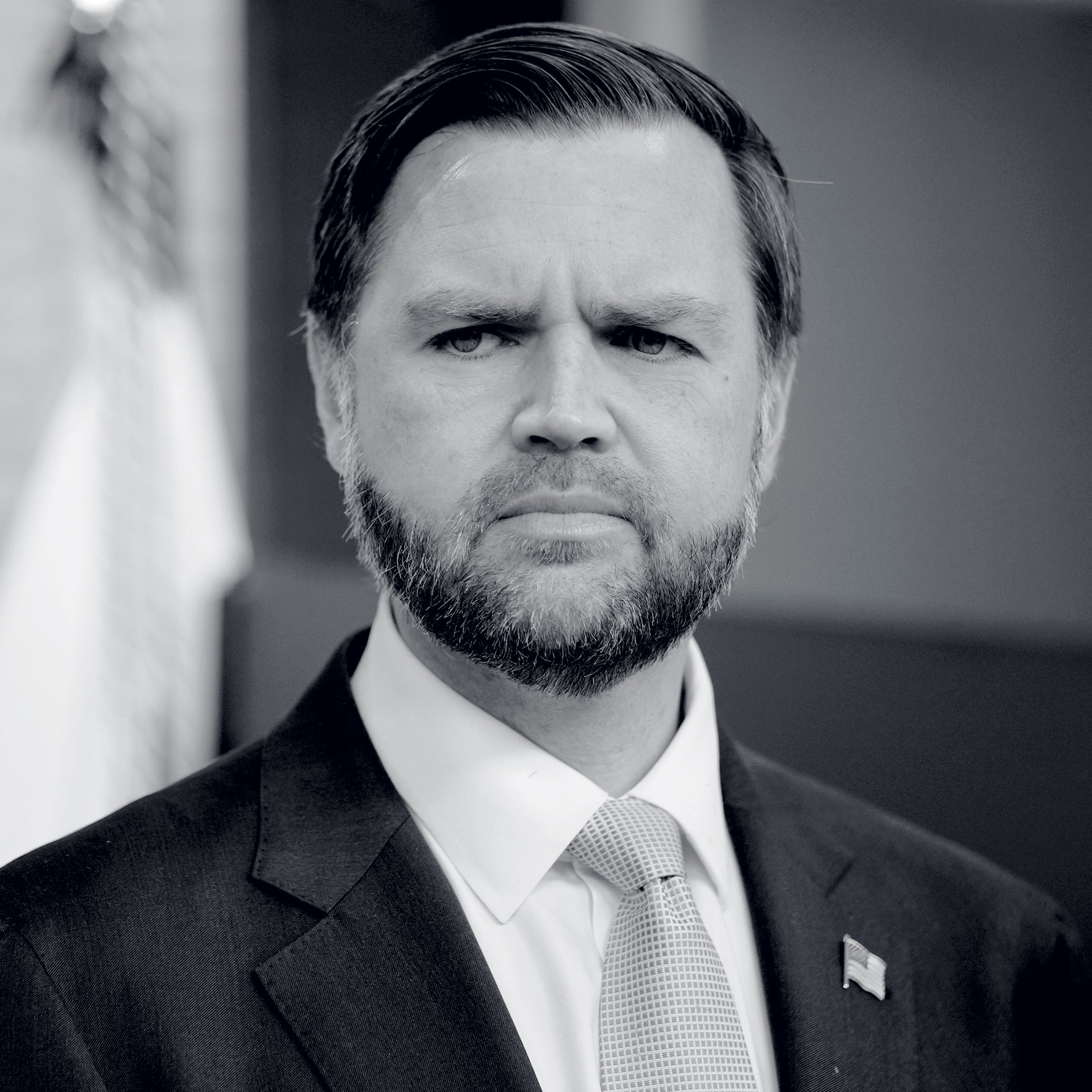
Photograph by Chip Somodevilla/Getty Images. Vice President JD Vance gets booed by audience members while attending an NSO concert.
-
April 9
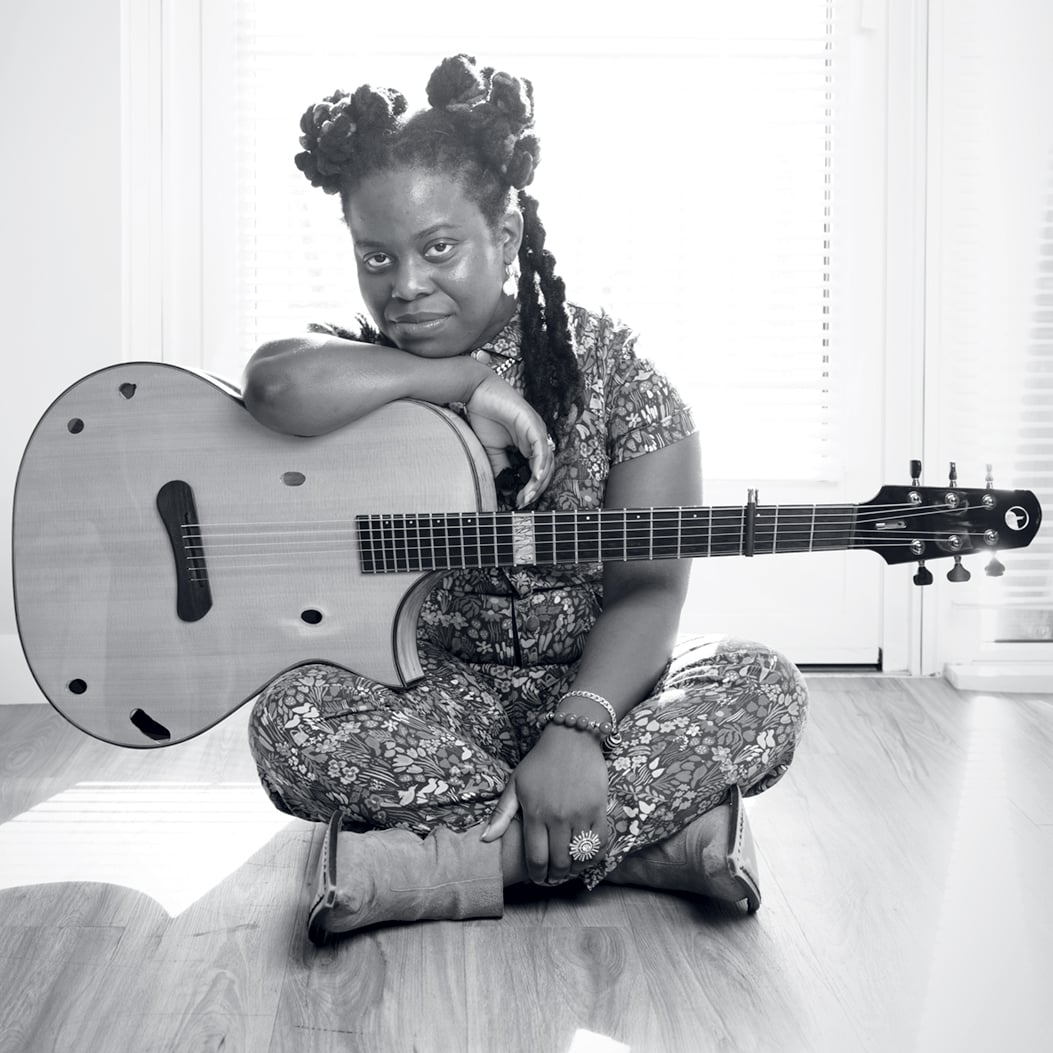
Photograph by Marvin Joseph/Washington Post/Getty Images. Acclaimed guitarist Yasmin Williams posts screenshots of an unusually heated text exchange with Grenell, who becomes known for his combative posts on social media. Their beef endures through September, when Grenell’s office reserves seats for a Republican group to heckle Williams during her Kennedy Center performance.
-
April 15
Staffers are laid off from the marketing, social-media, government-relations, and rentals teams, with plenty more dismissals to come.
-
June 3
A Washington Post analysis finds that subscription sales are down dramatically—36 percent compared with the previous year.
-
June 11
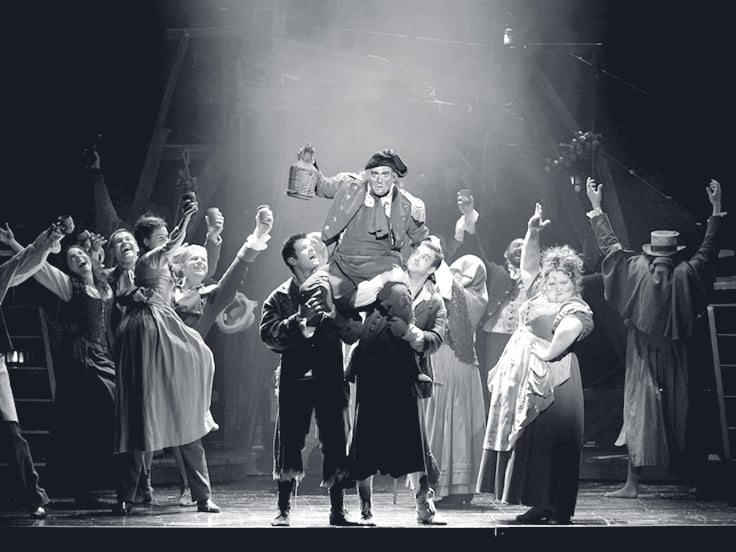
Photograph by Sarah L. Voisin/Washington Post/Getty Images. Trump makes his first-ever appearance at the Kennedy Center for opening night of Les Misérables. About a dozen cast members opt not to perform, and a number of boycotting subscribers donate their tickets to local drag queens, who attend in protest.
-
June 13
After the board’s unsuccessful attempt to stay the court order, Trump’s name is finally removed from the building. But with no new programming booked, the center’s fate still hangs in the balance.
-
August 25
Stephen Nakagawa, formerly of the Washington Ballet, is named the new head of dance programming. Before his appointment, he wrote Grenell a letter expressing concern over “radical leftist ideologies in ballet.”
-
December 7
Trump decides to host the Kennedy Center Honors. He’s the first President to do so. The broadcast draws about 3 million viewers—the lowest ratings ever recorded for the event.
-
December 18
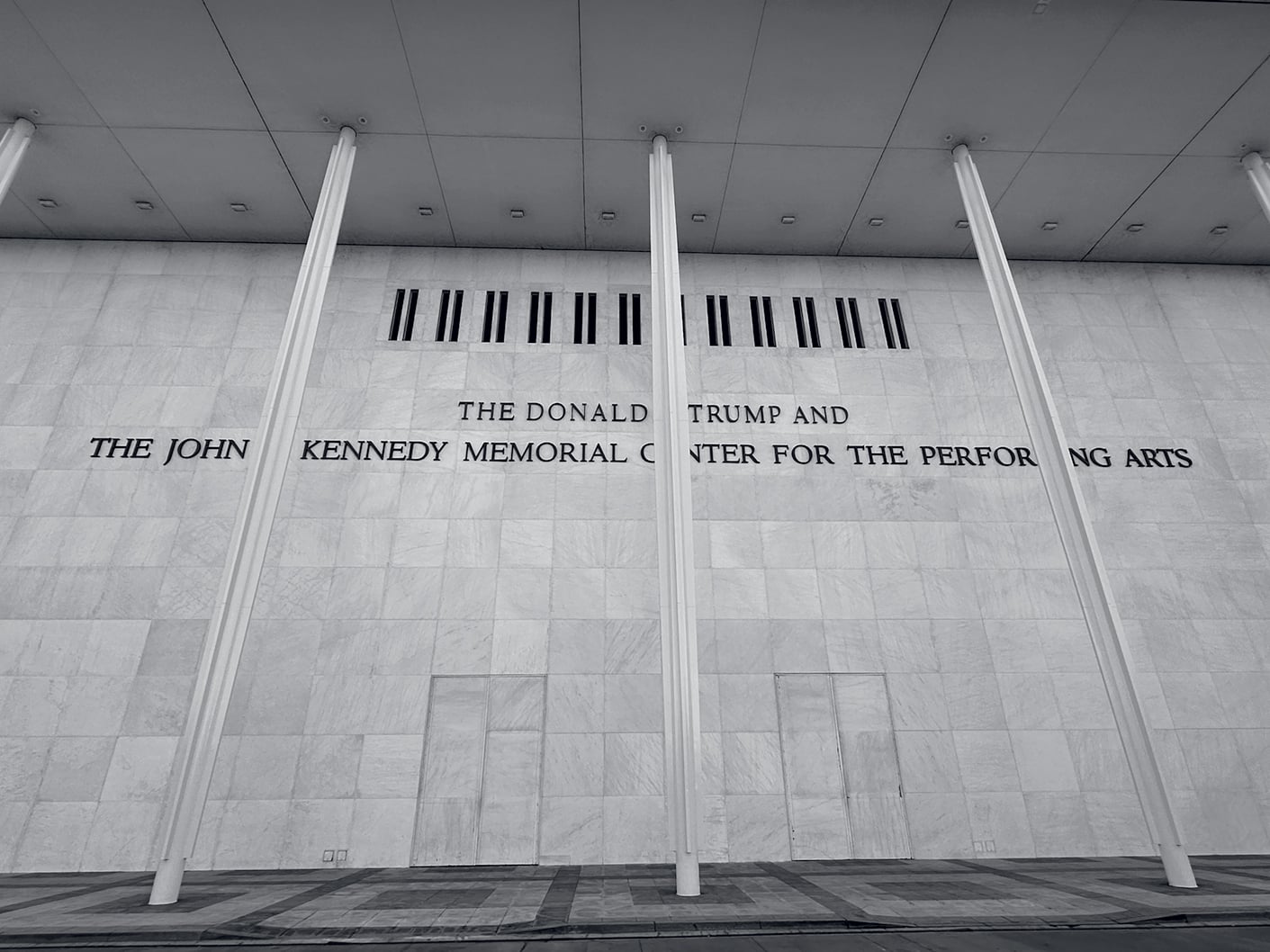
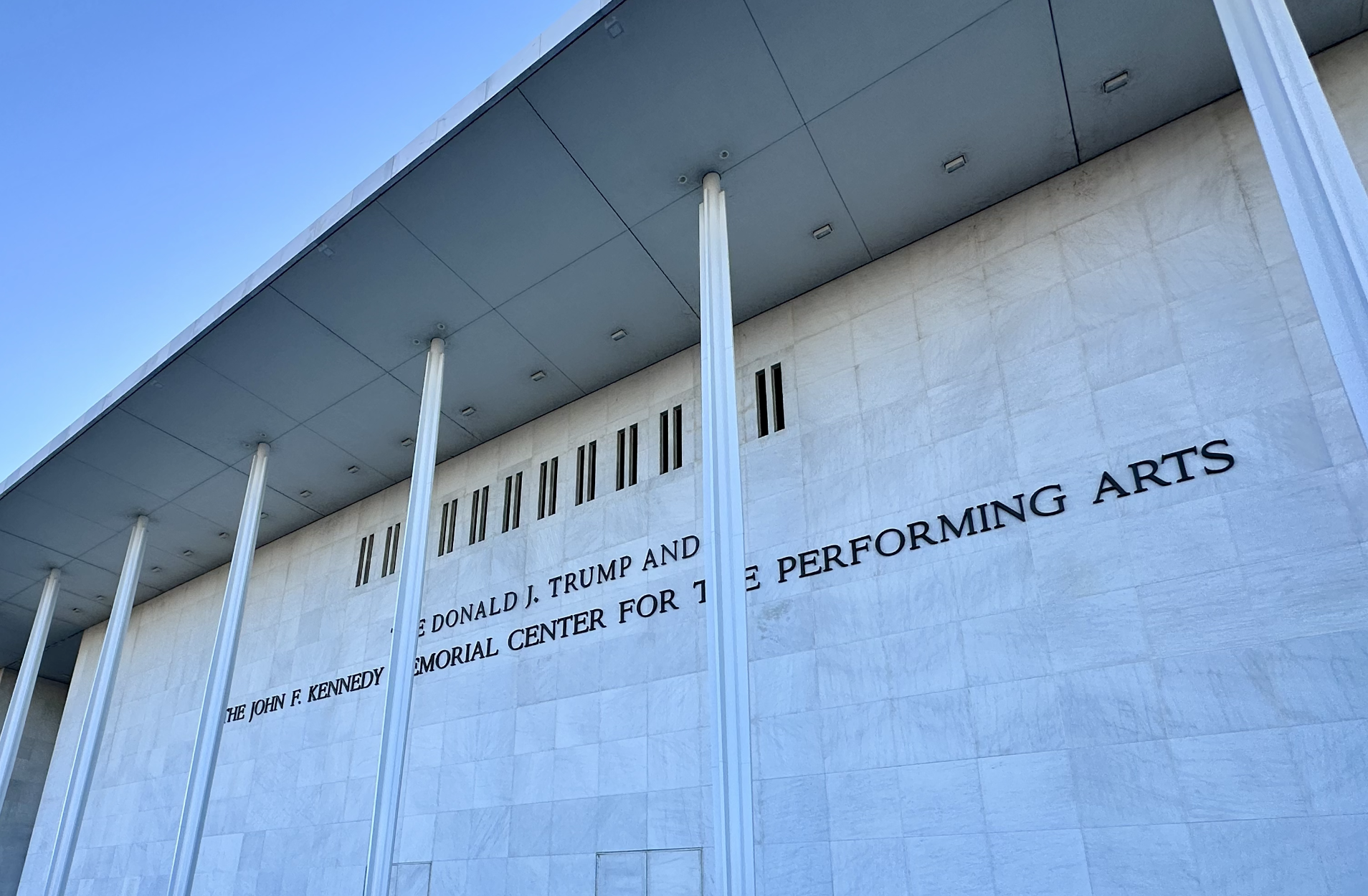
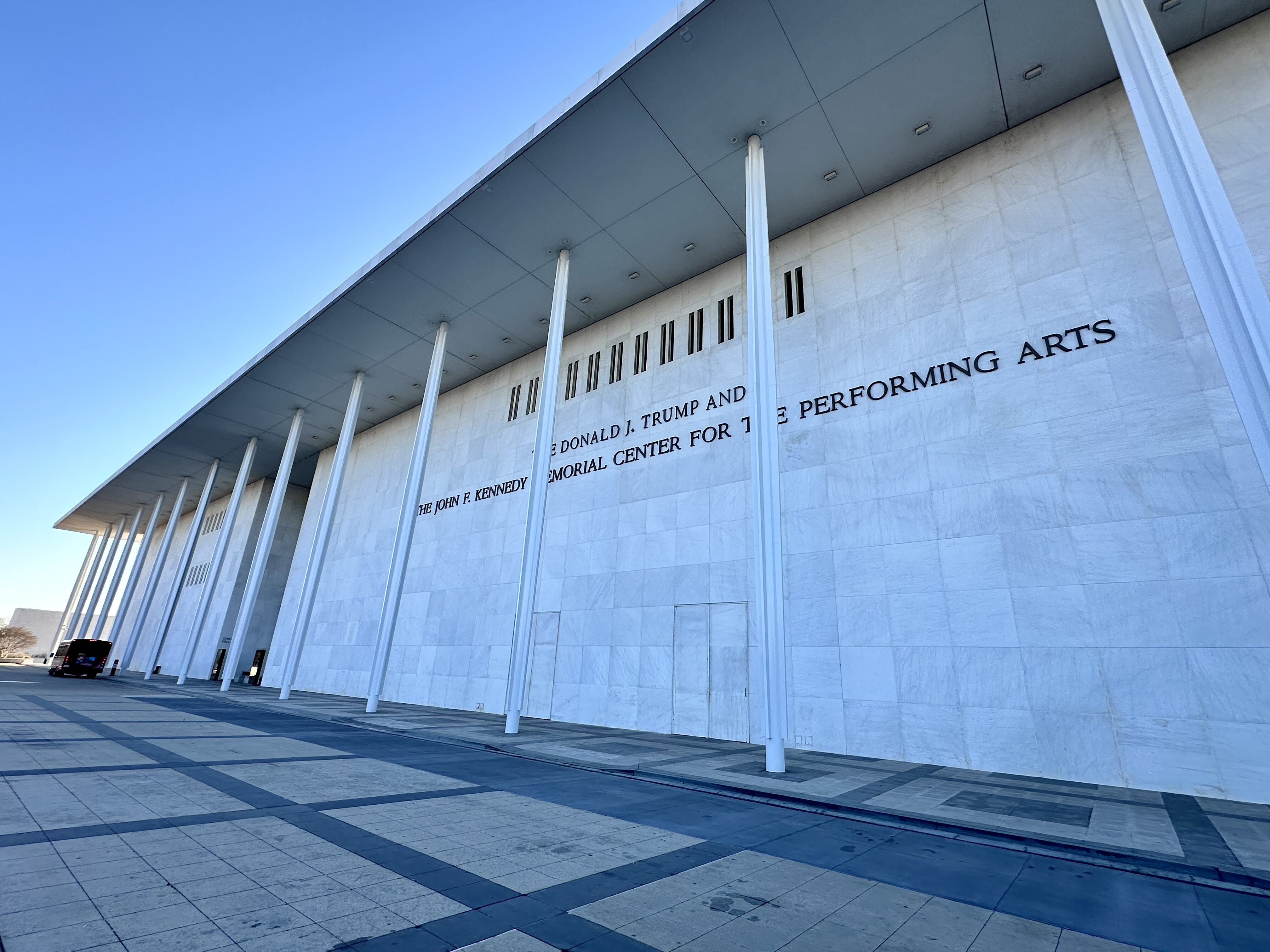
Photograph by Evy Mages. The board of trustees votes to rename the venue “The Donald J. Trump and The John F. Kennedy Memorial Center for the Performing Arts.” The next day, the lettering at the building’s entrance is altered. The name change seems not to be legal, as the original name is codified in a 1964 congressional statute.
-
December 19
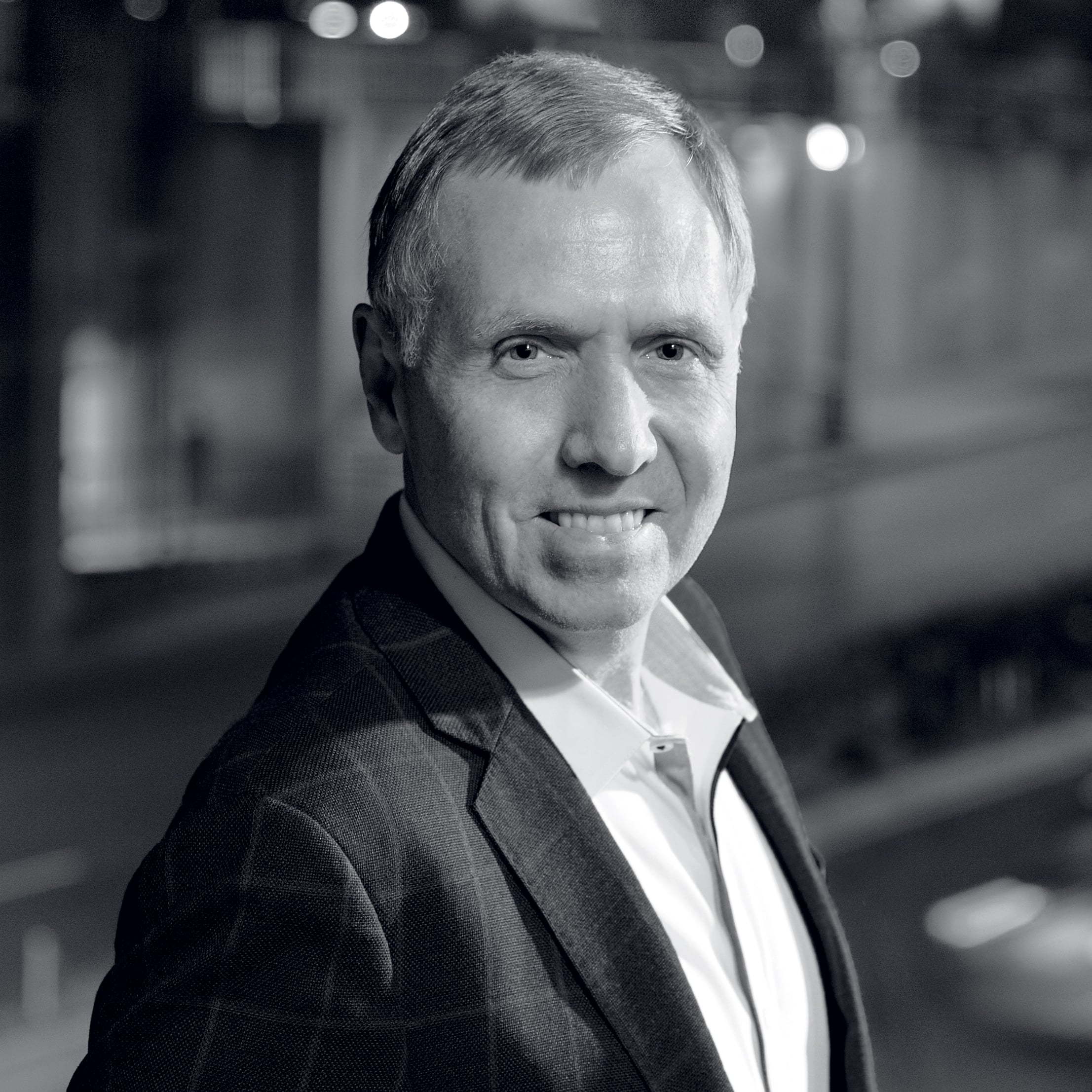
Photograph by Robert Severi. Jazz musician Chuck Redd calls off his annual Christmas Eve concert. Wicked composer Stephen Schwartz backs out of hosting the Washington National Opera Gala, and another wave of performer cancellations follows.
-
December 22
Ex officio board member Joyce Beatty sues to reverse the name change, saying she was repeatedly muted during the group call when voting took place.
-
2026
January 9
The Washington National Opera announces it will leave the Kennedy Center after more than 50 years.
-
January 14
The annual Martin Luther King Jr. Day concert moves from the Kennedy Center for the first time in two decades. The Martha Graham Dance Company and Seattle Children’s Theatre cancel events soon after, then Philip Glass withdraws the world premiere of his symphony inspired by Abraham Lincoln.
-
January 29
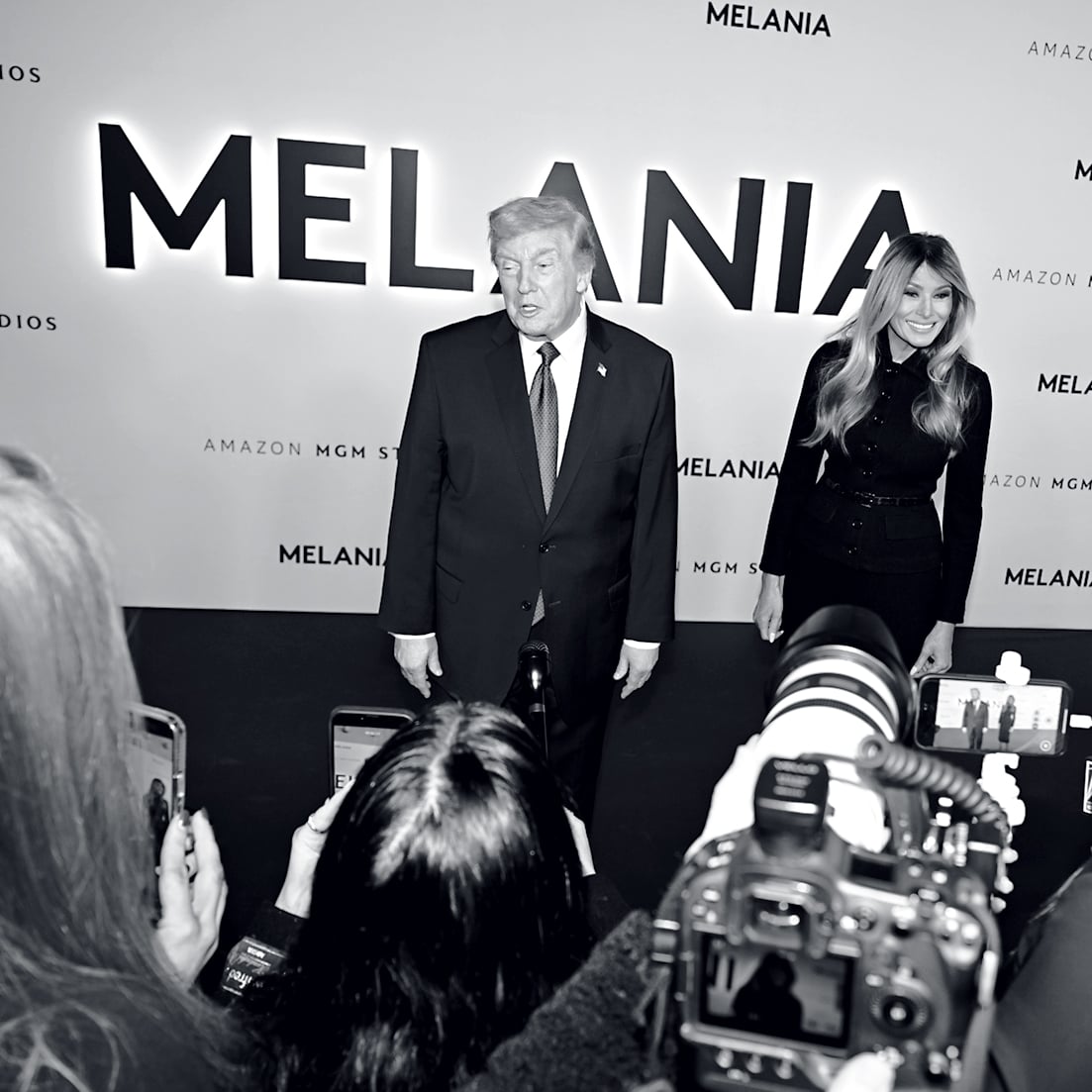
Photograph Craig Hudson/Variety/Getty Images. Amazon MGM Studios’ Melania documentary premieres at the Kennedy Center. Guests include the Trumps, Apple CEO Tim Cook, and rapper Nicki Minaj.
-
February 1
Trump announces that the Kennedy Center will close for two years on the Fourth of July, ostensibly for renovations. The following month, the board votes to make it official.
-
March 13
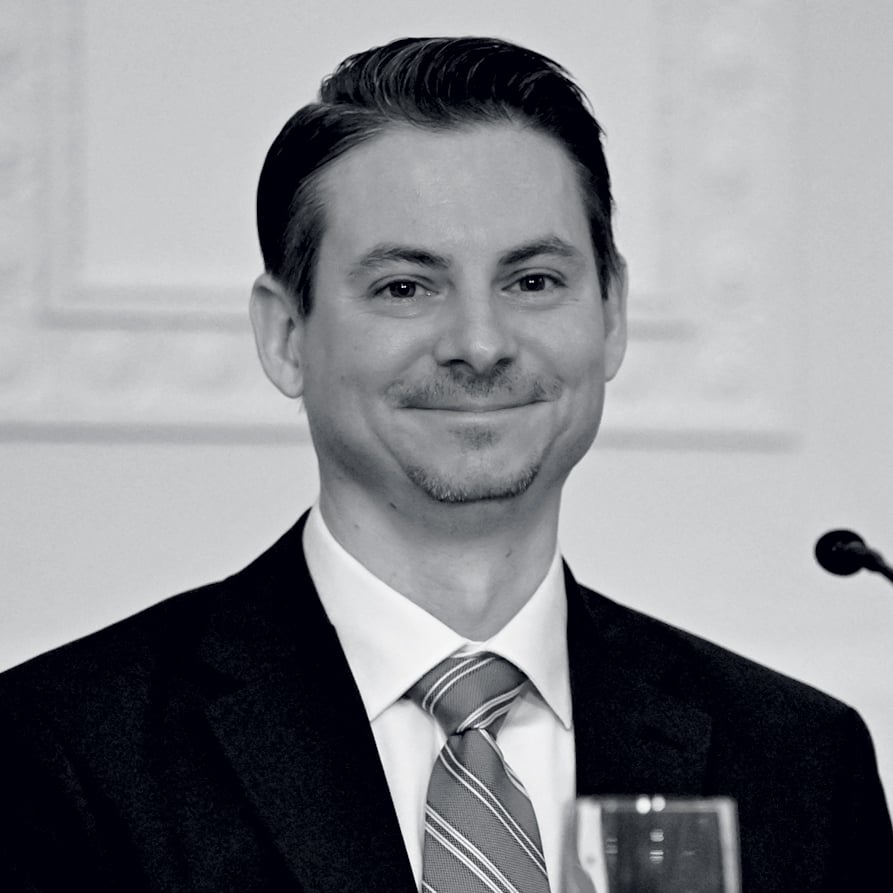
Photograph by Annabelle Gordon/AFP/Getty Images. Trump announces that Grenell is leaving and will be replaced by Matt Floca, the center’s vice president of facilities operations. Floca later says the closure was his idea and defends the planned renovations, citing water damage.
-
May 29
A judge temporarily blocks the two-year closure and says Trump’s name must come off the building’s facade. In an online post, Trump says he no longer wants to be involved with the venue.
—Kate Corliss
This article appears in the July 2026 issue of Washingtonian.