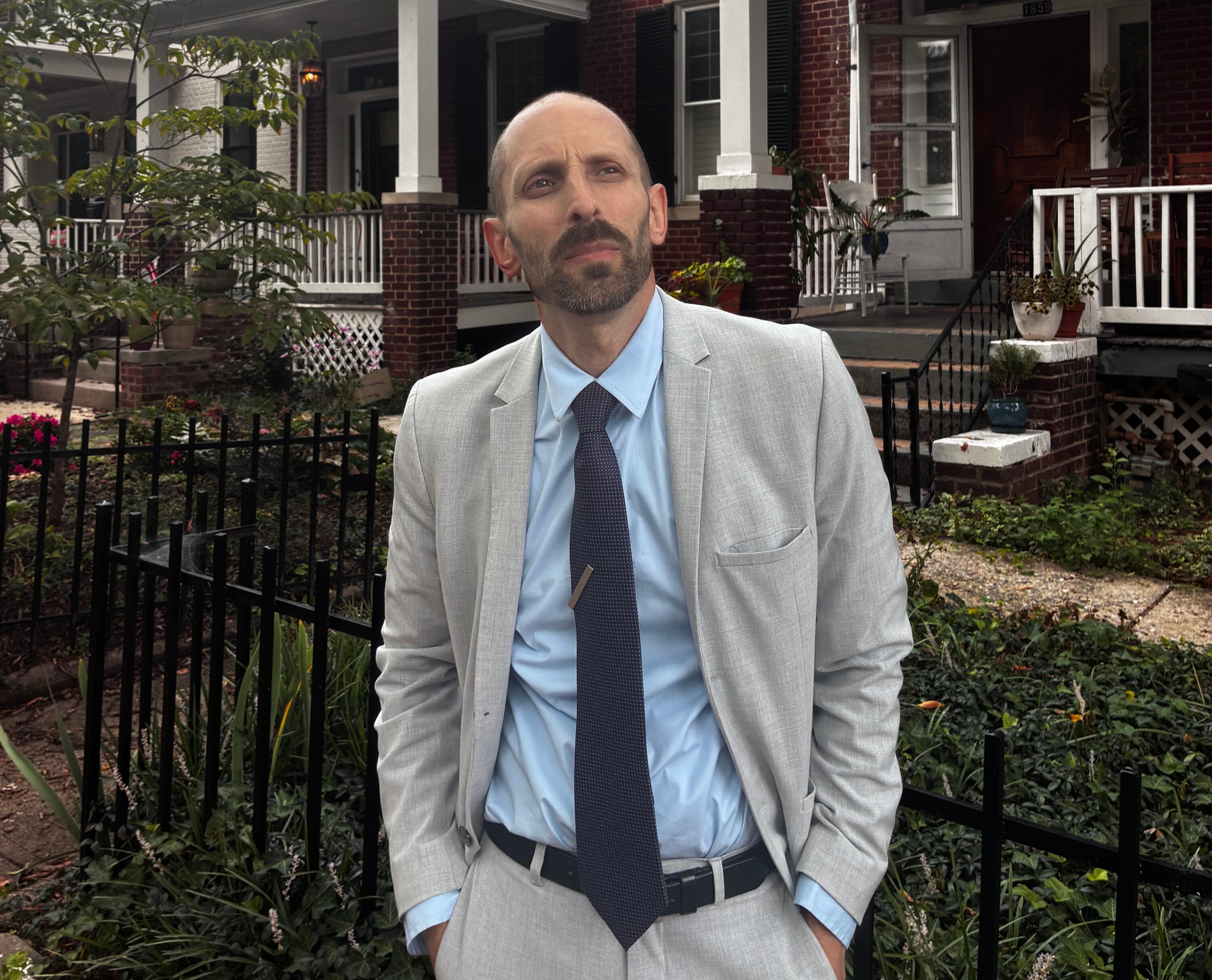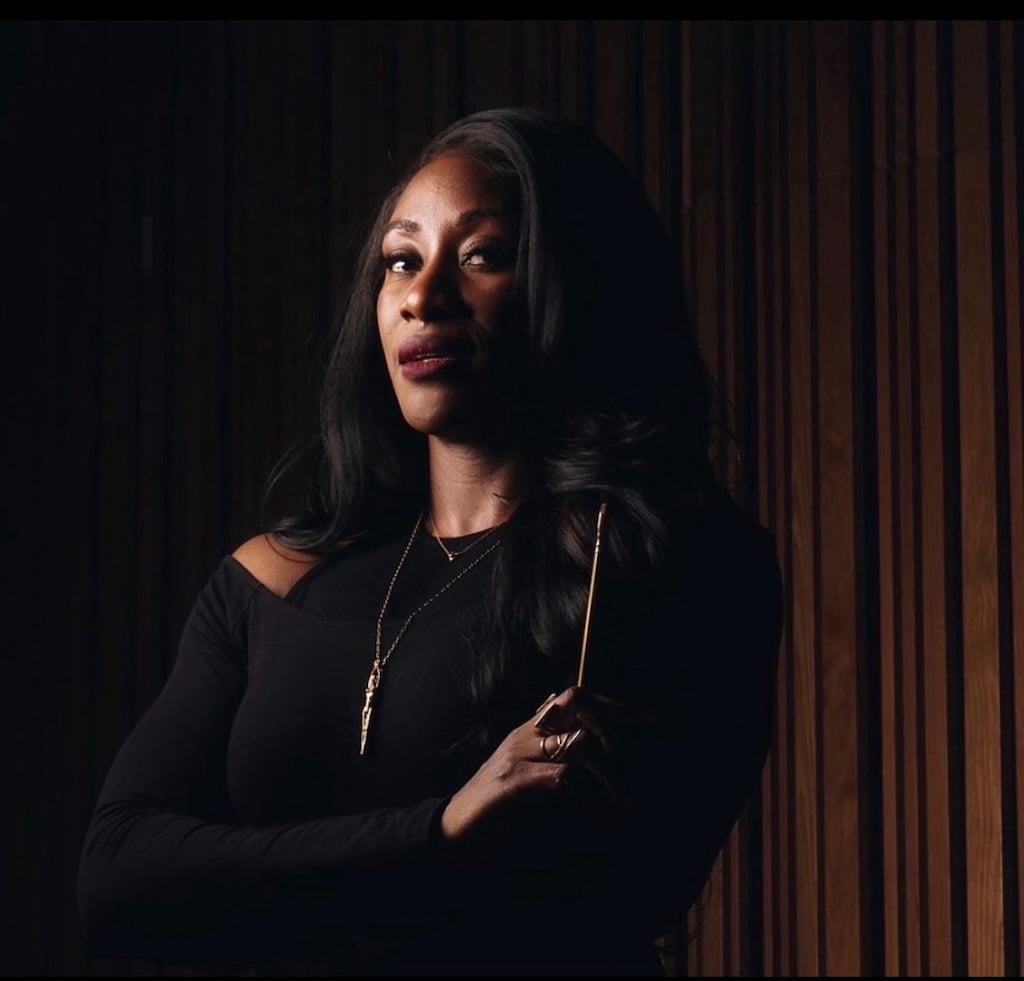
Karen Attiah has not yet heard anything from the Washington Post. On Monday morning, the former columnist for the paper’s opinion section, who was fired last September over social media posts she made following Charlie Kirk’s death, and the Washington Post Guild announced that an independent arbitrator had found the Post had violated its agreement with the union when it fired her and ordered her to be reinstated with back pay. “My God,” Attiah writes on Substack. “I fought the Washington Post—and won.”
A Post spokesperson tells Washingtonian the news organization respects the arbitration process but had no further comment. It does not appear the Post will cover this story—under Executive Editor Matt Murray, the Post has taken an approach to writing about itself whose rules appear to be maddeningly opaque. It covered the impending departure of opinions boss Adam O’Neal, for instance, but didn’t write about the departure of its managing editor Matea Gold. It covered a victory it won against a defamation lawsuit brought by President Trump’s media company, but it did not write about Attiah’s firing. “I think any longtime follower of the Washington Post knows that it used to be a paper that used to hold itself to account,” Attiah tells Washingtonian. And, of course, since the ruling last Thursday, it’s been crickets from the Post as to how or when she might return to her job.
After Kirk’s assassination last September 10, Attiah posted a thread on Bluesky that noted two Democratic lawmakers were shot in Minnesota earlier that year, to considerably less outrage on the right, and that “Part of what keeps America so violent is the insistence that people perform care, empty goodness and absolution for white men who espouse hatred and violence.” As is often the case with posts on Bluesky, her words seemed to dissolve in the greater maw of online discourse. She was home in Dallas, where her father was then critically ill, and went out to get some macaroni and cheese for dinner. Nothing Attiah saw that evening, she says, suggested her posts, which did not mention Kirk by name, had caused a storm of indignation.
In testimony to arbitrator Sarah Miller Espinosa, O’Neal said he received messages on Signal the next morning that he said raised concern about Attiah’s posts, though he claimed he could not recall from whom they were sent. O’Neal testified that none of the people he heard from included President Trump, Vice President JD Vance, or Post owner Jeff Bezos, whose dramatic rightward re-fashioning of the Post‘s opinion operation last February led to O’Neal’s hire. Signal automatically deleted the messages in question, O’Neal told the arbitrator.
O’Neal testified that after he received the messages, he texted Wayne Connell, the paper’s top HR executive, requesting an urgent meeting, which they had later that morning with Will Lewis, who was then the Post‘s publisher and who left under a cloud earlier this year. Lewis agreed Attiah should be fired, an action Connell carried out via email after, he told the arbitrator, he couldn’t reach her via phone. (Attiah says Connell called her when she was training at the gym—she studies martial arts—and that his termination email landed in her inbox several minutes later.) In her decision, Espinosa writes that she found it “curious that O’Neal could remember many details of the events occurring on September 11, 2025, but could not remember the identity of even one of the several individuals who sent him messages about [Attiah’s] posts.”
O’Neal had been employed at the Post since mid-July 2025 and in an early meeting with Attiah, told her her social media activities were not “consistent with the collegial atmosphere [he was] looking to build here.” He had planned to reassign her as letters editor rather than as a columnist, according to evidence presented in the hearing.
Espinosa’s decision is unsparing in her decision’s examination of the Post‘s arguments why it fired Attiah. For example, the Post argued that it “felt the need to act quickly in separating itself from Ms. Attiah in order to protect itself and its employees” from negative reactions spreading from the internet into the real world from Attiah’s Bluesky posts. Espinosa writes that she found it “strange for The Post to argue it had just cause to terminate [Attiah] in part, because, if it didn’t immediately do so, criminals may commit violence against other employees.” Indeed, she notes, the Post‘s social media policy explicitly says it will protect its journalists from harassment.
In addition, Espinosa found that the Post‘s claims that Attiah’s posts disparaged white men was “unsupported by the actual words, as well as the context” of her posts. “I’m glad that the grammar and the reading comprehension police won for once,” Attiah says, laughing. Attiah was represented by the attorney Norm Eisen, the Democracy Defenders Fund he co-founded, and the Washington-Baltimore News Guild, which also represents Washingtonian‘s editorial, art, and web departments.
For its part, the Guild argued that others at the Post had received differing treatment. Marc Thiessen, another opinion columnist who is a contractor, not a Post employee, tweeted prolifically about Kirk’s death, quote-tweeting a user who said “Fck all the media and the liberal democrats” and adding the message “Got a point,” for example. Thiessen, the arbitrator notes, got cautioned by O’Neal, while others who’ve worked at the Post who’ve made posts that have drawn outsized attention, including Dave Weigel and Felicia Sonmez and an employee whose name is redacted in the document, received differing treatment by management. None were fired over the incidents cited, a reaction Espinosa found was “absolutely disproportional” to the punishment the Post meted out to Attiah. (The Post later fired Sonmez over a different incident.)
Attiah’s father died six months ago. During the arbitration process, she says she mused about the surreality of fighting for her job instead of grieving him and about the fact that, as the Post‘s founding Global Opinions editor, she saw “what it means for a media company to stand behind its journalists” after the murder of Jamal Khashoggi, whom she hired to write for her section. She marveled, she said, to “several years later to be defending myself against the Washington Post, and not just defending myself but to be called a threat.”
In the past year, she’s done some traveling, continued her martial arts training, and worked as what she calls a “rogue radical headmistress,” teaching classes on an online platform she founded named Resistance Studies Series. She also has a Substack publication named The Golden Hour. Attiah was the Post‘s only full-time Black opinion columnist on staff when she got canned, and she was also dismayed when Lewis ordered deep layoffs at the paper earlier this year. “I know so many people feel beat down, especially maybe in DC,” she says. “I just wanted to be able to show an example of fighting back and increasing a bit more friction into the machine that would have us be quiet, you know?”
For the moment, she’s cooling her heels, waiting to hear what the Post plans to do with her. (Any onboarding meeting that involves Connell might be pretty interesting.) “I was doing my best work not just as a writer but as someone who was curating opinions for the section,” she says. It kind of sounded to me like she might not be that jazzed to edit letters to the editor instead.
I asked Attiah what people working in journalism and beyond might take from her win. “I would hope that this sends the message, first of all, that solidarity matters, that unions do matter,” she says. “I hope that this also just sends the message that people do care.”
Correction: I amended this article to add context to the circumstances surrounding Felicia Sonmez’s history at the Post.

Andrew Beaujon joined Washingtonian in late 2014. He was previously with the Poynter Institute, TBD.com, and Washington City Paper. He lives in Del Ray.