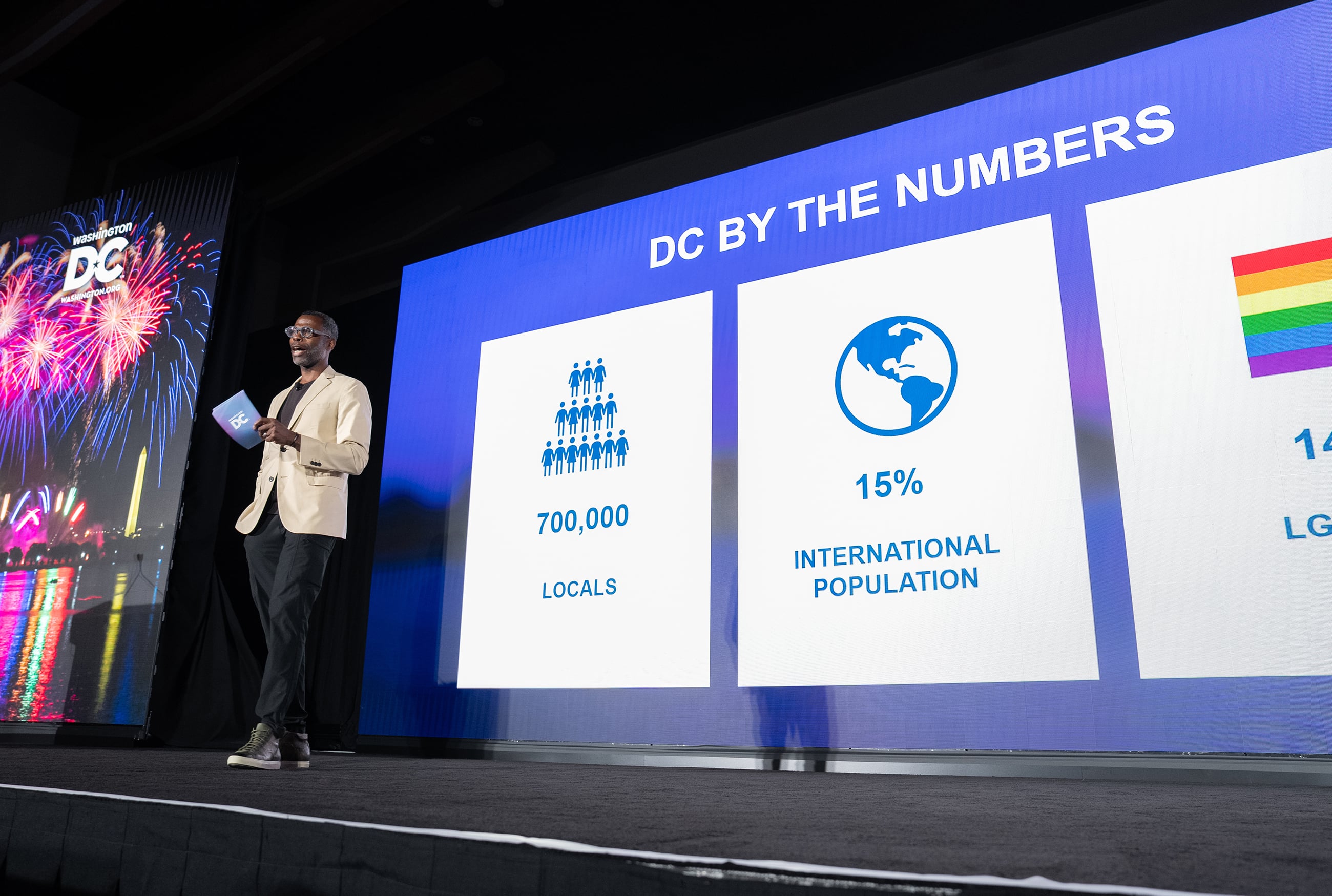
Destination DC is the city’s official marketing organization, dedicated to attracting tourists, conventions, and events to the District. At its Chinatown offices one recent morning, there was a buzz in the air: The America 250 celebration was approaching, among other things, and it’s going to be a busy summer. The space is full of fun DC touches, from a mumbo-sauce recipe painted on the kitchen wall to a framed Metro-map jigsaw puzzle hanging in the hallway.
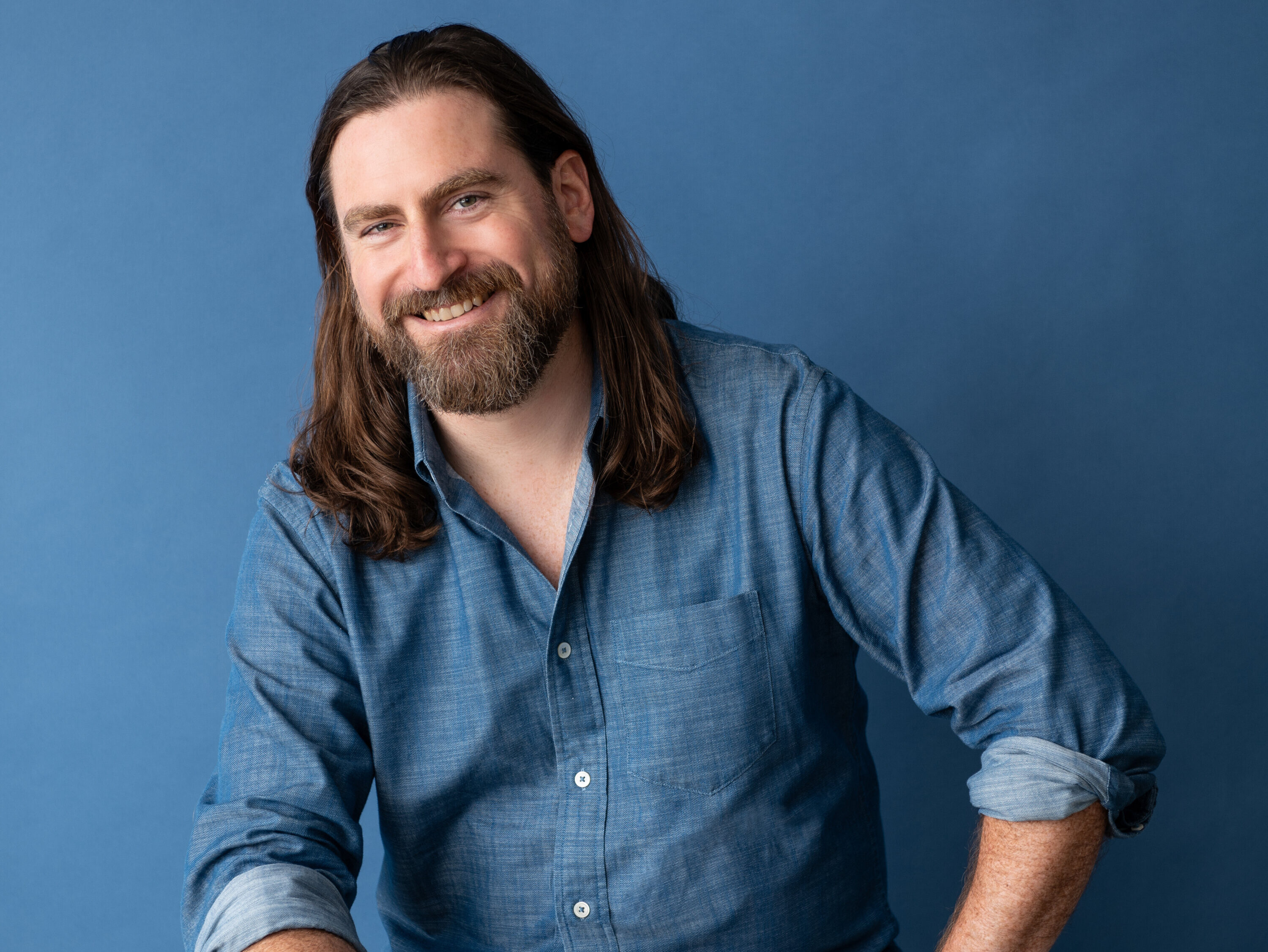
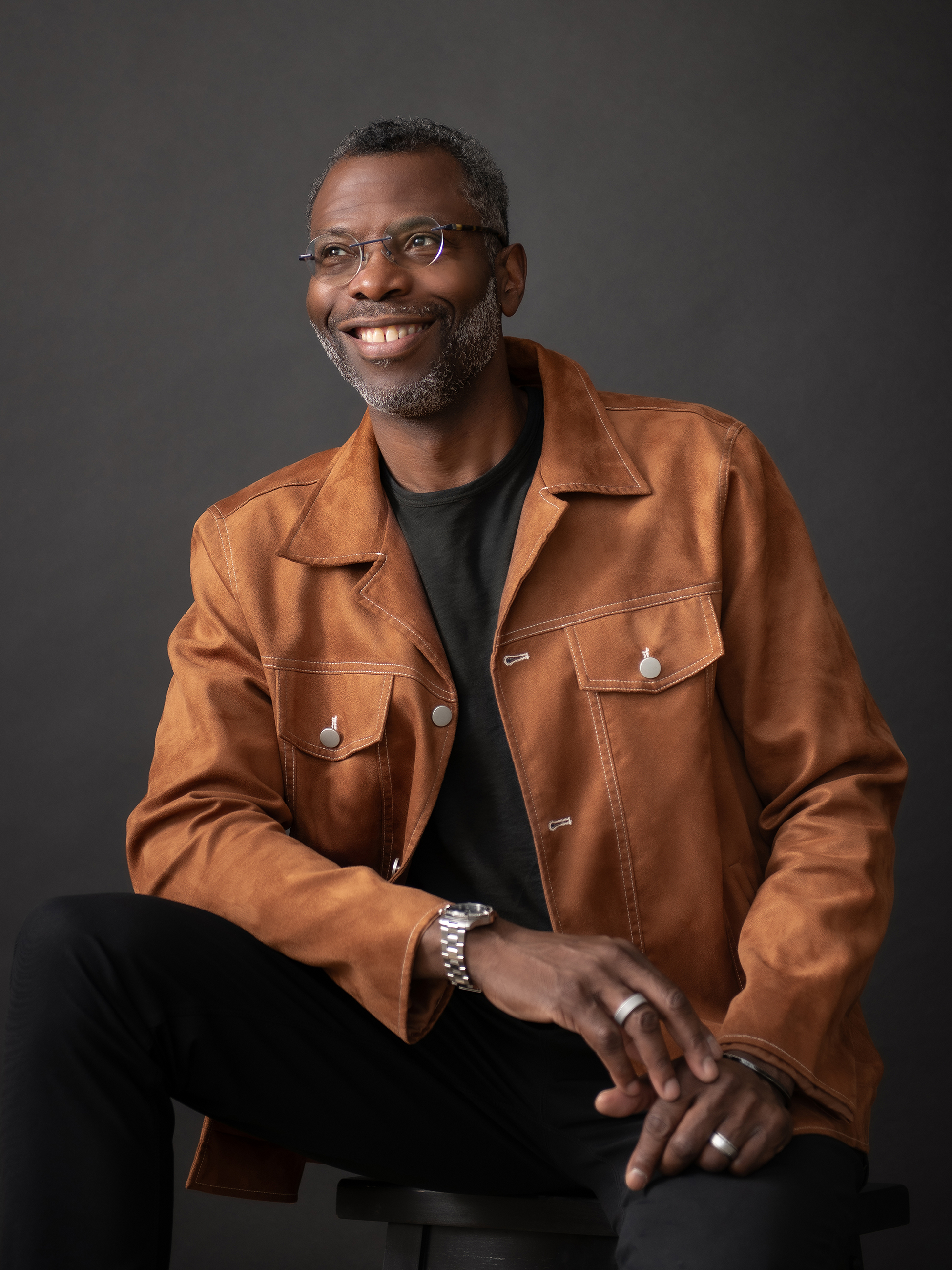
The group’s CEO, Elliott Ferguson, met me in a comfortable common room on the fifth floor, where he talked about the successes and difficulties he’s faced running Destination DC for the last 17 years—including, recently, challenges presented by the volatile second Trump presidency. “I really try to focus on the positive aspects of what this administration is doing for DC,” he says, “The things we cannot control we just can’t control.”
Not long ago, I met somebody from Iceland who was visiting here for the first time, and she was really surprised. She had an amazing hike in Rock Creek Park, and then she loved the 9:30 Club and Shaw. She had no idea DC was more than, you know, the three M’s, as you call them.
Monuments, memorials, museums.
Why are so many people still surprised that DC is a real city?
Because every day, if they’re watching the news, it’s always politics associated with DC. Monuments, memorials, museums, and politics don’t sound as exciting as Hollywood or Disney World. That’s part of the reason why we do what we do, simply because we are one of those destinations that people truly don’t understand—until they get here, and then they talk about how green it is, how walkable it is, the food scene, nightlife, the list goes on and on. The global community, they see DC as, yeah, we’ll go, but then we’ll go somewhere fun . And then they come here and then they’re like, “DC checks every box. Next time we’ll stay there much longer.”
You spend a lot of time traveling to promote DC. How do you convince people they have the wrong idea?
Talking to individuals that have never been to the United States about how great DC is, the expectation is I’m going to say nice things about DC: I’m not going to say, oh, “DC, it’s okay. We’re no Disney World.” So, you know, you have to recognize that. Just 8 percent of visitation to Washington is international, but they stay longer and spend more.
That’s also the audience that looks at DC through a lens that is tied to politics. So we have travel agents come to the city and do training on Washington, DC. We have the press come to Washington, DC, and then they say, “Oh my God, I didn’t expect much, but I left and had a great food experience, the weather was great, I ran around the park at night.” So those things really will resonate, and then you’ll see more visitation.
What are the conversations like when you’re talking to somebody who’s never been to DC?
[They talk about] “power” and “politics,” things that do not necessarily resonate as a reason to want to come for leisure travel. So how do we get them to think about all the free things to see and do? The fact that Washington is the only place you can see a panda in a zoo that’s free? The list goes on and on in terms of how we want them to envision DC versus what their perception is.
I mean, you hear people’s passion about politics. You know, “I’m not coming because of this person is in DC.” And that’s something that we’re benefiting from as well, because we’re doing more and more protest tourism.
Protest tourism?
You have all these people that are coming in town. Let’s say there is a plan to do a big protest in July. The city benefits from that: hotel rooms, restaurants. But we also want them to know what else there is to do while they’re here: go see Bruce Springsteen later in the night when you’re done, or go to a museum or do a bike tour. They’re coming into the city for an individual reason or cause, but they’re also going to want to eat, and they’re going to want to do other things, and they’re wanting to go to a credible source in terms of what’s happening.
You recently released stats for last year, and the big news is that while tourism is basically flat overall, the international number is actually down. How come?
It’s a variety of things. One, the political climate has impacted visitation. And the economics of it: As travel has become more expensive, people are making decisions to perhaps not do that international trip. It could be the politics in their country, it could be infrastructure, like there are fewer and fewer nonstop flights. What’s happening globally can impact visitation to your city.
What do you think is the best response, practically speaking? I’m particularly asking about the political aspect.
You know, if you choose not to come because you don’t like the political environment, you have to make a decision that makes you comfortable. If it’s an issue like safety, I talk about my experience: Do I feel safe in Washington, DC? The answer is yes. Do I walk around at night? The answer is yes. But we are also brutally honest: In any urban environment, there are situations that you just need to be aware of. Use some common sense—don’t walk down a dark street by yourself.
That’s also true in London or Paris.
That’s the whole point: It’s not specific to Washington, DC, in terms of some of these issues.
I’ve always loved living in a place that people want to come visit, but you do hear negativity about tourists from a lot of people who live here. What do you think that’s about?
Yeah, it’s 80-20. Eighty percent love it, 20 percent, there’s always going to be something that folks are going to say. We just focus on the positives. We joke about people standing on the left side of the escalator, but we should be thanking conventioneers for coming and tourists for coming. As a resident of the city, I’d rather benefit from the dollars being generated by visitors than my taxes going up.
You’ve estimated that each DC household saved more than $3,600 in property taxes in 2024 due to tourism.
Yeah, that’s about right. That resonates, I think, with most people. We don’t hear a lot of negative feedback from residents in terms of too many visitors in the city. If you’re downtown during the Cherry Blossom Festival or if you were around Nats park last night [for the Springsteen concert], you’re going to be inconvenienced a little bit. But I think our city truly understands the economic impact.
Another layer of what I do is: How do we get the local community to truly understand what we do? Most say, “What do you mean you sell DC—doesn’t everybody want to come here?” The answer is no. “Don’t conventions automatically happen because we’re the nation’s capital?” The answer is no. It’s very competitive, and we’re the organization that’s responsible for putting together bids to bring that business to the city.
As we’re going after conventions, no longer are they just interested in infrastructure. They’re interested in what we’re doing in terms of sustainability, in other areas of concern that traditionally groups did not ask us about. They’re saying, “If you’re not adhering to any of the policies associated with taking care of the environment, we may eliminate you as a location for a convention.” That’s why we have a person that solely focuses on sustainability on our team.
What is a touristy thing local people should go experience if they haven’t?
The number-one thing that every local says when they have visitors come to town is: “I need to do this more often! I need to come to the museums, I need to do all these things.” The key thing for us is: How do we continue to promote Washington to the locals? How do we educate them on things that perhaps they don’t know about the city, some of the best-kept secrets, some of the other hidden gems of Washington that I think folks, once they find out about it, they’re really enamored of. Hillwood Estate [in Forest Hills]. Or the Franciscan Monastery [in Brookland]: It’s just a gem in the city that when folks go there, they’re like, “This is amazing.”
Are there things only locals know about that you tell tourists to do?
I challenge visitors to go into neighborhoods for an experience: Go to different parts of Washington, DC; have a cup of coffee. The experience is augmented when you’re leaving the immediate downtown area. And it’s easy to get around! I hear back from people, “That was one of the smartest things I ever did.”
Have you yourself had any interesting travel adventures in other places?
When I visit other destinations, I like to go where the locals go, and I talk to everyone. Much to my wife’s chagrin, I’ll come back to the room and say, “Hey, we’re going to dinner at somebody’s house that I met.” She says, “What? Who are these people?” She freaks out every time I do it.
I’ve had nothing but great experiences. We were on our honeymoon 21 years ago and I came back to the room in South Africa and said, “I met this couple, we’re going to do things [with them].” And you have a different experience when you’re with locals that are very passionate about their community. We went back into a township, spent a lot of time just talking to the folks that were there. It was fascinating.
This article appears in the July 2026 issue of Washingtonian.

Rob Brunner grew up in DC and moved back in 2017 to join Washingtonian. Previously, he was an editor and writer at Fast Company and other publications. He lives with his family in Chevy Chase DC.