Somewhere in Virginia’s rural Northern Neck—down backroads prowled by loose dogs, past acres of soybeans and corn—a lonely dock stretches onto the Rappahannock River. On a hot evening in July, Logan Mattingly is there, boarding a 24-foot SeaArk boat. He and two of his childhood friends, all of them 22, are out hunting snakehead, a big mottled fish whose flaky white flesh is prized by grocers and chefs. If you’ve ever wondered how these fish wind up on your plate, someone like Logan probably caught them.
A fourth-generation commercial fisherman from Cobb Island, Logan makes most of his living on the water. He crabs, runs charters, and sells rockfish and catfish, while also fighting fires for the federal government. Tonight is more for leisure, though—a way to take his buddies out while maybe breaking even on gas. It’s not a great time of year to catch snakehead. They nest in pairs along the shoreline, camouflaging themselves among grasses and reeds, which grow vexingly thick in midsummer. But even in good conditions, snakehead are elusive. They’re not schooling fish, so they can’t be netted en masse, and they’re tough to land with hook-and-line. The best way to take them is bowfishing—by shooting them out of the water one by one.
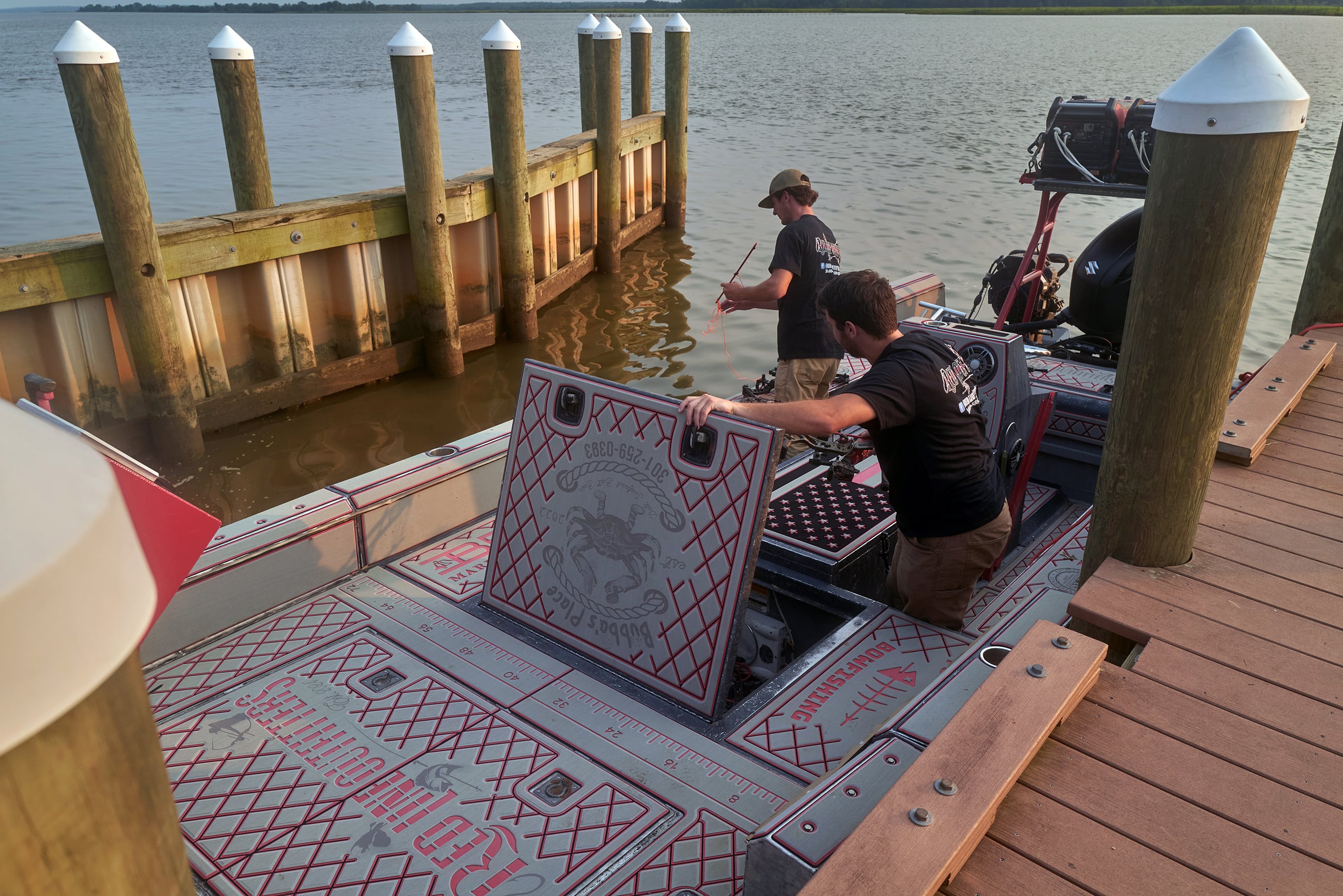
Before nightfall, it’s too bright. The glare on the water makes the fish near impossible to see. But as the boat churns upriver, the last light is leaking away, leaving the dim sky the color of slate. Logan turns into the mouth of a creek where snakehead like to nest.
In the dark water, beneath the boat’s blazing amber lights, various fish appear as white clouds, like shadows on an MRI—their bodies writhing, darting, gliding beside the boat. Crabs scuttle along the bottom, kicking up plumes of mud. The tide is low; there’s not even a foot of water in the creek. The boat can operate in as shallow as four inches, but Logan prefers at least six.
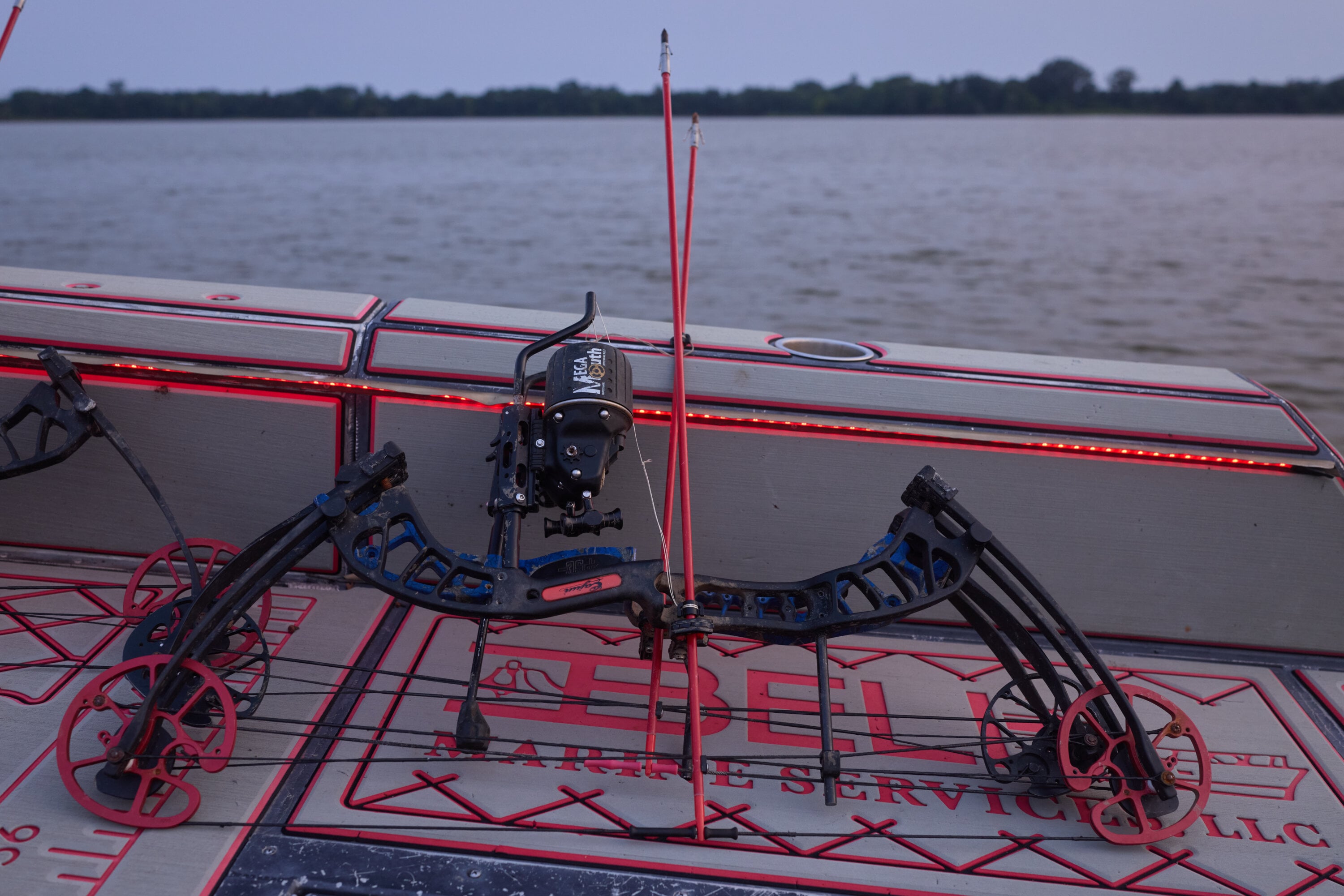
The boat hugs the shoreline, brushing cattails and reeds. Logan’s friends tease him when he steers into a log. They’re all casually firing their bows, warming up with lazy shots at blue catfish or longnose gar. After reeling in the arrows, they shake tendrils of marsh grass from the tips. You can taste the humidity. It lays a slinky film across the skin.
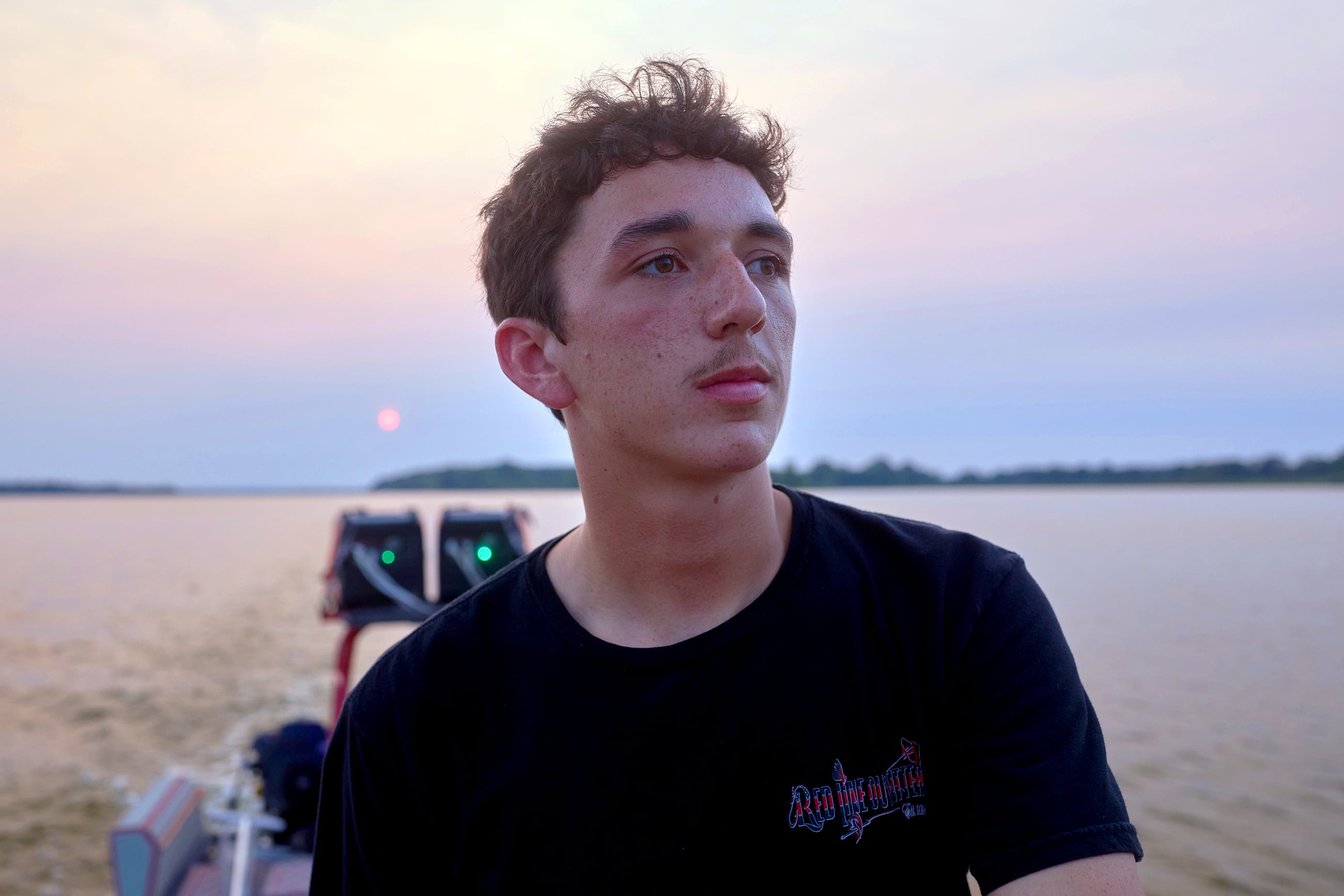
Logan sees a snakehead, long and brown and thick as a soda can. He misses it, his arrow splashing idly into the water. The snakehead is a nonnative fish, introduced to a pond behind a Maryland strip mall in 2002. Before that, the species had never been found on this continent in the wild. The fear was that snakehead might take over, that they would choke the life from the region’s rivers. But now some fisheries biologists believe that the population has stabilized, or even declined, without doing terrible damage. Blue catfish have been a whole lot worse for the ecosystem.
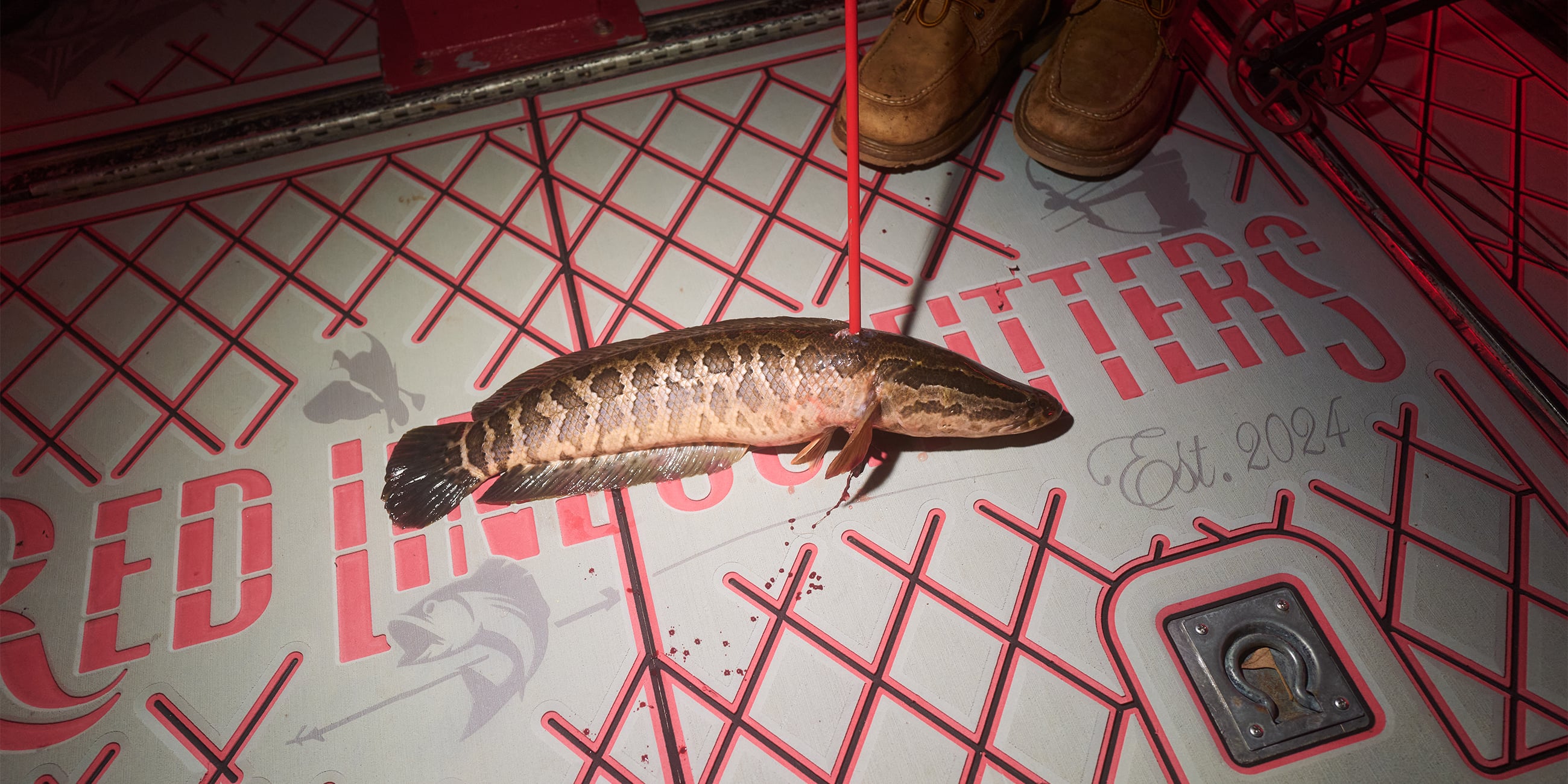
Logan’s buddy Ethan shoots a snake- head right through the midsection, then pulls it onto the deck of the boat. It’s small, Logan says—two or three pounds at most, born either this year or last. It flips around the deck before Ethan tosses it into a cooler to bleed out.
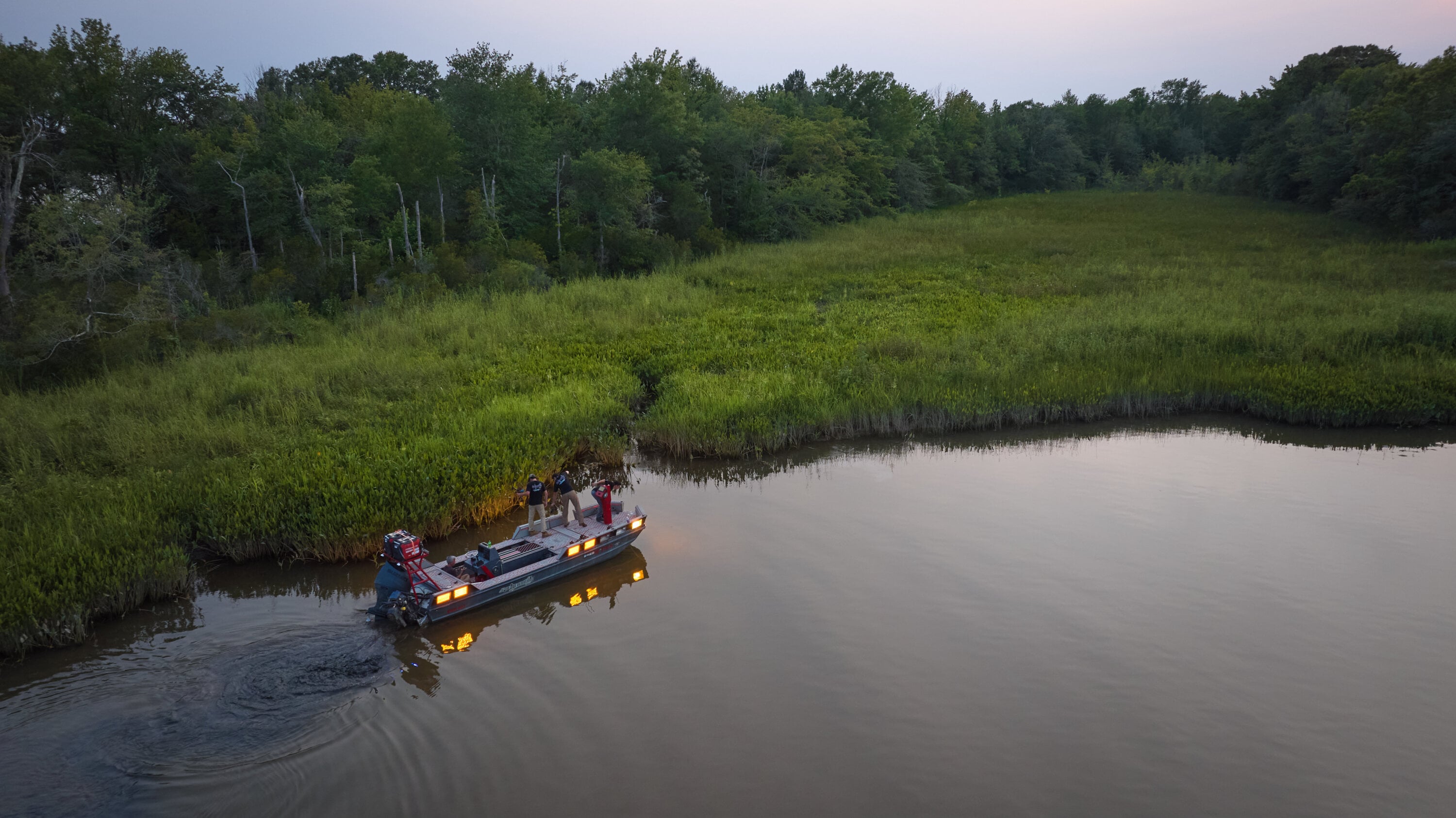
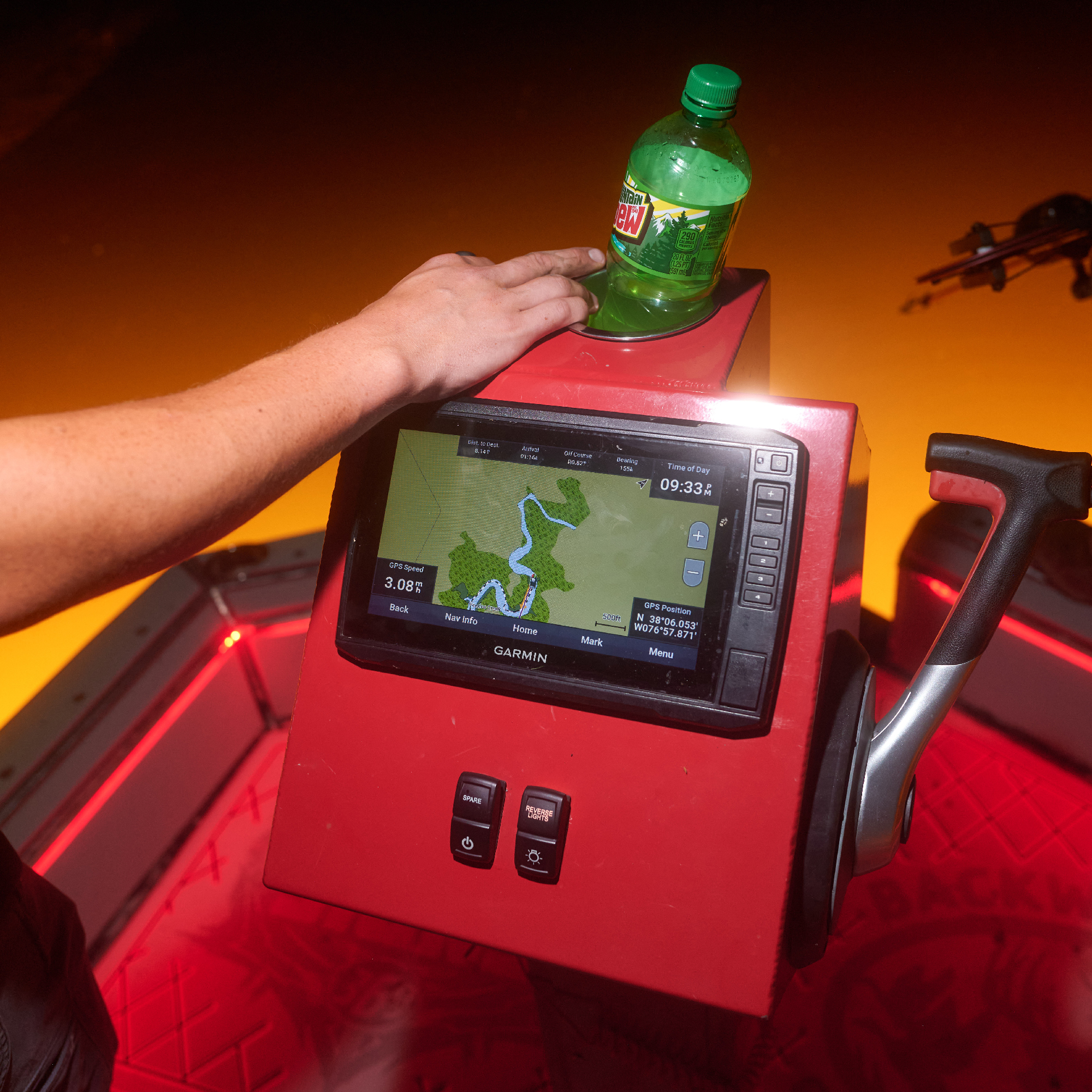
Logan gets a snakehead, about the same size as the last. Logan’s friend Tyler pulls a long, skinny fish from the water, but it’s a bowfin, not a snakehead. It makes a ruckus in the cooler, even after the lid is closed. A muskrat crawls from the creek and ambles into the reeds. The guys are happy. They laugh when they miss a shot. They rib each other and sip Mountain Dew, swaying to loud country music, not a life jacket in sight.
Simultaneous shots from Logan and Tyler. One hits. This snakehead is bigger: six or seven pounds. Their bows are barely restrung when all three of them shoot again. That fish was enormous, but they all miss it somehow. “What in the world!” Logan says, laughing. He’s relieved that the fish are here. They’re all around—far more of them than he expected.
“There was one,” Logan says, lowering his bow. “I seen it disappear.”
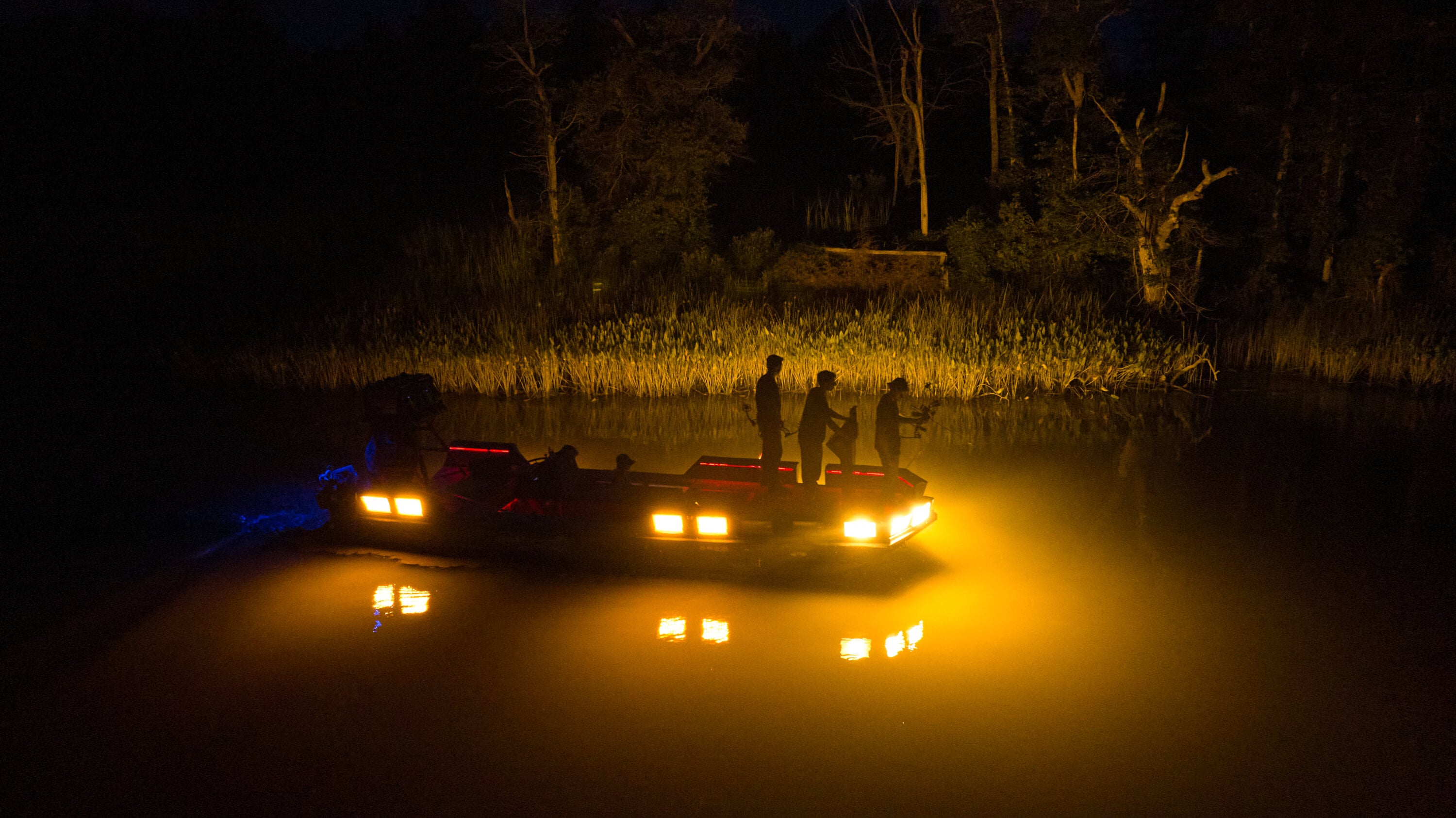
Bowfishing snakehead is the smallest of Logan’s income streams, but it’s also the most fun. On the boat, everything is so alive: the air, the water, the energy of the hunt. Every so often, the guys tense and lean forward in unison, all of them drawing their bows. A lumbering catfish drags itself around the side of the boat. They relax.
“You smoked him!” Logan says to Tyler, who’s reeling another one in. Snakehead is expensive. Right now, a pound of blue catfish goes for about 75 cents, whereas a pound of whole snakehead might fetch $4. That’s because snakehead is scarcer, tastier, and more labor-intensive to catch.
But there’s actually better money in running bowfishing charters—in selling the experience of the snakehead hunt, rather than the meat itself. Anglers come from all over the continent for an opportunity to shoot this fish from Logan’s boat. It’s possible that the species will become a valuable game fish for the region, like the Potomac’s largemouth and smallmouth bass.
A school of shad are darting around the creek, leaping into the air. “They’re gonna jump onto the boat,” Tyler jokes.
It’s slack tide now. Optimal conditions. Boots on the side of the boat, arrows pointed into the depths, the men stare into the river. It’s tough to see the snakehead, to distinguish them from logs, to ignore the constant fluttering of other fish. Sometimes, one of the guys will point and say, “There,” and a shot will go off within seconds.
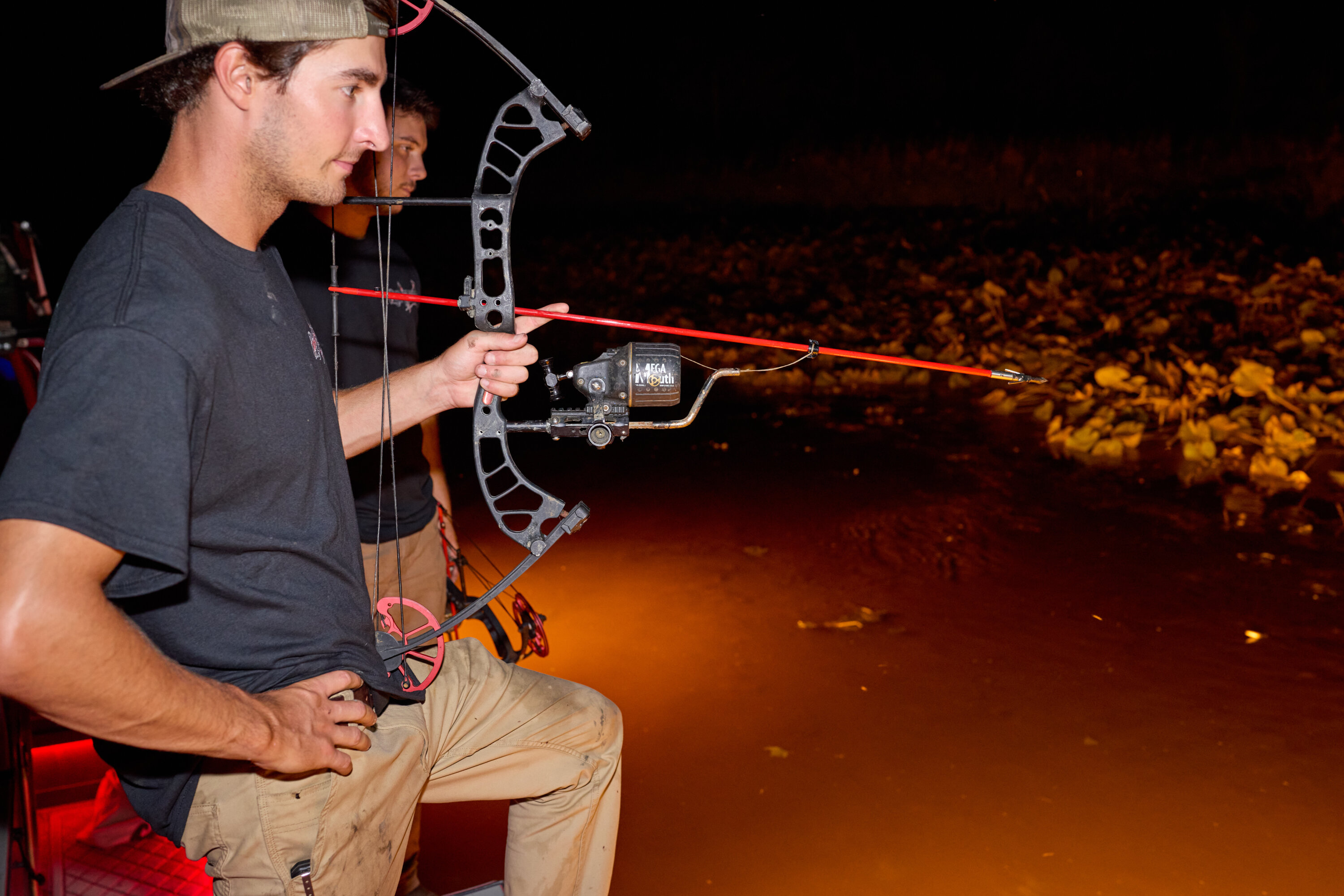
Two of them shoot the same fish. It’s a very small snakehead, and it seemed like they were both going to miss. But the trick is to account for distortion. Light refracts in the water, making everything seem closer to the surface than it is. The deeper the snakehead, the farther beneath it you have to aim. Those shots had looked about four inches too low.
Logan whips his hands from the boat console and fires a wild shot into the dark. On his arrow is a huge snakehead dripping blood from its wound. It takes a second for him to realize that the snakehead has a catfish hanging out of its mouth. It was in the process of eating dinner when it died. The boys crowd around. None has ever seen such a thing. “This one’s for the business page,” Logan says, snapping a picture with his phone.
Logan is shooting while piloting, making small adjustments with one hand while his other remains on the bow. Tyler spots a huge gar on the left side of the boat. Nobody else sees it, and they accuse him of making it up.
All three shoot at a snakehead, but it scrambles away, quicker than you’d think it could go.
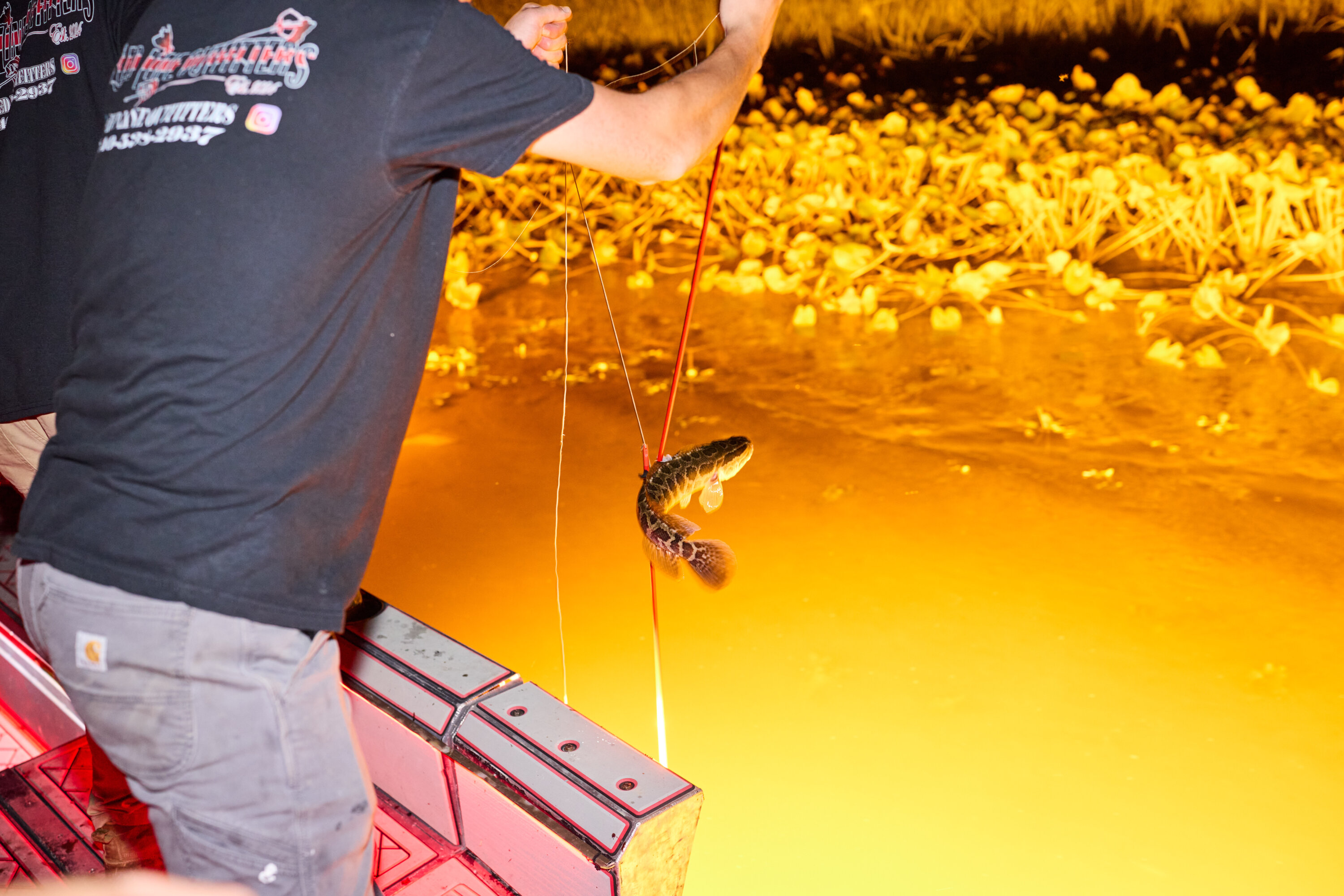
The cooler is thick with bodies, the water at the bottom red with blood. By this point, they’ve at least broken even—eight snakehead should just about cover broken arrows and gas. They’ll spend the rest of the night ambling through different creeks, cracking jokes, talking about their lives. Past 10’clock, the tide will rise. At that point, it’s no longer worth it to fish.
Back at the boat ramp, the men tally their haul: three gar, one bowfin, and 17 snakehead. The gar and bowfin will get cut to pieces as bait for Logan’s crab pots. But the snakehead—which weighs in at 118 pounds—is worth about $475. Logan will offer it to a carryout place back home on Cobb Island, one that’s been wanting to offer a snakehead-nuggets special.
For three or so hours of fishing, Logan will make a couple hundred bucks. But it was never about the money. He wanted to hang out with his friends and enjoy a languid summer night. “This is so peaceful,” he says. “You get to look at all the wildlife, away from the busy city lights and the traffic and everything else.”
This article appears in the October 2026 issue of Washingtonian.