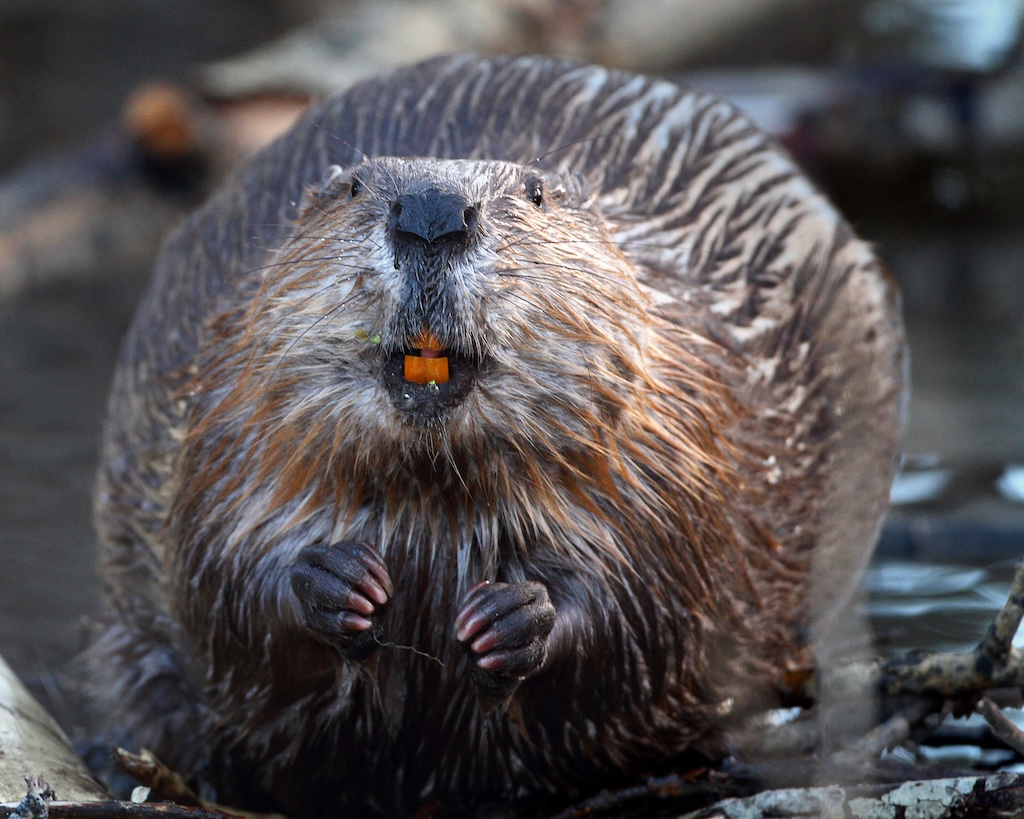
If this year hasn’t been nightmarish enough for you, three beavers, two of them later discovered to be rabid, have attacked people in Maryland in less than a month. The two earlier attacks occurred at Cunningham Falls State Park in Frederick County, while the most recent attack took place last Thursday in Seneca Creek State Park in Montgomery County. All of the victims—a ten-year-old girl, a 13-year-old boy, and a 19-year old man—are reported to be okay.
We spoke to Dr. Natalie Zimmerman, a vet at Second Chance Wildlife Center, an animal-rehabilitation practice in Montgomery County, to find out everything you need to know about possibly rabid semi-aquatic rodents.
Rabies tends to spike at this time of year
While Zimmerman says this is a high number of cases in recent weeks, late summer is usually when rabies cases spike among mammals. “This is the time of year when a lot of mammals are leaving their parents, heading out into the world and becoming more exposed to other adults and adults who carry rabies in the wild. And juveniles are not always the best at understanding or recognizing why that one individual of their species is acting so strangely,” Zimmerman says.
Typically, you might imagine a rabid bat, skunk, or raccoon—not a beaver. However, Zimmerman says, any mammal can carry rabies, and outbreaks tend to cluster among species, partially explaining the sudden rise in rabid beaver attacks.
Awareness is the best way to protect yourself
While recent incidents of animal bites are scary, Zimmerman says there’s no reason to avoid the great outdoors. Rather, she says that you should exercise caution and stay alert. Also, she says, “We always recommend that people leave wildlife alone.”
If you get bitten by an animal, especially one you suspect might be rabid, Zimmerman says you should call your doctor or go to an urgent care immediately.
“There is a post-exposure vaccination that you can get that will prevent you from contracting the disease,” Zimmerman says. That vaccine is 100 percent effective if given before symptoms start. You should also contact your local health department.
Make sure your pets are up to date on vaccines
If you’re worried about your pet contracting rabies from another animal, there’s a fix for that: the rabies vaccine, a preventative measure that is highly effective and also legally required in DC, Maryland, and Virginia.
“Try to avoid contact between your pets and wildlife, especially mammals that could be potential rabies carriers,” Zimmerman says. “But also, if you have dogs, cats, other domestic animals, you should talk to your local veterinarian and the one who you work with for your pets specifically to make sure that they’re up to date on their rabies vaccinations. So dogs and cats should have rabies vaccinations to help prevent the likelihood of them contracting the disease, should the worst happen and there’s an interaction that couldn’t be avoided.”
Hopefully, this will end soon
The number of rabies cases tends to decrease as the weather cools. And don’t let these incidents turn you against beavers. “Beavers are such an important species to our ecosystems,” she says. “Knowing that they’re having these incidents where they’re contracting rabies and attacking people, which is very much unlike them, means that they could be at risk for losing some members of their population, and a lot of populations in our ecosystem are already in decline.”