University of Maryland professor of cell biology and molecular genetics Kan Cao didn’t have a skin-care line in mind when she began testing the antiaging effects of the manmade compound methylene blue. The human-aging scientist was looking for a treatment for Hutchinson-Gilford progeria syndrome (HGPS), a premature-aging disorder that affects one in 4 million people. But a chance discovery led to the launch of mBlue Labs, a skin-care company that uses the compound to stall and potentially reverse signs of aging.
Methylene blue was first produced in 1876 to dye fabrics. It’s since been used in a medical setting for a variety of conditions such as malaria and is currently being explored as a potential treatment for Alzheimer’s. The medical application is how Cao first discovered the antiaging effects. For those with HGPS, the mitochondria—the cell’s powerhouse energy generators—are dysfunctional. Knowing that methylene blue could permeate and support the mitochondria in a cell, Cao tested the therapeutic agent’s ability to hinder the rapid aging process. But to her surprise, the compound didn’t just help the HGPS cohort: The control class, which included subjects from their late twenties to early eighties, also saw improvement. “All my control cells were fantastic, even those from 80-year-olds,” she says. Cao realized she’d stumbled upon something that could help improve skin at any age.
One of the key factors making methylene blue effective is its dual solubility, allowing it to move easily through both lipid and water. Once it permeates the mitochondria, methylene blue acts like a natural antioxidant, producing collagen and elastin. “In my view, it’s a magic molecule,” says Cao.
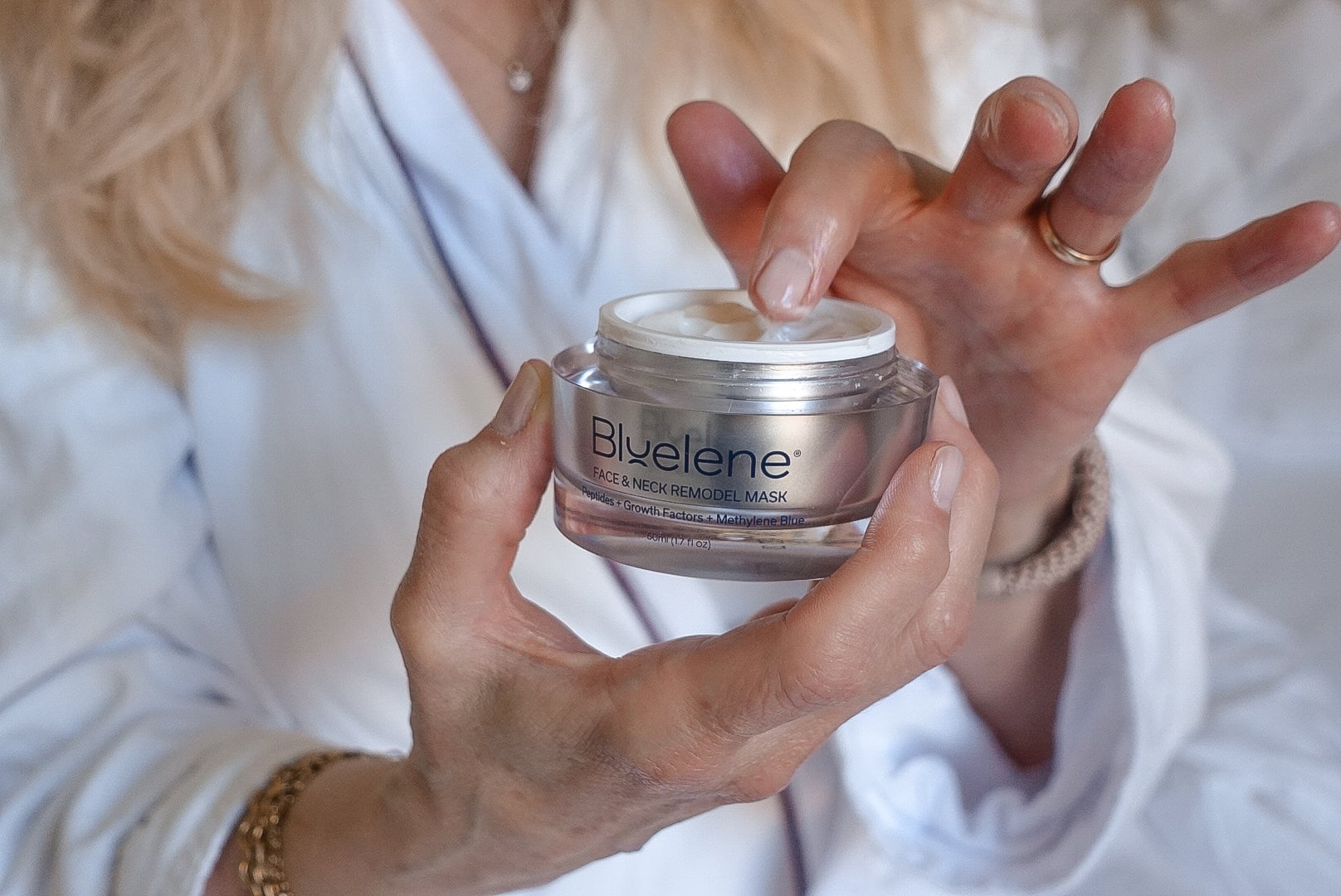
Following the scientist’s discovery, the university patented the compound for topical use. From there, it was a matter of taking it from lab to market. Cao linked up with high-tech alum Jasmin El Kordi through UM Ventures, a program that connects UMD researchers with business-minded folks. Together, Cao and El Kordi founded mBlue Labs, the beauty company behind Bluelene, the only product line made with the patented agent. El Kordi is the company’s CEO, launching Bluelene to customers in 2019.
Offerings have expanded over the past seven years beyond the initial night cream. “When we went into market, we thought, ‘We’re going to serve people 50-plus,’ ” says El Kordi. “But no, we have customers starting at about 20. They’re young Gen-Zers who want to hold on-to their skin.” Additions to the product line include a coral-safe sunscreen (the team built a reef farm for testing) and an elasticity cream released in fall 2025 that’s designed to maintain skin structure—a response to “Ozempic face,” the drooping facial and neck skin that sometimes results from quick weight loss. The most recent launch, in May, is a hair-growth product.
This article appears in the June 2026 issue of Washingtonian.

Daniella Byck joined Washingtonian in 2022. She was previously with Outside Magazine and lives in Takoma.