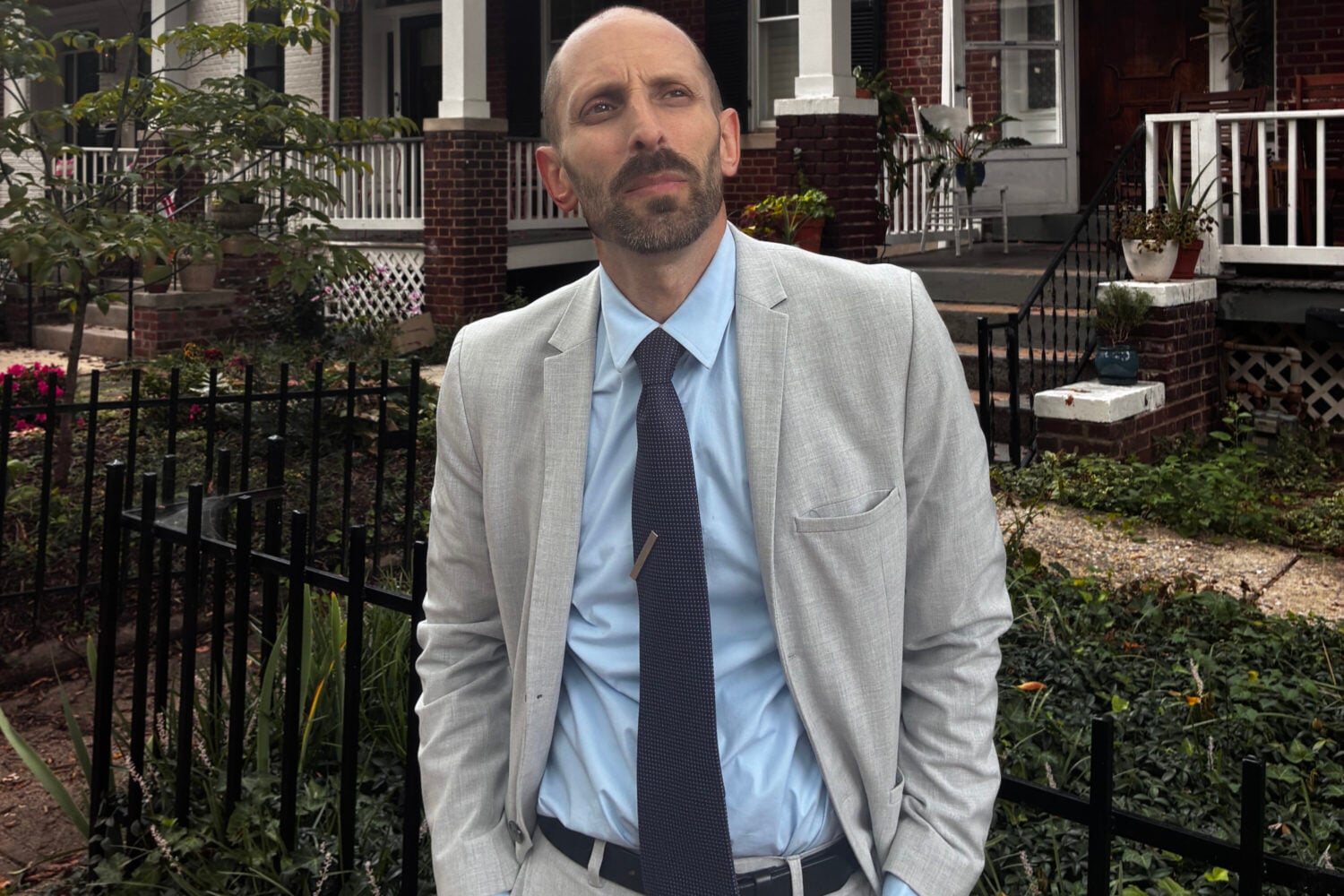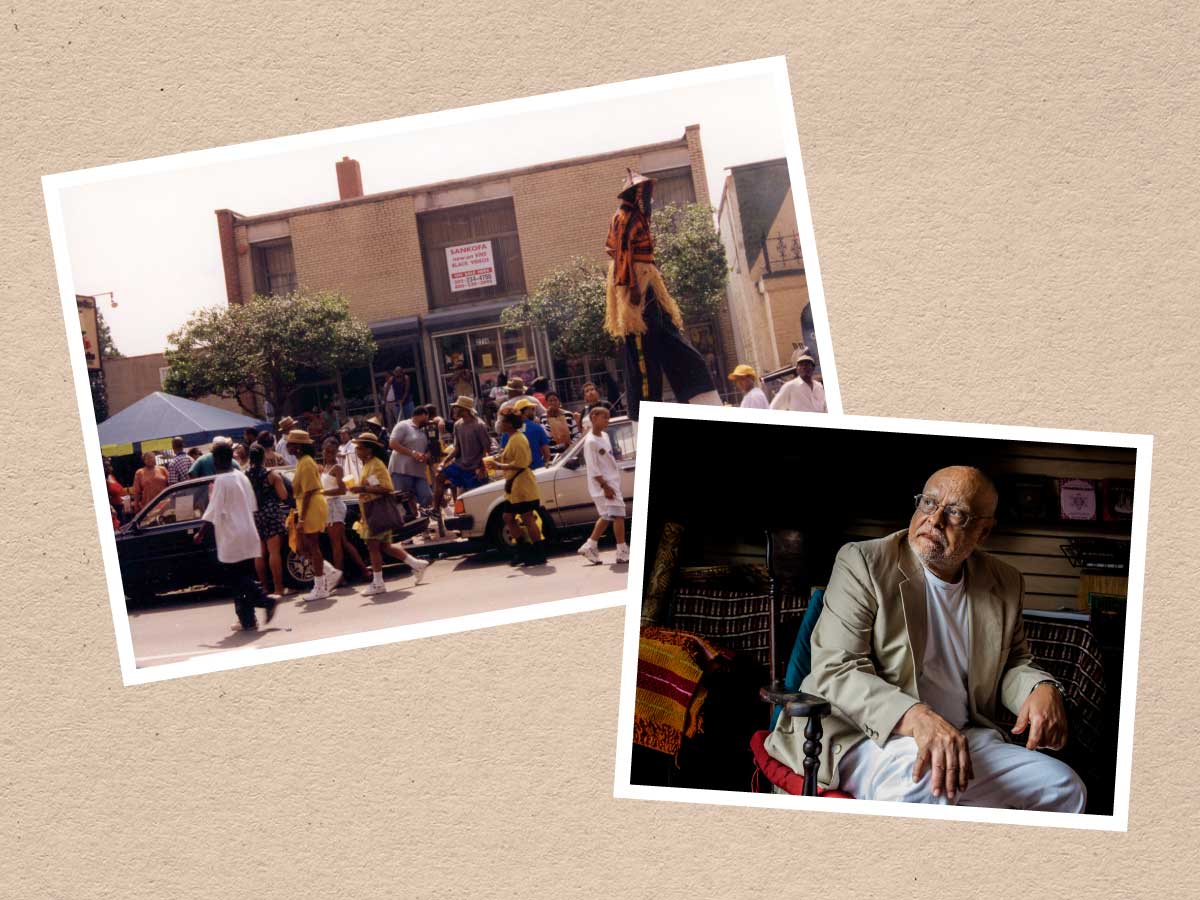
Ethiopian-born filmmaker and retired Howard University professor Haile Gerima debuted his best-known movie, Sankofa, in 1993. The acclaimed film follows a modern Black American woman thrust into an enslaved past. Sankofa, the LA Times wrote, “is a celebration of the strength of black people, in drawing upon their spiritual roots, to defy their oppressors—past and present alike.” Since 1997, Gerima and his wife, Shirikiana Aina Gerima, have also owned Sankofa Video, Books & Cafe, near Howard’s campus, where students and community members hang out, eat, and attend film screenings, author chats, and other events. Gerima reflects here on how support for Sankofa the movie led to Sankofa the cultural hub.
“I came to DC in ’75 to teach at Howard University. I left Howard for two years in 1993 just to distribute Sankofa. Washington is where we started what we call the “Sankofa Family” that helped us distribute the film in the Black community, raise money, and then go to other states.
“We called community elders that were supportive of cultural movements, rented a theater, and showed them the film. I said, ‘If you want to help us, if you believe in the film, show [that you do].’ And [the Sankofa Family] formed there.
I thought I was [dreaming], because the outcome was not what I expected. We marched from the Ghanaian Embassy, because the film was shot in Ghana. They drummed [in a procession] all the way to the theater. After that, the film sold out. Black people lined up, even from out of state.
“[Meanwhile] my wife and I always wanted a bookstore where you ‘read’ films and books together. We wanted to make sure we did relevant things with whatever money we got [from the film]. The idea was to have a film-production place where we [also] distribute our own films, so we paired it: video and books.
“My father [a historian and playwright] had a bookstore where I used to work. When he published a book, he wanted a store [to sell it], so he bought this broken ambulance from the Italian war [with Ethiopia] and made that a bookstore.
“At Sankofa’s opening in 1997, with [writers like] Sonia Sanchez and Haki Madhubuti, we didn’t have a stage—we were just in the parking lot. Community activists and poets from Chicago, Philadelphia came, saying, ‘This is our place.’
“All the time, Black folks pass through, buying things, renting the space, or sometimes requesting it for community meetings or study groups. The other day, a brother brought a special flower for Sankofa and planted it in front of our building. I was emotional—I left quickly.
“[But without the film] there would not be a bookstore. It was like a university for me on the capacity of the Black community, how giant they are when they believe in you.”
This article appears in the July 2026 issue of Washingtonian.

Dara T. Mathis is a journalist and nonfiction writer who joined Washingtonian in Fall 2025 as an Editorial Fellow. A 2024 recipient of the American Mosaic Journalism Prize, she resides in Prince George’s County, Maryland.