I did not know the man on the screen, but I saw him all the time.
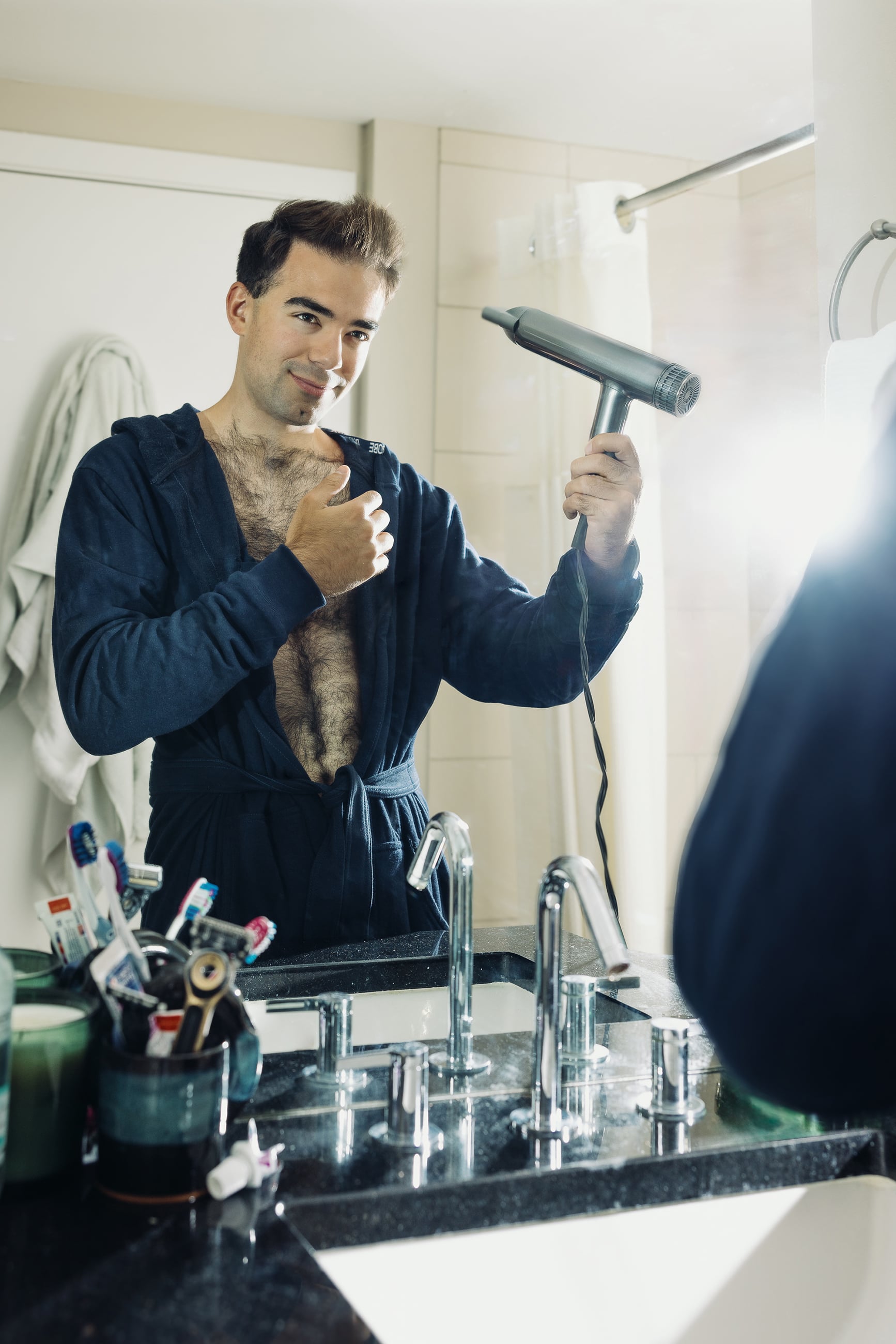
He’d pop up between other things in my Instagram feed: a guy playing golf, a beautiful woman, a hand running a knife sideways over the crispy skin of a piece of pork belly. I watched him walk toward the camera and point at his outfit—lavender shirt, blue slacks, purple tie—before cracking an awkward smile and crossing his arms. I watched him make dinner. That was disconcerting. He didn’t seem to be much of a cook; I’d never seen someone chop with such hesitation. He talked about how he spent his time in Washington, a city I knew pretty well. But he never did much of anything I hadn’t thought of before.
Other people started sending me videos of the man on the screen. Why is he smiling like that? Why is he putting the oil on the salmon that way? Why is he so excited about this new-development restaurant? Is this some kind of elaborate bit? I wasn’t sure, even as I kept seeing him more and more. The Washington Post profiled him and assured readers it wasn’t a bit.
The man on the screen tagged all the brands in his posts. A baseball team, a shoe company, a fast-casual food chain, an ice-cream company, a local golf course. It was hard to tell what he was being paid for and what was just a public attempt to get some free stuff. Either way, the getting seemed good. A sandwich chain flew him out to the Midwest. A ticket company sent him to a football game. He got a promo code that was also his name.

The man on the screen drew the attention of somebody on Capitol Hill. The Democratic Party was starting to panic about reaching younger people, so a senator in his late sixties ended up in a video awkwardly crossing his arms with the man on the screen. That was his thing now, the arm-crossing. He called it the “arm roll.” He had another thing, too. He called it “vibrant masculinity.” The concept wasn’t fully baked—it seemed to be about being a kind man who sometimes wore a flashy tie. Nevertheless, a few months later, he talked to another senator, a younger one who seemed to have his eyes on the presidency, about being a man.
Some people in the comments had always made fun of the man on the screen. Over time, their derision became the main attraction. They mocked his hair, his gait, the way he chose to play a Wheel of Fortune simulator after dinner. They sexualized him to belittle him: Don’t let my wife see this. It was funny, you see, because he was cleaning his apartment and talking about how he was practicing to be a caregiver for a family that he would have one day but that currently did not exist. It would have been easier to just watch the video, wonder what the point of it was, and move on, but these people kept at it. Eventually, they settled on a refrain that grew louder and louder. Hog reveal? Meaning his penis.
The man on the screen paid them no mind, at least as far as I could tell. He kept posting. He did a six-month campaign for a famous coffee-and-doughnut chain, which ended in a post about his dead grandmother and all the places he’d had coffee and doughnuts with her when he was a child. The comments were brutal. You’re pimping out your dead grandma for cash? He took the post down. The chain was cool with that. Later, though, he would tell me he regretted nothing—that his grandmother, pimped out or not, was laughing in heaven. Besides, the campaign paid him roughly $45,000.
Sometimes I wondered how the man on the screen lived with all of this.
ony P—down tens of thousands of followers from his peak and making hundreds of thousands less than he did when he first went viral—is pissed. The first time we speak formally, the conversation lasts four hours. The man on the screen has a lot to get off his chest. As it turns out, he sees the comments. They bother him.
That hairline is hanging on for dear life.
Tony P but the P stands for Prepubescent physique.
Tone why does your apartment look like a fancy Holiday Inn?
Tone have you ever been in a room with other people?
“I am done sugarcoating it for them,” he says about some of his followers, whom he calls haters. “I am done being humble for them. I am done saying that I suck at everything, because half of my followers hate me. Good! Because, guess what, I hate them, too.”
For about three years now, Tony P—known offline as Anthony Polcari—has been buffeted and boosted by forces beyond his control. Mention him to most people and they’ll look at you with confusion, perhaps wondering why you’re asking them about what sounds like a Bachelorette contestant. But among young people in the DC area, the 27-year-old seems to have greater name recognition than any member of the Washington Wizards.
In 2023, about two years after his college graduation, Tony went viral on Instagram. He did not do trendy dances. He did not show hog. He simply posted day-in-the-life vlogs in which he traversed the city as a white-collar transplant and videos filmed in his apartment in which he modeled, runway-style, the most normal office wear you can imagine. He showed us what he did before going on dates, even though he was mostly just shaving and getting dressed.
Mundane? Sure. But people watched. Lots. At one point, Tony appeared to have about 225,000 followers. They were drawn, perhaps, by his unusual sincerity or by the somewhat rare representation of yuppie life in Washington. The algorithm, famously, can be gamed for the right price, but sometimes somebody will just stumble into being noticed and be left to deal with the consequences. Tony became an influencer, as famous as someone with a low-six-figure follower count can be, and something of a local meme.
Being a meme paid well. Asked about money, Tony gets a little squirrelly. The only time he goes off record is when discussing his earnings. Still, he’s comfortable disclosing this: During his last year in an office job, at a small consulting firm, he made just under six figures. In his first two years influencing, 2023 and 2024, he made about half a million dollars.
That math led Tony to quit his day job. Not long after, things turned. Brands found other ways to spend money. People found other things to watch. Viewers who remained became increasingly snarky, even cruel. They were in on a shared joke, and Tony was the butt of it. Last year, his income dipped below what he’d made in his office job. These days, Tony knows the clock is ticking, that what he calls his 25 minutes of fame might soon be over. “I stretched it out a decent amount of time,” he says. “A year and a half is not bad. I think 15 minutes is like, you know, Hawk Tuah.”
Tony knows he has more to offer than a quip about fellatio. He’s trying to pivot. Away from social media and toward broadcasting. Tony announced sporting events in high school and a little bit in college. He’s been working for the local Fox station. On television, he believes, he can still make money and chase his dreams, without the haters demanding hog. It’s an open question whether he’ll succeed in trading one screen for another—or if the new screen will free him from all the problems that have come with the current one.
n 2023, the year Tony started posting in earnest, 57 percent of Generation Z wanted to be influencers. Perhaps that’s because, on social media, you don’t need to become an enormous star to enjoy some of the financial benefits of celebrity. Michael Jordan once sold shoes and sports drinks to the monoculture masses. Tony P can sell chicken marinade to twentysomethings without much experience in the kitchen. “Brands are willing to pay more if a creator has cultivated a dedicated following,” says Brooke Erin Duffy, a professor at Cornell who studies social media. “Creators with smaller followings seem to furnish higher levels of engagement.”
This seems like a nice life, if you don’t think about it too hard. Order whatever you’d like: The meal is on the house. You don’t have to save up for that piece of clothing or gear—it’ll be at your door almost as soon as you ask for it. Want to go on vacation? Somebody might pick up the tab on that, too. Or as Tony puts it, “FootJoy is sending me stuff. Cava. Comcast, who I’m a customer of, calls. I’m like, ‘What?’ This is freaking crazy, right? All these big brands, like the Nationals, the Commanders, are paying me to go to games. I’m sitting in the suite and I get paid?”

But brands do not work with you because they love you. They work with you because you’re a good billboard, and if traffic on your stretch of the highway goes down, the deals will dry up. So keep the numbers high. Give people what they came for. You may decide that a certain post is too degrading, that a potential sponsor is the wrong fit, that subjecting your daily life to the parasocial scrutiny of online strangers is profoundly unhealthy, but then those goodies may stop appearing on your doorstep. Is that something you’re okay with? Or will you do what you need to do to generate attention?
I asked Jack Sacco, Tony’s childhood friend, what he was like as a kid. “You’ll probably call him Tony,” he told me. “But to me, he’s always been AJ: Anthony John. So the whole ‘Tony P’ moniker is never how I refer to him. But I respect the brand name.”
Anthony John was an only child, a teacher’s pet, a boy with few friends in grade school. He had to change something, he says, “to make myself palatable. I thought Anthony was not a very attractive name. So I changed my name to AJ, because I thought it was cooler. And one of my buddies, who was one of the cool kids that liked me in the early years, was named AJ, and he had changed his name early on. So I thought, ‘Okay, I’ll do the same thing as him.’
“I also thought it would get me attention. And it did.”
Tony says he took an unusually long time to start talking, leading his aunt to worry and advise his parents to take him to speech therapy. About six months later, he started gabbing. The joke in Tony’s family is that he hasn’t shut up since. He was a fibber early on: In second grade, he told his class he was going to have a sibling, because he remembered a classmate who’d gotten attention when a new baby in his family was born.

As a tween, Tony started playing golf, becoming obsessed with the game. He was always insecure about not being a great athlete. If he succeeded on the course, he figured, it would prove he wasn’t less of a man than the jocks. In middle school, he got his first taste of broadcasting as the anchor on the morning announcements. He relished the performance, getting to use some of the skills he’d learned in drama club. In high school, he started announcing sporting events via livestream—football games, golf matches, hockey, basketball, even water polo. He’d delight in talking to the baseball players about their walk-up songs. He wasn’t quite one of the jocks, but they were close enough.
Tony also started getting positive feedback, from classmates and their parents: “It wasn’t just that they would say, ‘Oh, he’s so cute.’ It was a kind of affirmation that mattered. It was, ‘This seems like it’s effortless to you and you’re a natural.’ ”
A mentor suggested Tony take a look at Syracuse University, a factory for future sportscasters, but he thought it too impractical. He was from a middle-class family, and his parents had already stretched financially to send him to a private high school. He wasn’t going to take out loans so he could spend years or decades doing local news in small towns across the country, hoping to get a call-up to a big city. Instead, he did what a practical person does. He went to the University of Richmond and studied accounting.
Tony took a job at KPMG in Massachusetts after graduating but found it “utterly boring,” so he applied for a gig at a small consulting firm in DC. He got it and started in the summer of 2022. He enjoyed being a yuppie—he had no reservations about the kickball leagues and work drinks. He went on Hinge and embarked on a handful of short-term relationships. The last one broke his heart. At work, he was visibly down in the dumps. His boss intervened.
“He was like, ‘Hey, what have you been wanting to do that you haven’t done because you haven’t had enough time or you were just too chicken to do it?’ ” Tony recalls. “And I’m like, ‘Well, you know, I’ve been watching these influencers recently.’ ”
efore all this started, Tony says, he hated social media. He never used Facebook or YouTube. He posted on Instagram, but in-frequently and reluctantly. But in Washington, he started seeing accounts meant for people just like him: young transplants who weren’t too cool to go to meetups.
“They would say, ‘Here’s how you make friends in DC,’ ” he says. “ ‘Go to these places, try here, do this,’ and I would do those things, and they would work. And I really would enjoy it. And I thought, ‘I kind of know what it’s like to feel kind of alone in a new city and be anxious. You know, what if I do something like that?’ ”
Tony began posting, giving himself a creative outlet and trying to help others like him. He didn’t expect it to go anywhere. Maybe, at best, he’d pick up a few thousand followers and find a way to make a few hundred bucks a month on top of his salary. His first posts as Tony P, from May 2023, aren’t that different from his current ones—outfit-modeling, “weekend in my life” montages—but they’re less polished, with dead air and delivery stumbles. Still, they hit.
“It just gets from 50,000 to 100,000 to 500,000 views,” he recalls. “Then it starts, like, really going up.” Tony sounds increasingly excited. “And, like, the follower count starts to tick up. It’s 20,000. It’s 30,000. It’s, like, 65,000. What the f— is this? Right? It’s just going viral.”
The local news called. That gave him a bump. Then the Post. Another bump. “People are stopping me in f—ing bars and restaurants,” he says. “I’m going to clubs in DC, and I’m going to the front of the line.” At a work outing at a Nats game, he got mobbed by fans and worried that the partners at his job would be upset about his side hustle. Instead, they were amused. If anything, it would be good for the company.
The brand deals started coming in. Seven thousand dollars for one post. Tony had never seen a check that big in his life. But, he says, “to be honest with you, I felt like . . . before it took off and I was getting 20 likes . . . I felt better then than I do now.”
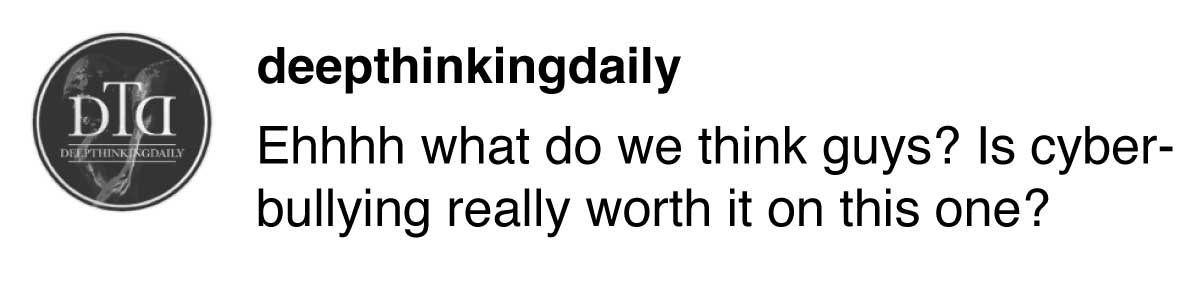
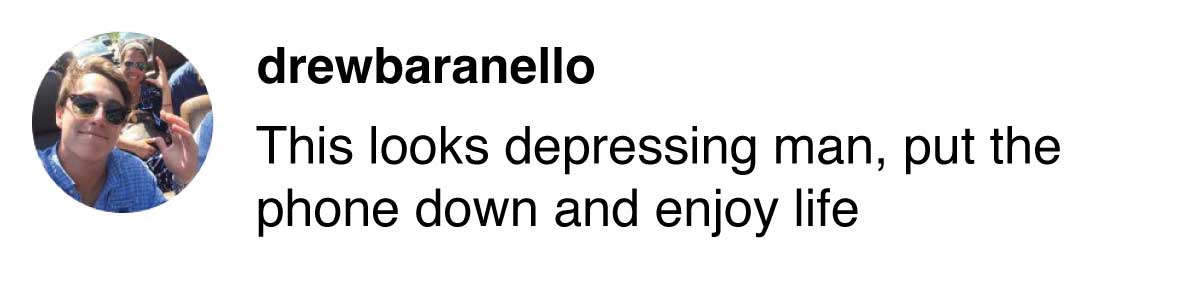
The haters soon hijacked the show. Every comment section filled up with them. “I have this intense anger at those people,” Tony says. “It’s like, just leave me the f— alone, right? Just please just scroll by. I’d like to someday open my account and not have to read those comments.”
On the other hand, Tony admits, “my business is directly tied to those haters. Like, when my mother and I did a cooking video together and guys made sexual jokes about my mother. Would I have got that money without the hate-watching? Because I got a lot of comments or hate-watching views, right? And maybe the algorithm pushed it out to the people that really liked what I did.”
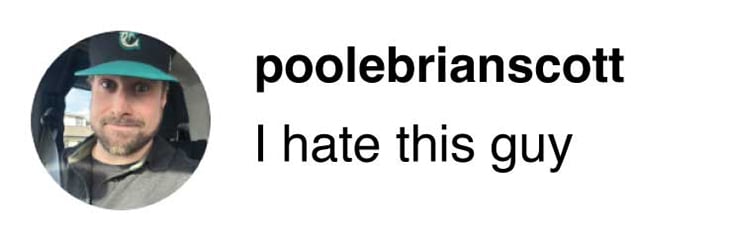
Social media exists to engage: The more we click and scroll, the more advertisements can be pumped in front of our eyeballs. Content that elicits negative emotions—dunks on political rivals and outrageous news stories, sure, but even anodyne cooking demonstrations for the right kind of viewer—is particularly good at holding our gaze. To be an influencer is to invite, almost by default, a Greek chorus of haters into your life. You may not like them, but you’re probably not getting paid without their attention.
At some level, Tony knows this. I’m reminded of a video he once posted from Times Square, in which he waxed poetic about how great seeing the place is “when you’re passionate about marketing and branding.”
“Maybe I do have to give credit to some of the hate-watchers, even though I can’t stand them,” he says. “I have to give them credit for, potentially, helping to grow my reach.”
n a cold day in March, I meet Tony at his office in a coworking space on K Street. He uses it for free, because he helps the owners out with—what else?—advertising. Tony guides the company on its own content and tags the place every once in a while in his posts. His personal piece of the place is a modest room without much in it: a desk, a bookshelf, a Coca-Cola-branded mini fridge where he puts a Chick-fil-A milkshake he’s saving for later.
Tony shows me some decorations he’s picked up from Eastern Market. It’s a series of old magazine ads. Bell phones. Coca-Cola, again. Johnny Carson sitting in a chair with a massive Saint Bernard at his feet, a full-pager for Smirnoff vodka.
We sit down in a conference room and talk about where Tony wants to go. He’s smarter, shrewder, than his haters give him credit for. Seemingly every day, another washed-up influencer starts hawking a meme coin in a desperate attempt to avoid going back to the world the rest of us live in. But even at Tony’s peak, he understood he wasn’t going to make money online forever. Back in 2023, he began appearing on Fox 5—first as a morning-show subject, then as a panelist on Like It or Not, a nightly lifestyle show. After chopping it up with the hosts, he was invited back, eventually landing a paid contributor role.
Today, Tony does work for the station every weeknight. He has a nightly program called Live Zone Primetime that streams online. On Tuesdays, he does five different shows, most of which are on the linear station. He’s just a contractor, though, and says his broadcasting earnings cover only about 30 percent of his expenses. He makes up the difference with his consulting work—he started his own independent firm in late 2024—and online brand deals.
Watch Tony on TV and you can tell he’s still learning how to host. He stumbles at times but is notably less awkward than during his early appearances. Tony says he cares deeply about learning the craft and that he wants “Coca-Cola fame”—not the “Tab fame” of social media. He sees television as a place for polished products, where succeeding as an on-camera personality involves more than just the good fortune—or dumb luck—of the algorithm smiling upon you.
I believe Tony. I also wonder if television represents a potential escape. Repeatedly, he told me how much he resented getting flak from his followers. This includes the obvious haters and gleeful cyberbullies, but also the genuine fans who take issue with his changing life and the ways that manifests on Instagram. They gripe that he’s gotten too big or is doing too much content that feels unrelatable. Why, he wonders, do they resent his success?
I tell Tony they probably don’t see him as a person. How could they? He’s just another character on the feed, a twentysomething consultant in DC, in a show where the audience can give real-time feedback. But on TV, on a bright set with a makeup team and commercial breaks and primary colors everywhere, maybe that will be different. Maybe he and the audience will both understand that it’s all artifice—that Tony exists separately from Anthony John, from the brands, from the fans, from the very online world they all inhabit.
Tony sounds almost desperate to find out, like he’s winding up to throw one last Hail Mary before his 25 minutes expire. “I know I can do this,” he says. “I just got to hit this one more time. If I just get a concept, then I’ll be in that room with the Amelia Dimoldenbergs and the Sean Evanses. And [Ryan] Seacrest. I’ve just got to find that open receiver.”
Ideally, Tony wants—well, it’s hard to say exactly what he wants. Maybe that’s part of the problem. Over the months we spoke, he floated a number of goals. Be a broadcaster. A talk-show host. A game-show host. Have a podcast. Have a whole podcast network. Be the modern Regis Philbin, Conan O’Brien, Mister Rogers. At one point, I asked him if he wanted to run for office one day. He gave a long answer that didn’t contain the word “no.”
Mostly, he just wants a chance to be bigger. “There isn’t very much I wouldn’t do for an opportunity like that,” he says. “I will crawl over hot coals. I’ll travel every day of the year. I’ll get three hours of sleep a night if I have to. I do define myself by my craft. My dream occupation is part of me, and it always will be. I do judge myself on my work, and I always will.”
Tony pauses. “My therapist, all the time, will go, ‘You shouldn’t do that.’ Well, I don’t really care.”
And if it doesn’t work out?
“I get scared about how I might handle it.”
n late March, people start sending me links, all to the same post. The man on the screen stands in a parking lot, head tilted and eyebrows raised, his arms bent like he’s doing a crotch chop. His hands and groin are blurred. The caption reads: “A Reveal unlike any other drops tomorrow.” The hog, it seems, is nigh. The comments are ecstatic.
Im screaming.
This will be the greatest day of my life.
Thanks for the heads up, Tone. I’ve got one day to get my wife off here.
Tony has always been afraid that people close to him will abandon him. When he was young, his dad and mom split, and after she remarried, money was tight and things could get tense. So he developed a habit. He’d move slowly, lie down on the carpet to make sure the stairs wouldn’t creak under his weight, and listen to his mom and stepdad. “Just to see if everything was okay,” he says. “And if they were okay, then I was okay.”
Tony also remembers, as a child, being aware that his great-aunt—a Grandmotherly figure to him—was dying, but he never wanting to admit it to himself. Then one day at church, while the congregants were giving the sign of peace, he turned to her and burst into tears: I love you. Don’t leave me.

“I think a lot of that stuff has created a reflex in me,” Tony says. “Please love me. Please like me. Don’t abandon me. Stop unfollowing me.”
On the big day, Tony posts again. It’s the same picture but with the blurred area clear. There is no hog. Instead, Tony is holding the TravisMathew NuAge Mega golf shoe. Swipe to the next slide and there’s a surf-rock-soundtracked montage of Tony hitting golf shots. He’s doing a voiceover with his best Jim Nantz impression: “A spiked traction system that creates maximum grip and stability as I clear the hips and drive into the ball.”
Recently, Tony’s stuff had been generating minimal attention—50 to 100 comments, 400 or 600 or 900 likes. But the returns on this stunt are good, for both the teaser post and the reveal. Tony is back in the thousands. The comment section is buzzing. When we talk, he’s amped: “Years ago, when I first started, I would probably go on a run with a million-plus views per post for, like, a couple months. That’s how the algorithm used to work. Now you can have that many views and then go back down to 80,000 the next day. It’s so different now. It really makes you earn it. So it was good to get back to that.
“And, look, it also makes me more palatable to other companies.”
For a long time, Tony was hesitant to lean into the hog stuff. It seemed crude. Off-brand. It was “nasty, locker-room humor,” he says, the kind of unvibrant masculinity the haters wanted. Only now that he’s broken the seal, Tony sounds happy. Maybe he should be. He says he was paid around $12,000 for the posts—not exactly Kardashian money but enough to cover rent and then some.
And yet: This was a chip that Tony could cash in only once. The “reveal” will not go viral a second time. There can’t be a second time. All of the comments, all of the cruel schoolyard taunts exploding in scale since the algorithm first chose him: This was the price for everything. Was it worth it?
Tony seems to brush my question off. Yeah, he says, he could have held out for $50,000, maybe even $100,000. But tonight, at least, those aren’t the numbers on his mind. “It felt really good,” he says, “to go viral again.”
I did not know the man on the screen, but I saw him all the time.
He’d pop up between other things in my Instagram feed: a guy playing golf, a beautiful woman, a hand running a knife sideways over the crispy skin of a piece of pork belly. I watched him walk toward the camera and point at his outfit—lavender shirt, blue slacks, purple tie—before cracking an awkward smile and crossing his arms. I watched him make dinner. That was disconcerting. He didn’t seem to be much of a cook; I’d never seen someone chop with such hesitation. He talked about how he spent his time in Washington, a city I knew pretty well. But he never did much of anything I hadn’t thought of before.
Other people started sending me videos of the man on the screen. Why is he smiling like that? Why is he putting the oil on the salmon that way? Why is he so excited about this new-development restaurant? Is this some kind of elaborate bit? I wasn’t sure, even as I kept seeing him more and more. The Washington Post profiled him and assured readers it wasn’t a bit.
The man on the screen tagged all the brands in his posts. A baseball team, a shoe company, a fast-casual food chain, an ice-cream company, a local golf course. It was hard to tell what he was being paid for and what was just a public attempt to get some free stuff. Either way, the getting seemed good. A sandwich chain flew him out to the Midwest. A ticket company sent him to a football game. He got a promo code that was also his name.
The man on the screen drew the attention of somebody on Capitol Hill. The Democratic Party was starting to panic about reaching younger people, so a senator in his late sixties ended up in a video awkwardly crossing his arms with the man on the screen. That was his thing now, the arm-crossing. He called it the “arm roll.” He had another thing, too. He called it “vibrant masculinity.” The concept wasn’t fully baked—it seemed to be about being a kind man who sometimes wore a flashy tie. Nevertheless, a few months later, he talked to another senator, a younger one who seemed to have his eyes on the presidency, about being a man.
Some people in the comments had always made fun of the man on the screen. Over time, their derision became the main attraction. They mocked his hair, his gait, the way he chose to play a Wheel of Fortune simulator after dinner. They sexualized him to belittle him: Don’t let my wife see this. It was funny, you see, because he was cleaning his apartment and talking about how he was practicing to be a caregiver for a family that he would have one day but that currently did not exist. It would have been easier to just watch the video, wonder what the point of it was, and move on, but these people kept at it. Eventually, they settled on a refrain that grew louder and louder. Hog reveal? Meaning his penis.
The man on the screen paid them no mind, at least as far as I could tell. He kept posting. He did a six-month campaign for a famous coffee-and-doughnut chain, which ended in a post about his dead grandmother and all the places he’d had coffee and doughnuts with her when he was a child. The comments were brutal. You’re pimping out your dead grandma for cash? He took the post down. The chain was cool with that. Later, though, he would tell me he regretted nothing—that his grandmother, pimped out or not, was laughing in heaven. Besides, the campaign paid him roughly $45,000.
Sometimes I wondered how the man on the screen lived with all of this.
ony P—down tens of thousands of followers from his peak and making hundreds of thousands less than he did when he first went viral—is pissed. The first time we speak formally, the conversation lasts four hours. The man on the screen has a lot to get off his chest. As it turns out, he sees the comments. They bother him.
That hairline is hanging on for dear life.
Tony P but the P stands for Prepubescent physique.
Tone why does your apartment look like a fancy Holiday Inn?
Tone have you ever been in a room with other people?
“I am done sugarcoating it for them,” he says about some of his followers, whom he calls haters. “I am done being humble for them. I am done saying that I suck at everything, because half of my followers hate me. Good! Because, guess what, I hate them, too.”
For about three years now, Tony P—known offline as Anthony Polcari—has been buffeted and boosted by forces beyond his control. Mention him to most people and they’ll look at you with confusion, perhaps wondering why you’re asking them about what sounds like a Bachelorette contestant. But among young people in the DC area, the 27-year-old seems to have greater name recognition than any member of the Washington Wizards.
In 2023, about two years after his college graduation, Tony went viral on Instagram. He did not do trendy dances. He did not show hog. He simply posted day-in-the-life vlogs in which he traversed the city as a white-collar transplant and videos filmed in his apartment in which he modeled, runway-style, the most normal office wear you can imagine. He showed us what he did before going on dates, even though he was mostly just shaving and getting dressed.
Mundane? Sure. But people watched. Lots. At one point, Tony appeared to have about 225,000 followers. They were drawn, perhaps, by his unusual sincerity or by the somewhat rare representation of yuppie life in Washington. The algorithm, famously, can be gamed for the right price, but sometimes somebody will just stumble into being noticed and be left to deal with the consequences. Tony became an influencer, as famous as someone with a low-six-figure follower count can be, and something of a local meme.
Being a meme paid well. Asked about money, Tony gets a little squirrelly. The only time he goes off record is when discussing his earnings. Still, he’s comfortable disclosing this: During his last year in an office job, at a small consulting firm, he made just under six figures. In his first two years influencing, 2023 and 2024, he made about half a million dollars.
That math led Tony to quit his day job. Not long after, things turned. Brands found other ways to spend money. People found other things to watch. Viewers who remained became increasingly snarky, even cruel. They were in on a shared joke, and Tony was the butt of it. Last year, his income dipped below what he’d made in his office job. These days, Tony knows the clock is ticking, that what he calls his 25 minutes of fame might soon be over. “I stretched it out a decent amount of time,” he says. “A year and a half is not bad. I think 15 minutes is like, you know, Hawk Tuah.”
Tony knows he has more to offer than a quip about fellatio. He’s trying to pivot. Away from social media and toward broadcasting. Tony announced sporting events in high school and a little bit in college. He’s been working for the local Fox station. On television, he believes, he can still make money and chase his dreams, without the haters demanding hog. It’s an open question whether he’ll succeed in trading one screen for another—or if the new screen will free him from all the problems that have come with the current one.
n 2023, the year Tony started posting in earnest, 57 percent of Generation Z wanted to be influencers. Perhaps that’s because, on social media, you don’t need to become an enormous star to enjoy some of the financial benefits of celebrity. Michael Jordan once sold shoes and sports drinks to the monoculture masses. Tony P can sell chicken marinade to twentysomethings without much experience in the kitchen. “Brands are willing to pay more if a creator has cultivated a dedicated following,” says Brooke Erin Duffy, a professor at Cornell who studies social media. “Creators with smaller followings seem to furnish higher levels of engagement.”
This seems like a nice life, if you don’t think about it too hard. Order whatever you’d like: The meal is on the house. You don’t have to save up for that piece of clothing or gear—it’ll be at your door almost as soon as you ask for it. Want to go on vacation? Somebody might pick up the tab on that, too. Or as Tony puts it, “FootJoy is sending me stuff. Cava. Comcast, who I’m a customer of, calls. I’m like, ‘What?’ This is freaking crazy, right? All these big brands, like the Nationals, the Commanders, are paying me to go to games. I’m sitting in the suite and I get paid?”
But brands do not work with you because they love you. They work with you because you’re a good billboard, and if traffic on your stretch of the highway goes down, the deals will dry up. So keep the numbers high. Give people what they came for. You may decide that a certain post is too degrading, that a potential sponsor is the wrong fit, that subjecting your daily life to the parasocial scrutiny of online strangers is profoundly unhealthy, but then those goodies may stop appearing on your doorstep. Is that something you’re okay with? Or will you do what you need to do to generate attention?
I asked Jack Sacco, Tony’s childhood friend, what he was like as a kid. “You’ll probably call him Tony,” he told me. “But to me, he’s always been AJ: Anthony John. So the whole ‘Tony P’ moniker is never how I refer to him. But I respect the brand name.”
Anthony John was an only child, a teacher’s pet, a boy with few friends in grade school. He had to change something, he says, “to make myself palatable. I thought Anthony was not a very attractive name. So I changed my name to AJ, because I thought it was cooler. And one of my buddies, who was one of the cool kids that liked me in the early years, was named AJ, and he had changed his name early on. So I thought, ‘Okay, I’ll do the same thing as him.’
“I also thought it would get me attention. And it did.”
Tony says he took an unusually long time to start talking, leading his aunt to worry and advise his parents to take him to speech therapy. About six months later, he started gabbing. The joke in Tony’s family is that he hasn’t shut up since. He was a fibber early on: In second grade, he told his class he was going to have a sibling, because he remembered a classmate who’d gotten attention when a new baby in his family was born.
As a tween, Tony started playing golf, becoming obsessed with the game. He was always insecure about not being a great athlete. If he succeeded on the course, he figured, it would prove he wasn’t less of a man than the jocks. In middle school, he got his first taste of broadcasting as the anchor on the morning announcements. He relished the performance, getting to use some of the skills he’d learned in drama club. In high school, he started announcing sporting events via livestream—football games, golf matches, hockey, basketball, even water polo. He’d delight in talking to the baseball players about their walk-up songs. He wasn’t quite one of the jocks, but they were close enough.
Tony also started getting positive feedback, from classmates and their parents: “It wasn’t just that they would say, ‘Oh, he’s so cute.’ It was a kind of affirmation that mattered. It was, ‘This seems like it’s effortless to you and you’re a natural.’ ”
A mentor suggested Tony take a look at Syracuse University, a factory for future sportscasters, but he thought it too impractical. He was from a middle-class family, and his parents had already stretched financially to send him to a private high school. He wasn’t going to take out loans so he could spend years or decades doing local news in small towns across the country, hoping to get a call-up to a big city. Instead, he did what a practical person does. He went to the University of Richmond and studied accounting.
Tony took a job at KPMG in Massachusetts after graduating but found it “utterly boring,” so he applied for a gig at a small consulting firm in DC. He got it and started in the summer of 2022. He enjoyed being a yuppie—he had no reservations about the kickball leagues and work drinks. He went on Hinge and embarked on a handful of short-term relationships. The last one broke his heart. At work, he was visibly down in the dumps. His boss intervened.
“He was like, ‘Hey, what have you been wanting to do that you haven’t done because you haven’t had enough time or you were just too chicken to do it?’ ” Tony recalls. “And I’m like, ‘Well, you know, I’ve been watching these influencers recently.’ ”
efore all this started, Tony says, he hated social media. He never used Facebook or YouTube. He posted on Instagram, but in-frequently and reluctantly. But in Washington, he started seeing accounts meant for people just like him: young transplants who weren’t too cool to go to meetups.
“They would say, ‘Here’s how you make friends in DC,’ ” he says. “ ‘Go to these places, try here, do this,’ and I would do those things, and they would work. And I really would enjoy it. And I thought, ‘I kind of know what it’s like to feel kind of alone in a new city and be anxious. You know, what if I do something like that?’ ”
Tony began posting, giving himself a creative outlet and trying to help others like him. He didn’t expect it to go anywhere. Maybe, at best, he’d pick up a few thousand followers and find a way to make a few hundred bucks a month on top of his salary. His first posts as Tony P, from May 2023, aren’t that different from his current ones—outfit-modeling, “weekend in my life” montages—but they’re less polished, with dead air and delivery stumbles. Still, they hit.
“It just gets from 50,000 to 100,000 to 500,000 views,” he recalls. “Then it starts, like, really going up.” Tony sounds increasingly excited. “And, like, the follower count starts to tick up. It’s 20,000. It’s 30,000. It’s, like, 65,000. What the f— is this? Right? It’s just going viral.”
The local news called. That gave him a bump. Then the Post. Another bump. “People are stopping me in f—ing bars and restaurants,” he says. “I’m going to clubs in DC, and I’m going to the front of the line.” At a work outing at a Nats game, he got mobbed by fans and worried that the partners at his job would be upset about his side hustle. Instead, they were amused. If anything, it would be good for the company.
The brand deals started coming in. Seven thousand dollars for one post. Tony had never seen a check that big in his life. But, he says, “to be honest with you, I felt like . . . before it took off and I was getting 20 likes . . . I felt better then than I do now.”
The haters soon hijacked the show. Every comment section filled up with them. “I have this intense anger at those people,” Tony says. “It’s like, just leave me the f— alone, right? Just please just scroll by. I’d like to someday open my account and not have to read those comments.”
On the other hand, Tony admits, “my business is directly tied to those haters. Like, when my mother and I did a cooking video together and guys made sexual jokes about my mother. Would I have got that money without the hate-watching? Because I got a lot of comments or hate-watching views, right? And maybe the algorithm pushed it out to the people that really liked what I did.”
Social media exists to engage: The more we click and scroll, the more advertisements can be pumped in front of our eyeballs. Content that elicits negative emotions—dunks on political rivals and outrageous news stories, sure, but even anodyne cooking demonstrations for the right kind of viewer—is particularly good at holding our gaze. To be an influencer is to invite, almost by default, a Greek chorus of haters into your life. You may not like them, but you’re probably not getting paid without their attention.
At some level, Tony knows this. I’m reminded of a video he once posted from Times Square, in which he waxed poetic about how great seeing the place is “when you’re passionate about marketing and branding.”
“Maybe I do have to give credit to some of the hate-watchers, even though I can’t stand them,” he says. “I have to give them credit for, potentially, helping to grow my reach.”
n a cold day in March, I meet Tony at his office in a coworking space on K Street. He uses it for free, because he helps the owners out with—what else?—advertising. Tony guides the company on its own content and tags the place every once in a while in his posts. His personal piece of the place is a modest room without much in it: a desk, a bookshelf, a Coca-Cola-branded mini fridge where he puts a Chick-fil-A milkshake he’s saving for later.
Tony shows me some decorations he’s picked up from Eastern Market. It’s a series of old magazine ads. Bell phones. Coca-Cola, again. Johnny Carson sitting in a chair with a massive Saint Bernard at his feet, a full-pager for Smirnoff vodka.
We sit down in a conference room and talk about where Tony wants to go. He’s smarter, shrewder, than his haters give him credit for. Seemingly every day, another washed-up influencer starts hawking a meme coin in a desperate attempt to avoid going back to the world the rest of us live in. But even at Tony’s peak, he understood he wasn’t going to make money online forever. Back in 2023, he began appearing on Fox 5—first as a morning-show subject, then as a panelist on Like It or Not, a nightly lifestyle show. After chopping it up with the hosts, he was invited back, eventually landing a paid contributor role.
Today, Tony does work for the station every weeknight. He has a nightly program called Live Zone Primetime that streams online. On Tuesdays, he does five different shows, most of which are on the linear station. He’s just a contractor, though, and says his broadcasting earnings cover only about 30 percent of his expenses. He makes up the difference with his consulting work—he started his own independent firm in late 2024—and online brand deals.
Watch Tony on TV and you can tell he’s still learning how to host. He stumbles at times but is notably less awkward than during his early appearances. Tony says he cares deeply about learning the craft and that he wants “Coca-Cola fame”—not the “Tab fame” of social media. He sees television as a place for polished products, where succeeding as an on-camera personality involves more than just the good fortune—or dumb luck—of the algorithm smiling upon you.
I believe Tony. I also wonder if television represents a potential escape. Repeatedly, he told me how much he resented getting flak from his followers. This includes the obvious haters and gleeful cyberbullies, but also the genuine fans who take issue with his changing life and the ways that manifests on Instagram. They gripe that he’s gotten too big or is doing too much content that feels unrelatable. Why, he wonders, do they resent his success?
I tell Tony they probably don’t see him as a person. How could they? He’s just another character on the feed, a twentysomething consultant in DC, in a show where the audience can give real-time feedback. But on TV, on a bright set with a makeup team and commercial breaks and primary colors everywhere, maybe that will be different. Maybe he and the audience will both understand that it’s all artifice—that Tony exists separately from Anthony John, from the brands, from the fans, from the very online world they all inhabit.
Tony sounds almost desperate to find out, like he’s winding up to throw one last Hail Mary before his 25 minutes expire. “I know I can do this,” he says. “I just got to hit this one more time. If I just get a concept, then I’ll be in that room with the Amelia Dimoldenbergs and the Sean Evanses. And [Ryan] Seacrest. I’ve just got to find that open receiver.”
Ideally, Tony wants—well, it’s hard to say exactly what he wants. Maybe that’s part of the problem. Over the months we spoke, he floated a number of goals. Be a broadcaster. A talk-show host. A game-show host. Have a podcast. Have a whole podcast network. Be the modern Regis Philbin, Conan O’Brien, Mister Rogers. At one point, I asked him if he wanted to run for office one day. He gave a long answer that didn’t contain the word “no.”
Mostly, he just wants a chance to be bigger. “There isn’t very much I wouldn’t do for an opportunity like that,” he says. “I will crawl over hot coals. I’ll travel every day of the year. I’ll get three hours of sleep a night if I have to. I do define myself by my craft. My dream occupation is part of me, and it always will be. I do judge myself on my work, and I always will.”
Tony pauses. “My therapist, all the time, will go, ‘You shouldn’t do that.’ Well, I don’t really care.”
And if it doesn’t work out?
“I get scared about how I might handle it.”
n late March, people start sending me links, all to the same post. The man on the screen stands in a parking lot, head tilted and eyebrows raised, his arms bent like he’s doing a crotch chop. His hands and groin are blurred. The caption reads: “A Reveal unlike any other drops tomorrow.” The hog, it seems, is nigh. The comments are ecstatic.
Im screaming.
This will be the greatest day of my life.
Thanks for the heads up, Tone. I’ve got one day to get my wife off here.
Tony has always been afraid that people close to him will abandon him. When he was young, his dad and mom split, and after she remarried, money was tight and things could get tense. So he developed a habit. He’d move slowly, lie down on the carpet to make sure the stairs wouldn’t creak under his weight, and listen to his mom and stepdad. “Just to see if everything was okay,” he says. “And if they were okay, then I was okay.”
Tony also remembers, as a child, being aware that his great-aunt—a Grandmotherly figure to him—was dying, but he never wanting to admit it to himself. Then one day at church, while the congregants were giving the sign of peace, he turned to her and burst into tears: I love you. Don’t leave me.
“I think a lot of that stuff has created a reflex in me,” Tony says. “Please love me. Please like me. Don’t abandon me. Stop unfollowing me.”
On the big day, Tony posts again. It’s the same picture but with the blurred area clear. There is no hog. Instead, Tony is holding the TravisMathew NuAge Mega golf shoe. Swipe to the next slide and there’s a surf-rock-soundtracked montage of Tony hitting golf shots. He’s doing a voiceover with his best Jim Nantz impression: “A spiked traction system that creates maximum grip and stability as I clear the hips and drive into the ball.”
Recently, Tony’s stuff had been generating minimal attention—50 to 100 comments, 400 or 600 or 900 likes. But the returns on this stunt are good, for both the teaser post and the reveal. Tony is back in the thousands. The comment section is buzzing. When we talk, he’s amped: “Years ago, when I first started, I would probably go on a run with a million-plus views per post for, like, a couple months. That’s how the algorithm used to work. Now you can have that many views and then go back down to 80,000 the next day. It’s so different now. It really makes you earn it. So it was good to get back to that.
“And, look, it also makes me more palatable to other companies.”
For a long time, Tony was hesitant to lean into the hog stuff. It seemed crude. Off-brand. It was “nasty, locker-room humor,” he says, the kind of unvibrant masculinity the haters wanted. Only now that he’s broken the seal, Tony sounds happy. Maybe he should be. He says he was paid around $12,000 for the posts—not exactly Kardashian money but enough to cover rent and then some.
And yet: This was a chip that Tony could cash in only once. The “reveal” will not go viral a second time. There can’t be a second time. All of the comments, all of the cruel schoolyard taunts exploding in scale since the algorithm first chose him: This was the price for everything. Was it worth it?
Tony seems to brush my question off. Yeah, he says, he could have held out for $50,000, maybe even $100,000. But tonight, at least, those aren’t the numbers on his mind. “It felt really good,” he says, “to go viral again.”
This article appears in the August 2026 issue of Washingtonian.