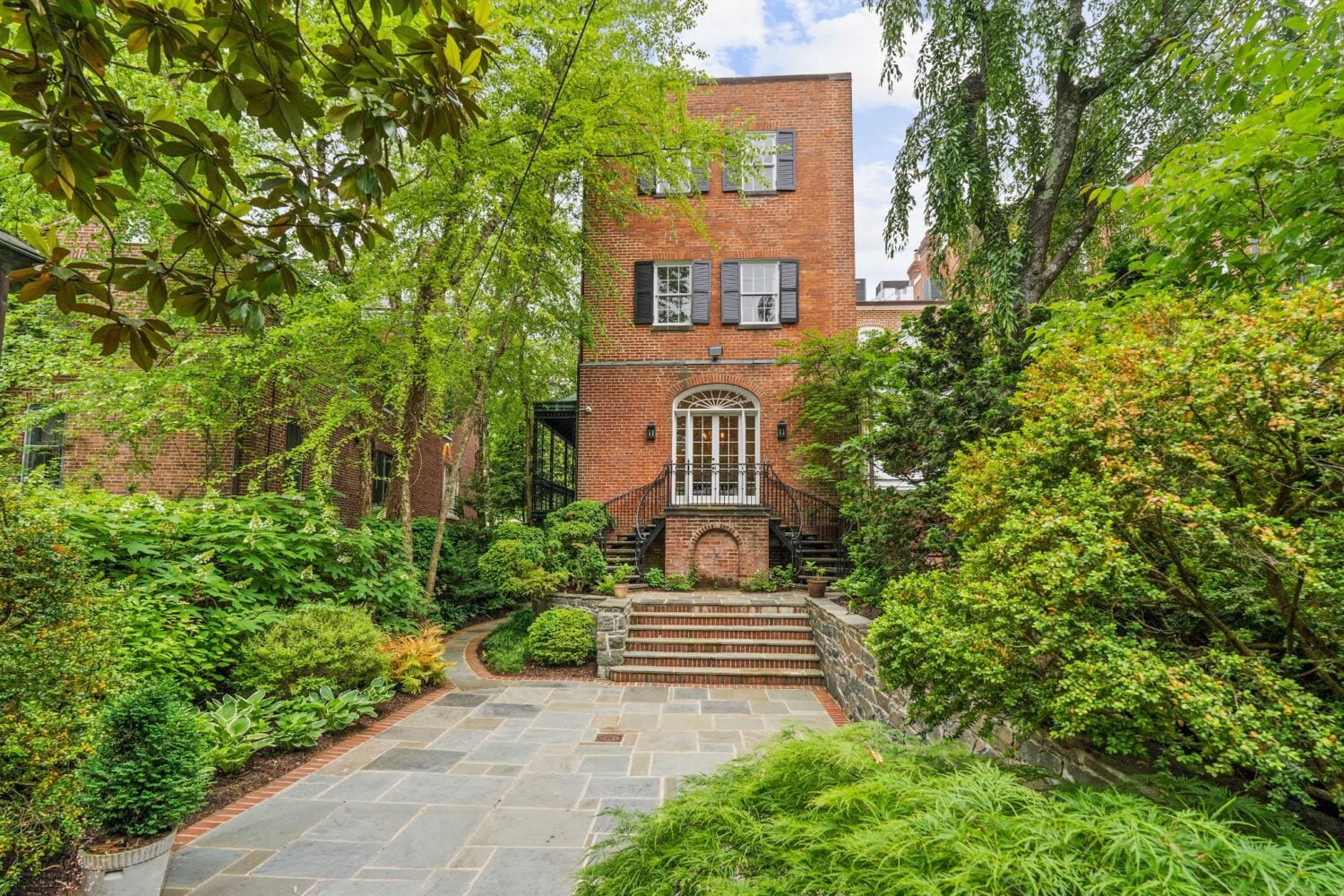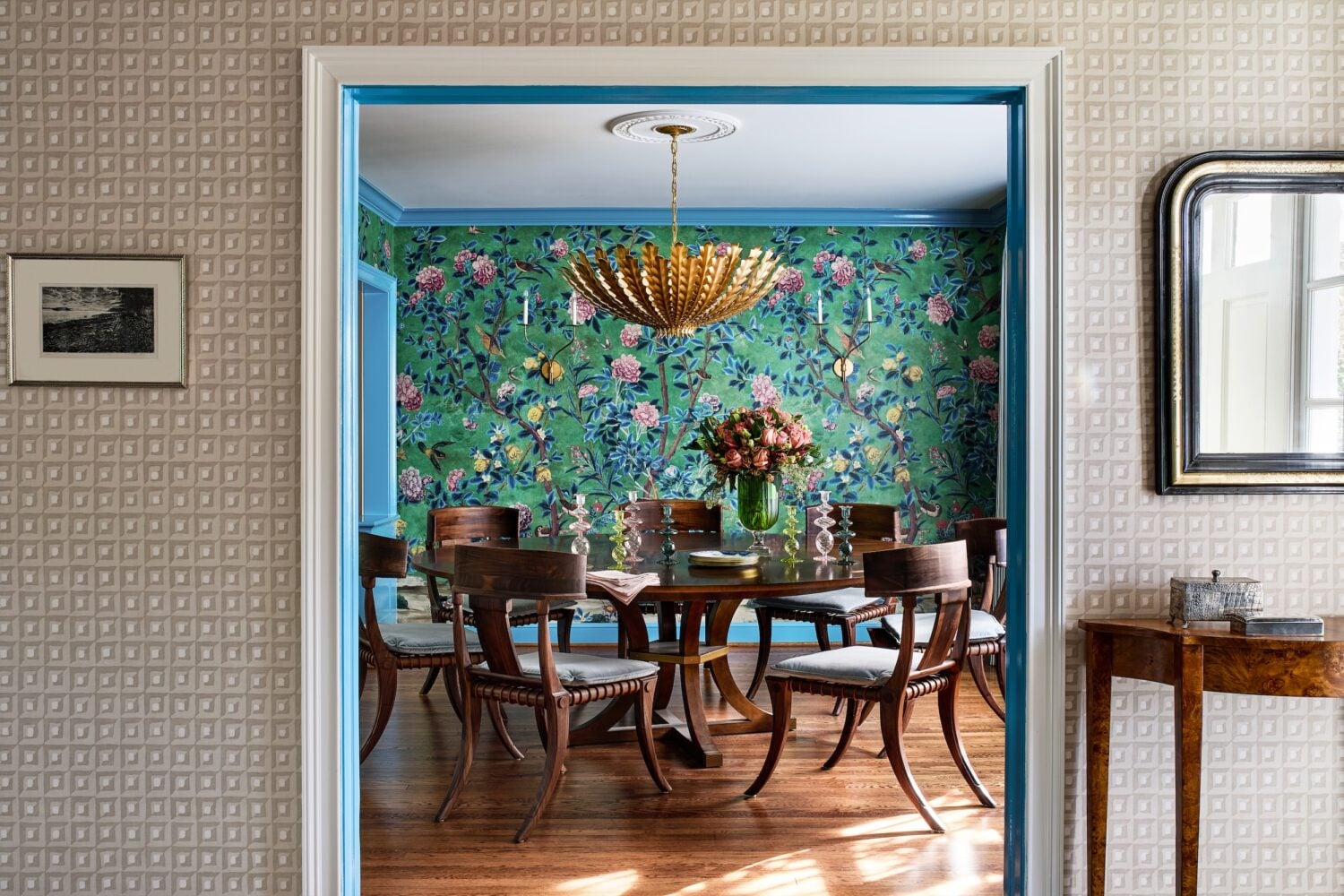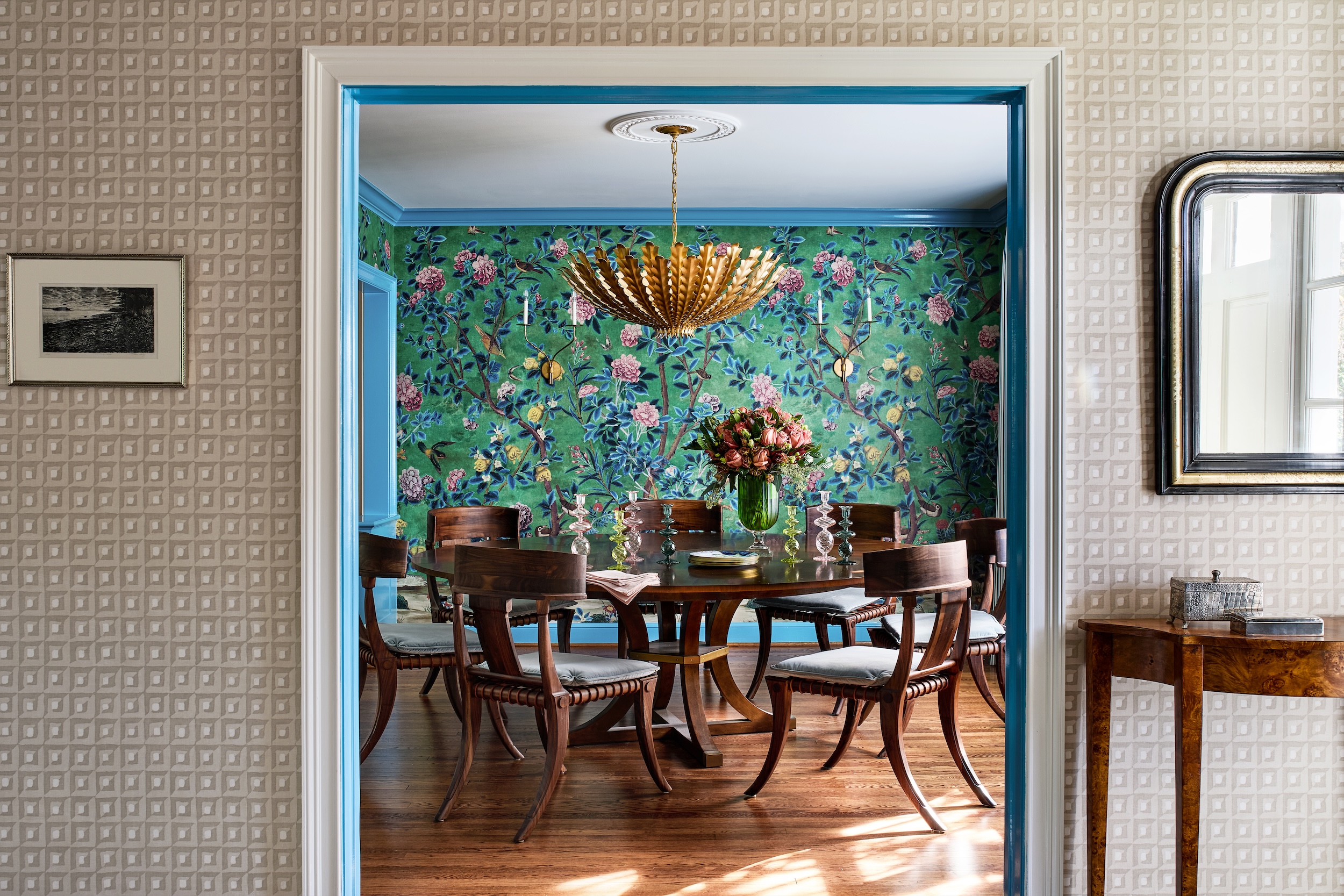
It’s that time of year when temperatures are rising and everyone wants to spend more time outside. Before the heat really sets in, spring is peak alfresco dining season. Increasingly, outdoor living areas—ones that are both beautiful and functional—are a priority among homeowners and buyers. For inspiration on creating the ideal outdoor dining space, we talked to architects, designers, and others about some of their favorite projects, to learn about visions, challenges, and tips.
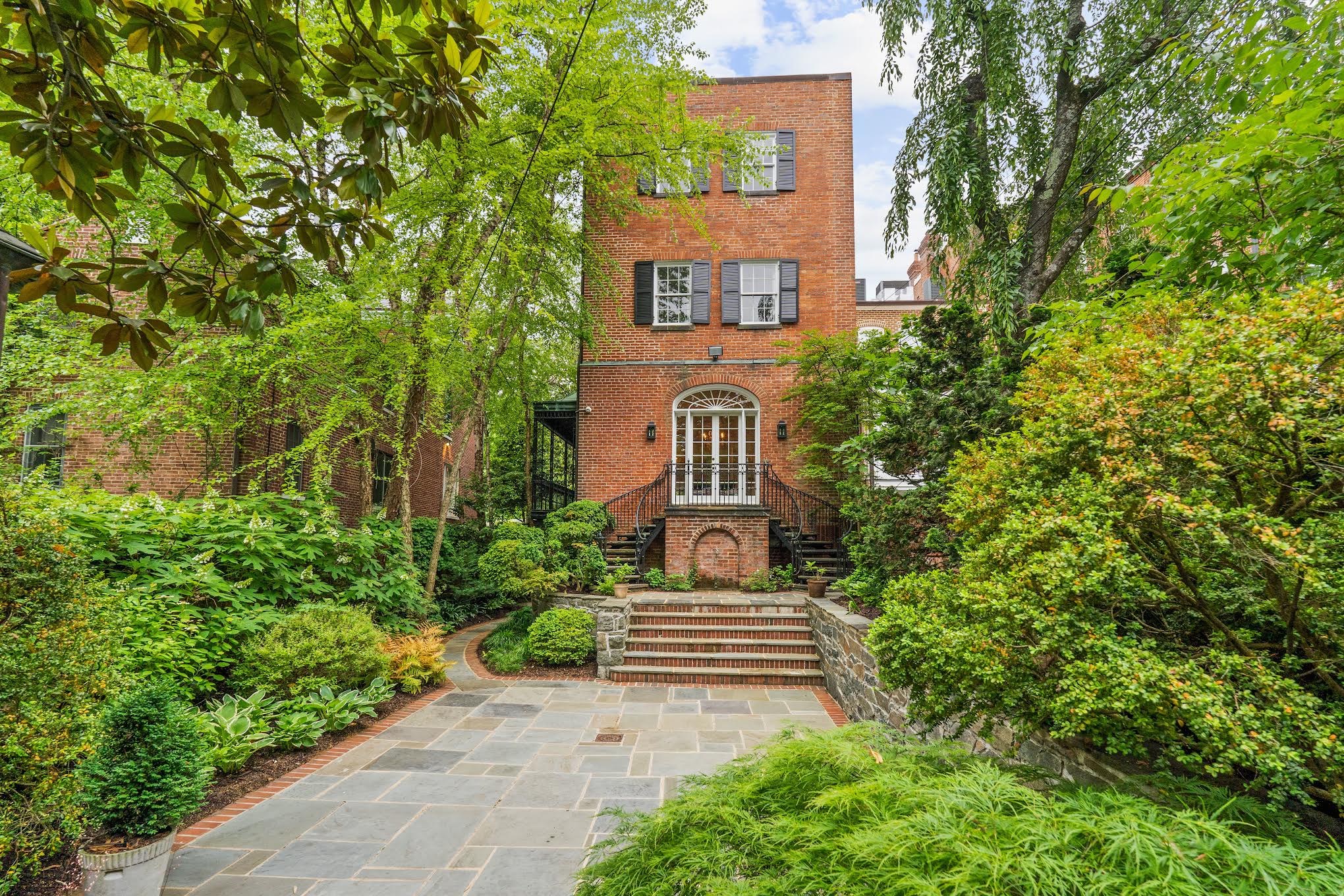
Terrace With Cathedral Views
Richardson & Associates
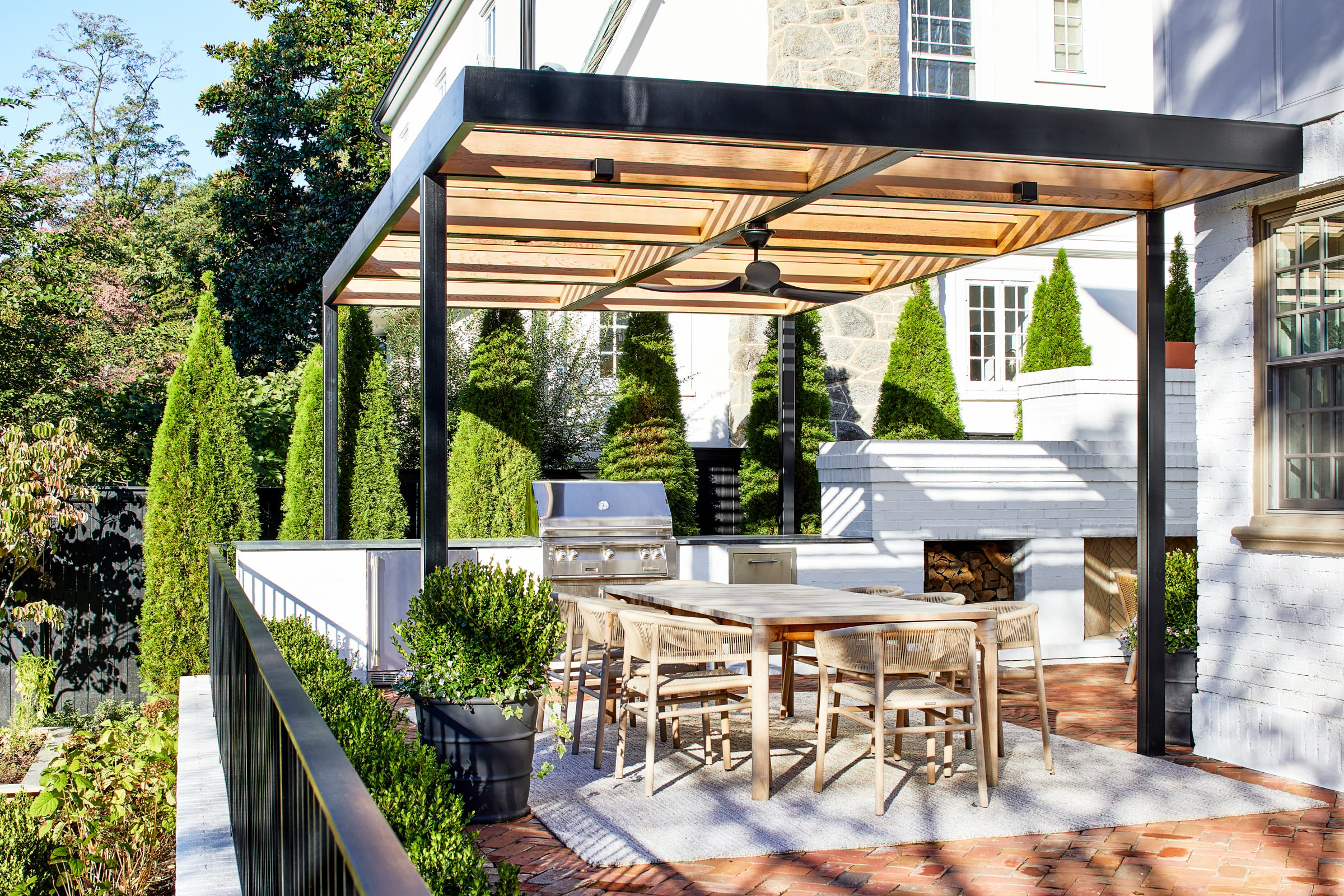
The task: Create a seamless indoor-outdoor flow to patio dining at a home with views of National Cathedral.
The challenge: Make the upper-level space private, plus safe for a toddler and dogs.
The solution: The DC landscape-architecture firm built a fenced-in terrace just off the family room, where multiple sets of doors open onto a pergola and a simple outdoor kitchen and fireplace. Strategically planted evergreens provide privacy without blocking the neighbor’s sunlight and views.
Takeaways and Tips: “Think about how you’re going to use this space from two perspectives,” says Joseph Richardson, the firm’s founder. First, scale: “I tend to get to the root of that by asking folks, ‘Hey, how big of a dining table are we planning for?’ ” And function: When it comes to outdoor cooking, he recommends clients consider their cooking routine. Unless you already use a grill, a pizza oven, and a green egg, he believes it’s unlikely you’ll start after building one into an outdoor kitchen. “People tend to underestimate, aside from a simple gas grill, how much time and energy it takes to prep some of these things.” Plus, the contraptions take up valuable space. Richardson suggests keeping it simple. Another tip: He likes planters of flowers with color and texture for visual interest, plus plants from the mint family—nepeta, calamintha, thyme, rosemary, and mint itself—to help deter insects.
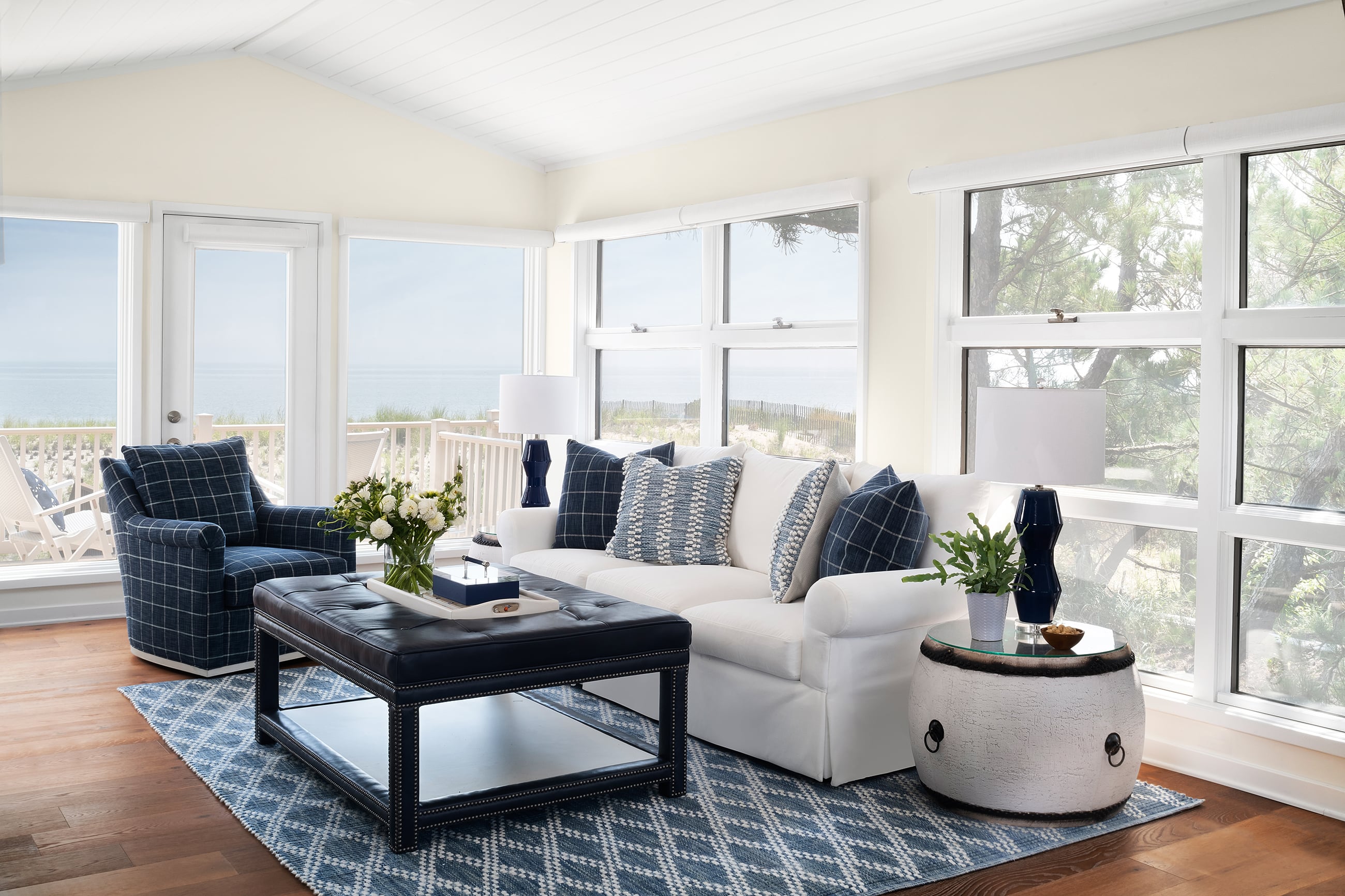
Summer HQ in Rehoboth
Pascale de Fouchier Interiors
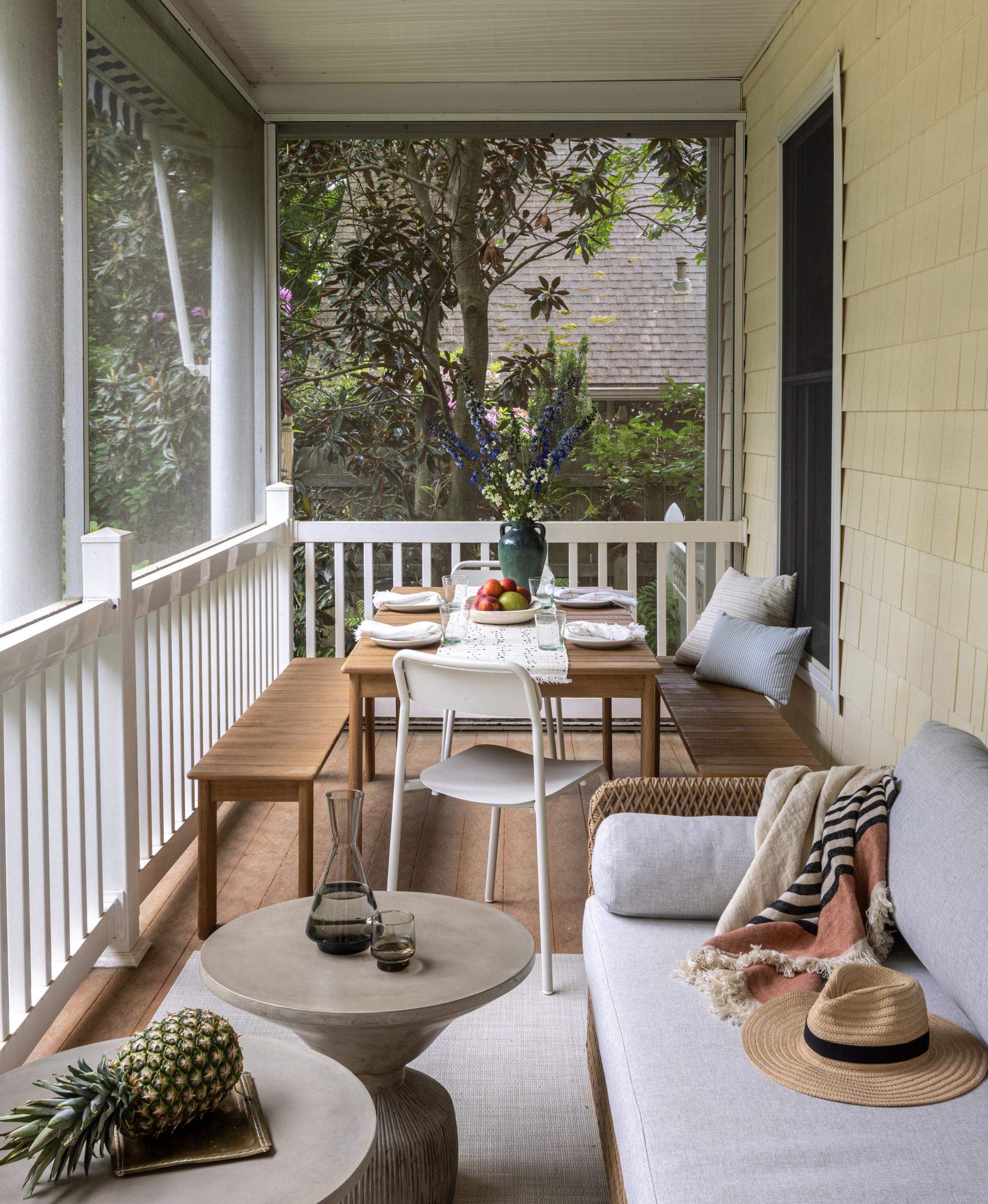
The task: The client wanted to give their Rehoboth Beach cottage a more modern, inviting feel, as a place to reset year-round.
The challenge: The porch had been set up as a lounge with white wicker furniture. “Fine, but outdated and not working hard enough for a family that lives outside all summer,” says firm founder Pascale de Fouchier. The long, narrow space lacked an obvious dining area and needed to work for “parents having a moment while the kids eat, a pre-dinner gathering, or a sit-down meal, without anyone rearranging chairs or apologizing for the squeeze”—and without renovating the structure. “When it clicks, the space stops feeling like a porch and starts feeling like another room of the house.”
The solution: The design firm swapped out the furniture entirely and flipped the layout. “Same bones, completely different life,” says de Fouchier.
Takeaways and tips: When designing (or redesigning) an outdoor space, de Fouchier suggests starting with the table: “Get that right first—size, material, position relative to the door, view—and the rest should follow.” Also, edit before you add. “Outdoor spaces read as cluttered faster than an indoor room, and clutter is the enemy of that vacation feeling.” Finally, de Fouchier suggests, spend where people will feel it: seat cushions. “Nobody lingers at a beautiful table that’s uncomfortable to sit at.”
Multilevel Space in Marriottsville
Absolute Landscapes
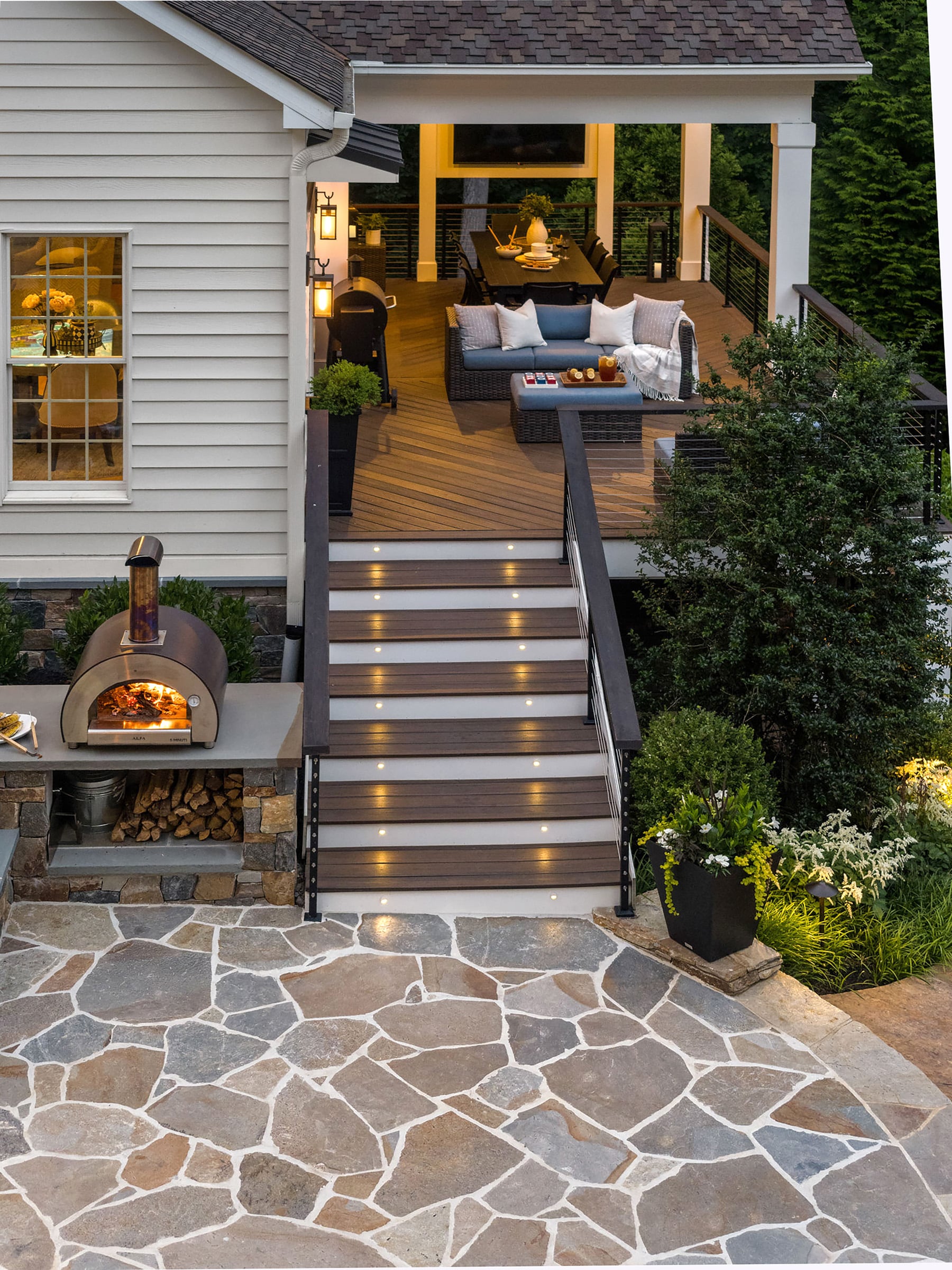
The task: Transform a steeply sloped Maryland property that’s more than an acre into a cohesive, functional space.
The challenge: Because of the scale and terrain, improving circulation and usability was key, says Absolute Landscapes owner Matt Sabine. With the wooded setting, sunlight was another consideration.
The solution: The firm introduced a series of tiered zones—from intimate spaces to larger entertaining areas—with transitions designed to feel intuitive and retaining walls to accommodate the grade.
Takeaways and tips: Sabine says lighting and fire features can add ambiance and extend how and when you use the space. Natural elements like boulders help create an organic, grounded feel. For smaller spaces, layering in terraces can create depth and make the area feel larger. Also: Consider potential future additions from the start so the design can evolve seamlessly.
Farmhouse With a Pavilion
Ballard + Mensua Architecture
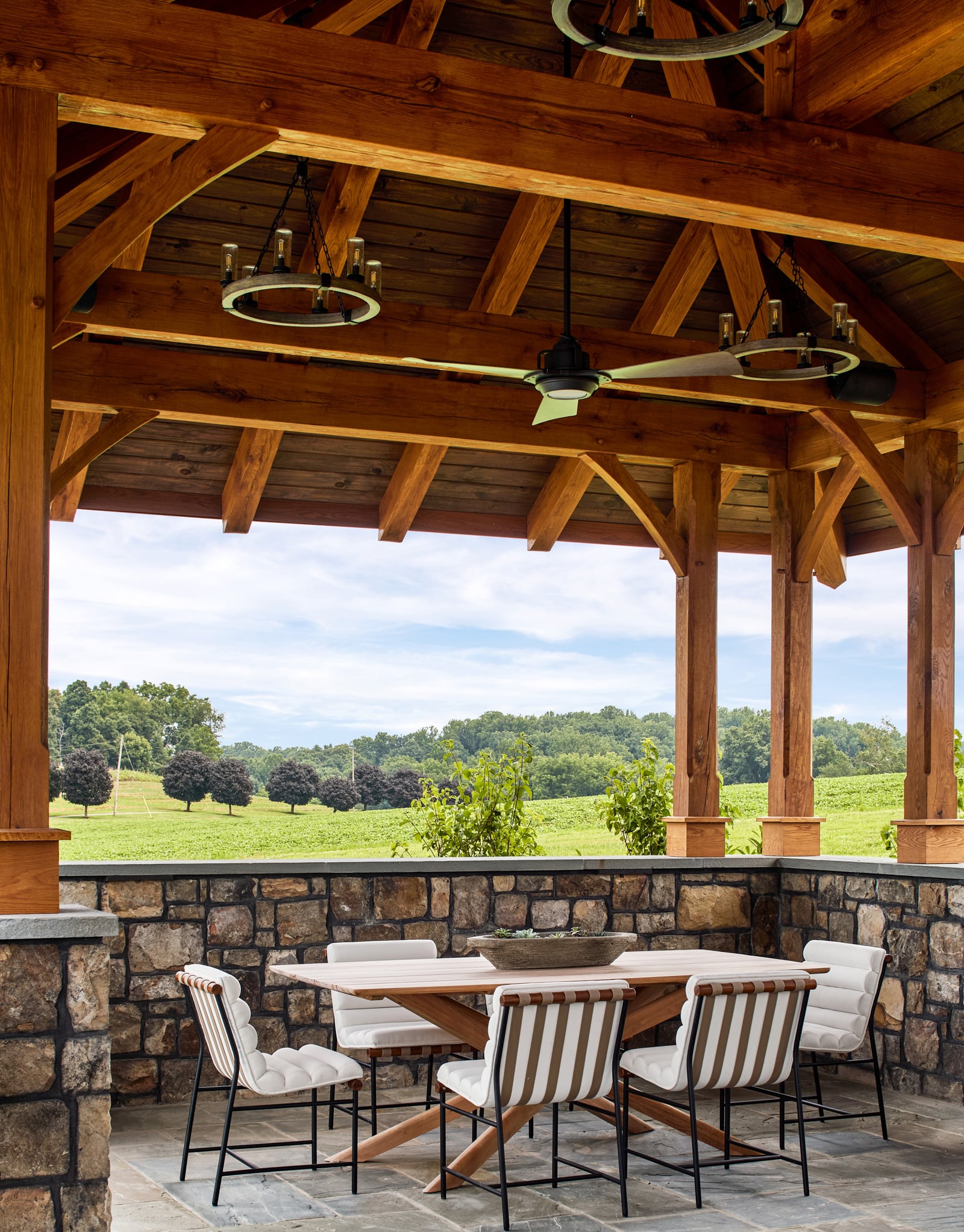
The task: In addition to converting an existing porch into a screened porch and building a pool with cabana, guesthouse, and expansive garage, this client wanted a pavilion with an outdoor kitchen, a fireplace, a TV-viewing area, and a dining space outside their six-bedroom farmhouse.
The challenge: Create a sense of space in an open farm field.
The solution: The architecture firm bunkered a stone-and-red-cedar-framed pavilion into a hill, which provided privacy on one side, while using the guesthouse and garage to anchor the other side.
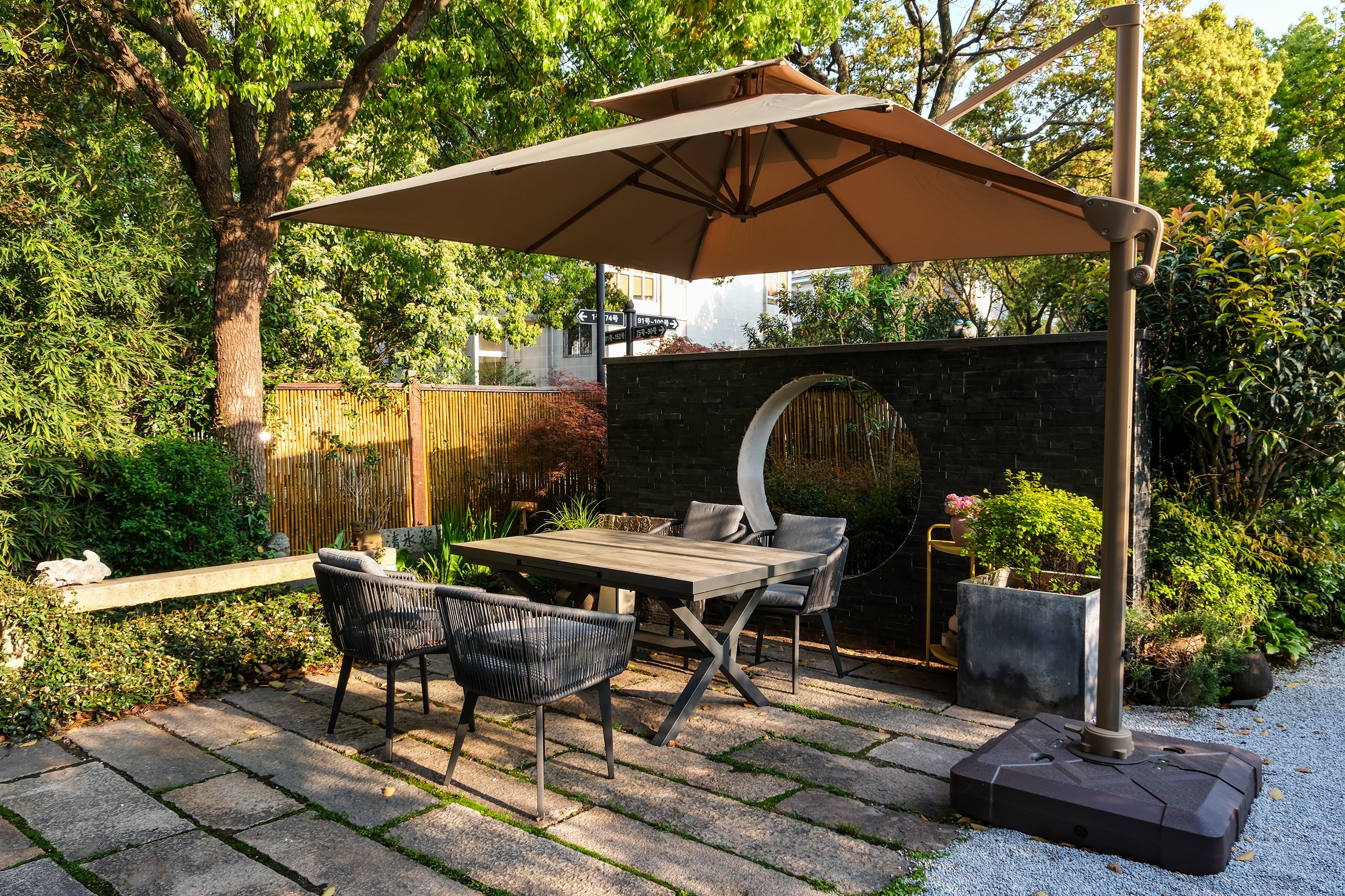
Takeaways and Tips: Ballard + Mensua founder and principal architect Seth Ballard says that using the right perspective, hardscaping, landscaping, lighting, plus shade structures—such as pergolas and pavilions—and water features, including waterfalls and rain gardens, can combine to feel vacation-like. He adds that outdoor heaters—such as those by Bromic—can extend a space’s use, and retractable roofs and awning technology have come a long way, with many options. For a less expensive method of creating an interesting space, he suggests a giant umbrella, like the commercial-size ones by Jumbrella.
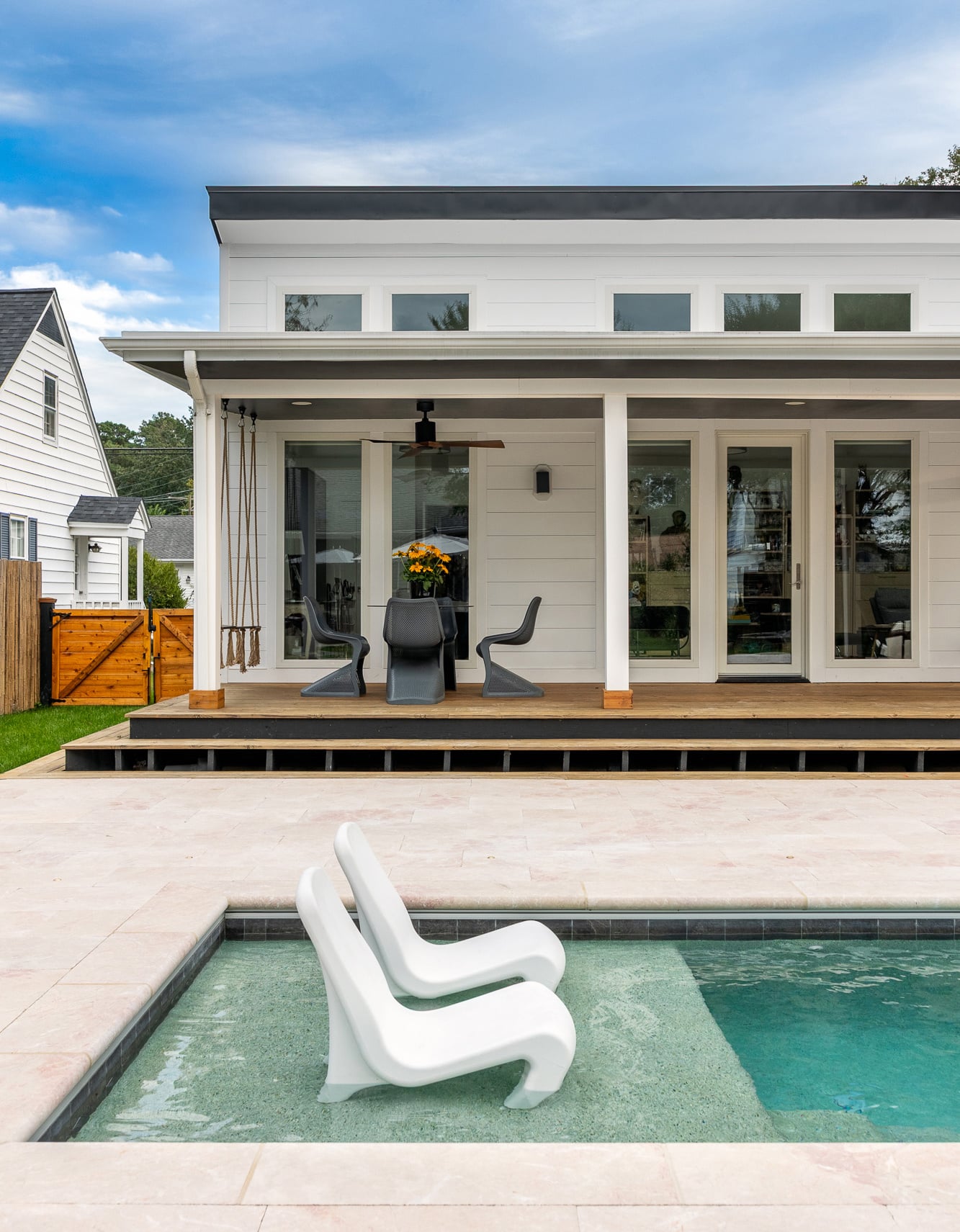
New-Build in Clarendon
ODE Design
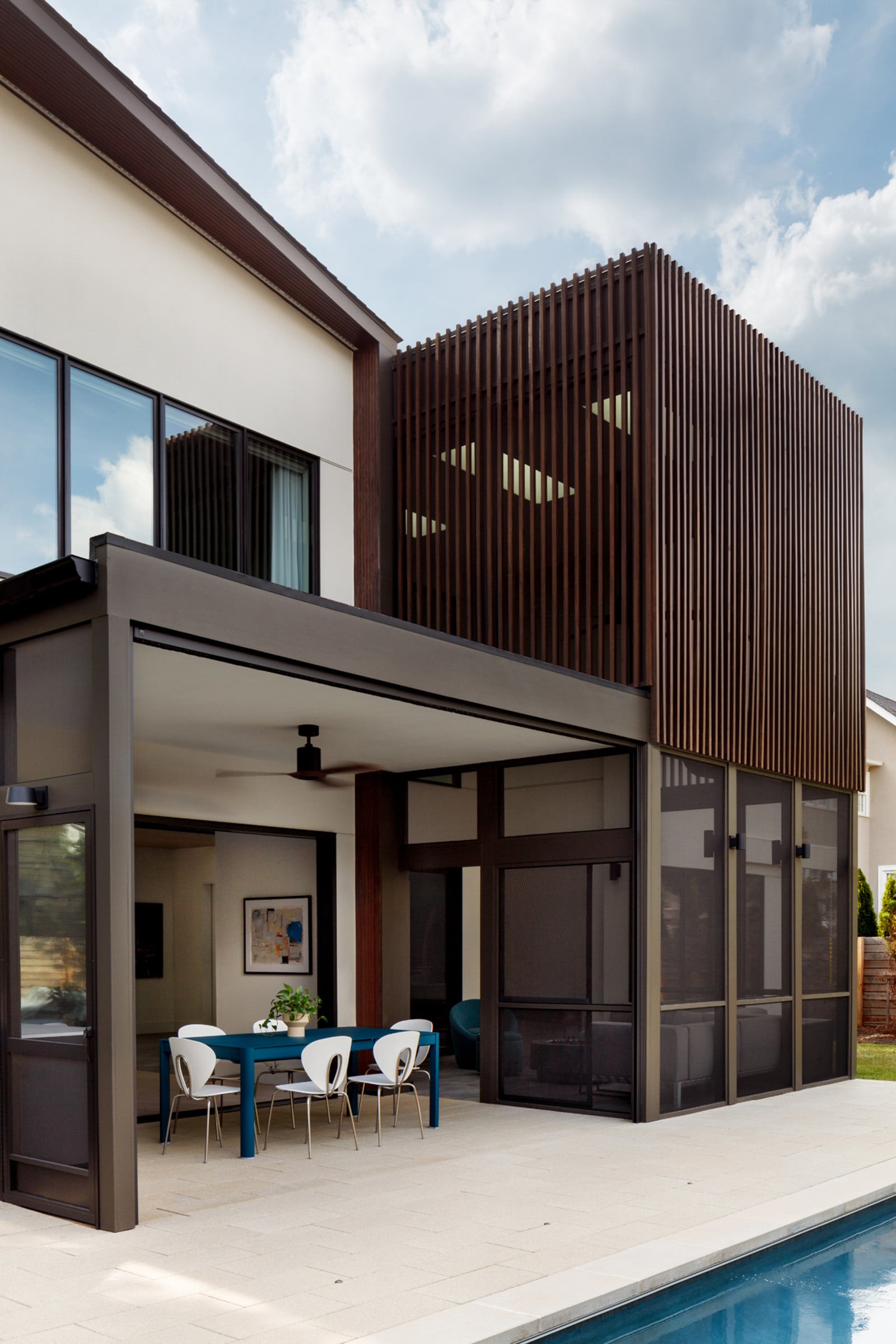
The Task: Design a home with a low profile and an indoor-outdoor transition space.
The challenge: Connect the outdoor dining space to the kitchen; create privacy with plants without blocking natural light to indoor rooms; and do it all while accommodating placement of a swimming pool.
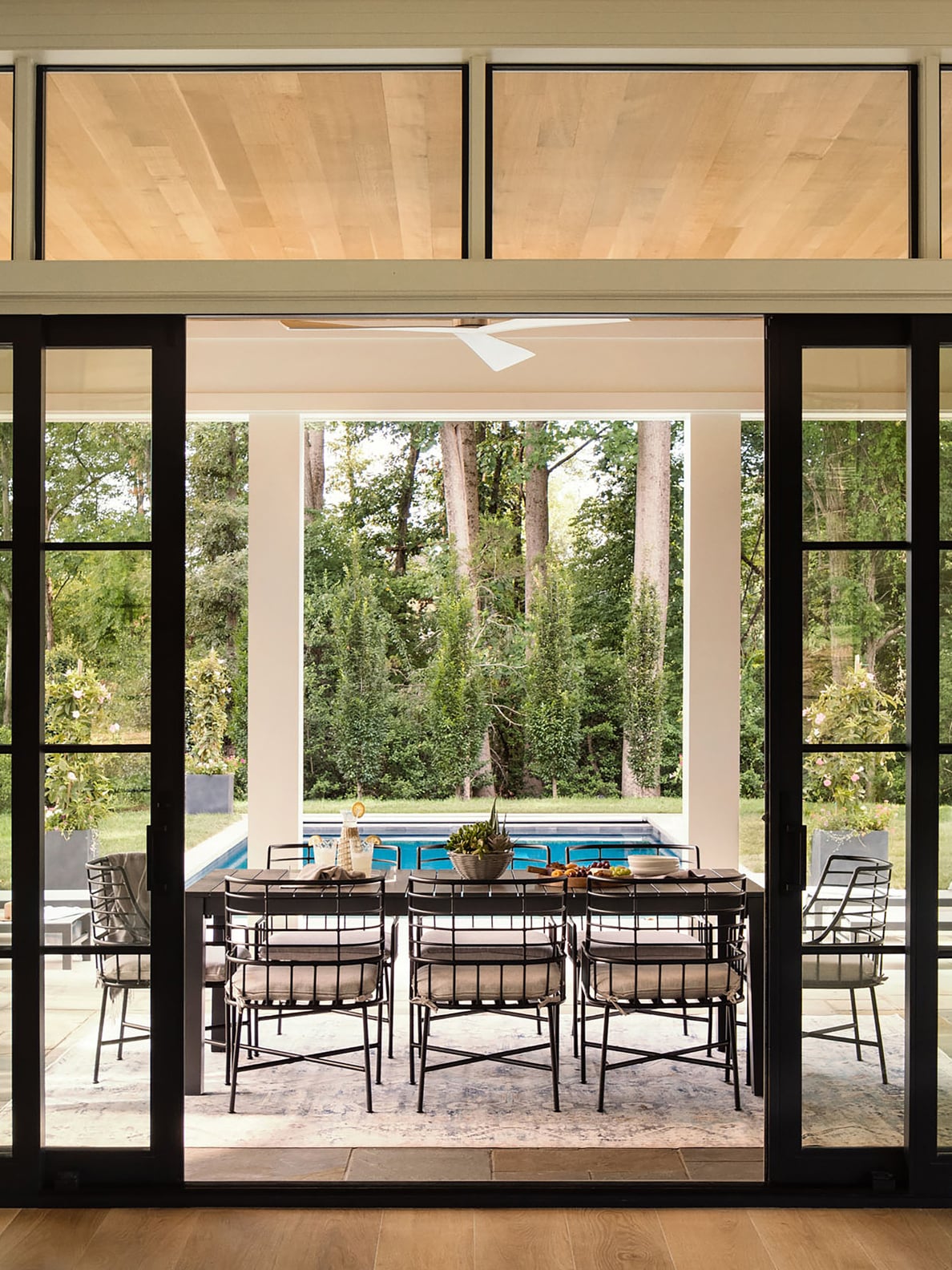
The Solution: The Falls Church firm put the kitchen and pool on the south side of the house and positioned the outdoor dining space between the pool and kitchen, which they gave a multi-slide door opening all the way up to the alfresco eating area. There, a heater and a rolling screen system add comfort and protection from weather and bugs. Next to that area is a two-story screened porch. “We wanted a really simple flow where the pool, the porch, and the kitchen are all one big connected zone,” says firm principal Yuri Sagatov.
Takeaways and tips: The connection between an indoor kitchen and an outdoor dining area is critical, says Sagatov. When designing a new space, he likes keeping the outdoor dining area as close to the kitchen as possible so it can feel like an extension of it. If you disconnect those two, he says, the dining area won’t be used as much. For renovations, Sagatov suggests reworking part of the kitchen or adding a sliding glass door or additional windows. For outdoor spaces with roofs or pergolas, maximize ceiling height—whether with a pitched roof or a raised ceiling—to make the space feel larger and allow more light. Rolling screens and indoor patio heaters can extend the room’s functionality.
1950s Deck Expansion
Third Street Architecture
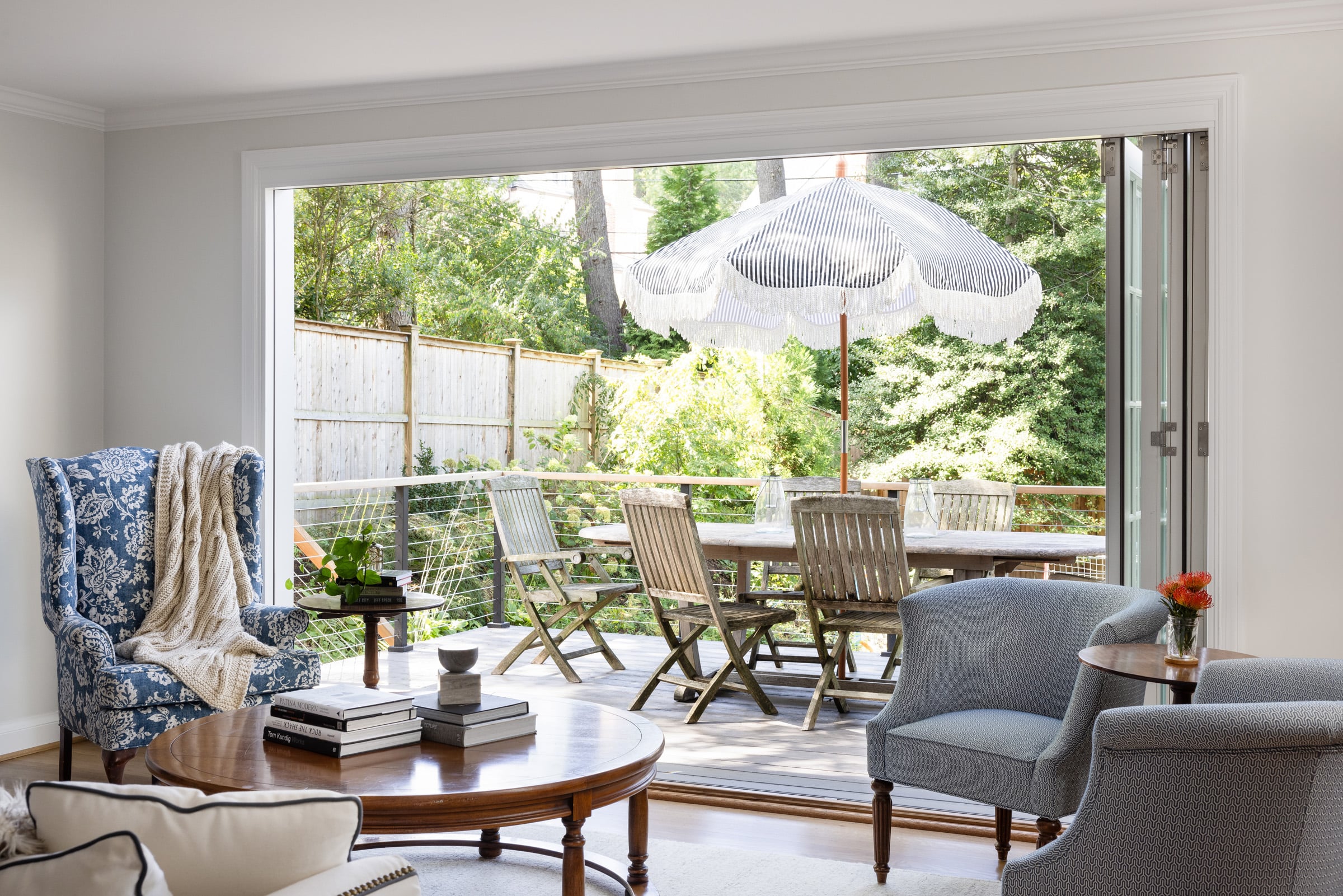
The task: Connect a ’50s-style home with the owners’ beloved outdoor space.
The challenge: The firm’s head of projects and business development, Josh Goldsberry, says the clients had renovated the backyard—where they spent considerable family time—but it felt disconnected from the rest of the home, which also lacked natural light.
The solution: Move the kitchen from one side of the home to the center to create a main hub; extend the deck to span the entire rear elevation; install a motorized vinyl-and-screen system (this project used one by Phantom Screens) to the existing covered porch to extend use through additional seasons; and install bi-fold glass doors (in this case, by Andersen) for natural light.
Takeaways and tips: “We recommend that clients consider the flow through the space, connection from the other living spaces, and potential multi-use options before committing to a design,” says Goldsberry.
Cozy Design Tips
Interior designer Jenna Morrow of Morrow Design Studios offers four things to think about when trying to bring the comfort of the indoors to the outside
Flow and Functionality
Consider the access points to an area when placing outdoor furniture. In contained spaces such as a screened porch, leave at least three feet of open space on each side of the door so people can enter and exit smoothly. Morrow also recommends putting the outdoor dining area closest to the home’s entrance to make transporting food and other items easier. And maximize your shade–lounge seating may take priority, “so you can stay cool while you relax.”
Materials
Choose durable materials that can withstand high temperatures, summer rain, and sunlight. Polypropylene and Sunbrella fabrics are great for dining cushions, as they’re water- and mold-resistant and won’t fade. For dining tables, Morrow says teak is classic and rot-resistant, meaning it will endure in more ways than one. For servingware, she suggests melamine or acrylic.
Heat and Bugs
Scorching temperatures and pesky insects ruin an outdoor space’s vibe. To combat sun, Morrow suggests adding a shade sail or retractable awning to a deck, or a pergola to a patio. For porches–screened or not–a ceiling fan can help beat the heat. As for pest control, tiki torches around the dining table double as warm lighting and bug protection, and well-placed citronella candles can act as decor plus insect repellent. Morrow also likes to use food tents when dining or hosting outside.
Finishing Touches
Textiles go a long way. Area rugs, outdoor throw pillows, and–if you have a porch–outdoor sheer curtains can all elevate a space.
This article appears in the May 2026 issue of Washingtonian.

Amy leads Washingtonian Weddings and writes Style Setters for Washingtonian. Prior to joining Washingtonian in March 2016, she was the editor of Capitol File magazine in DC and before that, editor of What’s Up? Weddings in Annapolis.