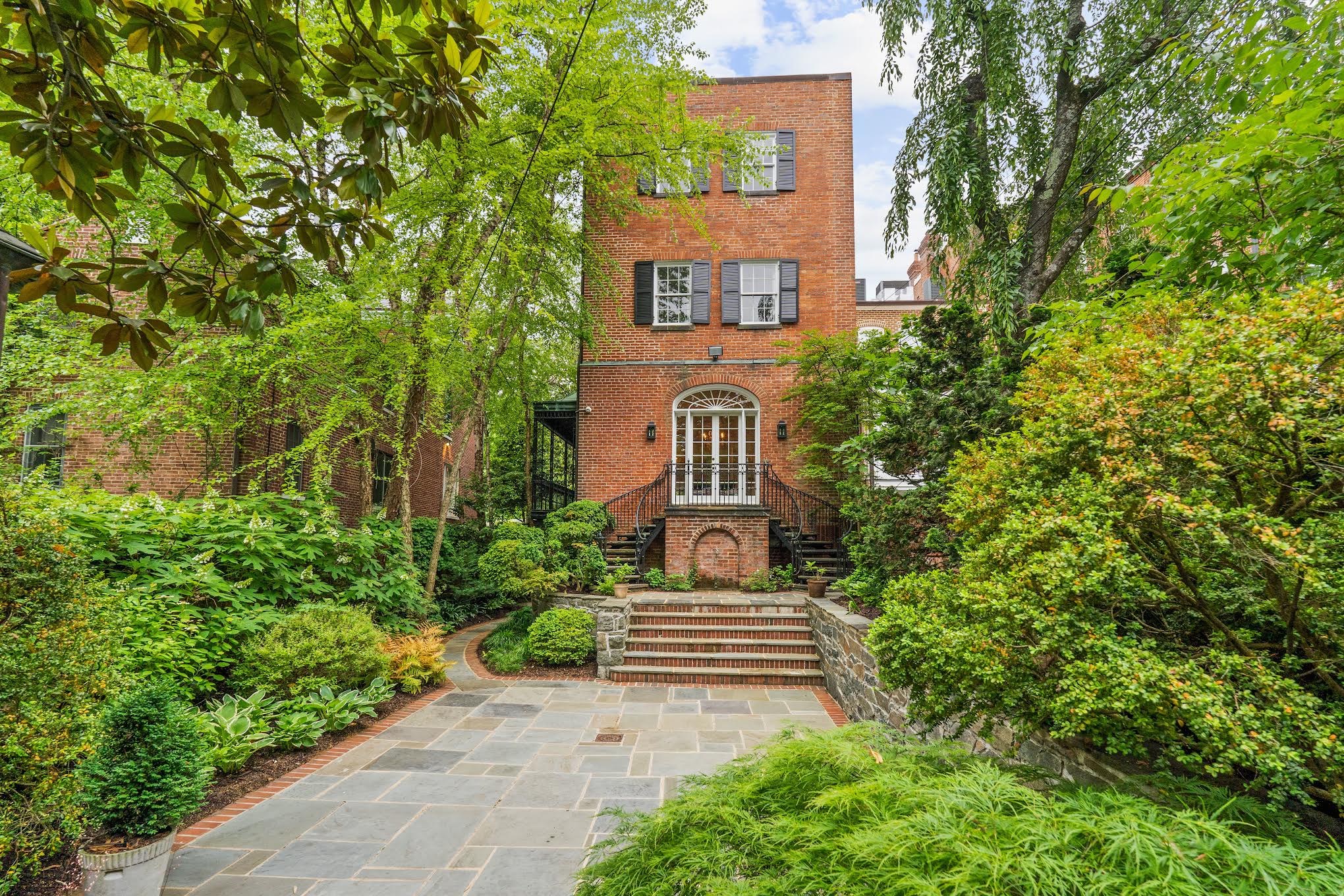
Designing an 8,200-square-foot home for a family of six is ambitious enough—but making it eco-friendly and able to produce more energy than it uses? That might sound impossible.
“The size was its biggest challenge,” says architect Deborah Buelow of Cedar Architecture in Alexandria. “It’s a big space, and that’s not easy to make a net-zero home.”
The family wanted more than energy efficiency—they envisioned what’s known as a net-positive, certified-passive, extreme-energy-efficient home, meaning it would power itself, store surplus energy for emergencies, and even feed electricity back to the grid. To receive its certified status from the Passive House Institute of the United States, the home required airtight insulation, a constant-ventilation system, a solar roof, and thermal heating and cooling.
“If this house had been built in a traditional manner, it would use more than three times as much energy as it does now,” Buelow says.
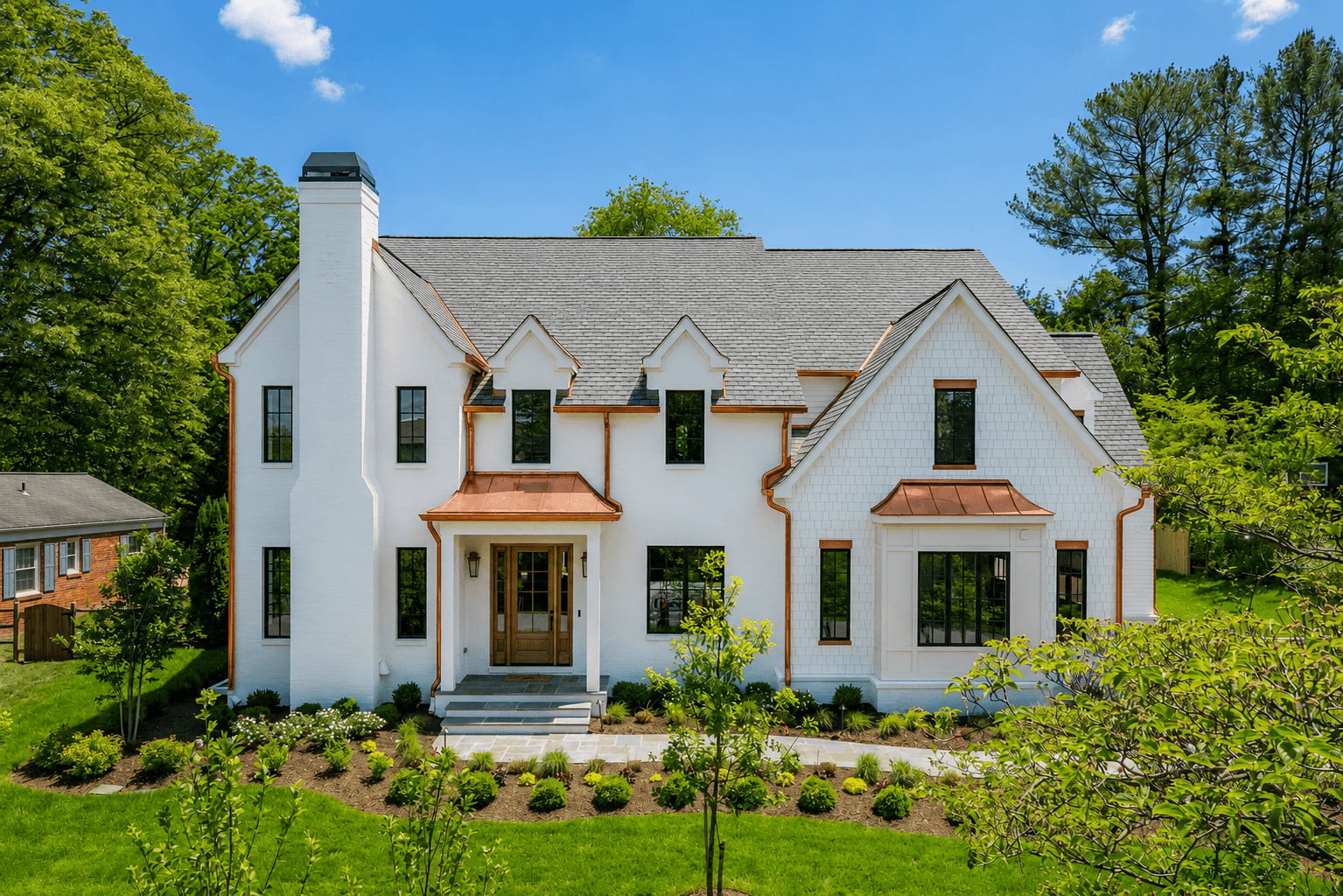
From the start, there were obstacles. The half-acre site had an irregular shape, cobbled together from three lots. After demolishing the existing structures, Buelow began designing, taking into consideration that while her clients wanted a spacious home, they also wanted it to blend in with the character of their Del Ray neighborhood in Alexandria.
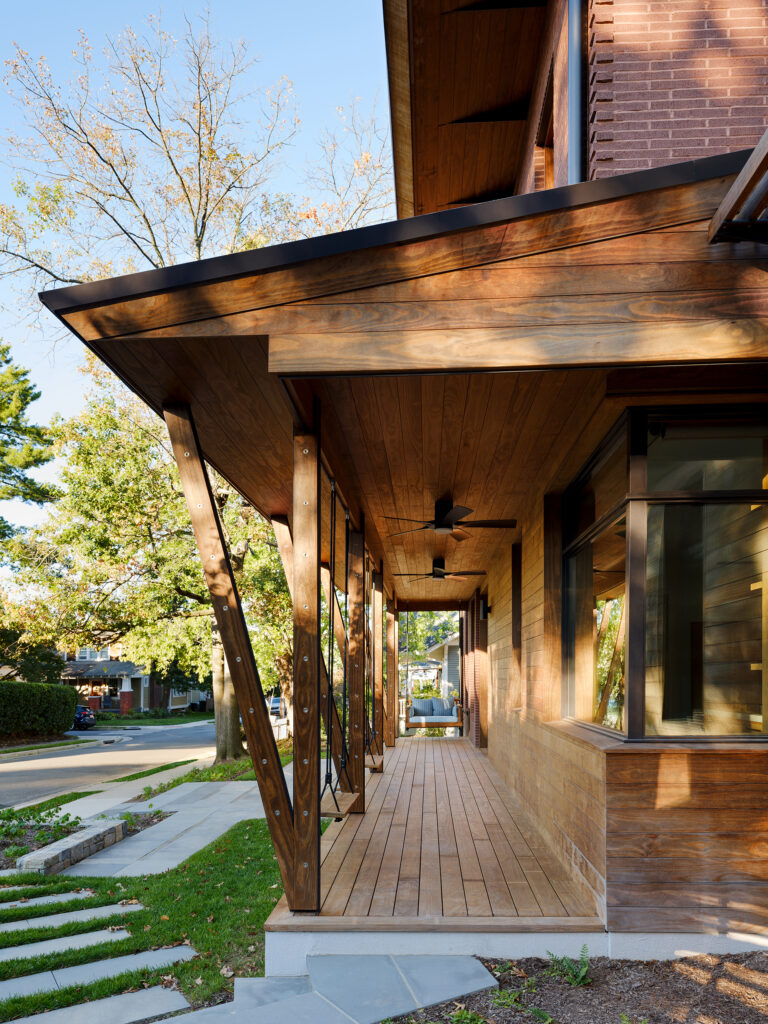
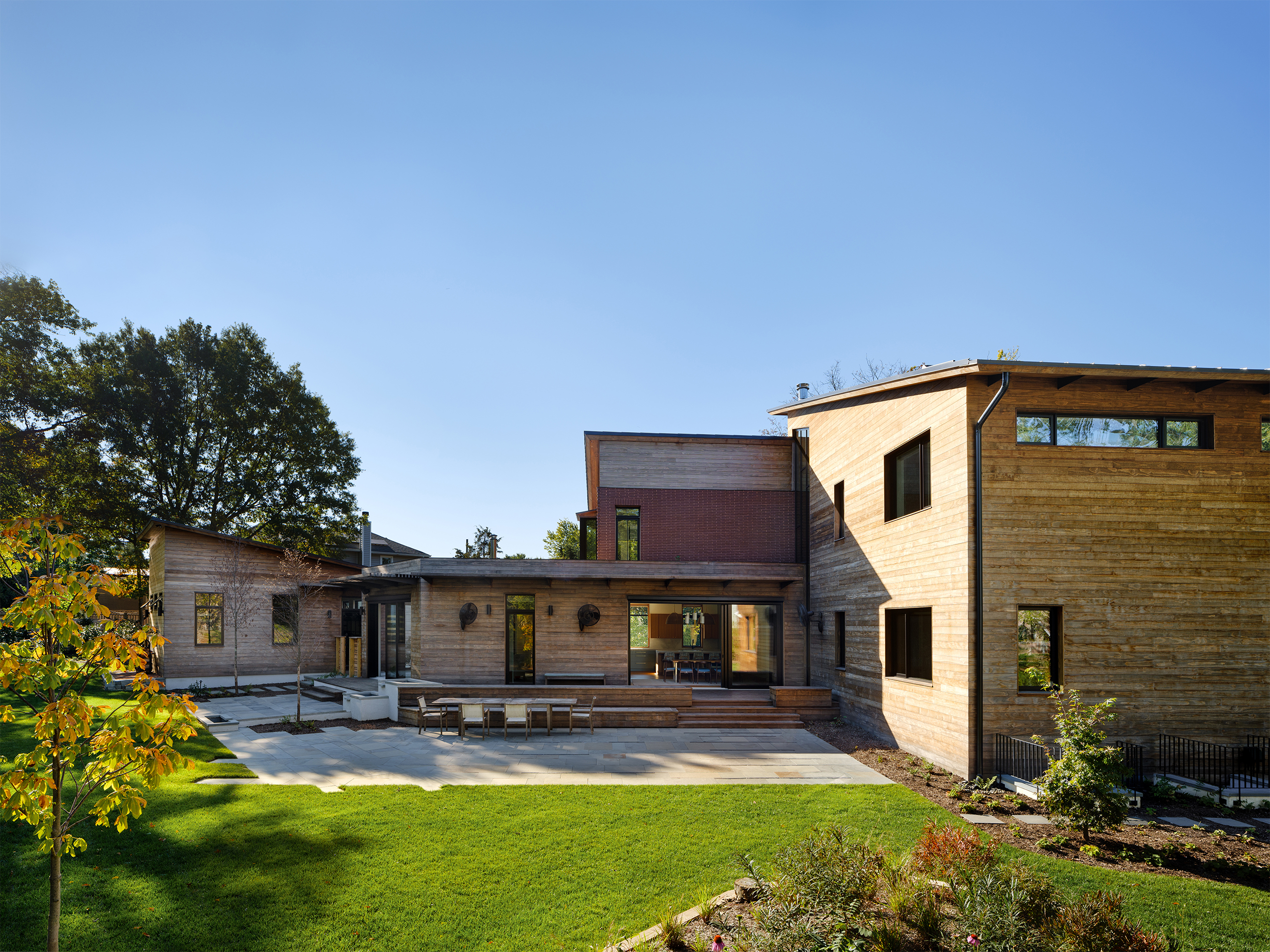
To achieve this, Buelow had the front of the house built out of brick made in North Carolina from 100-percent recycled ceramic materials. For the rest of the exterior, she used Kebony wood, a sustainable eco-treated pine that starts brown but weathers to a silvery gray. The homeowner added his own whimsical touch to the front porch by handcrafting swinging chairs from scrap wood.
“We brought the brick in as a way of kind of speaking to the Colonial style, but then wrapped the front of the house in wood to still give it a contemporary feel,” Buelow says. “And the wood will last forever. This type will never have to be replaced, painted, or coated. You never have to do anything to it.”
Throughout the process, Buelow prioritized incorporating nature into the design. While the house’s south-facing orientation captures abundant sunlight, generous four-foot roof overhangs shade the front windows from the high sun and prevent overheating during summer.
Other natural touches include slate flooring, rain roof gardens with native plants, and natural-grass wall coverings. Circadian bulbs in the Ketra intelligent lighting adjust during the day to mimic natural outdoor light. At the rear of the house, 16-foot-wide floor-to-ceiling sliding doors made by Zola draw in light and views of the back garden.
To preserve the interior climate, triple-pane windows and insulated doors were installed. The walls are 16 inches thick, including four inches of exterior insulation—creating a tight thermal envelope. The front door is secured with a bolt system in five places, keeping it tight to the frame to ensure that no air slips in or out when the door is closed.
“Any gaps in the exterior—whether through windows, doors, or wiring—pull air out and cause heat loss,” Buelow says.
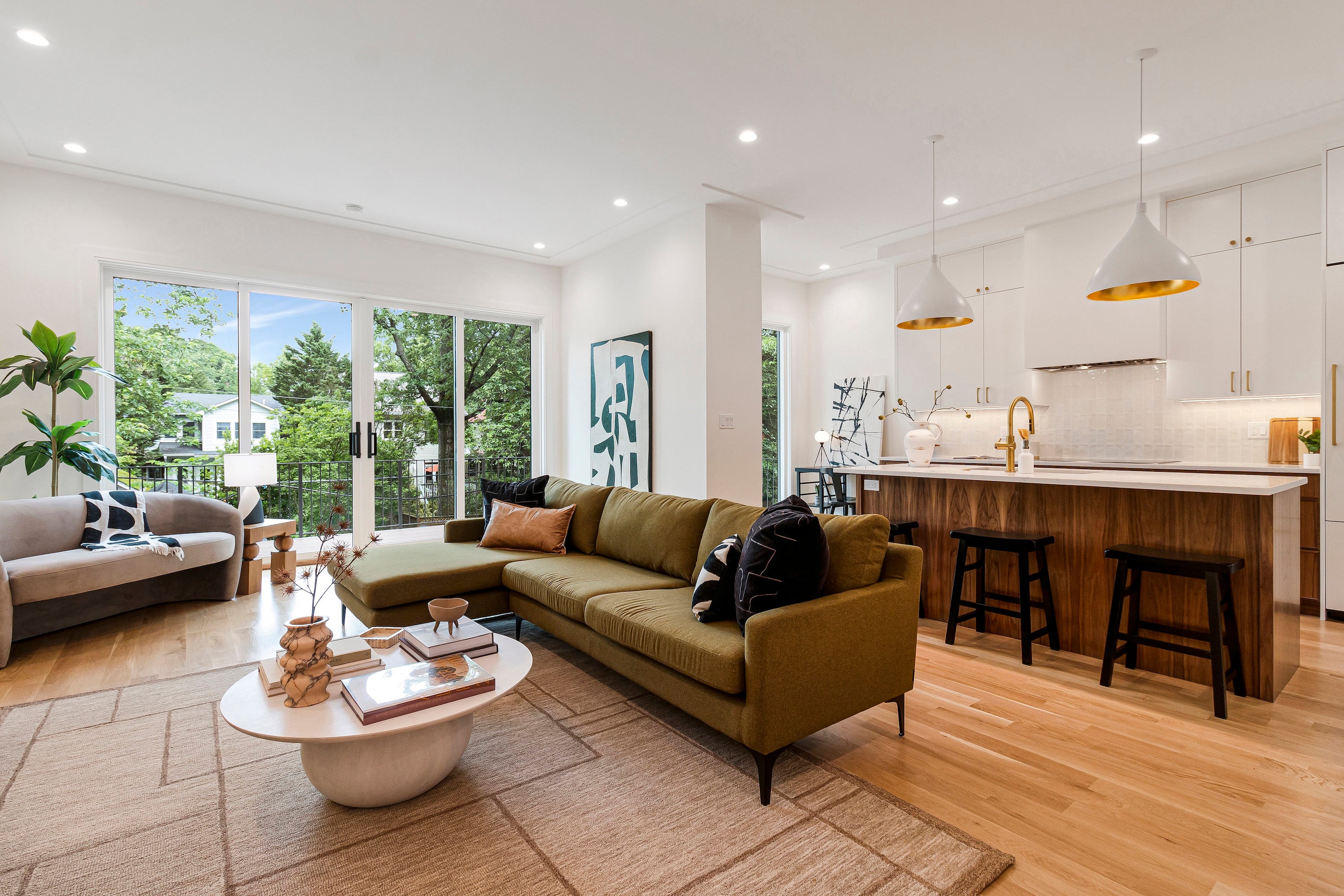
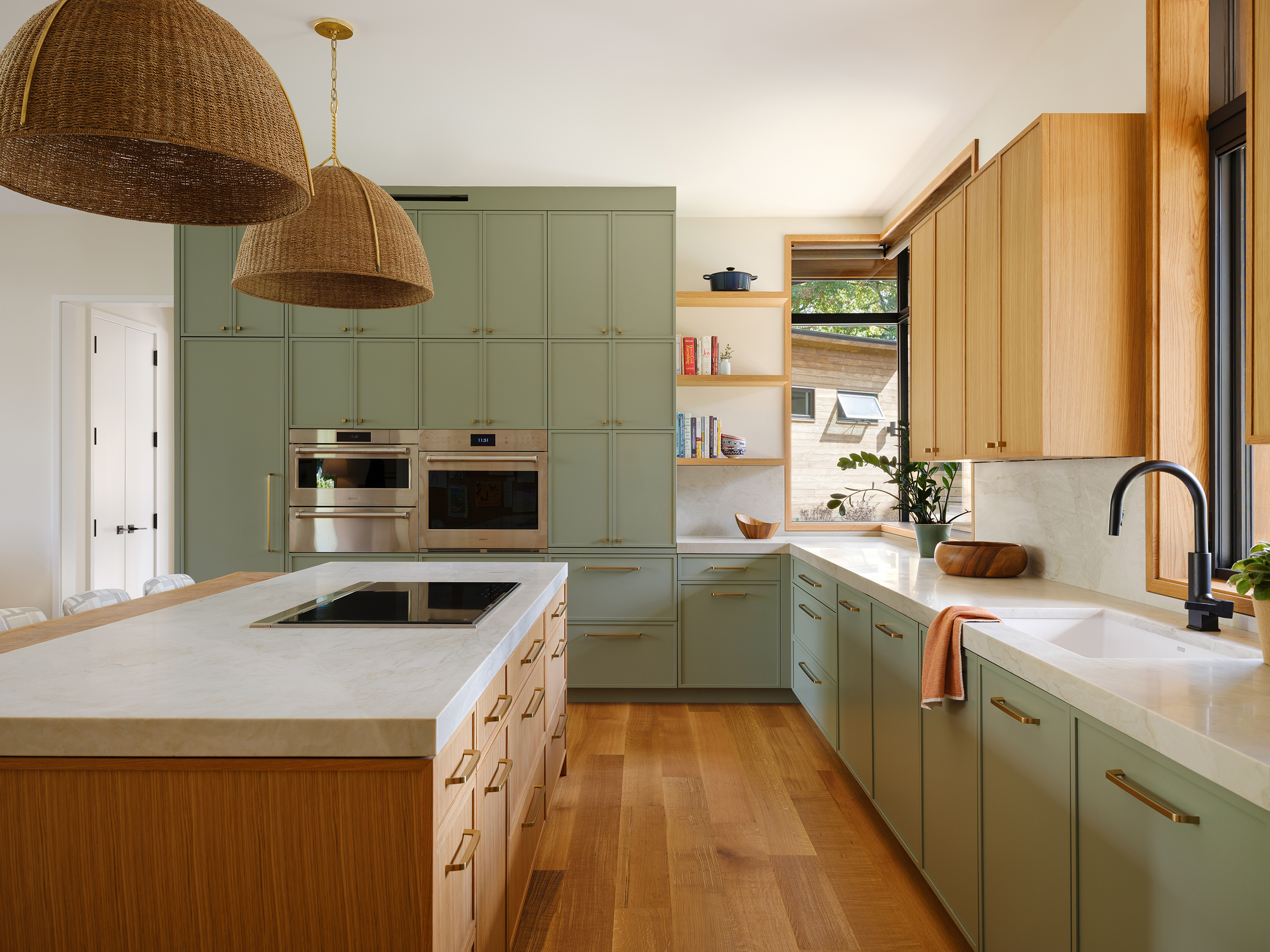
Inside is where the true energy efficiency is on display. After creating the sealed environment, a circulation system moves air throughout the house and continuously draws in filtered outdoor air. The kitchen operates entirely on electricity, including an induction cooktop in the island that boils water in minutes while keeping cool to the touch—a necessary safety feature for a household with four young children.
But the house has an equally impressive design. Despite its large footprint, individual rooms were configured on a more intimate scale to keep from feeling overwhelming. To create a seamless flow, Buelow established transitional zones between rooms, giving each area a distinct function. White-oak slats affixed to the front entry’s ceiling and walls, along with a modern hanging light fixture, create an elevated atmosphere for welcoming visitors. A separate mudroom entrance—with built-in benches; storage for coats, shoes, and backpacks; and laundry and plant potting stations—provides a practical space for everyday comings and goings.
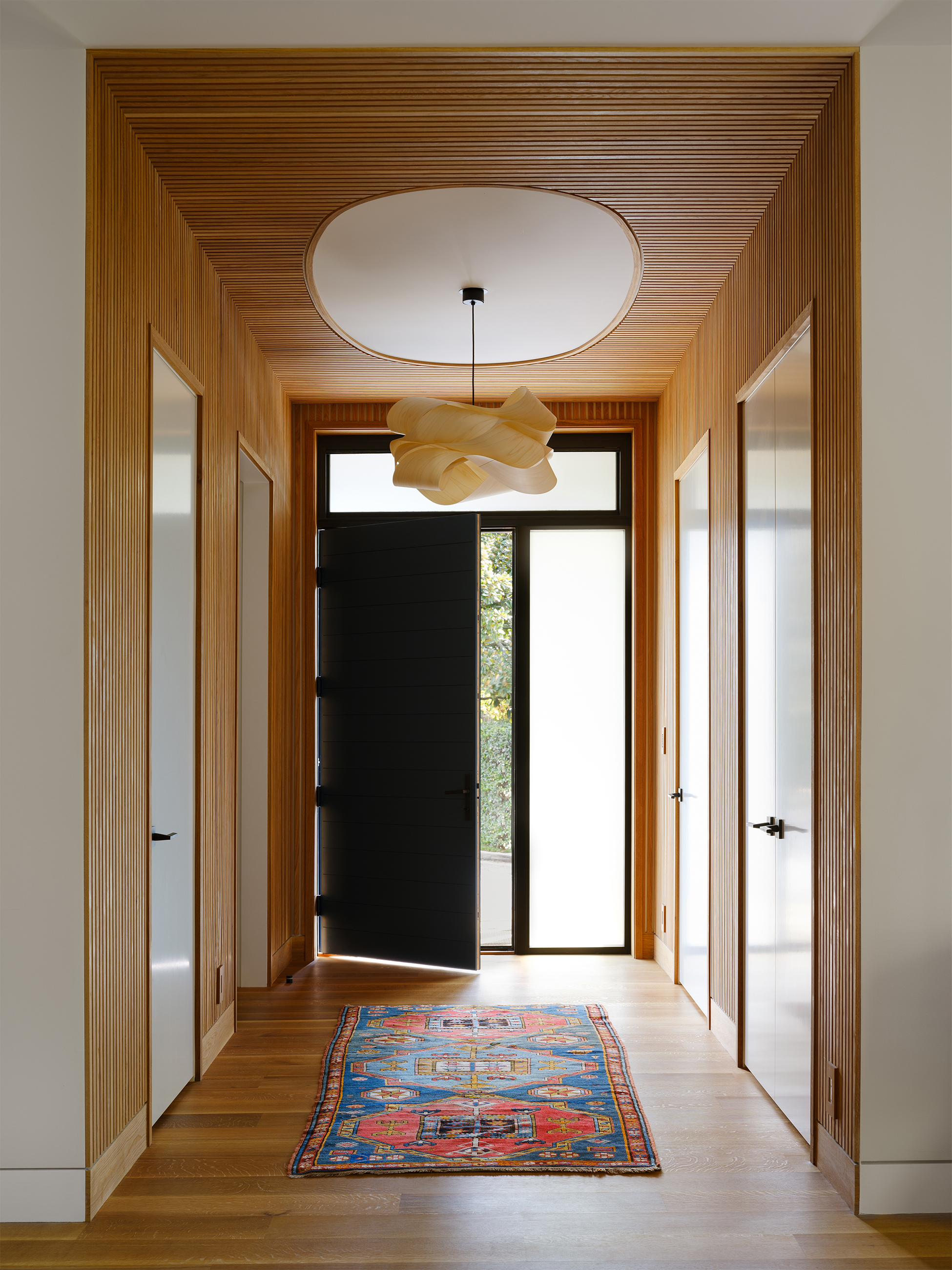
“We were aiming for spaces that are comfortable and not just about grandness, more about how a family actually uses the house,” Buelow says. “We spent a lot of time thinking about what they need in each room.”
An eye-catching central staircase, created by Treenet Collective, serves as a sculptural focal point, its “rainbow whirl” design featuring multicolor paracord typically used by rock climbers. Two slowly moving fans over the staircase circulate air, and the staircase is flanked on both sides by a three-story curtain window-wall that provides natural light deep into the home’s interior.
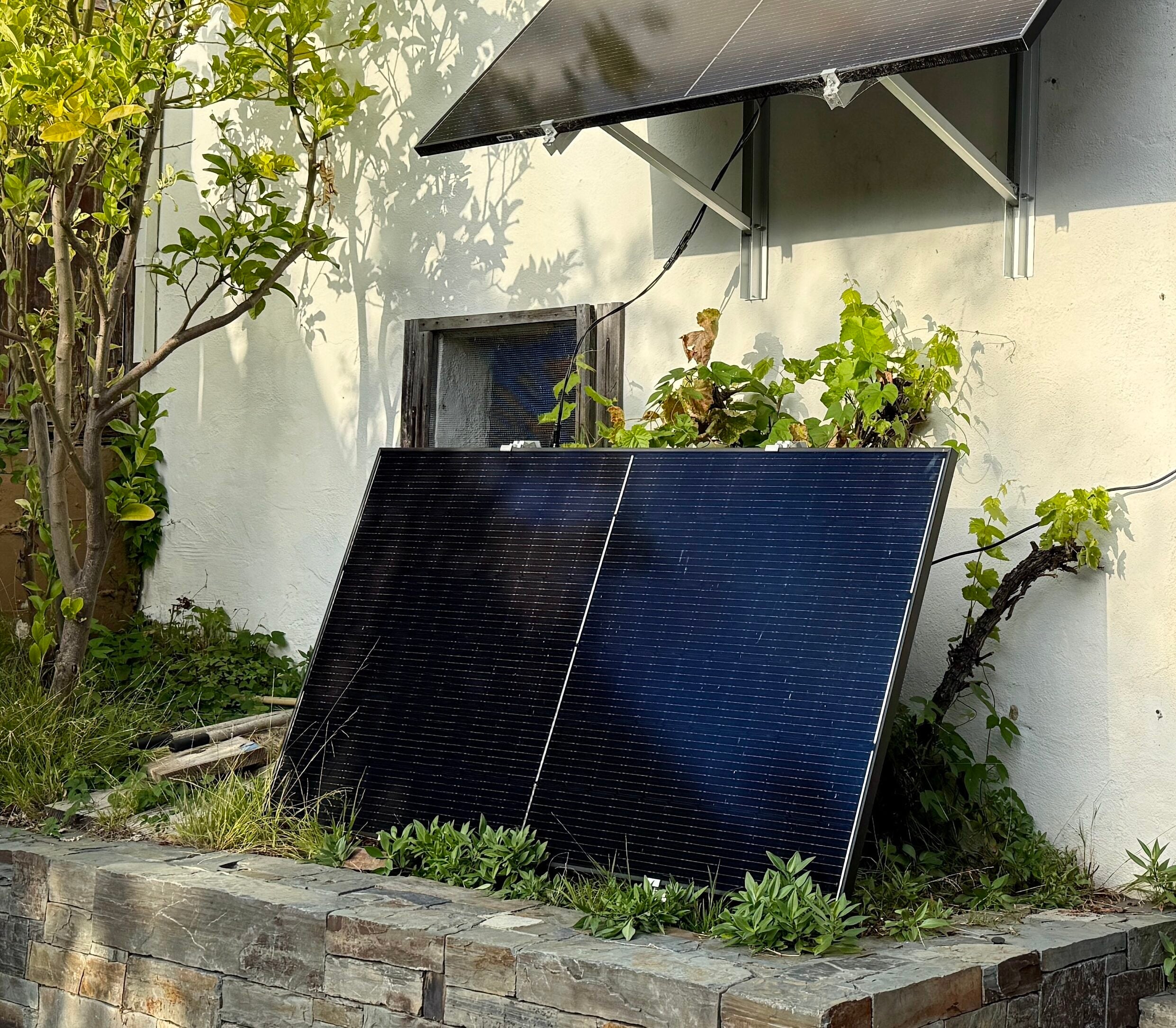
A mechanical room in the basement serves as the hub for the house’s energy efficiency. Integrated Tesla Solar roof panels feed power into smart panels in the room. A battery backup system stores the excess, up to three days’ worth of electricity, meaning that the homeowners might never even pay an electric bill.
“The amount of solar supply from the panels equals just a little bit more than the amount of energy this house requires,” Buelow says.
The home also has a geothermal heating-and-cooling-exchange HVAC system. It consists of three wells in the driveway that circulate water on a continuous loop via pipes that extend 300 feet underground. Because the water circulates through a constant underground temperature, it can keep the house’s temperature fairly constant and cut heating and cooling costs by 20 to 50 percent, Buelow says. Maryland, Virginia, and DC offer incentives and tax credits for installing geothermal electricity-based heating systems.
With changing climates and escalating heating and cooling costs, Buelow expects more homeowners to look into eco-friendly options when updating, renovating, and building homes. Though constructing a net-zero house of this type may cost 5 percent more upfront, she says, lower utility bills over time can make the investment worthwhile.
“The demand is growing as people are learning about the benefits,” Buelow explains. “Building codes are going to be requiring you to build with more energy efficiency anyway. People are going to have to understand that it’s going to have to be part of their homes and that your home can be the house you want and also be energy-efficient.”
Four Energy-Efficient Upgrades
1. Replace Your Windows
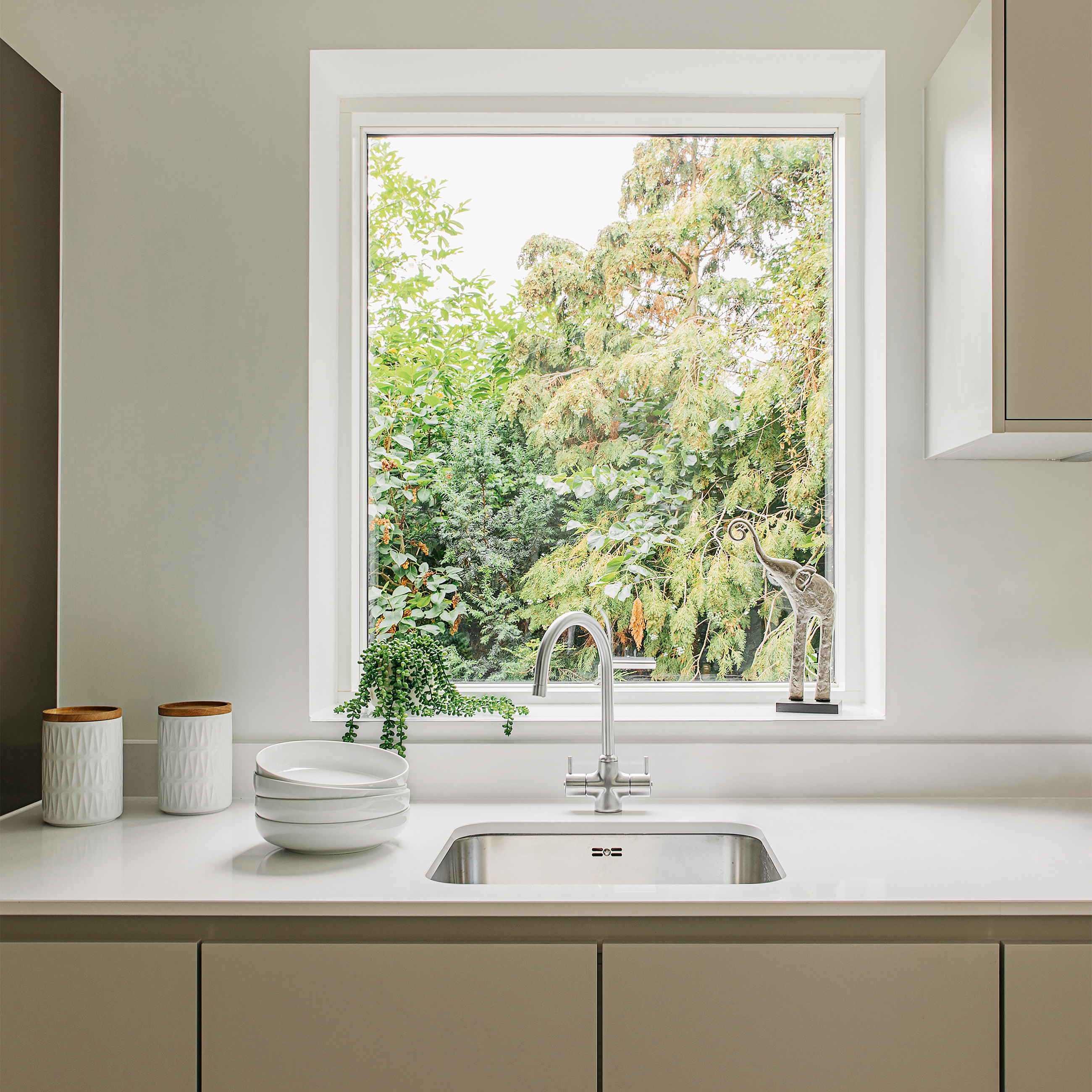
Switching from single-pane to double-pane windows is one of the most effective ways to reduce heat loss and improve energy efficiency.
2. Seal Air Leaks
Gaps around windows, exterior doors, or electrical wiring can allow air to escape, causing significant heat loss. Insulating these areas helps maintain your home’s temperature. Another way to plug leaks around an exterior door is a multi-lock system, in which one key turns multiple bolts that run the length of the door. This not only provides greater security but also pulls the door tighter to the frame, reducing heat and cold loss.
3. Install LED Bulbs
LED lights use at least 75 percent less energy and last up to 25 times longer than incandescent, according to the Department of Energy. In addition, LED bulbs such as Phillips Hue and Ketra can simulate the natural light patterns outside by changing throughout the day, thereby helping regulate your biological clock. “That helps keep your body in relationship to nature, which has many proven health benefits,” says architect Deborah Buelow of Cedar Architecture in Alexandria.
4. Replace Your Stove
Induction cooking offers multiple advantages: Water boils faster than on either conventional electric or gas; the cooktop stays cool to the touch, eliminating burn risks; it requires less energy; and it provides healthier home air quality compared with gas.
This article appears in the April 2026 issue of Washingtonian.