About Hidden Eats
Follow our staff writer Ike Allen as he scopes out under-the-radar mom-and-pop restaurants around the DMV, from Hyattsville to Herndon and beyond.
location_on20800 Pidgeon Hill Rd., Sterling
languageWebsite
Exit 323 on Interstate 81, near the Virginia/West Virginia border, looks a little desolate. There’s an Amazon warehouse, a fireworks store, a Methodist church, and some mobile homes and old houses along Martinsburg Pike. One business does stand out, though: 323 Dhaba Punjabi Veg Kitchen, a low-slung truck-stop diner advertising Northern Indian regional specialties in the middle of the Piedmont farmland.
The owner is Jasdeep Singh, a longtime trucker from the Punjabi village of Chamkaur Sahib, who settled down in Virginia in 2022 to run a truck-repair business. A year later, he added a vegetarian restaurant by popular demand. Hundreds of thousands of Punjabi Sikhs work in trucking in the US—about 20 percent of the industry’s workforce, by some counts—and Singh says about half his West Virginia customers are truckers.
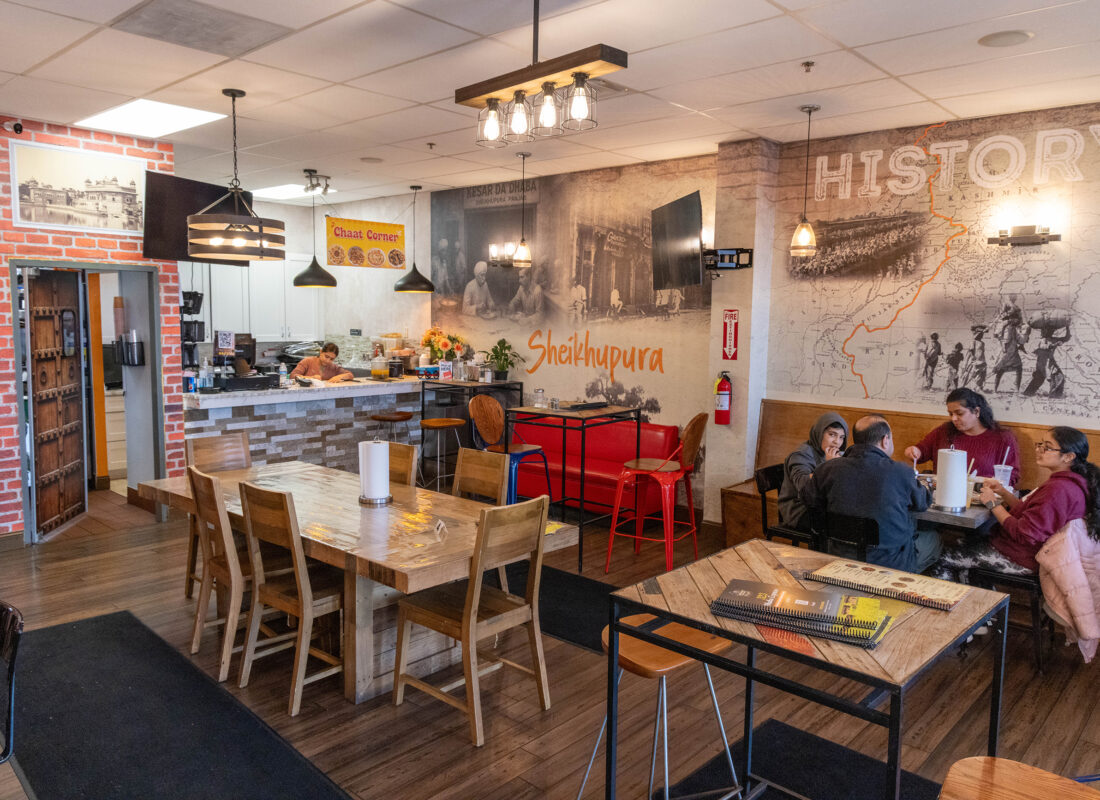
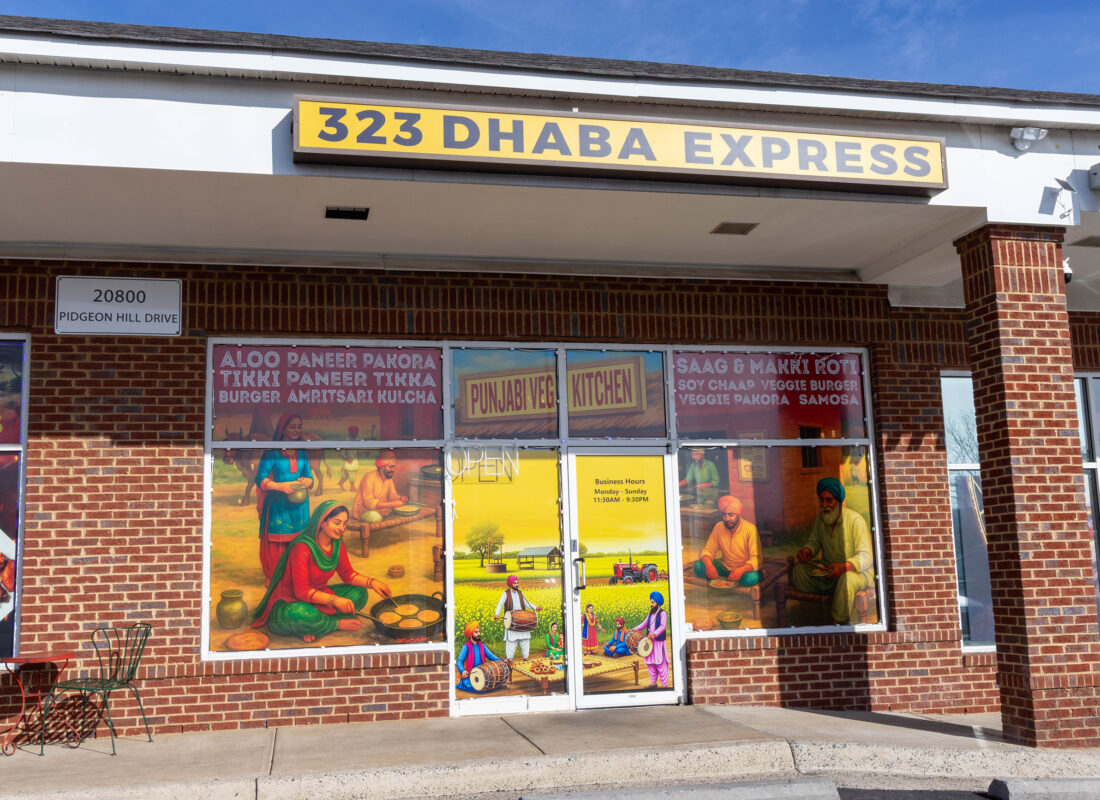
Last November, Singh and his wife, Sandeep Kaur, opened their second location much closer to DC, near Dulles Airport. At 323 Dhaba Express, they’re catering to Loudoun County’s Indian community—more software and IT workers than truckers.
The menu at both locations is all vegetarian but no less hearty for it. Curries such as dal tadka (split-lentil stew) and kala chana (black chickpeas) are enriched with plenty of ghee. Punjab, sometimes called “the granary of India,” is known for its roti, paratha, naan, and kulcha. Fittingly, 323 Dhaba serves some of the best Indian breads in the area, all cooked to order in the restaurant’s tandoor oven. Parathas—as wide and oven-blistered as Neapolitan pizzas—can be stuffed with potatoes, cauliflower, paneer, or all the above. Lachha paratha is flaky and layered like a Malaysian roti canai. Makki di roti, a supple corn flatbread, is traditionally paired with creamy mustard greens.
 Sandeep Kaur shows off one of 323 Dhaba Express’s specialties: bread.
The most impressive product of the tandoor is Amritsari kulcha, a stretchy flatbread stuffed with potatoes and dotted with crushed coriander seeds. A meal in itself, the kulcha arrives with a tray of condiments: salted butter, sliced onions, chickpea curry, green chilies, pickles, and raita with a confetti of fried chickpea flour.
The bread is named for the Sikh holy city of Amritsar, which is pictured on the walls of the restaurant. A message nearby offers a history lesson on India’s partition, which split Punjab between that country and Pakistan in 1947. It memorializes the death and displacement of millions because of decisions made “by those who were neither Punjabi nor ever lived in Punjab.”
For restaurant decor, it’s unusually solemn, and it speaks to Singh and Kaur’s desire to tell the full story of Punjabi culture through food.
“Here in Northern Virginia at 323 Dhaba Express,” the message reads, “we bring you the authentic taste from Punjab, the land of five rivers, along with our stories of sorrow, joy, and hope.”
This article appears in the April 2026 issue of Washingtonian.

Ike Allen covers politics, food, culture, and transportation in DC and writes the monthly Hidden Eats column for the magazine. He grew up in DC.