
About Hidden Eats
Follow our staff writer Ike Allen as he scopes out under-the-radar mom-and-pop restaurants around the DMV, from Hyattsville to Herndon and beyond.
The spice-rubbed, flame-grilled meat skewers known as suya aren’t something you normally find in restaurants in Nigeria. On the street corners and beaches of Lagos, a megacity of more than 20 million people, vendors—many from the Muslim-majority north—set wire grates up over hot coals, grill slices of beef, sprinkle them with a powdery spice mix that includes peanuts and chili, and wrap it all up in newspaper. Customers take their suya to go, spearing slices with toothpicks. Often identified with Nigeria, suya is just as popular in neighboring Cameroon.
For years, the tens of thousands of West Africans who live in the DC area have had relatively few sit-down restaurants to remind them of home. But in the 2020s, a group of fun, scrappy Nigerian and Cameroonian street-food specialists have popped up in Montgomery and Prince George’s counties. Driving around Maryland in the past few months, I’ve found suya spots set up in old taco trucks, Lagos-style shawarma stands, and a mini-chain that aims to become the Chipotle of African street food. Like barbecue joints, each uses its own marinade, secret spice rub, and grilling technique. We’re a long way from the suya-loving cities of Lagos and Bamenda, but a few grill masters are turning Washington into Suya City.
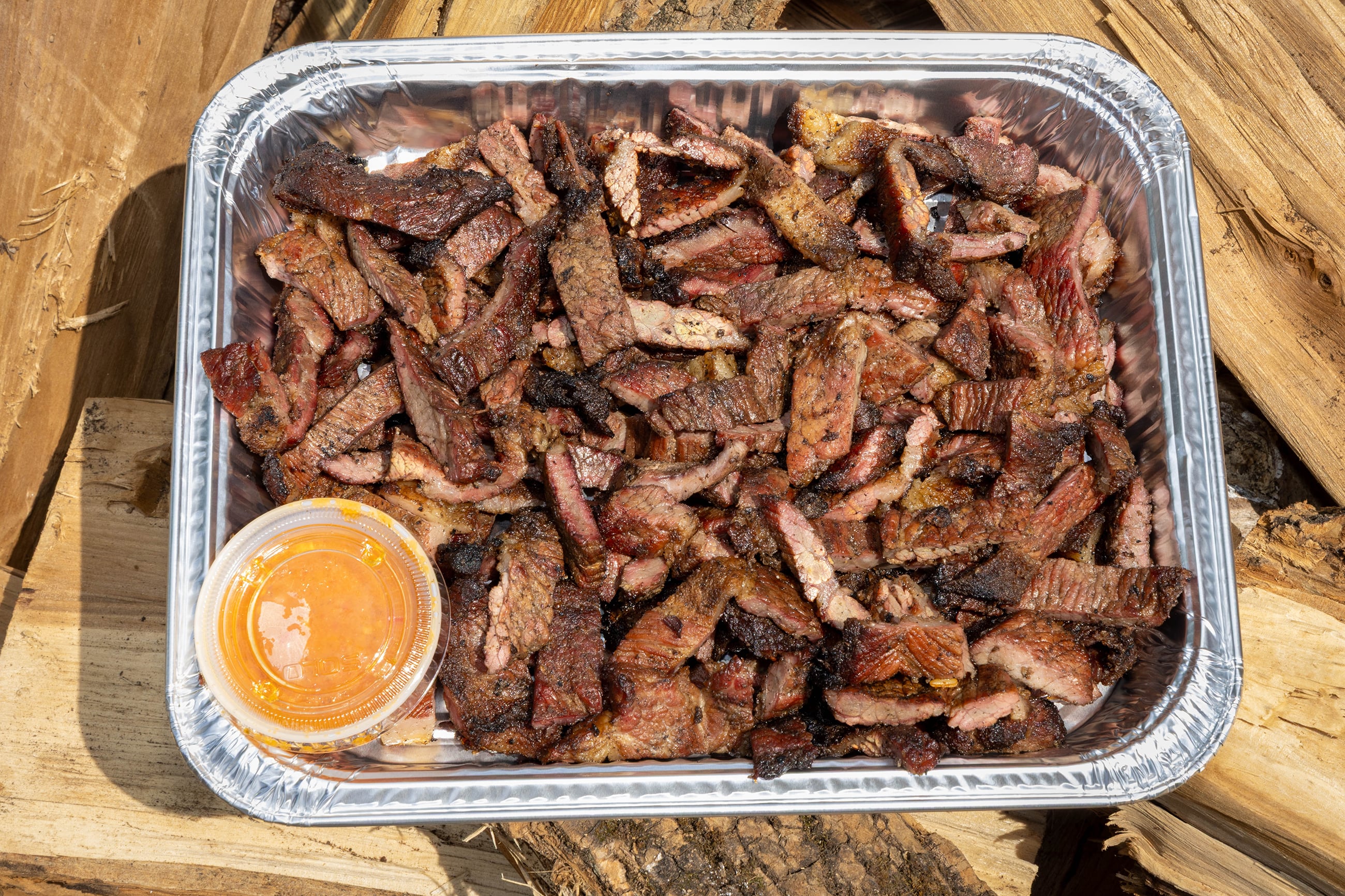
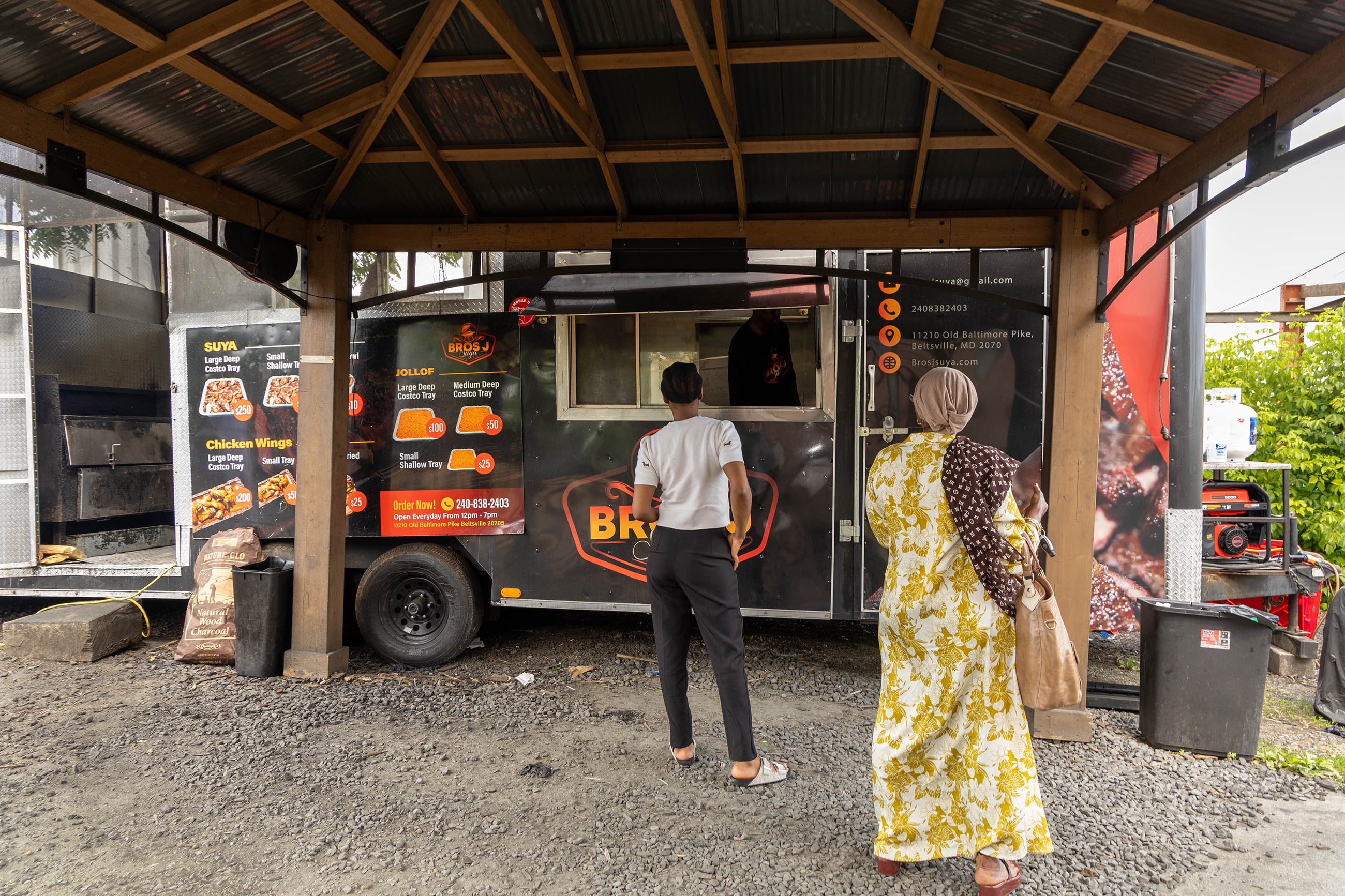
The first hint that you’ve found Bros J Suya (11210 Old Baltimore Pike, Beltsville) is the enormous pile of firewood along an overgrown industrial-frontage road near the train tracks in Beltsville. As soon as you step out of your car, you can smell it burning and hear Afrobeats playing from a small speaker.
The operation is spartan. There’s a trailer where people place takeout orders for jollof rice and suya (sizes include “small bowl,” “shallow tray,” and “large Costco tray”) and a soot-blackened smokehouse on wheels where Ulrich Nebangu and his team grill the meat over wood. The whole setup looks like some of the best back-road barbecue joints in the Carolinas, but instead of ribs or pork butt, Cameroon-born Nebangu is grilling thin strips of steak, wings, and whole fish.
The suya here is intense stuff: Chewy, peppery, and deeply smoked, it’s halfway between steak and jerky. Each plate comes with a fiery pepper sauce for dipping, and the buzz from the spice and smoke will linger with you for hours.
The polished look of Spice Kitchen (3124 Queen’s Chapel Rd., Hyattsville) reflects Olumide Shokunbi’s big ambitions. The Nigerian American DC-area native, who once managed a Chipotle in Bowie, wants to adapt West African street food to a modern, fast-casual chain.
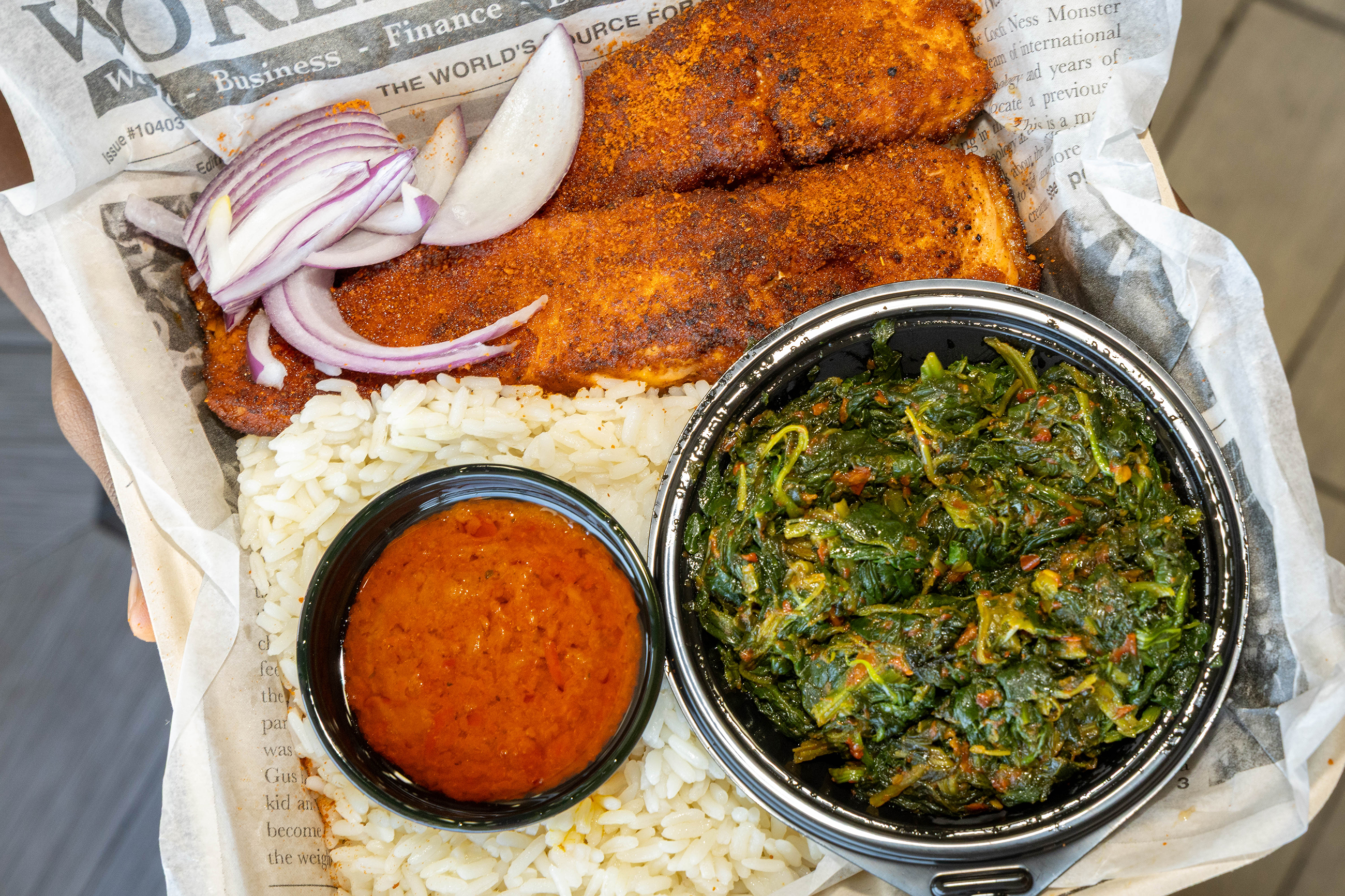
In 2020, Shokunbi opened Spice Kitchen as a ghost kitchen, then moved it to a food hall. In 2023, he debuted his own storefront. Here, richly spiced suya powder is applied not only to strips of rib eye but also to salmon, shrimp, wings, and—tastiest of all—lamb chops. The meat is nestled next to jollof rice and sides like smoky corn, spinach stew, or honey-sweet plantains. It’s an American-style build-your-own bowl.
“We changed the definition of suya to mean anything with suya spice,” Shokunbi says. “I was definitely being a little inventive while paying homage to the things I enjoy the most about our food.”
Those tributes include plates assembled with a layer of newspaper, just like on the streets of Lagos. And the spice it-self is as traditional as it gets—shipped directly from northern Nigeria. Shokunbi says he brings in “a couple thousand pounds” a year.
Nigerian street food isn’t all suya. Starting in the 19th century, tens of thousands of Lebanese immigrants, some of whom had intended to reach America, arrived on the West African coast. They established themselves in the business community in Nigeria and brought with them one of their most essential street foods: shawarma.
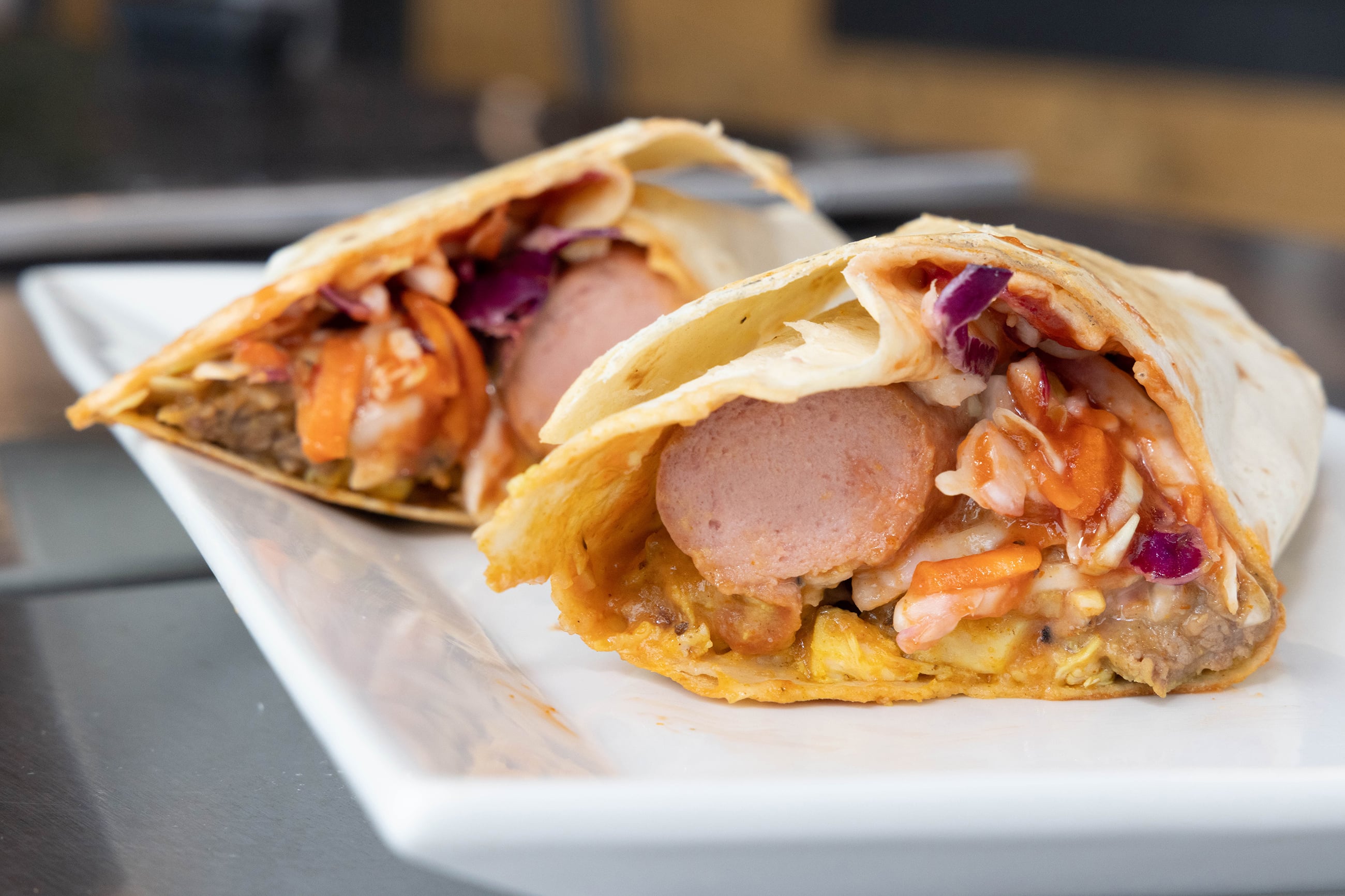
These days, Naija-style shawarma is a staple street food in Lagos, where Kozy Fawehinmi is from. Nigerians have created their own distinct style, and Fawehinmi opened Laud Shawarma (12250 Clarksville Pike, Clarksville) to recreate it in America. The business started with a brief tenure in Silver Spring’s ill-fated Solaire Social food hall before moving to another food-hall space in Takoma. Finally, she landed in the Common Kitchen, a pleasant food hall in Howard County.
Naija shawarma differs from the traditional Middle Eastern variety in some key ways. To taste it at its most Nigerian, order a mix of beef and chicken, add a hot dog to the wrap (yes, really), and get the whole thing spicy. Then tack on a side of Fawehinmi’s mild, tomatoey jollof rice and some hibiscus juice. This is probably unlike any shawarma you’ve had before.
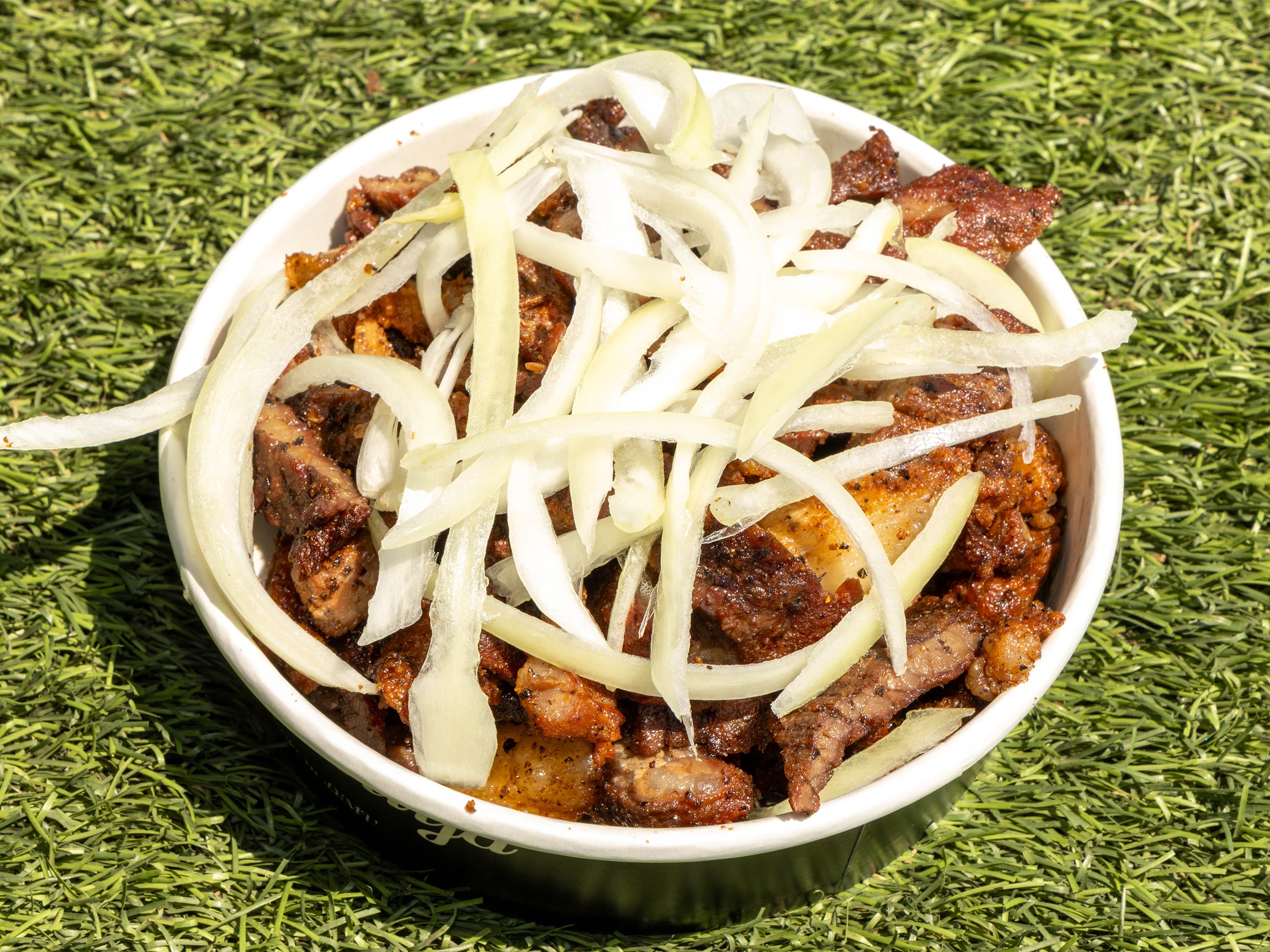
For some of the region’s most sophisticated, uncompromising suya, visit Project Suya in Silver Spring (8777 First Ave.) or one of its trucks in Hyattsville and Bowie. Beef suya here means tender strips of fatty brisket, marinated with kankan (a secret Cameroonian seasoning blend); a spice called country onion; Maggi powder; and enough black and white pepper to make you cough. It acquires a profound smokiness from the grill, then gets neatly packaged in a heat-retaining bag with toothpicks and extra pepper.
This mini-chain was founded by Mikecollins “Lionn” Mendong, who lived in Nigeria for years but originally hails from Cameroon. (“If you’re born in Cameroon, I think the first thing you will know, even before your own name, is suya,” he says.)
Mendong was disappointed by the suya scene when he moved to DC, so he commandeered it, and his recipe for beef suya took months to perfect. In June, he opened his first brick-and-mortar location in downtown Silver Spring. There, he serves suya burgers and suya tacos along with the more traditional stuff.
The spices alone cost Mendong tens of thousands of dollars a year, but “it’s 110 percent not about the money,” he says. “It’s really about the culture, preserving it, shaping it for our kids. They are going to grow up to know suya.”
This article appears in the July 2026 issue of Washingtonian.

Ike Allen covers politics, food, culture, and transportation in DC and writes the monthly Hidden Eats column for the magazine. He grew up in DC.