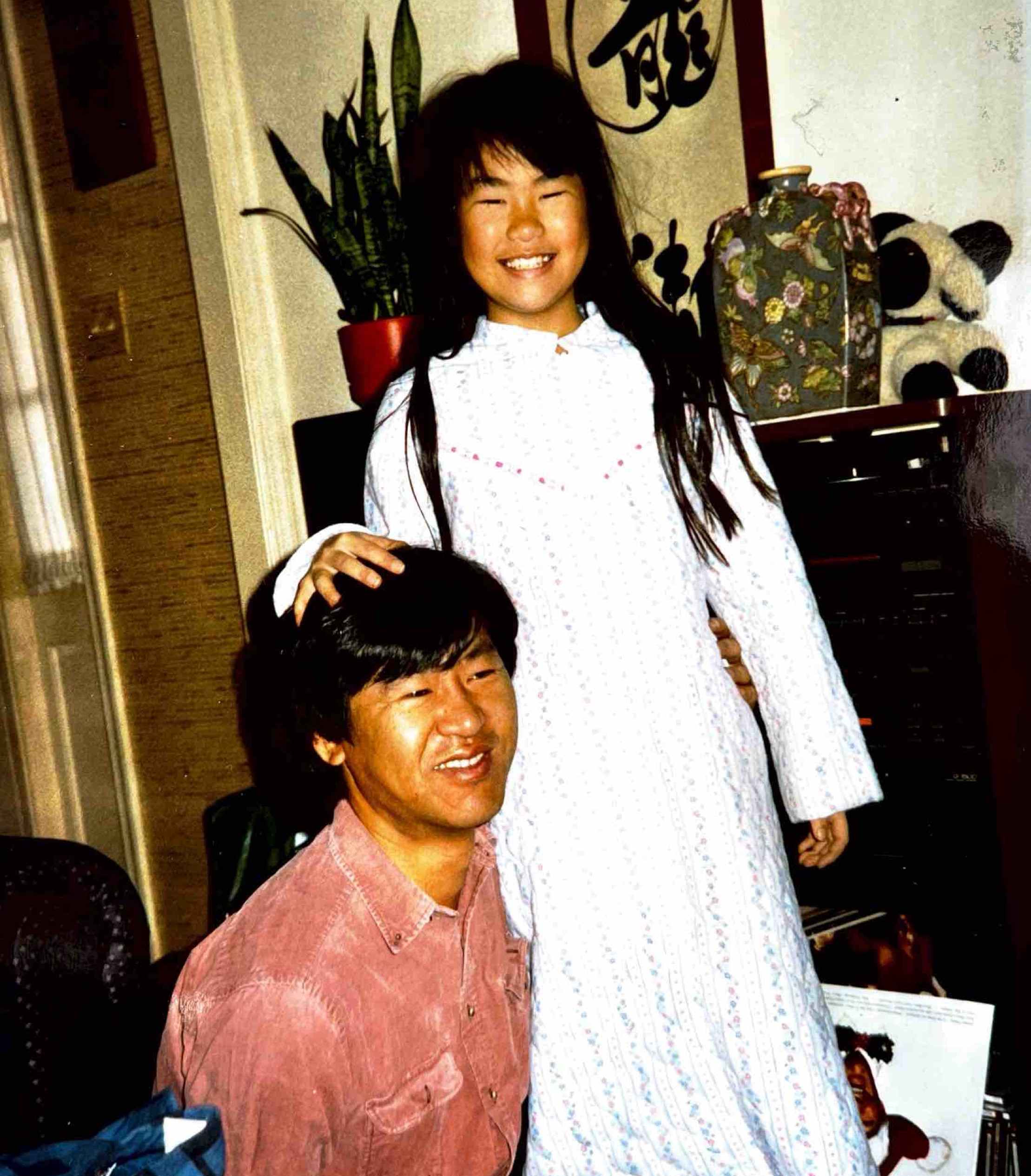
When Suzan Song was growing up in Ellicott City, her father owned a liquor store that was periodically robbed. In 1993, one of those robberies went sideways. Her father was stabbed multiple times and kidnapped, then saved himself by jumping from a speeding van. He spent months in the hospital. About a year later, he died.
Song was in high school then, and for a long time she believed she was fine—that the violence and grief hadn’t affected her. She went from college to medical school to residency, then to Harvard for a master’s in public health. As she built a career in psychiatry, she was drawn to humanitarian work, seeing patients who had survived torture, sex trafficking, and genocide. She did asylum evaluations for children in US immigration detention and treated the worst-off kids in foster care. Song was obsessed—for no reason that she could discern—with how people handle suffering, and whether they can eventually heal.
Then in 2013, Song was in Burundi researching former child soldiers, studying how trauma reverberates through their adult lives. After an interview, one of her subjects turned on her. He began making threats. Song wasn’t sure what was happening, but her interpreter thought the danger was real. He whisked her to a friend’s apartment and urged her to return to the States.
Hiding in that apartment, Song began asking difficult questions: How did I get here? Why am I doing this? She’d recently been in touch with police about going undercover in the sex-trafficking world, and it struck her that she’d spent an awful lot of her career putting herself in danger. “I was like, wait, why? I’m from suburban Maryland, I don’t need to be doing this,” she told me.
That night, while she was struggling to sleep, Song noticed a large hole in the mosquito netting above her bed and thought of her family’s liquor store—how after one robbery, her dad had installed bulletproof glass in the entryway. The glass hadn’t saved him in the end, and the ripped mosquito netting struck her as the exact same kind of false protection. That was the moment when she connected the dots: All of this was about her dad.
A psychiatric professional like Song might call this a moment of narrative insight, when a person sees that a story they’ve been telling about their life isn’t actually true. In this case, Song suddenly understood that she’d essentially been numb since her dad died. She was locked in a bad pattern of seeking out danger and hardship as a roundabout way of confronting her grief. Her entire professional life—her whole fixation on suffering—was an attempt to answer an urgent personal question: After experiencing trauma, how does one return to feeling alive?
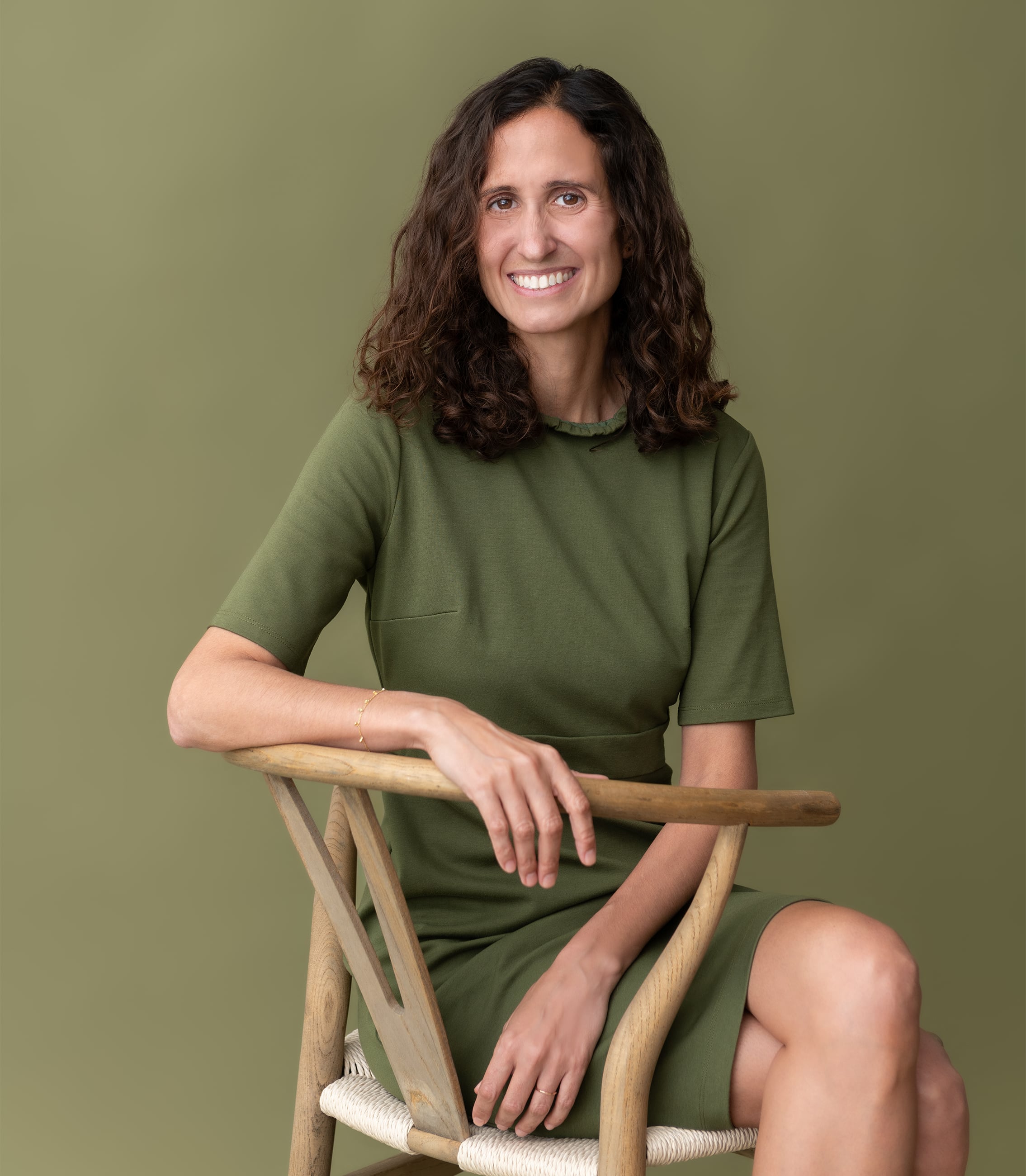
More than a decade later, that question is at the heart of Song’s first book, Why We Suffer and How We Heal. Published in February, it’s a blend of memoir, patient case studies, and psychological self-help that lays out a framework for surviving suffering. Song and I spoke about it recently at her home in Bethesda, where she maintains a private psychiatric practice, seeing patients from a variety of backgrounds: resettled refugees, tech CEOs, survivors of torture, members of high-profile political families. On her wall were woven injera baskets from Ethiopia. She sat in an armchair drinking herbal tea.
Song began writing her book during the pandemic, she told me, when she was a professor at George Washington University and treating her patients on Zoom. She’d noticed that some were crumbling while others thrived, and the thrivers weren’t necessarily who she expected: They weren’t the best resourced, least traumatized, or most therapized patients, but “they carried themselves with a sense of calm and confidence and mastery,” Song said. “They weren’t avoiding what was going on.” She wondered what they had in common—whether they were born that way or their resilience was an acquired skill.
What they shared, Song concluded, was “the ability to embrace instability.” They understood that life is a cascade of destabilizing events, and they had tools for staying grounded amid strife. She thought a lot about what those tools might be, sifting through her experiences with patients across the globe, and landed on the notion that people thrive by rewriting narratives, performing rituals, and embracing a greater purpose. These became the three sections of her book.
The narrative aspect, Song told me, is very Western. “Americans are so obsessed with our thoughts,” she said, explaining that in the United States, healing is often understood to begin and end with learning to tell different stories about ourselves. She finds that important, but she writes that “insight alone doesn’t always change behavior.” Self-examination “can trap you in an insular world of unproductive ruminations, like tumbling through a dryer cycle that never stops.”
That’s where ritual and purpose come in. In cultures with no therapists or psychiatrists, Song explained, people “don’t sit around talking to a stranger about their deepest, darkest thoughts.” They may not ever discuss their trauma with anyone at all. In those contexts, Song realized, healing tends not to involve connecting a person more deeply to themselves; it’s about connecting a traumatized person with community and making them feel like they belong.
Rituals, like funerals or baptisms, are often collective affairs, embedding people in their communities during times of transition or pain. And finding purpose is the cornerstone of a meaningful life; Song writes that “when purpose is missing, success feels empty and struggle feels like you’re just getting by.” A person with purpose believes that they matter in the world, and Song thinks that people mostly feel that way when helping others.
For a long time, Song’s humanitarian work seemed like purpose; ostensibly, she was helping people heal. But throughout her early career, she mostly felt numb and robotic. Her work shut down her interior life. “Especially working with torture survivors,” she told me, “I could put all of my energy into them, so I didn’t have to think about myself.” Now she understands that making herself a witness to trauma prevented her from seeing herself as a victim of it. And as long as she was alienated from herself, she couldn’t heal.
After Song’s transformative moment in Burundi, when she realized that her whole career had been a reaction to her dad, she returned to the United States and stopped working abroad. She thought she was done with it forever. Being in conflict settings had required her to dissociate in order to function, to repress her emotions and fears. She’d been in that mode for decades. To recover, she began trying to reconnect with herself—probing her false narratives, making “micro-changes” in her life to see what felt good. In figuring out who she was and what she wanted, she had to restore the sense of safety and joy that she’d lost after her father’s death.
When Song allowed herself to stop numbing, a surprising feeling arose: She missed being with people at their most vulnerable moments. In doing humanitarian work, she would have “these little doses of intimacy” with people. It made her feel more human. While she no longer felt blindly compelled to encounter suffering, she realized that she actually still wanted to—not to untangle her own trauma, but to do good in the world. In 2014, when she heard a radio story about chemical warfare in Syria, she reached out to a friend at UNICEF. Two weeks later, she was in a refugee camp on the Syrian border, consulting on how to help migrant teens.
Song had returned to humanitarian work, but it felt different this time around. For one, her interactions with people felt more present and human. “Until then, I had been so disconnected from myself that I was somewhat disconnected from the people I was working with,” she explained. And she was also thinking less like a clinician, whose job is to help individual people heal, and focusing more on systems. She wanted to help whole populations of people by changing the environments and policies that cause suffering in the first place.
These days, Song frequently consults on global humanitarian issues. She has recently built school-based mental-health programs in Ethiopia and assembled teams to help kids in Ukraine. She has advised the United Nations, the International Medical Corps, the State Department, and the US Office for Victims of Crime. In a way, writing Why We Suffer and How We Heal is a hybrid of her clinical and consulting work, taking the insights that she provides to her individual patients and dispensing them at scale.
Americans assume that we need to figure things out by ourselves. “But we’re supposed to be in this together,” Song says.
When I asked what the primary takeaway from her book should be, Song said that “people aren’t meant to do life alone.” She herself is a member of four different book clubs (it’s purely social; she doesn’t read the books), and sometimes, for fun, she and her kids bake cookies and drop them off in the neighborhood door to door. This winter, she hosted a Lunar New Year party for her older neighbors because she was worried about them being cooped up with all the ice.
Working in other countries, Song told me, “you can feel the fabric in the air that stitches people together, but every time I fly back to the US, I feel the isolation. You land, and then you realize, ‘Oh, I’m all alone.’ ” To Song, so much suffering occurs simply because Americans assume that we need to figure things out by ourselves. “But we’re supposed to be dependent on each other,” she said. “We’re supposed to be messy, and we’re supposed to be in this together.”
In a way, Song’s whole job is to make suffering less lonely: to be a moral witness to pain, to sit with the aftershocks of some of the worst human-rights abuses on the planet. I asked how she makes sense of it. “I am not Pollyanna-ish, like, ‘There is a silver lining to everything,’ because there is not,” she told me. “Sometimes it’s just unfair.” But she believes that many of her patients simply need someone to hear their suffering and tell them that what happened to them was wrong. She brought up the child psychoanalyst Selma Fraiberg, who once observed that a mother can’t hear her child’s cries until someone has heard her own. “I think that’s actually applicable to all of us,” Song said. “We are all just a bunch of wounded people bumping into each other, and our goal is to not hurt each other as best as we can.”
When Suzan Song was growing up in Ellicott City, her father owned a liquor store that was periodically robbed. In 1993, one of those robberies went sideways. Her father was stabbed multiple times and kidnapped, then saved himself by jumping from a speeding van. He spent months in the hospital. About a year later, he died.
Song was in high school then, and for a long time she believed she was fine—that the violence and grief hadn’t affected her. She went from college to medical school to residency, then to Harvard for a master’s in public health. As she built a career in psychiatry, she was drawn to humanitarian work, seeing patients who had survived torture, sex trafficking, and genocide. She did asylum evaluations for children in US immigration detention and treated the worst-off kids in foster care. Song was obsessed—for no reason that she could discern—with how people handle suffering, and whether they can eventually heal.
Then in 2013, Song was in Burundi researching former child soldiers, studying how trauma reverberates through their adult lives. After an interview, one of her subjects turned on her. He began making threats. Song wasn’t sure what was happening, but her interpreter thought the danger was real. He whisked her to a friend’s apartment and urged her to return to the States.
Hiding in that apartment, Song began asking difficult questions: How did I get here? Why am I doing this? She’d recently been in touch with police about going undercover in the sex-trafficking world, and it struck her that she’d spent an awful lot of her career putting herself in danger. “I was like, wait, why? I’m from suburban Maryland, I don’t need to be doing this,” she told me.
That night, while she was struggling to sleep, Song noticed a large hole in the mosquito netting above her bed and thought of her family’s liquor store—how after one robbery, her dad had installed bulletproof glass in the entryway. The glass hadn’t saved him in the end, and the ripped mosquito netting struck her as the exact same kind of false protection. That was the moment when she connected the dots: All of this was about her dad.
A psychiatric professional like Song might call this a moment of narrative insight, when a person sees that a story they’ve been telling about their life isn’t actually true. In this case, Song suddenly understood that she’d essentially been numb since her dad died. She was locked in a bad pattern of seeking out danger and hardship as a roundabout way of confronting her grief. Her entire professional life—her whole fixation on suffering—was an attempt to answer an urgent personal question: After experiencing trauma, how does one return to feeling alive?
More than a decade later, that question is at the heart of Song’s first book, Why We Suffer and How We Heal. Published in February, it’s a blend of memoir, patient case studies, and psychological self-help that lays out a framework for surviving suffering. Song and I spoke about it recently at her home in Bethesda, where she maintains a private psychiatric practice, seeing patients from a variety of backgrounds: resettled refugees, tech CEOs, survivors of torture, members of high-profile political families. On her wall were woven injera baskets from Ethiopia. She sat in an armchair drinking herbal tea.
Song began writing her book during the pandemic, she told me, when she was a professor at George Washington University and treating her patients on Zoom. She’d noticed that some were crumbling while others thrived, and the thrivers weren’t necessarily who she expected: They weren’t the best resourced, least traumatized, or most therapized patients, but “they carried themselves with a sense of calm and confidence and mastery,” Song said. “They weren’t avoiding what was going on.” She wondered what they had in common—whether they were born that way or their resilience was an acquired skill.
What they shared, Song concluded, was “the ability to embrace instability.” They understood that life is a cascade of destabilizing events, and they had tools for staying grounded amid strife. She thought a lot about what those tools might be, sifting through her experiences with patients across the globe, and landed on the notion that people thrive by rewriting narratives, performing rituals, and embracing a greater purpose. These became the three sections of her book.
The narrative aspect, Song told me, is very Western. “Americans are so obsessed with our thoughts,” she said, explaining that in the United States, healing is often understood to begin and end with learning to tell different stories about ourselves. She finds that important, but she writes that “insight alone doesn’t always change behavior.” Self-examination “can trap you in an insular world of unproductive ruminations, like tumbling through a dryer cycle that never stops.”
That’s where ritual and purpose come in. In cultures with no therapists or psychiatrists, Song explained, people “don’t sit around talking to a stranger about their deepest, darkest thoughts.” They may not ever discuss their trauma with anyone at all. In those contexts, Song realized, healing tends not to involve connecting a person more deeply to themselves; it’s about connecting a traumatized person with community and making them feel like they belong.
Rituals, like funerals or baptisms, are often collective affairs, embedding people in their communities during times of transition or pain. And finding purpose is the cornerstone of a meaningful life; Song writes that “when purpose is missing, success feels empty and struggle feels like you’re just getting by.” A person with purpose believes that they matter in the world, and Song thinks that people mostly feel that way when helping others.
For a long time, Song’s humanitarian work seemed like purpose; ostensibly, she was helping people heal. But throughout her early career, she mostly felt numb and robotic. Her work shut down her interior life. “Especially working with torture survivors,” she told me, “I could put all of my energy into them, so I didn’t have to think about myself.” Now she understands that making herself a witness to trauma prevented her from seeing herself as a victim of it. And as long as she was alienated from herself, she couldn’t heal.
After Song’s transformative moment in Burundi, when she realized that her whole career had been a reaction to her dad, she returned to the United States and stopped working abroad. She thought she was done with it forever. Being in conflict settings had required her to dissociate in order to function, to repress her emotions and fears. She’d been in that mode for decades. To recover, she began trying to reconnect with herself—probing her false narratives, making “micro-changes” in her life to see what felt good. In figuring out who she was and what she wanted, she had to restore the sense of safety and joy that she’d lost after her father’s death.
When Song allowed herself to stop numbing, a surprising feeling arose: She missed being with people at their most vulnerable moments. In doing humanitarian work, she would have “these little doses of intimacy” with people. It made her feel more human. While she no longer felt blindly compelled to encounter suffering, she realized that she actually still wanted to—not to untangle her own trauma, but to do good in the world. In 2014, when she heard a radio story about chemical warfare in Syria, she reached out to a friend at UNICEF. Two weeks later, she was in a refugee camp on the Syrian border, consulting on how to help migrant teens.
Song had returned to humanitarian work, but it felt different this time around. For one, her interactions with people felt more present and human. “Until then, I had been so disconnected from myself that I was somewhat disconnected from the people I was working with,” she explained. And she was also thinking less like a clinician, whose job is to help individual people heal, and focusing more on systems. She wanted to help whole populations of people by changing the environments and policies that cause suffering in the first place.
These days, Song frequently consults on global humanitarian issues. She has recently built school-based mental-health programs in Ethiopia and assembled teams to help kids in Ukraine. She has advised the United Nations, the International Medical Corps, the State Department, and the US Office for Victims of Crime. In a way, writing Why We Suffer and How We Heal is a hybrid of her clinical and consulting work, taking the insights that she provides to her individual patients and dispensing them at scale.
Americans assume that we need to figure things out by ourselves. “But we’re supposed to be in this together,” Song says.
When I asked what the primary takeaway from her book should be, Song said that “people aren’t meant to do life alone.” She herself is a member of four different book clubs (it’s purely social; she doesn’t read the books), and sometimes, for fun, she and her kids bake cookies and drop them off in the neighborhood door to door. This winter, she hosted a Lunar New Year party for her older neighbors because she was worried about them being cooped up with all the ice.
Working in other countries, Song told me, “you can feel the fabric in the air that stitches people together, but every time I fly back to the US, I feel the isolation. You land, and then you realize, ‘Oh, I’m all alone.’ ” To Song, so much suffering occurs simply because Americans assume that we need to figure things out by ourselves. “But we’re supposed to be dependent on each other,” she said. “We’re supposed to be messy, and we’re supposed to be in this together.”
In a way, Song’s whole job is to make suffering less lonely: to be a moral witness to pain, to sit with the aftershocks of some of the worst human-rights abuses on the planet. I asked how she makes sense of it. “I am not Pollyanna-ish, like, ‘There is a silver lining to everything,’ because there is not,” she told me. “Sometimes it’s just unfair.” But she believes that many of her patients simply need someone to hear their suffering and tell them that what happened to them was wrong. She brought up the child psychoanalyst Selma Fraiberg, who once observed that a mother can’t hear her child’s cries until someone has heard her own. “I think that’s actually applicable to all of us,” Song said. “We are all just a bunch of wounded people bumping into each other, and our goal is to not hurt each other as best as we can.”
This article appears in the April 2026 issue of Washingtonian.