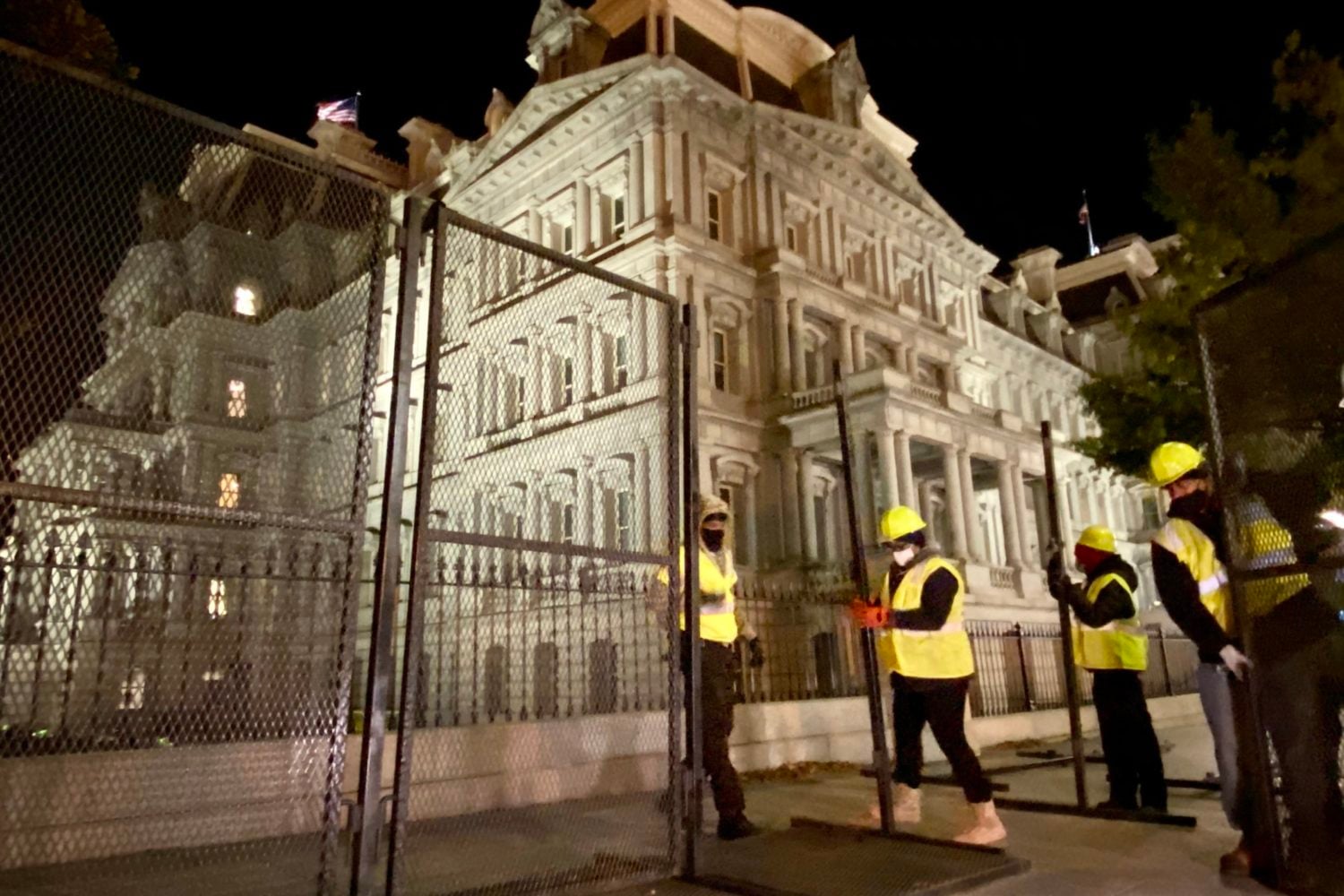
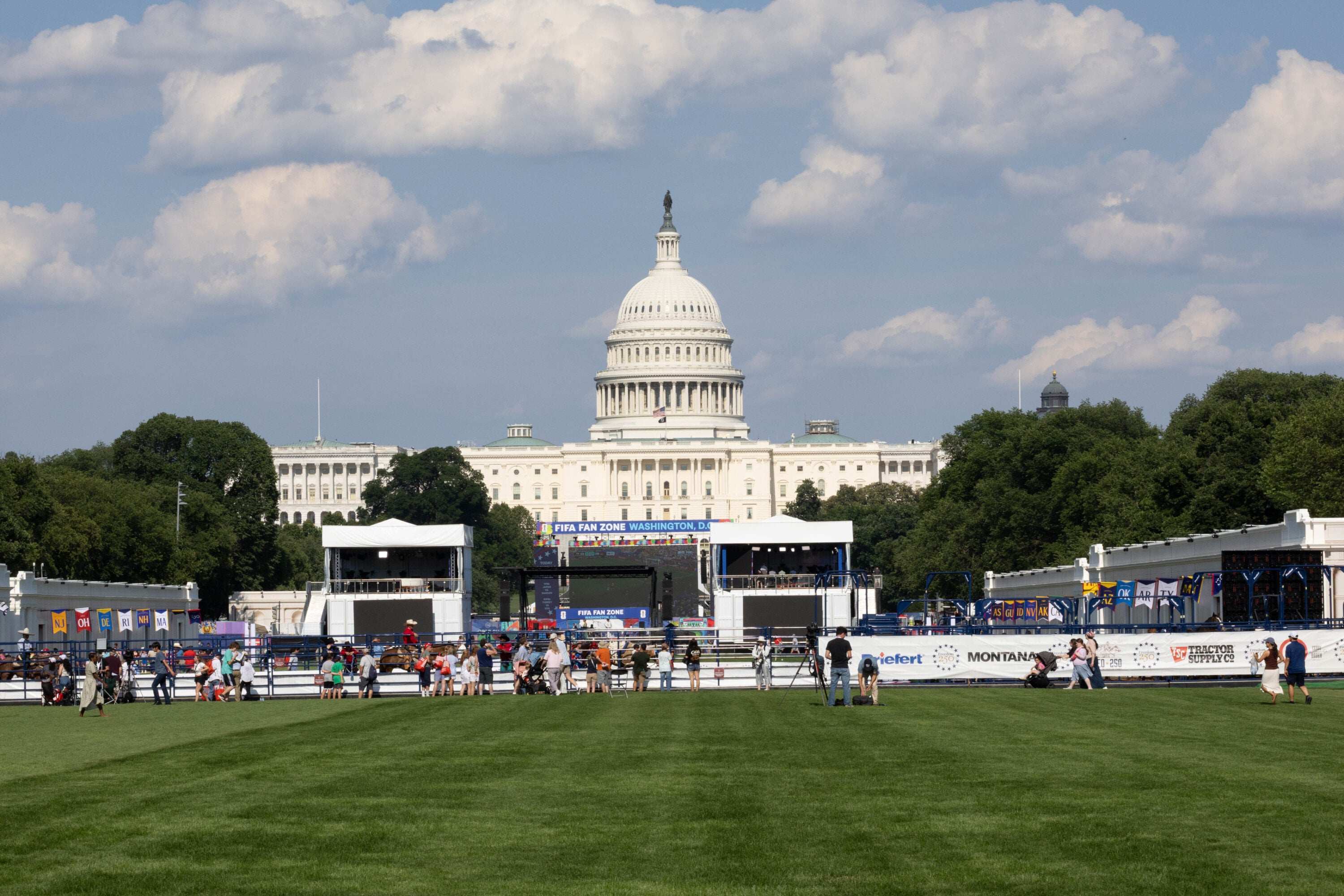
Thursday was opening day for the Great American State Fair, the latest round of summer patriotism planned by President Trump’s Freedom 250 semiquincentennial task force. In preparation, the National Mall has spent weeks cluttered with half-built plywood structures and has been largely cordoned off to the public. Road closures and bus detours will choke downtown through mid-July. The fanfare conflicts with the usual dates of the locally beloved Smithsonian Folklife Festival, which has moved its iconic marketplace to the Arts and Industries Building instead. Surely, I thought, this thing ought to be worth the fuss.
Gates opened at 10 AM, and I feared my noon arrival would relegate me to the back of a winding security line. Getting to the bag check wasn’t easy: Tall fences flank the entire Mall, and I walked well over a mile from Federal Triangle station just to reach an entry point. But when I finally make it, already sweating through my shirt, there is no line to speak of. (Later, a vendor tells me that nobody really trickled in for at least an hour after the start time.) A guard glances into my purse, ushers me through the metal detector, and off I go.
Of all the bombastic 250th anniversary programming planned by the Trump administration—a UFC fight that chewed up all the grass on the Ellipse, an Indy car race slated for August that’s expected to mangle downtown traffic for days—the state fair seemed like it was going to be the most benign. Organizers promised exhibits from all 56 states and territories, a quaint showcase of Americana that wouldn’t involve a gas leak or LED octagon lights blinding pilots en route to National Airport. And honestly, who doesn’t love to eat a funnel cake and take the Ferris wheel for a spin?
But the tender sheen over the event quickly dissipated last month when a hodgepodge of musicians booked for live performances backed out at the last minute, saying they were not informed that the Freedom 250 festivities would have a political tilt. Several states also announced they would not participate. In the eleventh hour, the president declared he would headline the fair himself: He was introduced at a rally Wednesday night by transportation secretary Sean Duffy, who started by dogging on the “libtards that canceled on us.” When Trump finally took the stage, he lauded America as the “hottest” nation in the world. “Nobody’s laughing at us anymore,” said the man filling in for Milli Vanilli.
Despite the event’s unseemly visage, I truly believed I might have an okay time. I am nothing if not nostalgic, and I grew up loving my small town’s annual fair. If I can at least drink some allegedly “fresh-squeezed” lemonade out of a plastic cup with a corrugated jumbo straw, I tell myself, I will feel content.
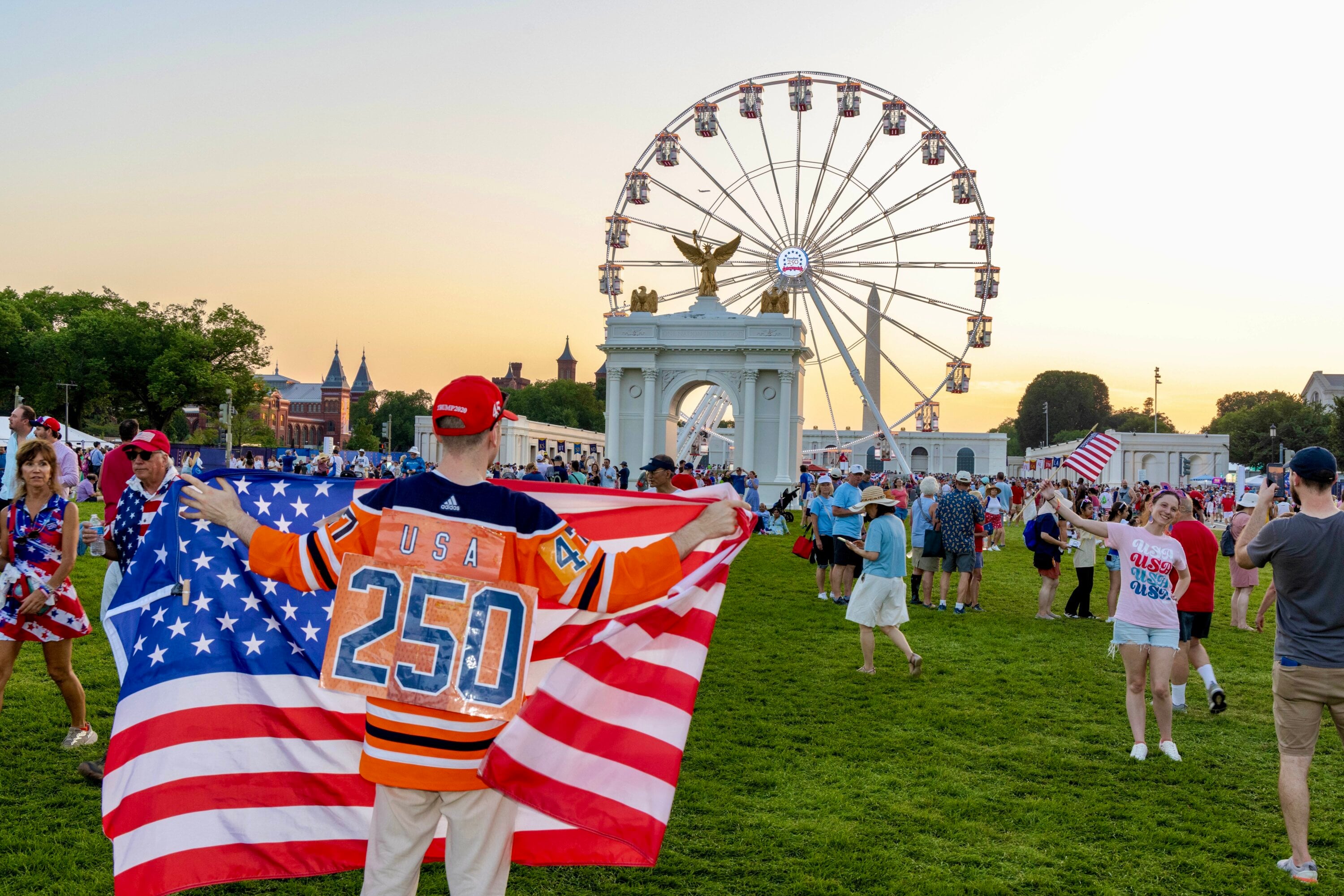
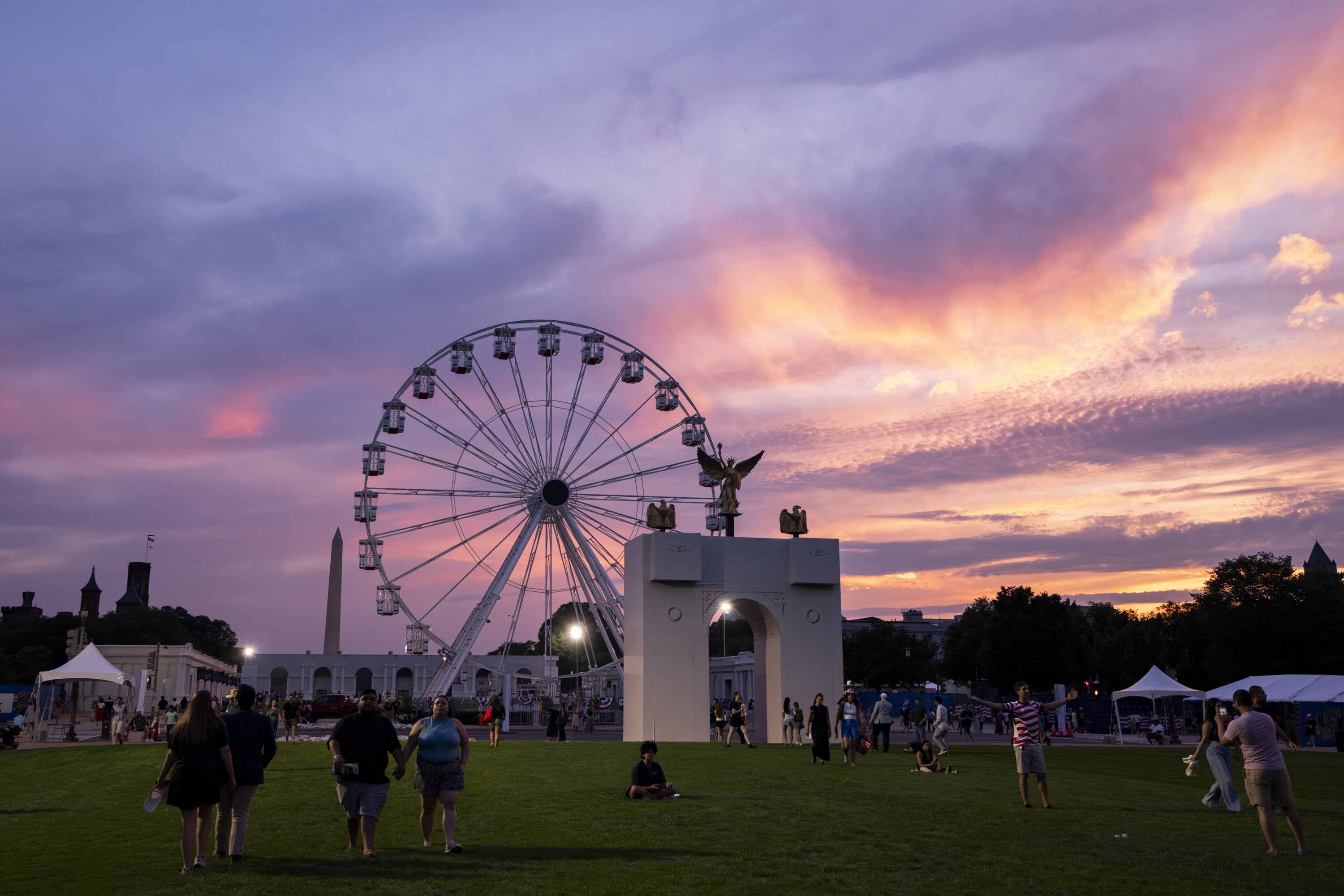
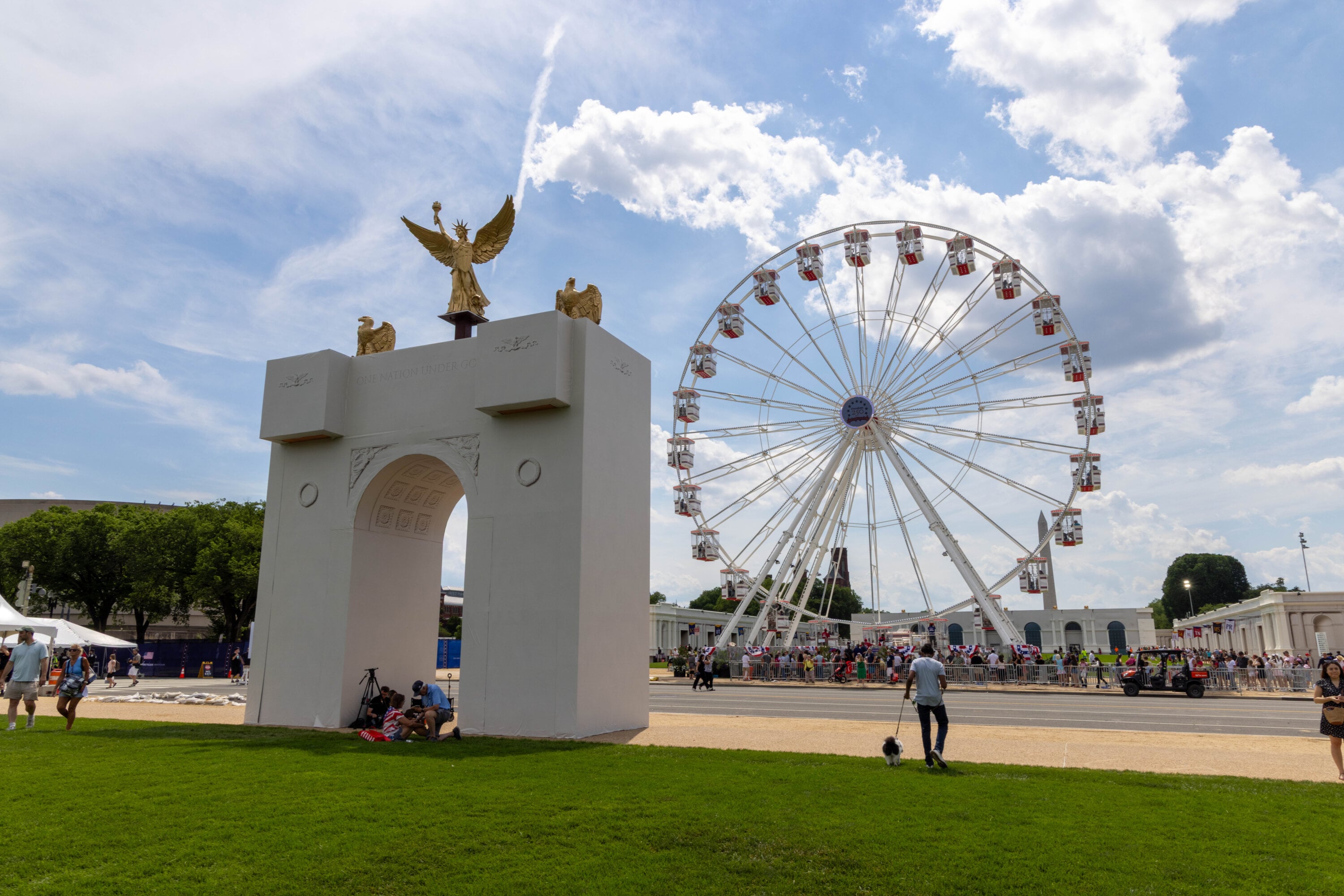
The crowd beyond the gates is meager. Upon entry, the Ferris wheel smacks you in the face—it’s not very big, but the slow-moving line boasts the highest concentration of people anywhere on the Mall. One couple toward the back tells me they’ve been waiting for 20 minutes already and they haven’t even seen the ride run yet. (City Cast reported around 6 PM Thursday night that the wheel had broken down due to generator issues and was expected to be out of commission for an hour or two. We reached out to Freedom 250 for specifics and are waiting to hear back.) A few days ago, I might have been reluctant to hop on, given how the administration’s last construction project resulted in a potentially toxic algae bloom in the Reflecting Pool. But recent reporting confirmed the wheel was inspected both by DC safety officials and a third-party company, so I am tempted to join the queue. No single passengers are allowed, so I consider asking to join another group. A beaming woman swimming in American flag apparel saunters past, and she seems like she’d be a good time. I ask if she’s ridden yet. “No,” she says firmly, gesturing at the enclosed gondolas. “It looks like a hot box.” If she’s out, so am I.
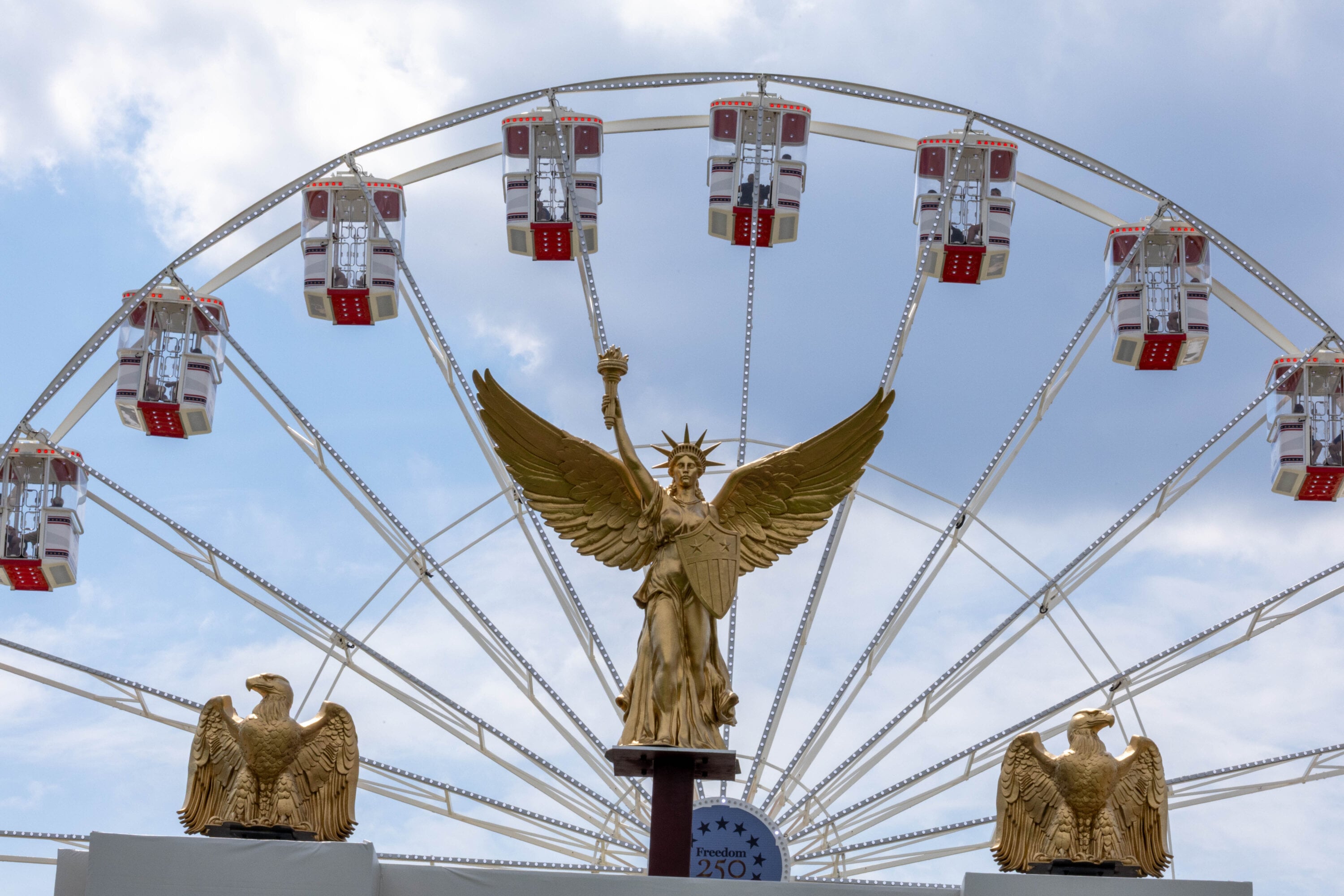
Across from the Ferris wheel is a scaled-down replica of Trump’s victory arch, planned for Memorial Circle near Arlington National Cemetery. A couple folks pose for photos in front of it, while others slump underneath for some shade.
I decide to check out the state exhibitions, which are housed in rows of makeshift structures draped with tarps designed to look like Tuscan columns. The spaces are cramped, so the programming is simple: Mississippi reminded everyone it was the birthplace of Elvis Presley, Nebraska offered a truck simulator and a braggadocious placard about its invention of “modern center pivot irrigation,” Puerto Rico played a salsa-dancing tutorial video on loop. Visitors are invited to pick up state fair “passports,” and each tent offers a unique stamp.
DC’s tent is in shockingly good spirits: Plastic cherry blossoms dangle from the ceiling, and children are invited to draw magic-marker pictures on the walls. When I see a flag flying for my home state of Connecticut, I’m oddly relieved: Our governor is among those who declined to send representatives to the fair, so I guess something must have been thrown together. But the room is empty except for two wicker chairs, a stamp, and the box the stamp came in. Poking my head into the barebones booths of the other opt-out states, my nostalgia officially feels irrelevant.
The main attraction turns out to be Florida, where a line snakes out the door. “They giving away citizenship, or what?” hoots a woman passing by, her bright-red America 250 tank top competing with the sun. After a few minutes of waiting, I start to wonder if she might be onto something. If any state was going to veer into political gimmicks, I assume it would be the one where the president spends so much of his time. But I’m greeted by a wall of “Famous Florida Men and Women” that boasts Jimmy Buffett and Tom Petty, two famously anti-Trump celebrities, and the rest is a children’s museum-style explainer of the state’s wildlife and agriculture. The final room smells like oranges, which is the most whimsical touch I will encounter all day.
“God forbid you die today,” is the salutation of a young man who approaches me as I’m collecting myself between Georgia and Tennessee. “Are you absolutely sure you would go to heaven?” Caught off guard, I’m honest: “It’s a 50/50 shot.” He proceeds to say a prayer for me, and asks me to recite one in return. In dodging that request, I learn that he’s visiting from Tampa with an evangelical Christian group called Celebrate America DC, founded by a pastor who was arrested in 2020 for refusing to close his megachurch during the Covid pandemic. The ministry will be around the District through mid-July, an effort “to shake a city, to plunder hell and populate heaven.”
Shortly after this encounter, an urgent voice booms from the opposite end of the Mall. The siren song calls me, and I’m halfway to the main stage when I realize the featured performer is an evangelical preacher. “Glory, glory, hallelujah, His truth is marching on,” he orates, sounding more like Lin-Manuel Miranda than Jerry Falwell. “Onward, Christian soldiers marching forth.” He hasn’t been introduced and there is no signage, so I ask the handful of other spectators if they know who he is. They don’t. Save me, Vanilla Ice, I think, probably the first person on Earth to utter such a prayer. He’s not playing until tomorrow.
An hour into my excursion, I have already been the subject of two exorcism attempts and my constitution is starting to falter. There can’t possibly be a better time for my lemonade. I step into the food hall, where I see a single vendor: Express Hibachi, which is an unusual name for a purveyor of personal pizzas and chicken Caesar salads. I skip the dining and head straight for the beverage stand. At this moment, I realize it’s all over: The only available lemonade is Minute Maid, sold by the plastic bottle. Feeling bamboozled and stupid for believing that I might find something beautiful at this garish perversion of an American tradition, I consider purchasing three $14 Cutwaters and passing out in the middle of the grass. But I already appear to be emanating a demonic energy to my fellow fairgoers, so I settle on a $5 water. In the meantime, another performer has taken the stage, a 14-year-old singer named Reagan Oliver who has traveled here from Arkansas and croons a sweetly timid rendition of “Delta Dawn.” Most of the attendees ignore her, and only a few clap when she’s done.
The only remaining entertainment for today is the rodeo, a cobbled-together production that isn’t set to start until later in the afternoon. (Our staff photographer attends later in the day and notes that prerecorded videos are played between the riding acts, which wind up comprising about half the performance.) I really hate to see horses in compromising situations, but when the cowboys start warming up in the small pen shortly before 2 PM, I watch because there’s nothing else to do. “Don’t micromanage him,” a trainer warns a rider who is struggling with her horse. “Just let him figure it out.”
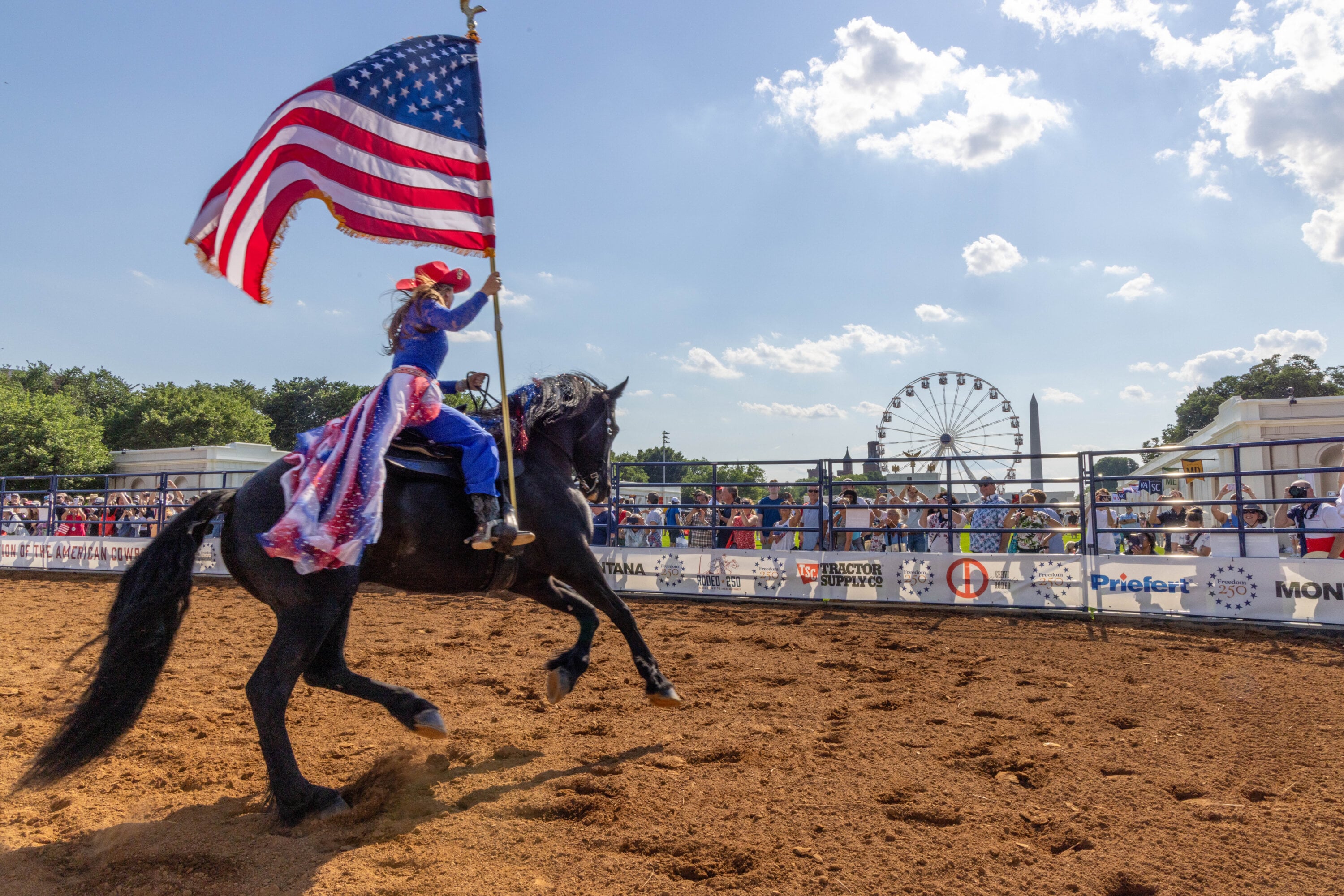
Two men, one donning a “Stand for the Flag, Kneel for the Cross” T-shirt that feels like the most authentic state fair token I’ve seen all day, stand alongside me. They’re visiting from Ohio, and it’s their first time in DC. “We’re disappointed,” they tell me of their fair experience. They’re traveling with a group that includes children, and they planned to scope out the scene and hopefully invite the rest of the family to come along. But they don’t see how a kid could possibly have fun here, with the lackluster attractions and the conspicuous absence of cotton candy. Plus, they had a hard time finding the entrance; they wandered for more than an hour before they found the security line. I tell them I got lost, too. “And you live here,” one points out. “How do you think we feel?”
Maybe we’re all just Debbie Downers. A number of fairgoers apparently had a great time, finding a sense of American unity and encountering corndogs that I somehow missed. There were a number of hands-on activities for children at the state exhibitions, including a dinosaur bone-digging site in Montana and a mini-golf station in Indiana. My own nostalgia remains untapped, but what if 50 years down the line, one of these kids spends the tricentennial relishing the memory of the time they traveled down to DC for the Great American State Fair? That feels worthwhile, even celebratory. On my way out, I spot a mother and her young son standing under the shade of the wheel. “Have you gone for a ride yet?” I ask the little boy, thinking that if he offers a rave review, I’ll siphon some of his joy and stomach the line before I leave. “No,” he croaks back, sweat beads pooling on his cheekbones. The thing hasn’t broken down yet, so maybe he still has a chance.