Three weeks ago, a collapse of the Potomac Interceptor pipe launched hundreds of millions of gallons of raw sewage into the Potomac River, contaminating waterways and thrusting the concept of “poop water” into local consciousness. Though it seemed for a moment that the spill was largely contained, DC Water announced last week that workers discovered a massive rock dam blocking the damaged sewer line—a snafu that is expected to delay repairs for another four to six weeks. And this past Super Bowl Sunday, as toilets across the District confronted the consequences of atypically high buffalo chicken dip consumption, yet another major overflow occurred.
According to a DC Water press release Monday, an onslaught of non-disposable wipes flushed Sunday clogged multiple pumps, which then had to be taken out of service for cleaning and maintenance. “This reduction in pumping capacity coincided with a high flow period in the sewer system contributing to the event,” the release says. “The incident is in addition to a smaller overflow that occurred earlier in the day but was contained within the site and did not reach the river.” The deluge released “several hundred thousand gallons of wastewater,” which the agency says was contained on-site and did not reach the river. A smaller related overflow—about 5,000 gallons of contaminated water—took place Monday but was also contained on-site, according to a Tuesday update. DC Water says five new bypass pumps are being tested and could arrive as soon as the end of this week.
Before this clog, the temporary bypass system that crews implemented late last month to reroute wastewater upstream of the broken pipe were preventing additional sewage overflow “on most days,” DC Water spokesperson Sherri Lewis tells Washingtonian in a written statement. As repairs to remove the rock blockages continue over the next several weeks, more leaks are possible. “We have had some limited overflow caused by increases in flow due to inflows and infiltration caused by snowmelt and pump issues that temporarily reduced pumping capacity,” she adds. “Until we have full functionality restored to the Potomac Interceptor, there remains a risk of some wastewater escaping, but that risk and the volume are minimal.”
Water testing woes
DC Water, which has been conducting regular water sampling across the river through a third-party contractor, posted on X Monday that it identified “human error” in some of its initial data. The E. coli levels near the drainage channel are about 100 times higher than the agency previously reported.
The nonprofit group Potomac Riverkeeper Network, which has been conducting independent testing at nine sites along the river in partnership with University of Maryland researchers, announced Thursday that sampling from last week showed E. coli levels more than 4,200 times the safe limit for human contact—even higher than the results found during a January 28 analysis. “We definitely found high levels of E. coli in a number of our samples over these nine sites,” says Dean Naujoks of the Potomac Riverkeeper Network. “And E. coli is just an indicator of other bacteria that could be present,” noting that researchers also detected Staph aureus (the bacteria that causes staph infections) and MRSA (an antibiotic-resistant strain of Staph aureus) at the site of the collapsed pipe. More Staph aureus was found downstream at a third of the sampling sites, revealing that the bacteria is moving through the river. “Anything that you find in sewage, whether it’s parasites or these various bacteria, we’re also finding in the river,” Naujoks says.
On Tuesday, the Potomac Riverkeepers launched an interactive map showing its testing sites, including all of the organization’s water quality sampling results to date. The group also confirmed that they will perform more testing this week. Meanwhile, DC’s Department of Energy and Environment told Washingtonian in a written statement Monday that it is “expanding testing efforts in conjunction with DC Water to multiple testing sites, and will be testing weekly along with local and federal partners, weather and conditions permitting.”
Given the uncertainty, the Potomac Riverkeepers are calling on local public health agencies to issue an advisory regarding recreational use of the river. “We have been getting calls and messages almost every day from people asking if the river safe, and we’re not a public health agency,” Naujoks says. The organization says it does not have the expertise to answer questions about safety; according to Naujoks, they’re fielding questions about fishing and upcoming polar bear plunges, and even got a call recently from wary local firefighters who were planning to practice rescue drills in the icy river conditions. “We just feel public health agencies in DC and Maryland need to step up and do their jobs.”
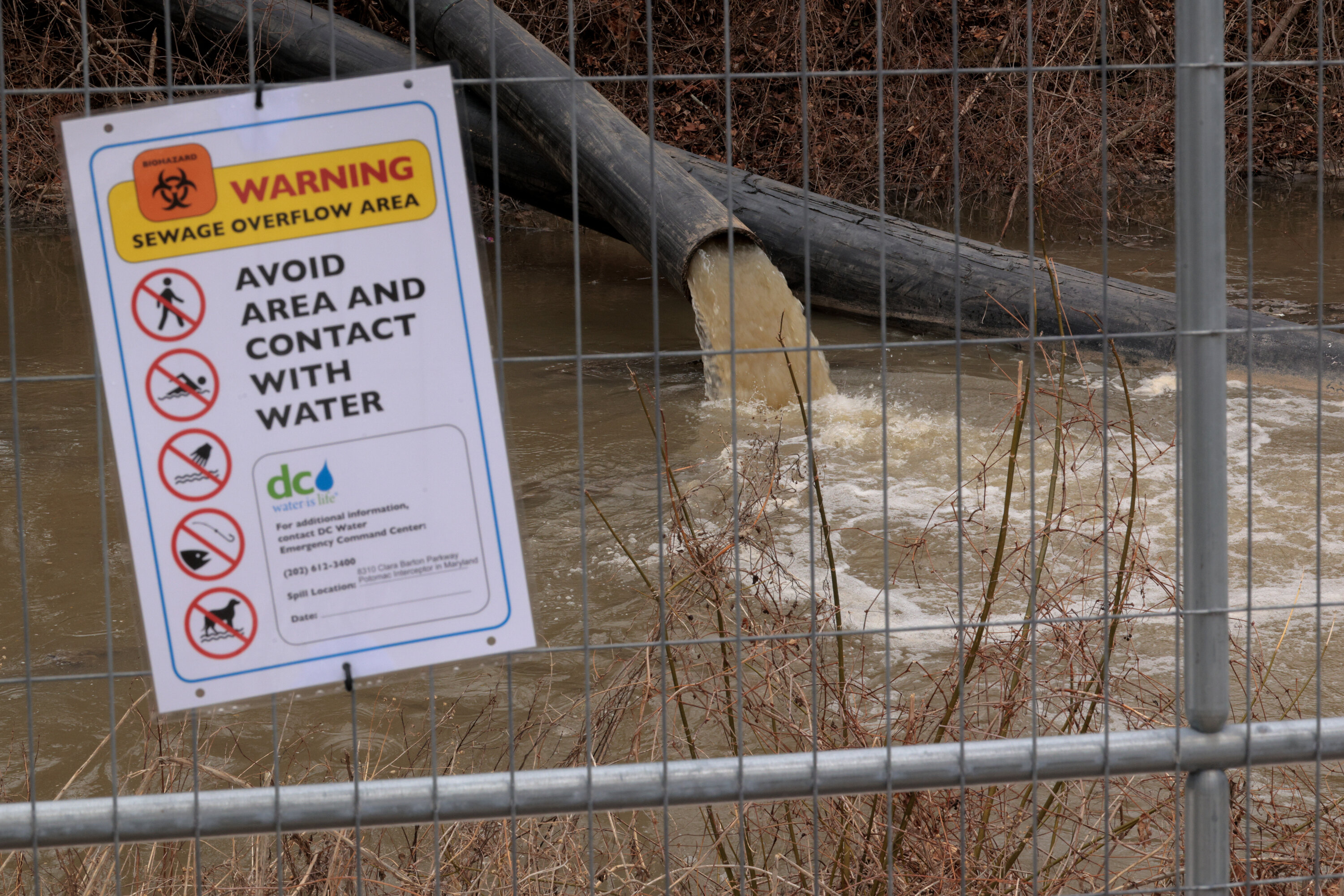
Maryland’s Department of the Environment told Washingtonian in a written statement Monday that it is “coordinating with the Maryland Department of Health and local health departments to ensure the public is informed of any health advisories,” adding that Montgomery, Prince George’s, and Charles counties have issued health advisories. “This has been done in accordance with state regulations for health advisory notifications following a sewage spill,” the statement continued. “DC Water is also reminding the public to avoid areas with raw sewage and follow all warning signs in posted areas along the C&O Canal or river. The Maryland Department of Natural Resources has provided advisories to anglers and hunters.”
In its statement to Washingtonian, DC’s energy and environment department says that the city’s government “is continuing to advise that the public and their pets avoid contact with the water, including fishing, until the situation is fully resolved and bacteria levels are reported as safe.”