In July, several news outlets reported that the AI company Anthropic was buying rare and antique books to scan for language model training—and destroying the books in the process. That’s because to use the books, they do what’s called “destructive scanning,” cutting the bindings off books and rendering them unusable.
Anthropic is destroying millions of physical books, including rare books with no surviving copies, to train their private model…
Legitimately evil. https://t.co/AADYoNUHOB
— Geiger Capital (@Geiger_Capital) July 28, 2026
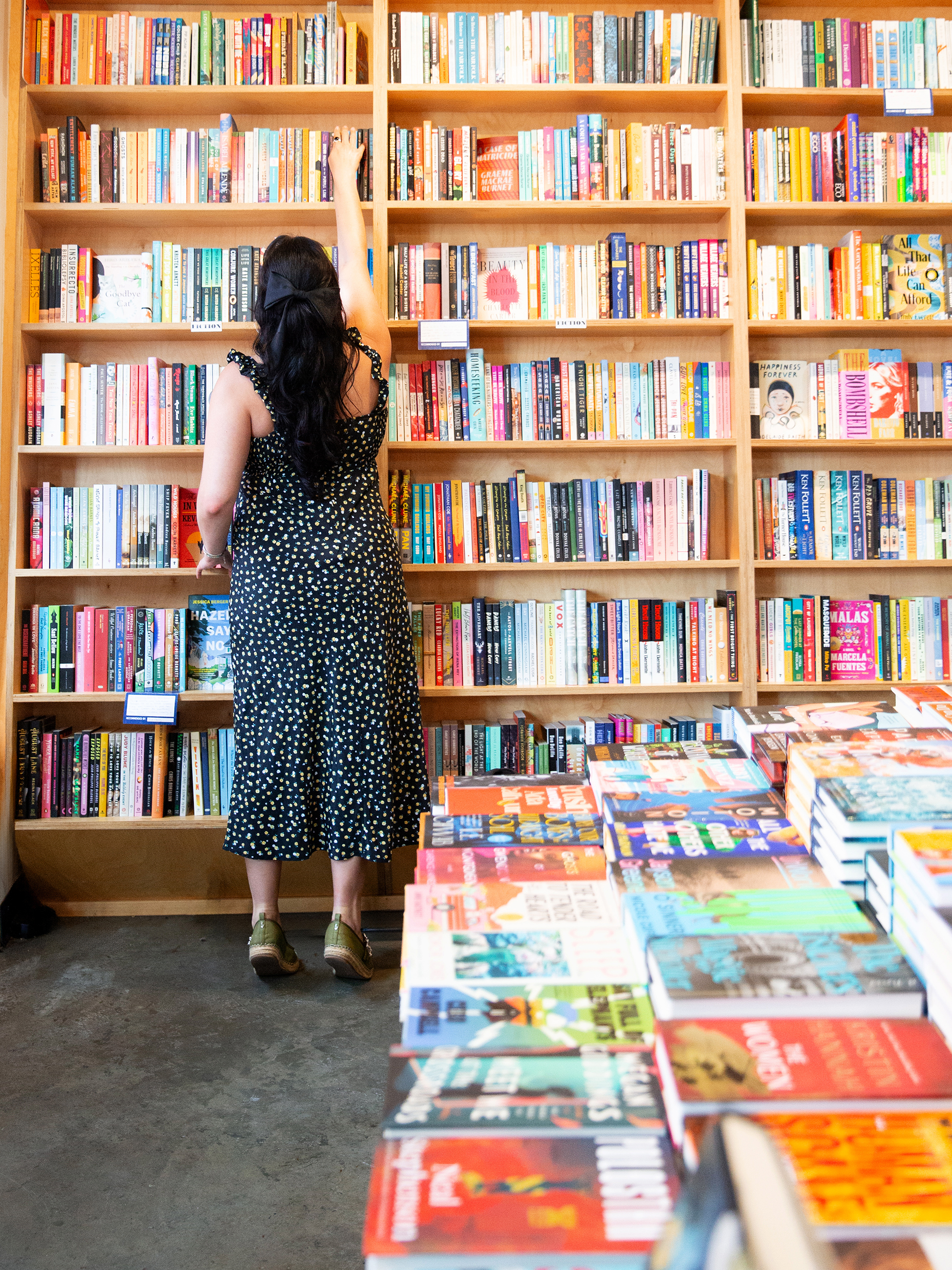
The stories sparked online outrage about the potential loss of rare titles. We wondered: Have DC-area booksellers noticed orders that might be coming from Anthropic or other AI companies training their models? If so, would they sell them the books?
The answers: Yes, and it depends.
Second Story Books tells Washingtonian that at the end of last year, they started to receive large orders for up to 100 books at a time. Most of the titles were University Press, academic texts, and other general interest nonfiction titles. Almost all the volumes were published between the 1970s and the 2020s, after ISBNs started tracking titles and before AI started producing text.
“We have sold thousands of volumes to, what we believe to be, AI training,” says Zachary Green, who works with special collections at Second Story, which has multiple locations in the DC area.
But it’s impossible to know for sure. Institutions are able to place orders through concierges on most bookselling sites, where a university or library can provide a list of the titles it is looking for. The orders are placed on the institution’s behalf, which means a bookseller ships to a warehouse rather than a buyer.
Still, Green says he’s able to make an educated guess based on the quantity, price point, and shipping destination of an order. Sellers talk to each other, and, Green says, there are common shipping locations for these large orders.
Despite fears circulating online, Green says he hasn’t received any orders for truly rare titles. Antiquarian Book Shop in Georgetown, which has a much smaller inventory of truly rare books, has not received any unusual orders, according to owner Susan Hale.
Green says most orders are for widely accessible titles, or volumes that have sat on shelves for years. In an effort to ensure that the store is preserving its unique inventory, Green says he now reviews every title in a large order.
“If we see orders come in for items that it would be irresponsible to sell to them, we will cancel,” he says. “We have not really seen that happen yet.”
Not every bookseller sees that as an option. Robert Harper runs My Dead Aunt’s Books in Hyattsville and Robert Harper Books, which lists around 36,000 titles online. Since January he says he’s sold between $30,000 to $50,000 worth of older academic texts to these third-party buyers, with orders still coming in.
Harper says that online bookselling sites such as Amazon, Biblio, Alibris, and eBay all assign a fulfillment ranking to sellers. If an order gets cancelled, even partially, it can lower a rating. With too low a rating, sellers get kicked off the site and jeopardize their livelihood—and the used-book business is infamously difficult as it is.
“If I cancel two out of 100 books in an order from Amazon, I will be cut off as a seller,” Harper says. “I can’t think about it morally or ethically, I have to fill the orders.”
Harper also says that these large orders have kept his store afloat, especially as big orders from universities have tapered off amid funding cuts. Often, the orders are for arcane titles that aren’t rare or valuable, but have been collecting dust on his shelves.
Still, the debate is fierce. Susan Benne, executive director of the Antiquarian Booksellers Association of America, says some booksellers are opposed to anything that could potentially train AI. She says ABAA had formed a working group on AI’s impact on the rare-book trade even before news reports about destructive scanning, and that they are aware of the concerns. She says there’s no precedent for booksellers monitoring their buyers.
“Typically when a bookseller gets an order,” Benne says, “they aren’t asking, ‘What are you going to do with the book afterwards?’ ’”