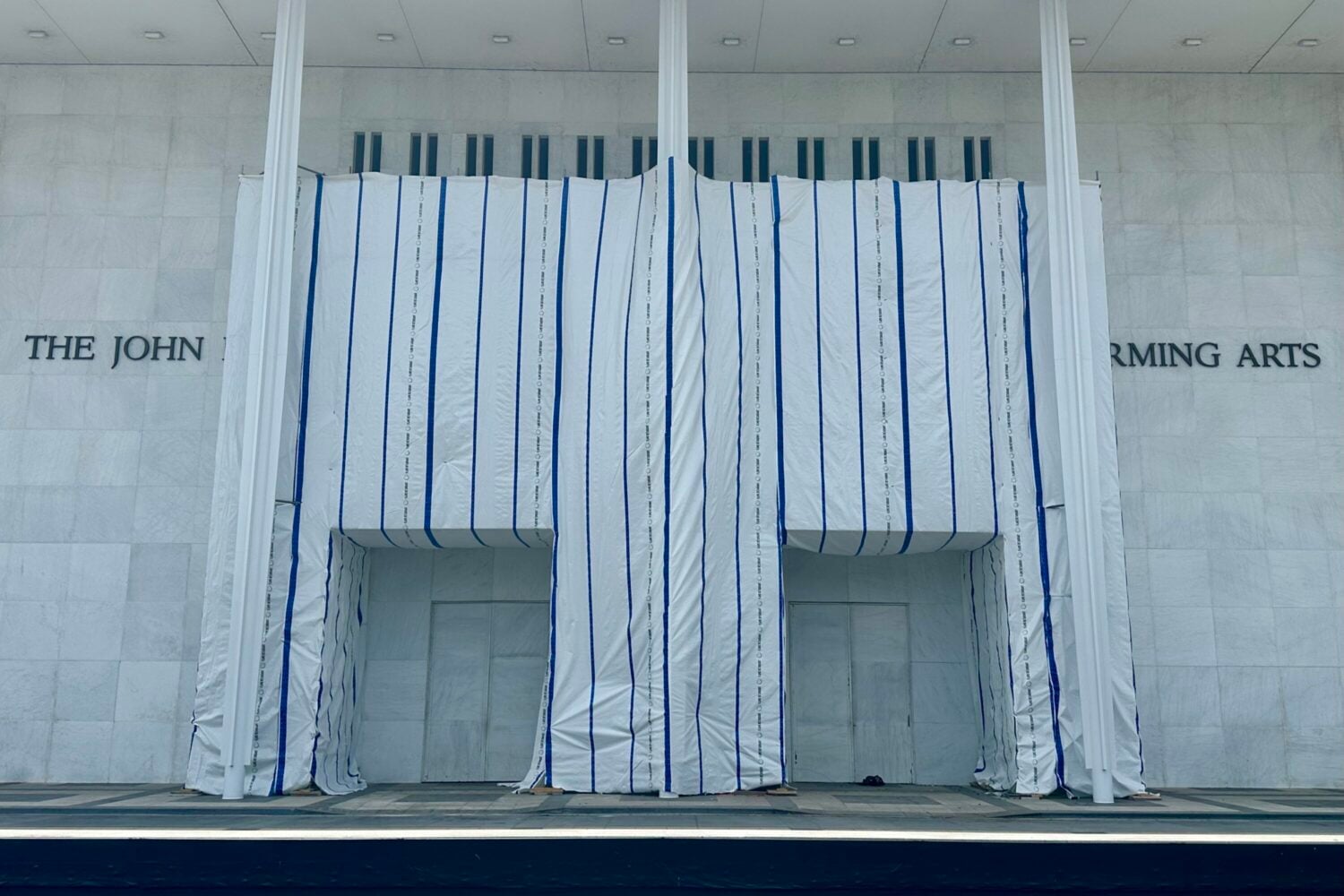
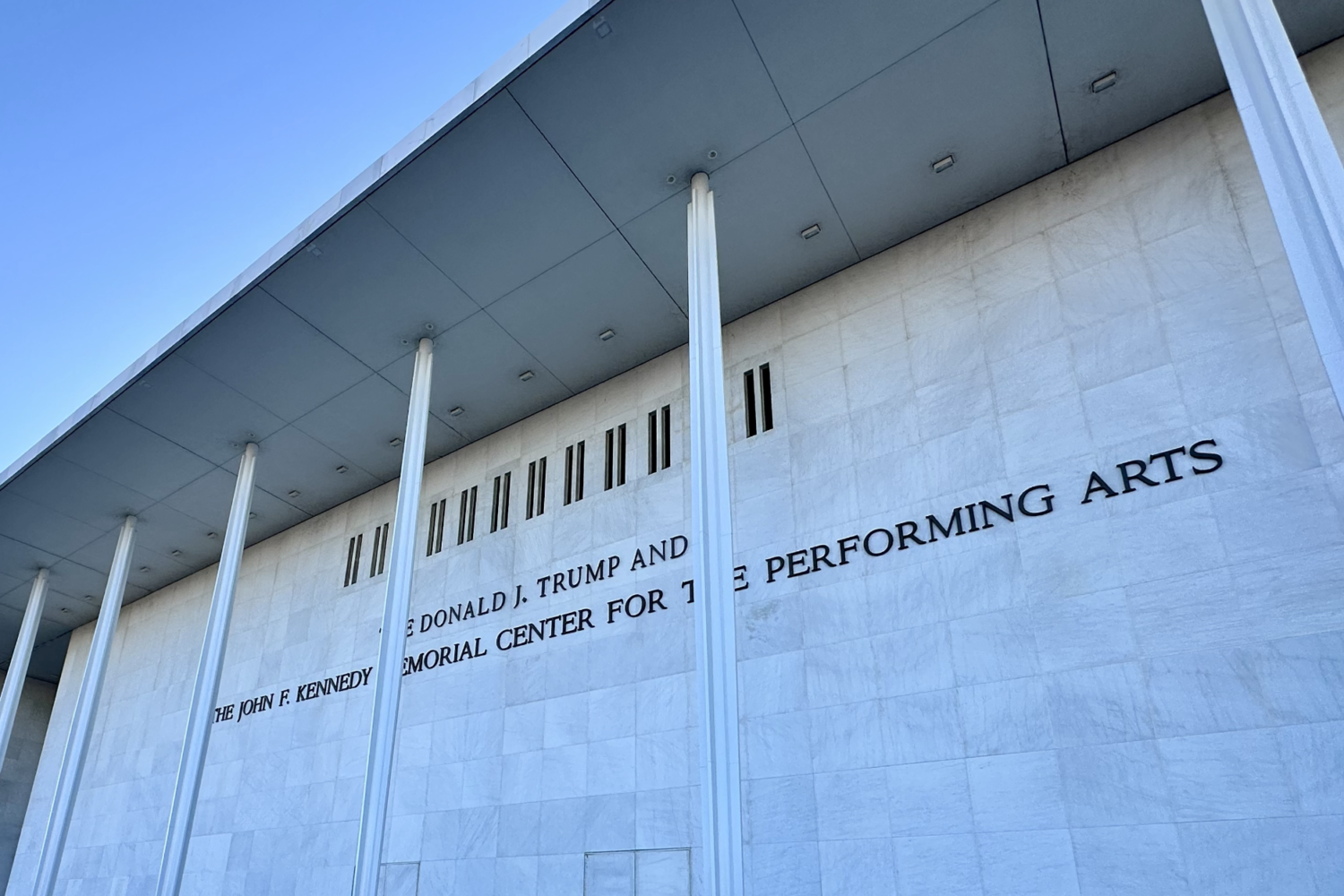
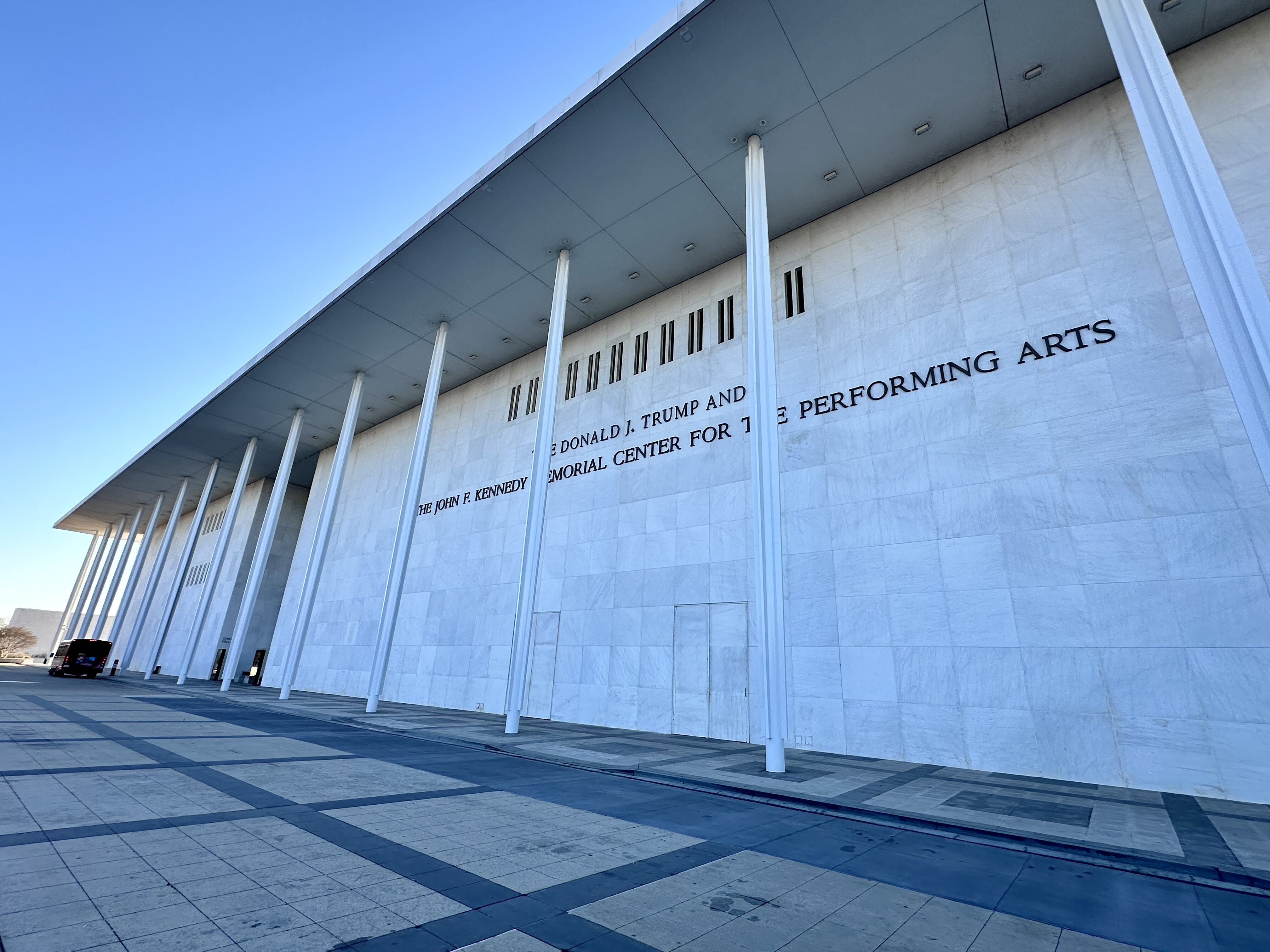
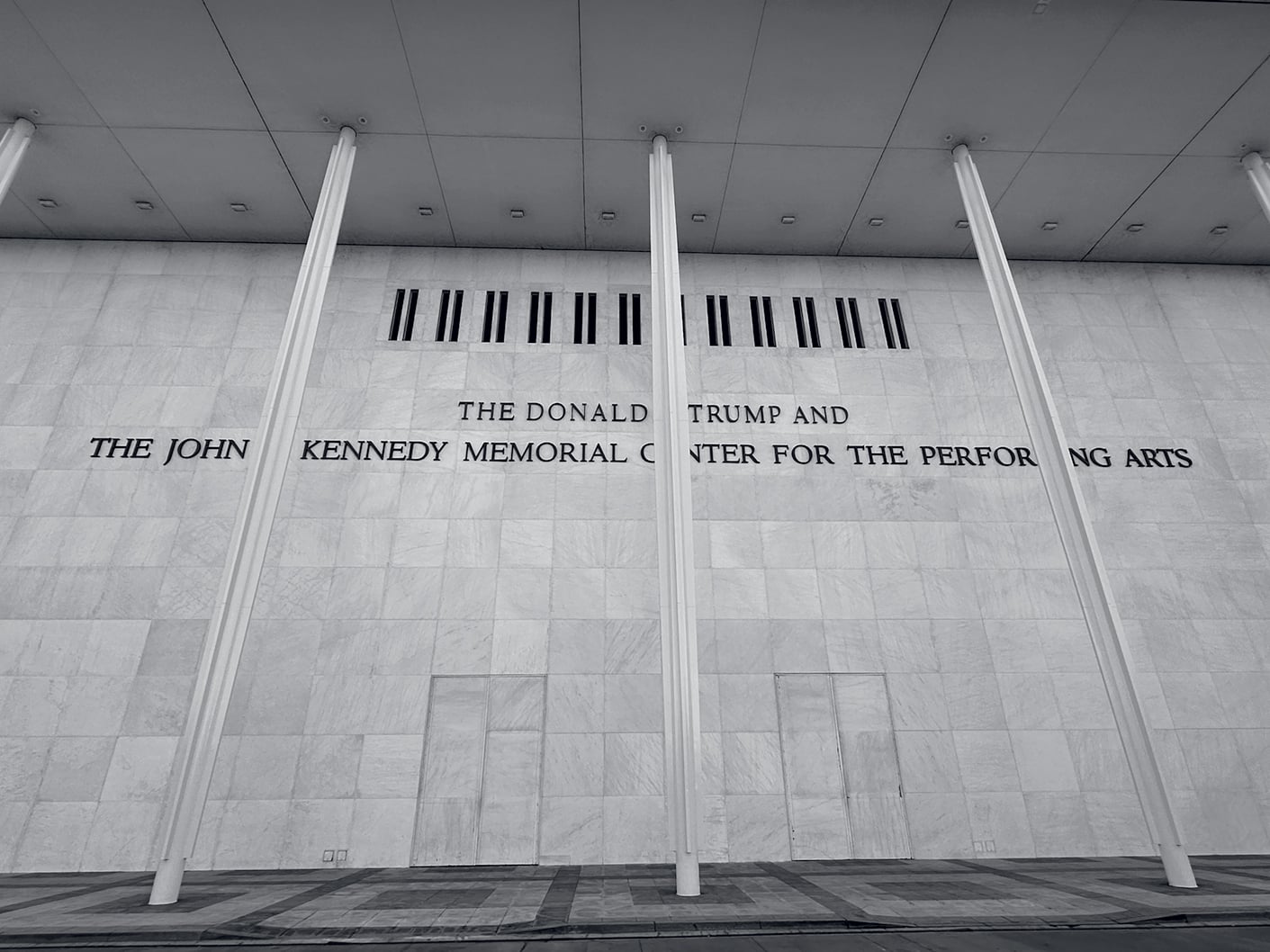
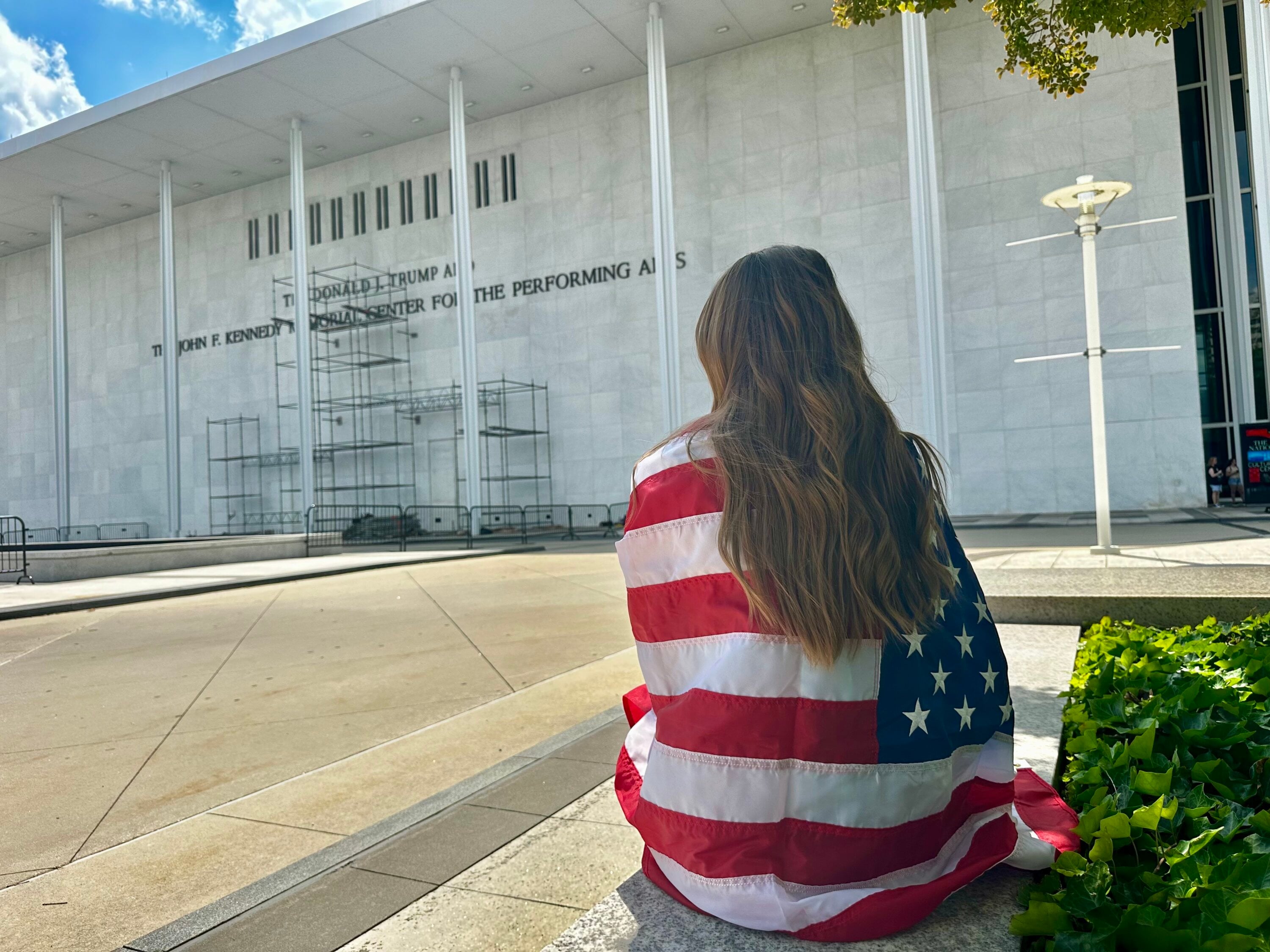
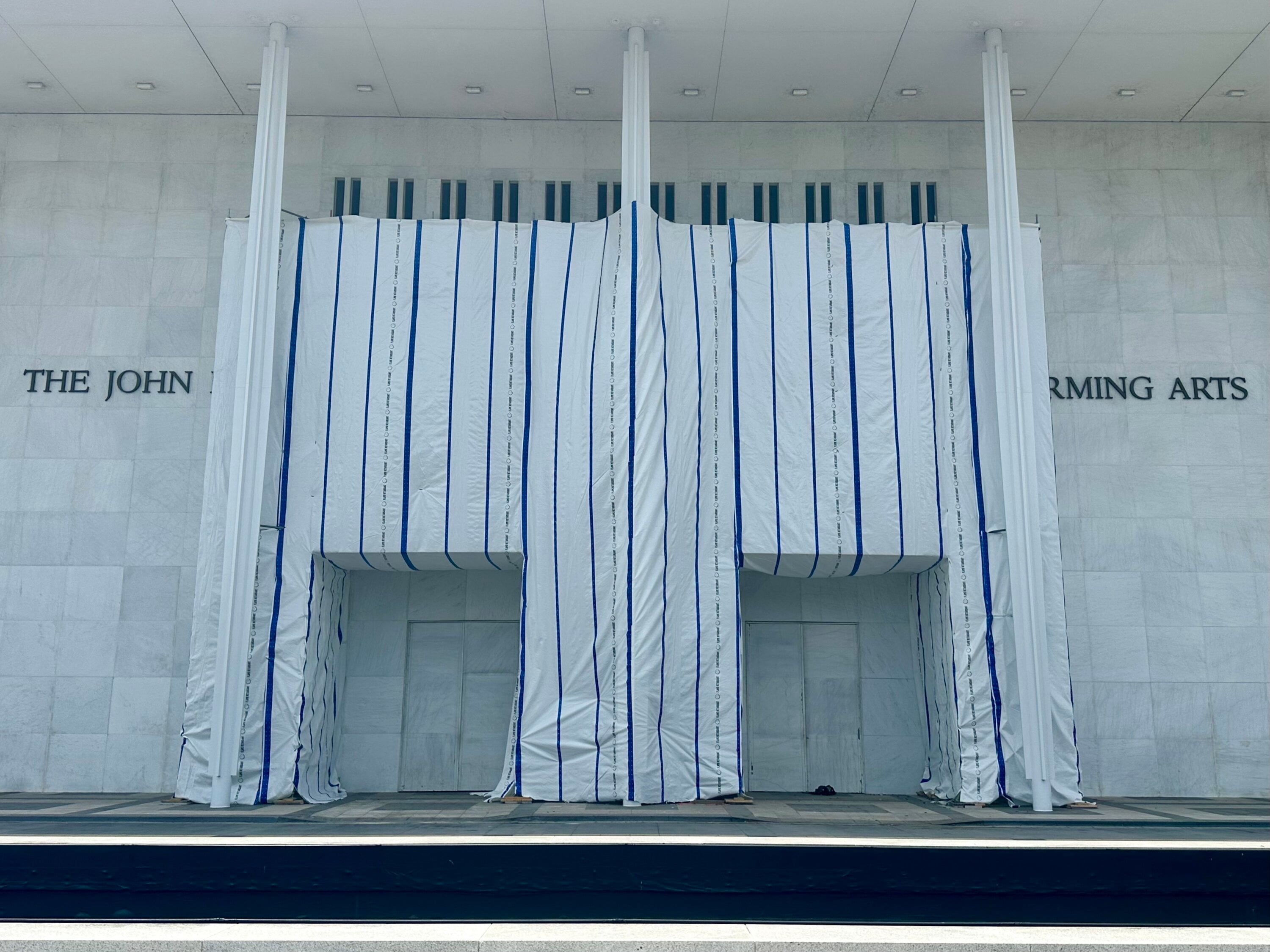
President Donald Trump’s plans to close the Kennedy Center for a two-year renovation project starting in July are rather vague so far. But the last time the President promised a major overhaul of a Washington landmark, the entire East Wing of the White House got annihilated. Could the same fate be in store for the Kennedy Center? The White House told ABC News this afternoon that the administration does not intend to tear the Kennedy Center down, which is at least somewhat reassuring. We talked to Georgetown law professor David Super about what the rules actually are.
“There’s certainly no explicit authority for either President Trump or his board to demo the Kennedy Center,” Super says. “But it’s also very clear there’s no implicit authority.” The statute that established the Kennedy Center as a living memorial to President John F. Kennedy back in 1964 features detailed specifications for how future construction projects may be pursued: The board of trustees may only make expansions or general improvements in accordance with an official site master plan. The law does not authorize any demolition, under the purview of the board or any other official. Because of that, Super explains, it’s “utterly inconceivable” for MAGA actors to argue that knocking the Kennedy Center down is fair game from a legal perspective.
Should Trump blitz the building anyway, Super says he’d be violating the Antideficiency Act—which prohibits the government from spending federal funds that have not been appropriated by Congress. Trump says financing for this project is “fully in place,” and the One Big Beautiful Bill Act did set aside $257 million for “capital repair, restoration, maintenance backlog, and security structures” at the Kennedy Center. But that list of approved uses does not include demolition. “[That money] is only for maintenance and renovations and things of that nature,” Super says. “You don’t renovate something you’re going to knock down.”
“Any money that the President might raise from private donors,” Super says, would still need to be appropriated by Congress—legally, the federal government must deposit any funds its receives directly into the US Treasury under the Miscellaneous Receipts Act. Wait, doesn’t that mean the East Wing demolition—which Trump says was funded entirely by private donors—was also illegal, since Congress never saw any of that money? Super says that is the case, “and if the attorney general was not completely committed to the President’s political agenda, there would be an investigation of that right now, both for the improper expenditures involved and for the destruction of public property. I think the East Wing demonstrates that, at least when it comes to monumental building projects, President Trump has very strong feelings and will not be stopped by the law.”
So what happens if Trump actually does tear the Kennedy Center down anyway? The best-case scenario for accountability would arise after his term ends. There’s no formal statute of limitations applied to Antideficiency Act violations, so a future Justice Department could open an investigation down the line. “On the other hand, the President has shown a great willingness to use his pardon power to advance his political agenda,” Super points out. “Someone who’s contemplating carrying out instructions to demolish the Kennedy Center will have to consider whether they can count on the President to pardon them or not.”