
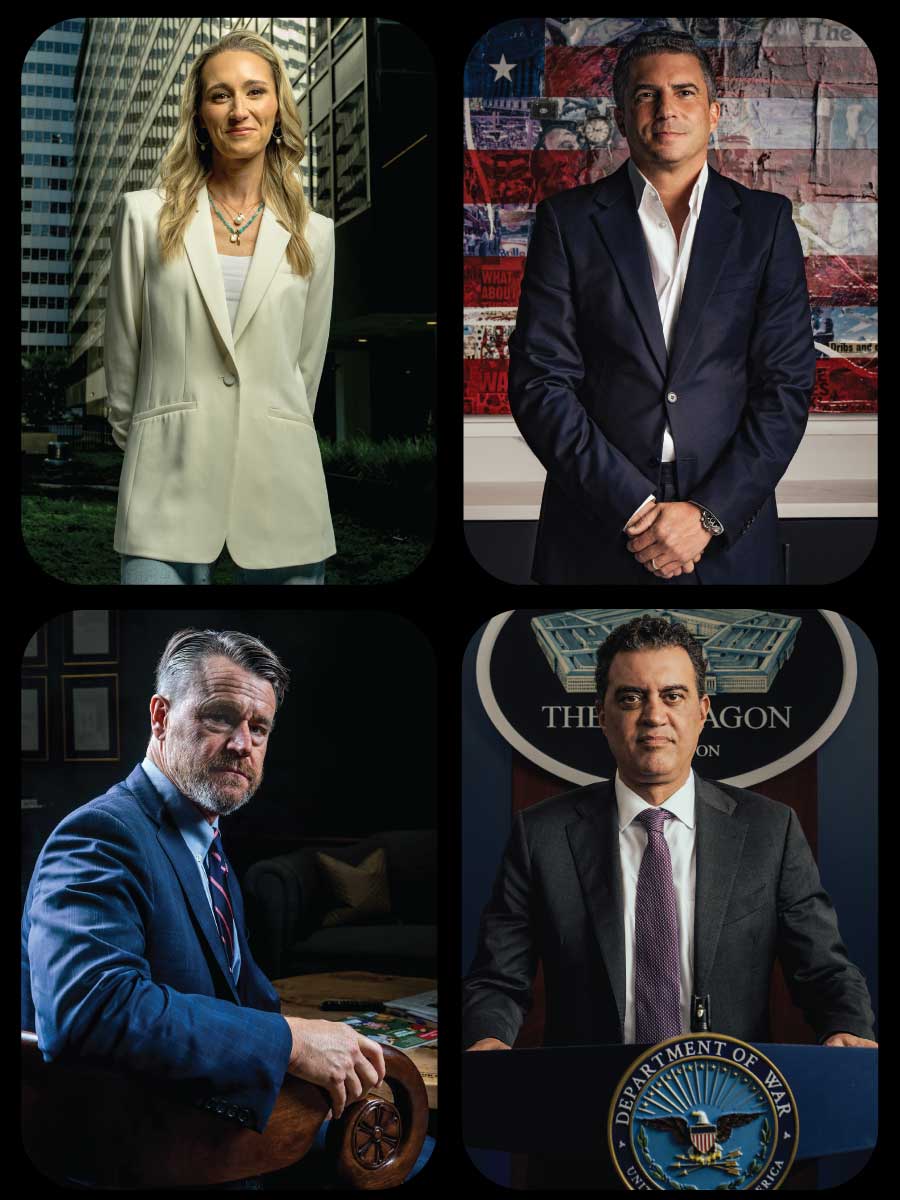
ashington’s defense technologists once followed a familiar path. They circulated through major defense contractors such as Lockheed Martin and Northrop Grumman, spent time at the RAND Corporation or other established think tanks, and moved in and out of the Pentagon E-ring.
Today, things are changing—and quickly. A new military-industrial complex is being shaped as much by Silicon Valley as by the traditional defense establishment. Elon Musk has become a key national-security figure; his space-and-AI company, SpaceX, is one of the Pentagon’s most critical private partners. Similarly, the software and data-analytics company Palantir has emerged as one of the world’s most valuable defense contractors.
The success of those companies—and others like them—has helped open the doors for hundreds of new enterprises, with venture-capital firms investing nearly $50 billion in defense-technology startups last year. These companies are pitching killer drones, autonomous ships, and AI-powered weapons to receptive audiences in the Pentagon, on Capitol Hill, and in the White House.
This boom has also raised new questions. Can startups manufacture weapons at scale? Will Silicon Valley’s twin credos of “Fake it till you make it” and “Move fast and break things” work on the battlefield, where lives are at stake? And how should the government handle potential conflicts of interest as politically connected investors, former administration officials, and even members of the Trump family become involved in startups seeking federal contracts?
While much of the capital and technology in this new defense wave originates in places like El Segundo, Austin, and the Bay Area, the answers to these questions largely will be determined in Washington—home to lawmakers, policy wonks, key investors, and the biggest and most important customer of all, the Pentagon.
With all that in mind, here are 20 of our area’s defense-tech leaders, people who are actively shaping what national security will look like in the years to come.
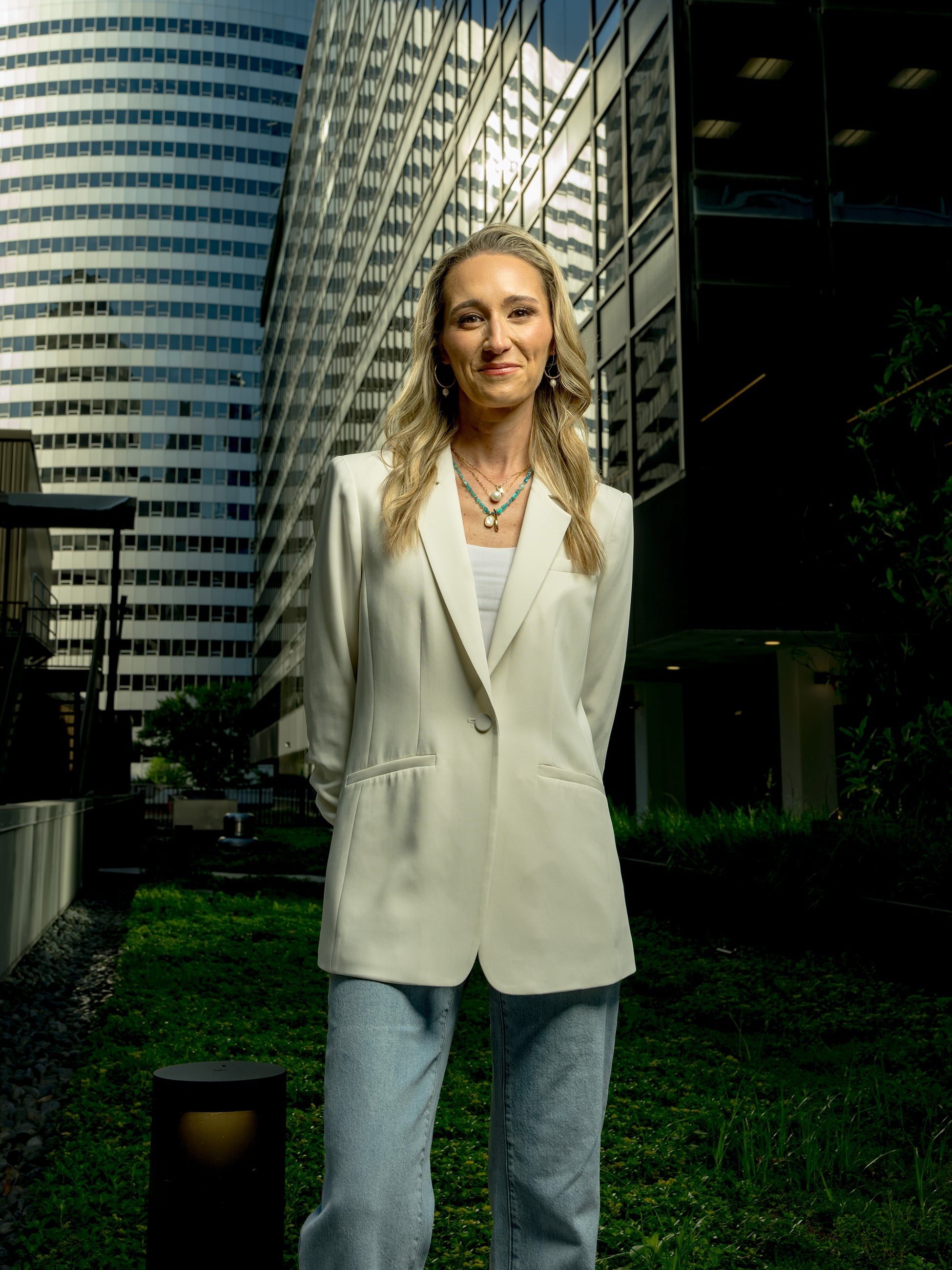
Tara Murphy Dougherty
CEO, Air
Making us smarter about making and maintaining stuff
Tara Murphy Dougherty was interviewing with the CIA on her college campus the morning of September 11, 2001, when the recruiters’ cellphones started ringing. “They stepped out of the room, they came back, they didn’t say anything to us,” she recalls. “They threw their stuff in their bags and they took off.”
The terror attacks of that day only strengthened Dougherty’s desire to work in national security. But when she eventually arrived in Washington, she concluded that a career at the CIA would be too bureaucratic for her taste. Instead, she worked in the Pentagon before joining Palantir. Four years later, she was recruited to Air (then known as Govini), a rare Washington-based defense unicorn.
Like Palantir, Air is a data-focused software company, though its focus is less on military intelligence than on identifying vulnerabilities in the defense-industrial base. What does that mean in practice? Dougherty points to an aircraft supporting operations in Iran that was grounded because it required a component with a 250-day lead time. Using Air’s software, the government found an equivalent part that could be delivered in three days. “It’s not that glamorous an example,” she says, “but readiness rates are a big deal.”
Mina Faltas
Founder and CIO, Washington Harbour Partners
A godfather of the new tech-defense axis
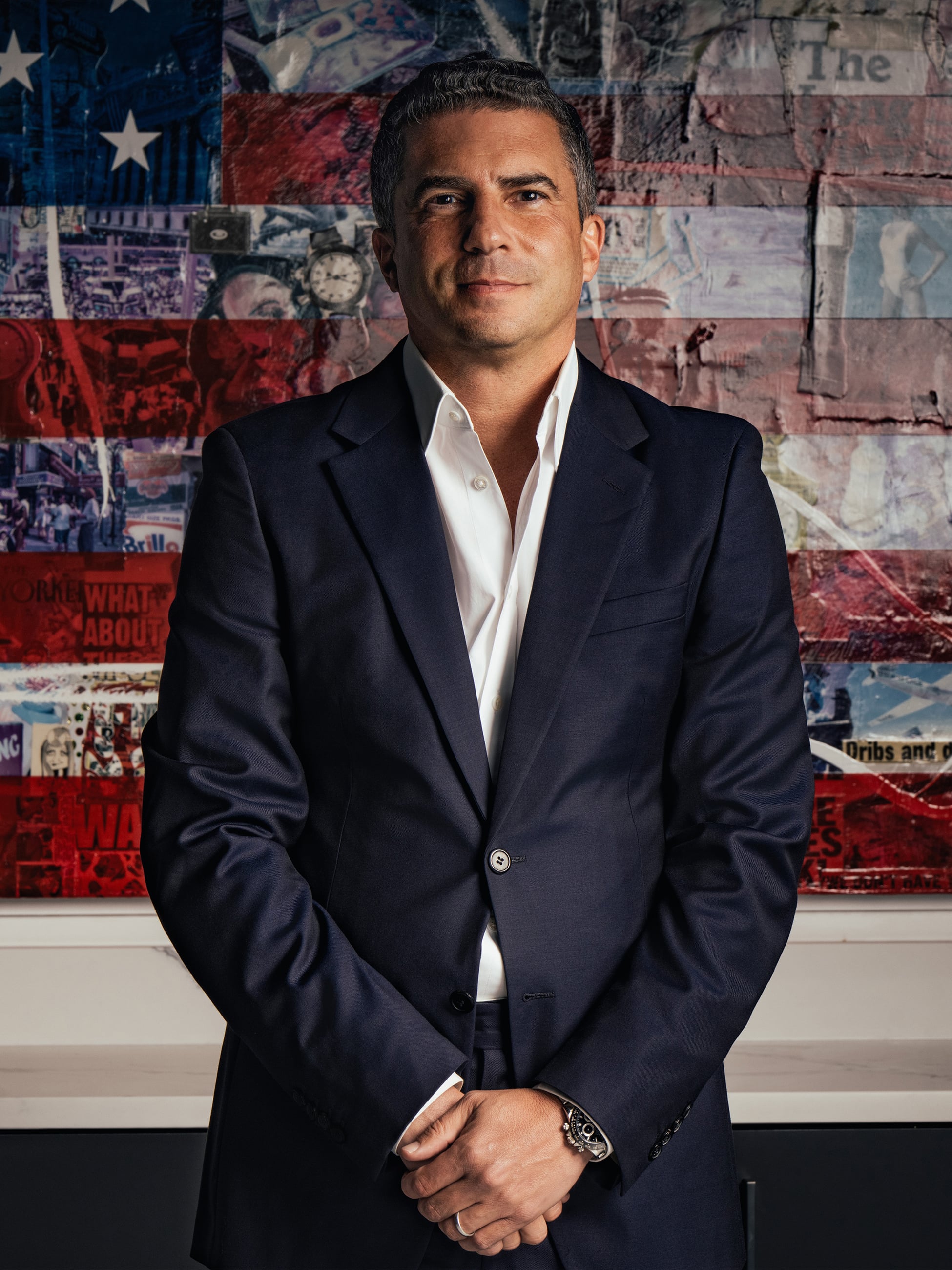
In the late 1990s, Faltas—who grew up in Northern Virginia and was working in finance in New York—wandered into the studio of artist Peter Tunney. Looking at the patriotic-themed mixed-media works covering the walls, he made a promise to himself: One day, he would own a Tunney piece.
Today, several of them hang in Faltas’s office in Rosslyn—which overlooks DC, the geographic center of the thesis that has guided his investment firm, Washington Harbour Partners. While many investors for years avoided companies doing business with the federal government, Faltas saw the world’s leading purchaser of goods and services as an opportunity.
In contrast to many defense-tech investors clustered in other parts of the country, Faltas built his firm around a deep understanding of how Washington works. He recruited a team of technology specialists from New York and San Francisco who wanted to be in the nation’s capital, believing that proximity to the federal government offered an advantage few investors possessed.
This helped lead to one of the firm’s most consequential relationships: In 2024, Washington Harbour executives traveled to the Bay Area to meet with OpenAI. At that time, the ChatGPT-maker hadn’t seriously considered working with Washington. “You only have part of the picture,” Faltas recalls telling the company’s executives. The federal government, he argued, was the planet’s largest IT buyer, and agencies across Washington wanted access to generative-AI tools adapted to their security and data requirements.
Today, OpenAI’s models are being deployed across parts of the federal government—including the Pentagon.
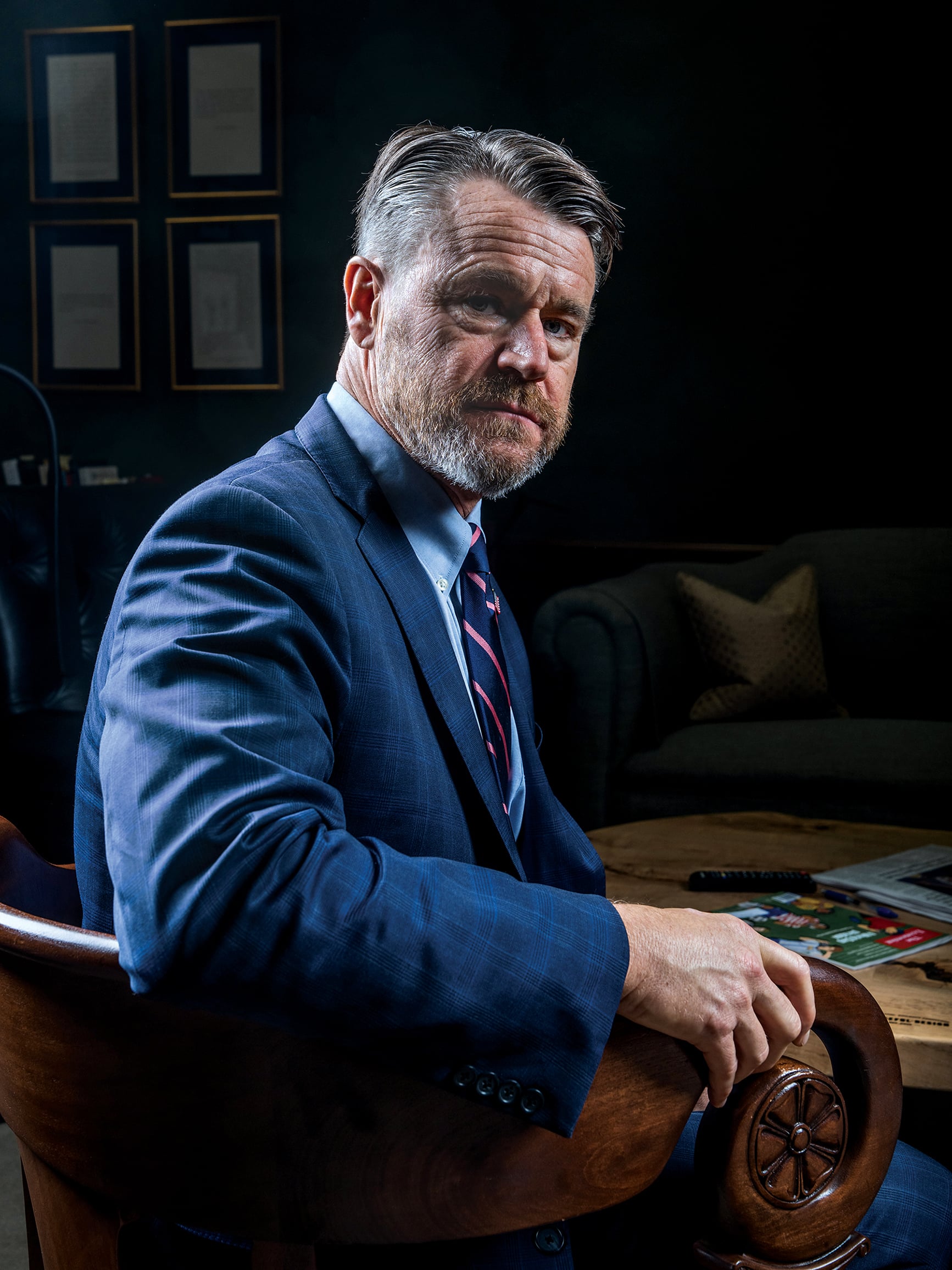
Todd Young
Indiana Republican Senator
Looking ahead to a biological arms race
When most people think about cutting-edge defense technology, they picture killer drones or hypersonic missiles. But for Todd Young, one of the most consequential nascent national-security threats is less visible: biotechnology.
As chair of the National Security Commission on Emerging Biotechnology, Young has spent the past two years warning that advances in the life sciences could create new vulnerabilities. “Our job in government is to deal with tail risks,” he says. “It’s to think about creative ways to deal with the risk of catastrophic events happening.”
Among the scenarios that concern him are engineered pathogens or toxins designed by hostile actors. “Could a superbug be elegantly designed to attack certain ethnic or racial groups? Yes,” he says. “Could a toxin find its way into America’s food supply with a delayed-onset illness or other biological effects that could decapitate our society? Yes, those things can be produced.”
Young argues that the best defense is sustained investment in American biotechnology. That means putting resources into education, research infrastructure, genetic sequencing, and stronger partnerships among government, industry, and academia. “The extent to which we can educate this generation of people to be biotech experts and world leaders in all realms of biotechnology,” he says, “we will harden ourselves against these types of risks.”
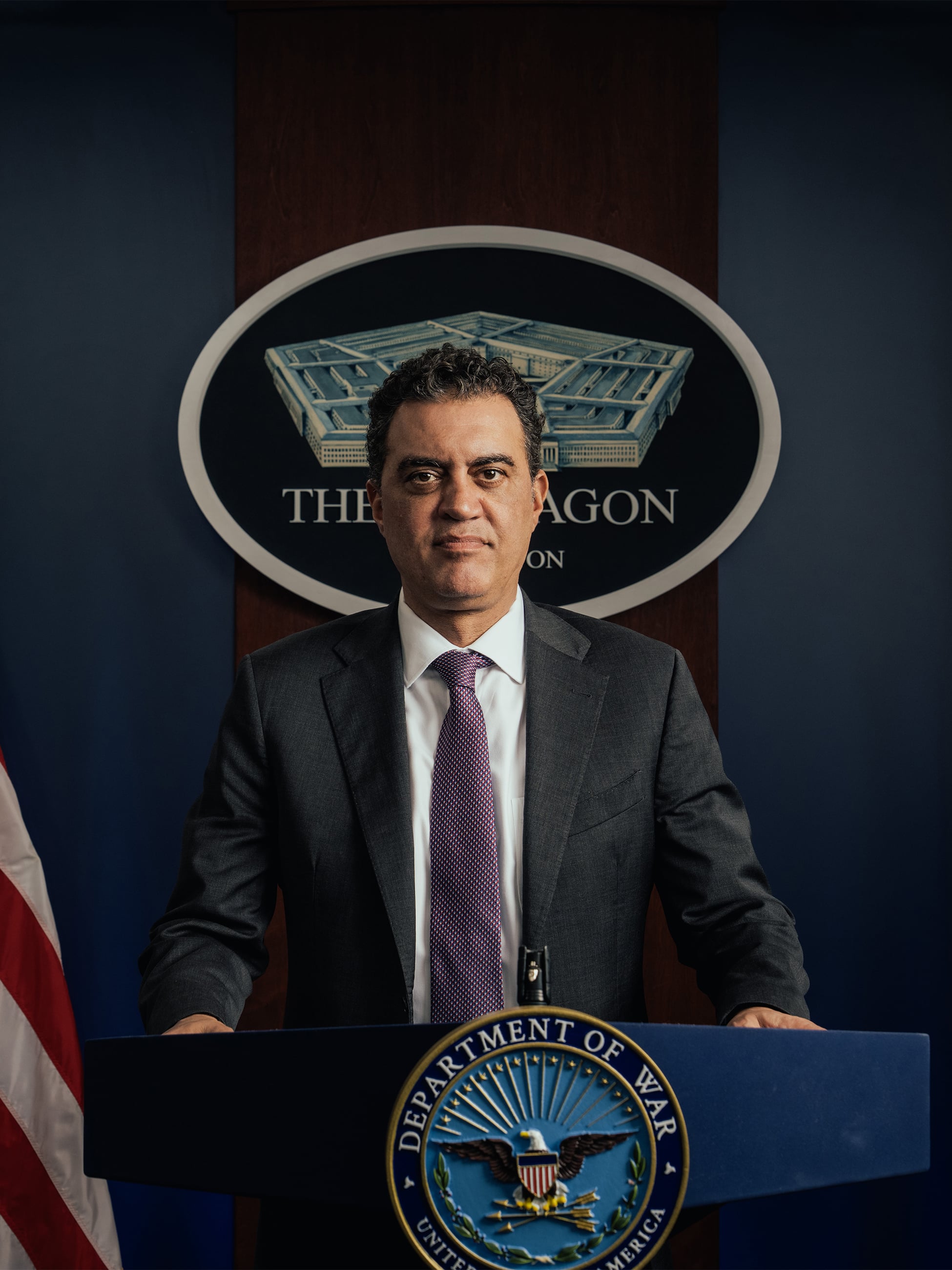
Emil Michael
Undersecretary of War for Research and Engineering
The Pentagon’s tech emissary
Once best known as the take-no-prisoners Uber executive who helped orchestrate the ride-sharing company’s rapid global expansion, Michael has reemerged a decade later in a very different role: as the Pentagon’s top technology official.
His appointment is notable because the position was once associated with physicists, engineers, and career defense technologists. Michael’s rise reflects the growing influence of Silicon Valley executives and venture capitalists in shaping US defense policy. Defense-industry leaders praise him for moving quickly to bring new companies into the Pentagon’s orbit and for accelerating efforts to expand military production.
His highest-profile test so far has been the Pentagon’s public battle with the AI company Anthropic over the military’s use of the firm’s models. The dispute intensified after a US operation that captured Venezuelan leader Nicolás Maduro, prompting the company to question whether its technology had been involved.
Michael was incensed at Anthropic. “The ‘whoa moment’ was after the Maduro raid, when Anthropic raised concerns about how their software might have been used and knowing that the Iran conflict was pretty close in time to that,” he says. “What would happen if we were dependent on a software provider that decided they didn’t like it and turned it off?”
How does a former Silicon Valley executive evaluate defense startups pitching technologies? With an eye on trustworthiness—and a dose of skepticism. “My BS detectors are all along the way, and at the end it’s like, can we work [together]?” Michael says. “Because once you start working with a partner for an important drone or counter-drone or missile, you’re going to be working with them for decades, likely.”
16 More Leaders
Dmitri Alperovitch
Cofounder and Chairman, Silverado Policy Accelerator
The cofounder and former chief technology officer of the cybersecurity company Crowdstrike is now focusing on making the US more competitive with China in areas such as rare-earth minerals.
Joshua Boehm
Chief Growth Officer, Spirit Defense, a Boeing Company
While many of Silicon Valley’s newly minted defense-tech bros rally around the mantra “It’s time to build,” a number of longtime military contractors make an important counterpoint: They’re already building. Leading Spirit’s defense business in DC, Boehm has helped expand the company’s manufacturing work for the Pentagon. Recently acquired by Boeing, Spirit makes critical components for a number of military airframes, including the newest stealth bomber, the B-21.
Chris Brose
President and Chief Strategy Officer, Anduril Industries
A onetime staffer to the late Republican Arizona senator John McCain, Brose joined Anduril when it was a little-known defense startup founded by Palmer Luckey, who became a billionaire after selling his virtual-reality company to Facebook. Today, Anduril is a pack leader of a new generation of defense startups and is producing drones, unmanned submarines, and software designed to link autonomous weapons. Brose is credited with helping the company navigate federal bureaucracy.
Dan Driscoll
Secretary of the Army
President Trump dubbed Driscoll “the Drone Guy,” a nod to his work reforming how the Army buys unmanned aircraft and other technology. Since becoming the youngest Secretary of the Army, he has pushed to move new technologies to the battlefield.
Steve Feinberg
Deputy Secretary of War
The secretive private-equity billionaire has spent his career assiduously—but not always successfully—avoiding press coverage. He founded Cerberus Capital Management, which has invested in everything from hospitals to private military contractors. Today, Feinberg is the second-highest-ranking official in the Trump administration’s Department of War and has spearheaded the Pentagon’s efforts to marry Wall Street–style financing with Pentagon procurement, including a unit jokingly called “Deal Team 6.”
Dan Gwak
Chief Investment Officer, IQT
Gwak, who deployed as a Marine to Afghanistan, now leads investment strategy for IQT—the CIA’s venture arm. An early investor in Palantir, IQT has long served as a gateway for startups that want to work with the Agency and other intelligence services.
Jacob Helberg
Undersecretary of State for Economic Affairs
A former Palantir adviser, Helberg founded the influential Hill & Valley Forum, an annual event that brings together Silicon Valley tech luminaries and Washington lawmakers. He’s also the architect of Pax Silica, a US-led effort to work with countries to ensure the supply chain for critical technologies needed for AI, semiconductors, and rare-earth minerals.
Sunmin Kim
Head of Strategy, Kela Technologies
Kim held senior roles at the Defense Innovation Unit—the organization established to bring technology from commercial companies into the military—before joining the Israeli defense-tech startup Kela, which received funds from IQT, among others. In Washington, she’s helping Kela establish a foothold in the Pentagon market.
Mark Lewis
Chief National Security Officer, Purdue University
A former university professor who also served in senior roles in the Pentagon, Lewis has long been one of the most forceful advocates of hypersonic weapons—missiles and aircraft that travel at more than five times the speed of sound, making them exceptionally fast and exceedingly difficult to shoot down. Venture capital is now rushing to fund a number of new companies building such weapons, based on years of research and engineering that Lewis championed.
Ali Reza Manouchehri
CEO and Cofounder, MetroStar
Based in Reston, the defense-tech firm MetroStar didn’t emerge from the venture-funded world of Silicon Valley. Instead, Iranian-born Manouchehri founded the company in 1999 to help the federal government with Y2K issues. Today, it works on a variety of defense technologies, including AI-enabled wearable headsets that allow aircraft mountaineers to operate in hazardous environments.
Margaret Mullins
Director of Public Options and Governance, Vanderbilt Policy Accelerator
Mullins, who worked in the Pentagon during the Biden administration, has emerged as a prominent skeptic of some of Silicon Valley’s most enthusiastic defense claims—and promises. “Washington should not rush to accept Silicon Valley’s critique as gospel,” she recently wrote, urging Pentagon procurement reform that matches ambition with reality.
Wahid Nawabi
CEO, AeroVironment
Nawabi emigrated to the area from Afghanistan after the Soviet invasion of 1979. He likes to remind people that, unlike many of the new defense startups, AeroVironment’s drones have been flying in military operations, including in Ukraine, for years.
Oleg Rogynskyy
CEO, Uforce
An entrepreneur who became CEO of the first Ukrainian defense-tech unicorn—a privately held startup valued at more than $1 billion—the Washington-based Rogynskyy says those inside Uforce like to contrast its hard-earned battlefield experience against Silicon Valley startups with limited or no track record in military operations: “While other companies are patrol-ling trade shows, we are patrolling the straits.”
David Rothzeid
Principal, Shield Capital
After serving at the Pentagon’s Defense Innovation Unit, Rothzeid moved into venture capital, where he’s investing in the next wave of defense-tech startups.
Heidi Shyu
Former Undersecretary of Defense forResearch and Engineering
As the Pentagon’s chief technology officer and Emil Michael’s predecessor during the Biden administration, Shyu created many of the programs, such as the Office of Strategic Capital, that the Trump administration is using to boost new defense companies. Now back in the private sector, she continues to work with firms involved in new defense technologies.
John Tenet
Founder, Chaos Industries
The Washington-based son of former CIA director George Tenet has been involved in nearly every phase of the defense-tech boom. An early investor in Anduril, he went on to cofound Epirus, a maker of high-powered microwave weapons designed to counter drone swarms. He then launched Chaos Industries, another counter-drone startup.
This article appears in the August 2026 issue of Washingtonian.


