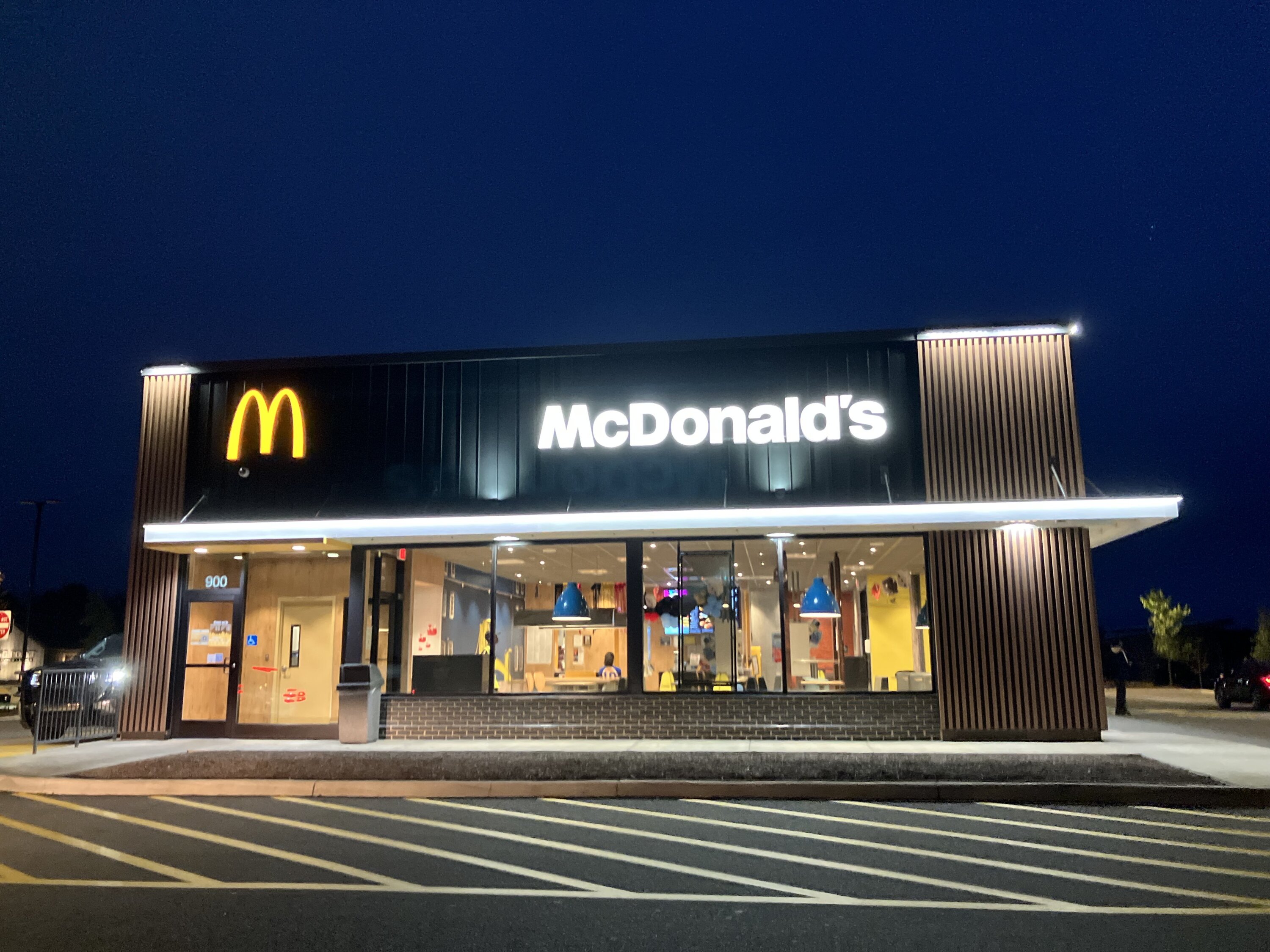
The sixth-worst McDonald’s in America is nestled between a Chase Bank and a Wawa in a forlorn parking lot off of I-95, ten miles south of Quantico in the exurbs of Stafford County, Virginia. The Google reviews are atrocious: “I realize this is just McD’s and not a Michelin star restaurant but oh my God, I’ve never in my life have I been to a worse McDonalds.” “It looks like the employees are sleeping and are not working.” “This location needs to terminate all current employees and hire a dedicated and motivated team.” “I hope it goes out of business, or Ray Kroc comes back from the dead to take over.” “SHUT THIS LOCATION DOWN.”
The consistent theme, as one reviewer put it, is that the Stafford McDonald’s “provides one of the worst customer service experiences I’ve seen.” The very young staff apparently “refuse to make eye contact even when they see you waiting to order” or they “hide in the back” despite that “they see you standing there.” Many reviewers describe employees ignoring long lines of customers, or acting “surprised that we actually wanted the food we had paid for,” or a manager listening to earbuds and pretending not to hear a request for help. One reviewer said that an aggressively idle employee was “either blitzed out of his mind or just didn’t have a single care in the world.”
I was alerted to my proximity to the sixth-worst McDonald’s in America by a helpful public relations professional whose client, the digital marketing firm SEO Backlinks, recently ranked US McDonald’s locations by their aggregate Google reviews. According to SEO Backlinks, the very worst McDonald’s in America is in Surprise, Arizona, with an aggregate Google rating of 1.55 stars. The best one, with 4.25 stars, is in Eagle Pass, Texas. In between them are almost 14,000 McDonald’s locations with an average rating of 3.44 stars. The Stafford McDonald’s—which one reviewer calls “a prime example of why it would not hurt my feelings if McDonald’s went out of business everywhere”—has 2.4 stars.
If you think about it, “sixth worst McDonald’s in America” is sort of a rarefied designation. In a field of almost 14,000 competitors, to perform worse than all but five, something must have gone badly wrong. But in the reviews, nobody quite seemed to know what: Bad management? Unusually lackadaisical local teens? “That ole Ronald is up to sumthin” was the ambiguous conclusion of one skeptical reviewer. Washingtonian food writer Ike Allen and I recently drove an hour and a half in rush-hour traffic to see what that sumthin might be.
When Ike and I pulled up to the Stafford McDonald’s at 900 Wonder Road, we expected the store to be mayhem. It wasn’t. “This is a well-appointed McDonald’s,” Ike remarked with surprise. The interior was clean and sedate. A lone Amazon delivery driver in a blue mesh vest tapped at the illuminated kiosk while scratching flakes of dried skin from his nose.
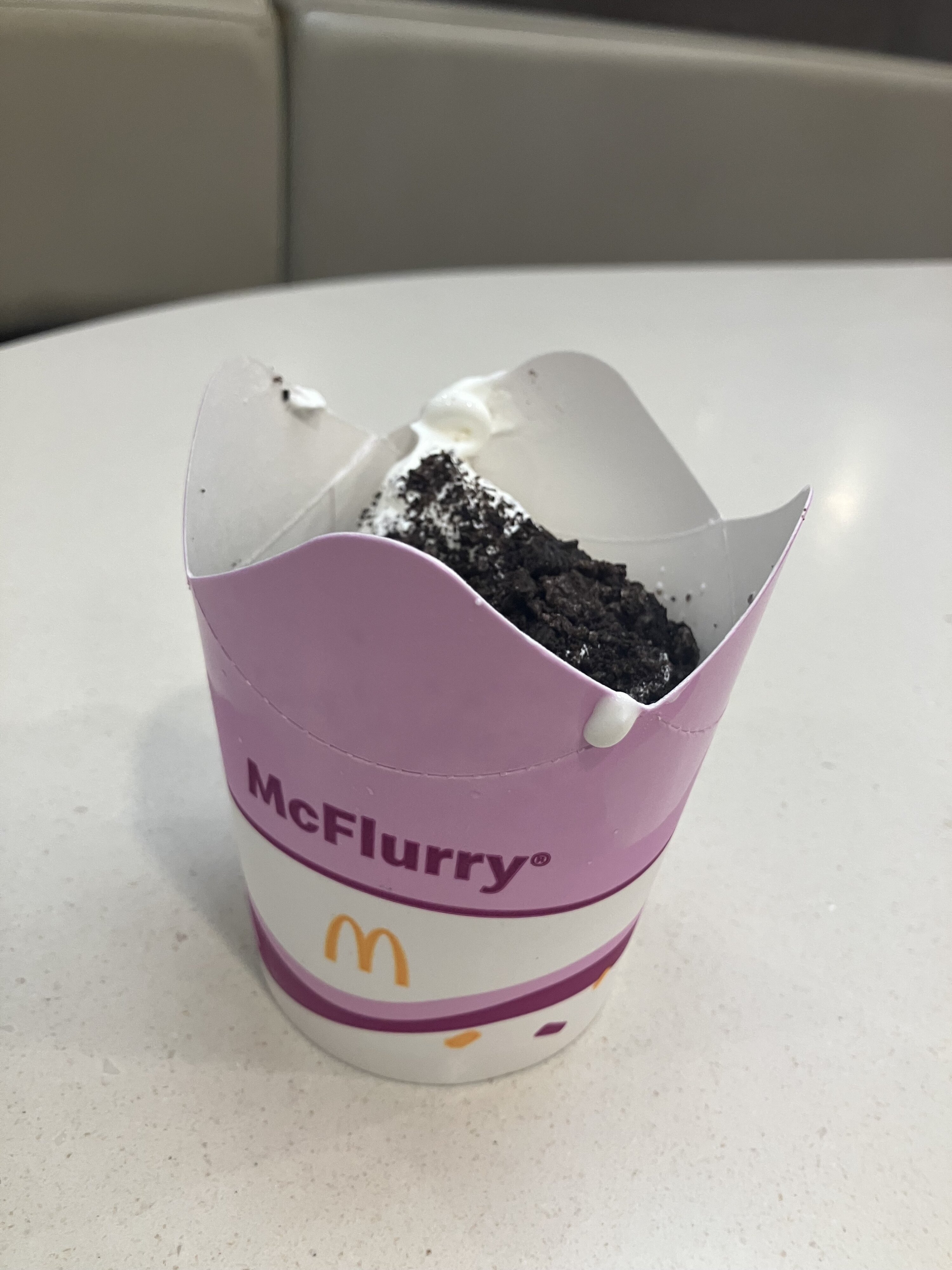
Based on the outraged internet reviews of several hundred strangers, I expected an ethereally long wait at the counter—but in less than a minute, an upbeat teen emerged from the back. We ordered a variety of items. One was a Spicy Snack Wrap, because when I Googled “most complicated item on the McDonald’s menu,” that’s what the internet returned. The teen rang us up, no sweat, then he asked if our McFlurry should be Oreo or M&M. Actually, he said, he could mix them together if we wanted. I asked him whether that was on the menu or if was he offering to make it special. He said he was doing it special. We told him absolutely, yes.
It was 6:58 PM when I swiped my credit card, and I figured we’d be lucky to have food by 7:30. We settled into a sparkly clean table for a long and arduous wait. Four minutes later, our McFlurry was at the counter. But when Ike went to grab it, a different employee was depositing another McFlurry beside ours, and Ike couldn’t figure out which one to take. It turned out that both employees had made us McFlurries. A little apologetically, they told us that we could keep the extra one for free.
Fine, but did we really want to be stuck with two melting McFlurries—one of which we did not even order—while waiting forever for our actual meal? Two minutes later, the tray with the rest of our items arrived. Still, I approached them with trepidation. Some of the Google reviews alluded to moldy bread and rancid milk, fries that came either cold or burned, chicken nuggets served raw. One reviewer said that “We did not receive our whole order and only some of what we received was edible.” Another alleged that “my kids chicken nugget box contained zero nuggets and just one slice of cheese.”
I sampled my food. All of it was hot, except the McFlurries, which were cold. The items came exactly as ordered, minus the McFlurry snafu. While savoring his delicious Quarter Pounder with Cheese, Ike announced that he was beginning to “feel a little defensive about this McDonald’s.” He said this was “probably one of the better McDonald’s ordering experiences I’ve ever had,” and that the teen at the register “was a consummate professional.” We were moved that either from kindness or boredom, he’d fixed us a special dessert.
At the Stafford McDonald’s—allegedly the sixth worst in America—the service was efficient, the food was fine, and the store was festooned with Monopoly-themed promotional décor: cardboard dice hanging from the ceiling, gold sparkly streamers, a cheerful balloon arch. While we ate, we listened to the soothing sound of chirping machines wafting languidly from the kitchen, rhythmic like the singing of bugs. It was pleasant. It was nice. I’ve had much worse experiences at my local McDonald’s in Tenleytown. What were we missing here?
Serendipitously, the teen behind the counter was about to take his break. Still in his black mesh McDonald’s cap, he sat down at a table alongside two of his non-employee friends who’d just showed up to hang. I sidled up to their table and asked if they had a minute to chat. “Did you all know that this is the sixth-worst McDonald’s in the United States of America?” I asked. The employee looked bewildered, but his friends began to nod and howl.
“You knew?” I asked them.
“No,” one boy replied. He was wearing a sparkly black hoodie and plaid pajama pants. “But you can just tell by the service here.”
“I can’t tell,” I told him. “I’m having a lovely time.”
“You probably just had a good experience,” he explained. “But we’ve suffered multiple times. Remember a couple of weeks ago? We saw two people ordering and it took them 45 minutes to get their drinks. It wasn’t overly packed that day, maybe a few more people than this, but it still took them 45 minutes. That’s crazy.”
I asked the employee for an explanation. “I think I can give you real insight,” he said. “It be the certain workers we got.” He himself is a high schooler, but he said that “we’re starting to get more younger managers. As soon as they turn 18, they’re getting a manager spot. I think my general manager’s 20. It’s a lot of kids getting these manager titles and positions, but they’re not really managers.”
I told him that to be honest, that environment sounded kind of fun.
Of course it is, he said—but therein lies the problem. To his exuberant and youthful colleagues, “work is a social thing.” Half the crew is high schoolers, and even the non–high schoolers are young. “We’re all too comfortable with each other. We feel like we can get away with certain stuff” because the manager is “our friend,” not “a random person who’s gonna write you up.” The experience I had that evening was anomalous, he suggested. “We got the right team tonight. Everyone is locked in.”
Perhaps wisely, this teenaged employee would not elaborate on what kind of tomfoolery they all get up to when they’re supposed to be pouring Dr. Peppers—but a clue came from one of the Google reviews: Months ago, a disgruntled customer described waiting in their car at the drive-thru behind a crew of teens—employees who had just gotten off work—who were blocking the lane on foot while speaking with on-duty employees via the intercom. They were “making jokes,” the reviewer claimed. “We waited for about 4 minutes for the kids to leave, but they just carried on conversation…I asked if there was anyone to take the order and all they responded with was ‘yeah hold on.’”
I know, but haven’t you ever been young? Haven’t you ever goofed off at a job while making minimum wage? Can’t you appreciate the irritating genius of using a drive-thru intercom not as a device that enables you to efficiently shovel calories into your mouth but as a portal to cracking jokes with your friends? The teenage employee in Stafford acknowledged to me that the “excessive wait times” are his store’s biggest flaw. But for a while, that seemed to me like a somewhat niche complaint, like the local clientele might be a little demanding. Forty-five minutes for drinks is a lot, but who really cares if it takes 15?
But on the 90-minute drive home, I thought about it further. And even if everything else is perfect—if the store is clean, and the food is hot, and there are ten whole McNuggets in the ten-piece box—it’s not actually trivial when customers wait. There’s a passage in The Power Broker about the Northern State Parkway on Long Island, which—due to a series of deals cut to preserve the estates of various robber barons—was built with a circuitous route. The detour wasn’t that many miles, but to explain its staggering cost, Robert Caro does some math, laying out how many hours were stolen from people over the course of their lives, how much time they spent commuting instead of watching baseball or cooking dinner or doing homework with their kids.
Unless their young lives are very unlucky, a teenager does not yet understand that their time on this earth is limited. The social contract is different for them. They’re not going to do what they’re told. That is the beautiful thing about a teenager, and it’s one of the reasons that they may not excel at paid work. I mostly find it burdensome when their antics disrupt the flow of my day—but once in a while, I can talk myself into seeing adolescent stupidity as a reminder that life doesn’t always have to feel grim. With that said, there is probably some wisdom to the reviewer who wrote of the Stafford McDonald’s that “If they intend to continue employing teenagers, please ensure that there’s an adult supervisor or manager on duty during their shifts.”
When I called the best McDonald’s in America—on East Main Street in Eagle Pass, Texas—I spoke with a peppy manager who was clearly an adult. She said she didn’t know why their reviews were so good. “We try our best to serve the food fast to make our customers happy,” she told me, “but it gets really hectic. We have a lot of customers. Like right now, we have a line all the way to the entrance, but we are doing as much as we can to move the line really fast and get the people their food.” Shortly after telling me that, she hopped off the phone and returned to work.