A little over a week ago, Donald Trump’s plans to build a 250-foot-tall arch at the entrance to Arlington National Cemetery honoring, uh, himself ascended to a new level of Trump-iness: the president announced his intention to have the gargantuan monument “house and store” military drones, snipers, and “large quantities of sniper ammunition,” otherwise known as bullets.
Putting aside the immediate—and almost certainly correct—analysis that Trump’s militarization proposal is a play to get a legally questionable, aesthetically dubious arch approved and built under the auspices of national security, the idea of storing and stationing weapons and soldiers at a fundamentally insecure location along one of the Washington area’s most-trafficked thoroughfares raises an important and obvious question.
Namely, in what universe is it a good idea to store and station weapons and soldiers at a fundamentally insecure location along one of the Washington area’s most-trafficked thoroughfares?
Oh, and also: snipers? Like Charles Whitman and Lee Harvey Oswald? Perched up above the Memorial Bridge and the entrance to Arlington National Cemetery? Equipped with long-range scopes and rifles? What could possibly go wrong?
Perhaps unsurprisingly, Washingtonian is not alone in being perplexed. Late last week, we reached out to Virginia Congressman Don Beyer, who represents Arlington and other parts of Northern Virginia. Speaking to us over the phone following a press conference opposing Trump’s plan to overhaul East Potomac Park, Beyer sounded unpersuaded by Trump’s assertion that a militarized arch would further fortify the region.
“We have lots and lots of military facilities around and feel very protected,” Beyer told Washingtonian. “Fort Myer, Belvoir, McNair, and then, if you move to Maryland, Andrews [Air Force Base], and the Pentagon itself. I don’t think we’ve had any sense that adding some snipers and drones on an arch is going to make us any safer. In fact, it probably makes us much less safe.”
Start with those snipers. It’s one thing to station them on the roof of the White House, or in counter-sniper positions when presidents give speeches outdoors. It’s quite another to give them overwatch responsibilities for the sand volleyball courts just west of the Lincoln Memorial. “Who are they going to shoot?” Beyer asked. “People visiting graves in the cemetery? Or people zooming by on the GW Parkway?”
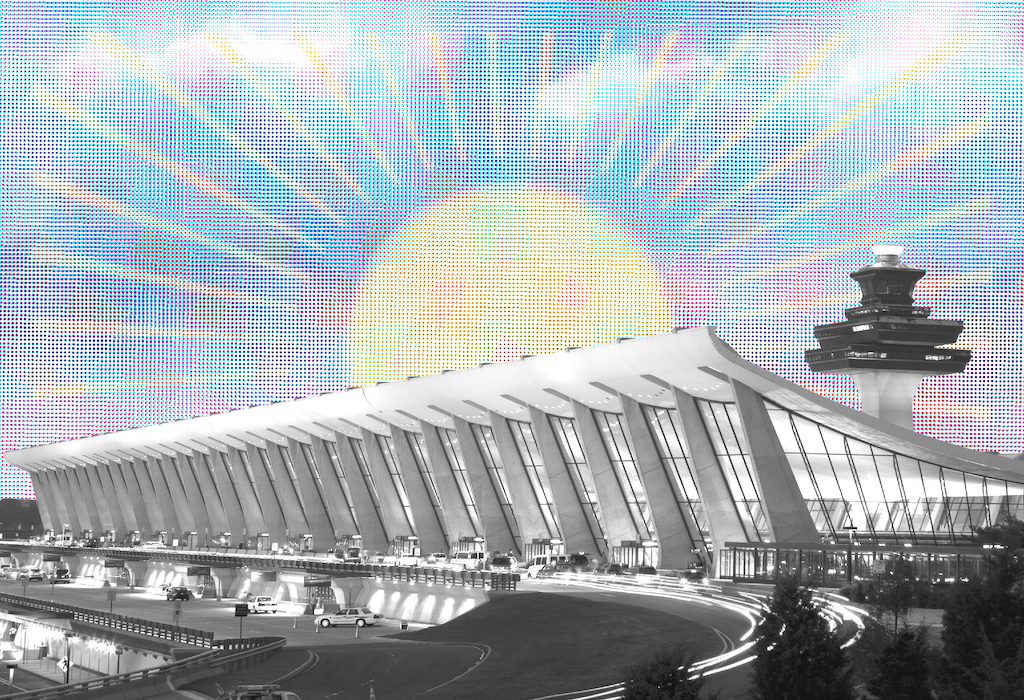
Then there are the drones. The FAA has said that the proposed arch itself—despite standing just 3,000 feet from National Airport and within its main approach and departure corridors—“would not pose a hazard to aircraft.” Turning the arch into a base for military aircraft, Beyer has argued, is a “stupid, dangerous, and unworkable” idea that would threaten aviation safety.
Storing ammunition at the arch, Beyer told Washingtonian, also creates the potential for a large explosion—“a much bigger explosion than simply hitting a big marble building,” he says, “which seems to me to just make it much more dangerous than it would otherwise be.
“In fact, my grandfather Otto Sternoff Beyer Jr.’s whole career started [as] an Army captain in World War I at an armory where there was an explosion. His job was to get the people back to work because the workers refused to show up. They went on strike because they were afraid to get blown up.”
Said explosion could happen by accident—or as the result of an attack on the proposed arch’s weapons cache. Unlike most military bases, which tend to be buffered by fencing and lots of empty space, Trump’s monument-cum-drone n’ shoot port would be right by busy roads.
“You don’t have to go very far to hit [it],” Beyer said. “One out-of-control truck could. Or in a worst case, a rogue person who may or may not have any bombs in their vehicle, could run [a] truck into the armory itself.”
Early work on the proposed arch already may have begun. Though Trump is under court order to give 48 hours’ notice before beginning any work, there is a waiver in the order that allows for geological work—and last Thursday, geologists and technicians were on-site, boring into the ground to test the soil.
What were they testing for, exactly? Beyer says that he asked, and was told by the workers that they were “just here to do a report on the soil.” When Beyer asked about the arch, he says, the workers “clearly did not want to discuss the arch.”
As for Trump’s proclamation that adding weapons to the arch came at “the strong request of the United States Military,” Beyer said he had not yet seen evidence of this request. “None whatsoever,” he said. “And it seems farcical on the surface.”