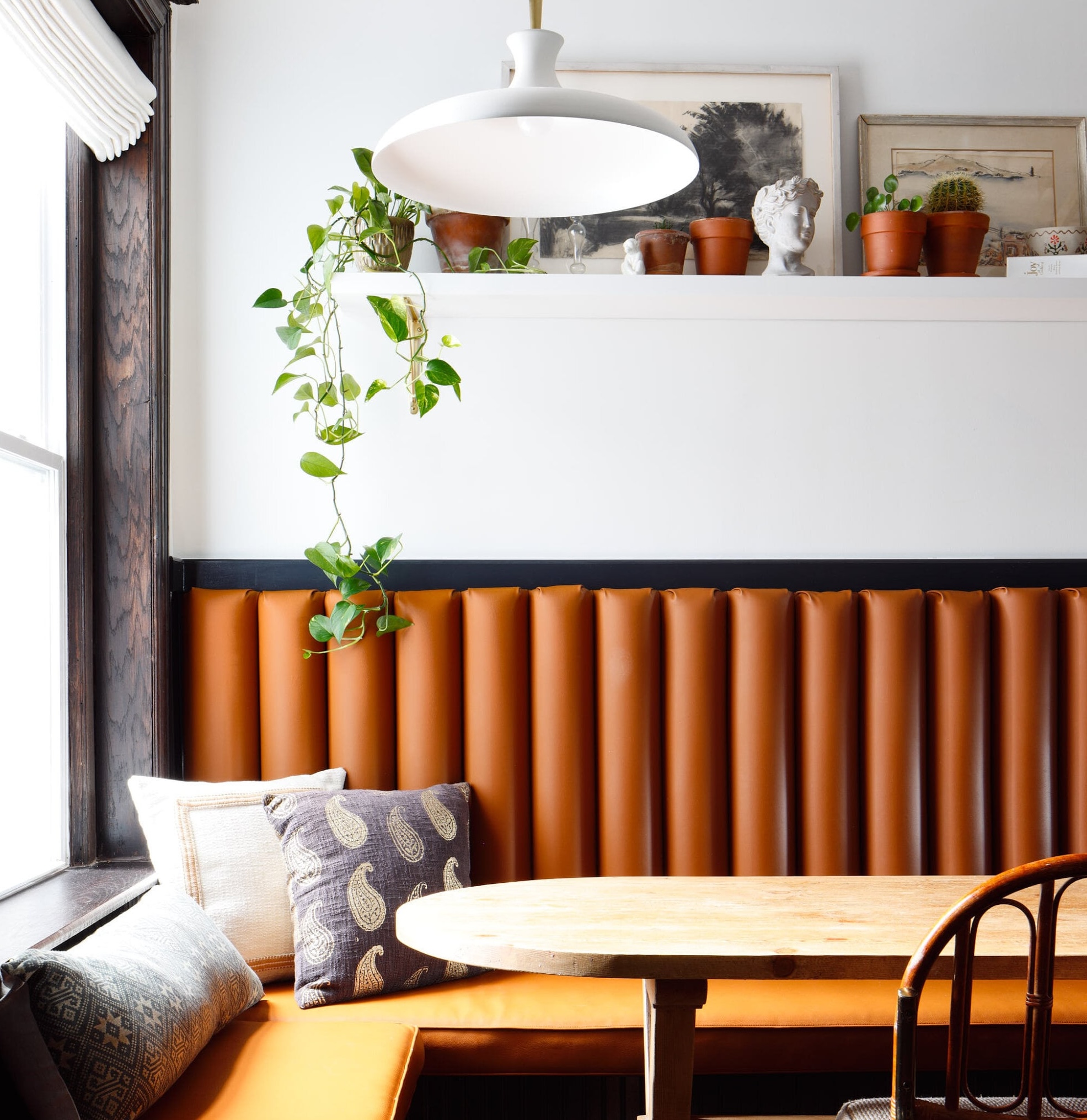
Kitchen design has had distinctive eras: from brightly colored in the ’70s to country-style—complete with black-and-white floors—in the ’90s to stark and all-white in more recent years. Now, though, kitchens are mixing old, familiar design in new ways or with fresh elements. Here’s what local designers say that looks like.
Color and Warmth
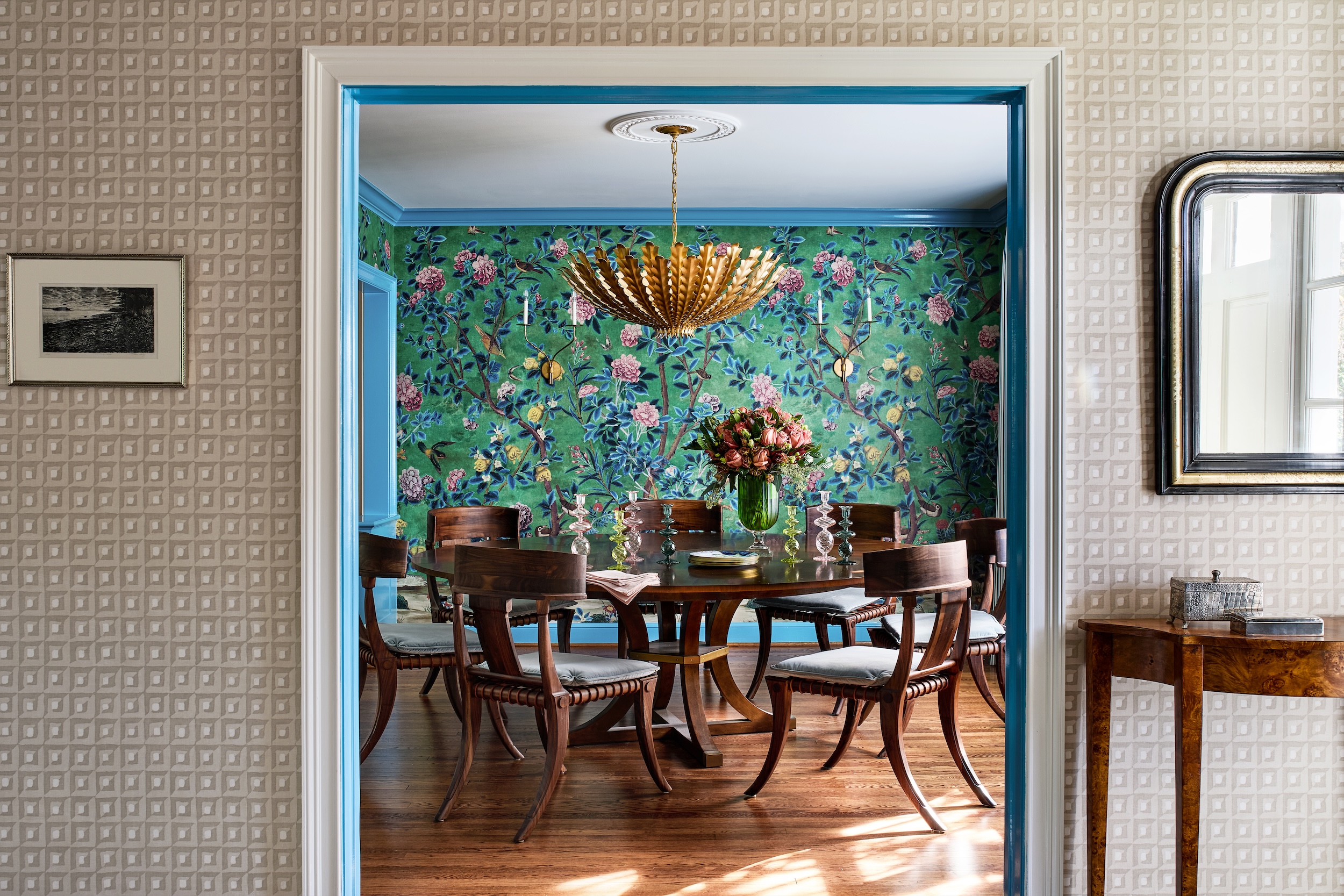
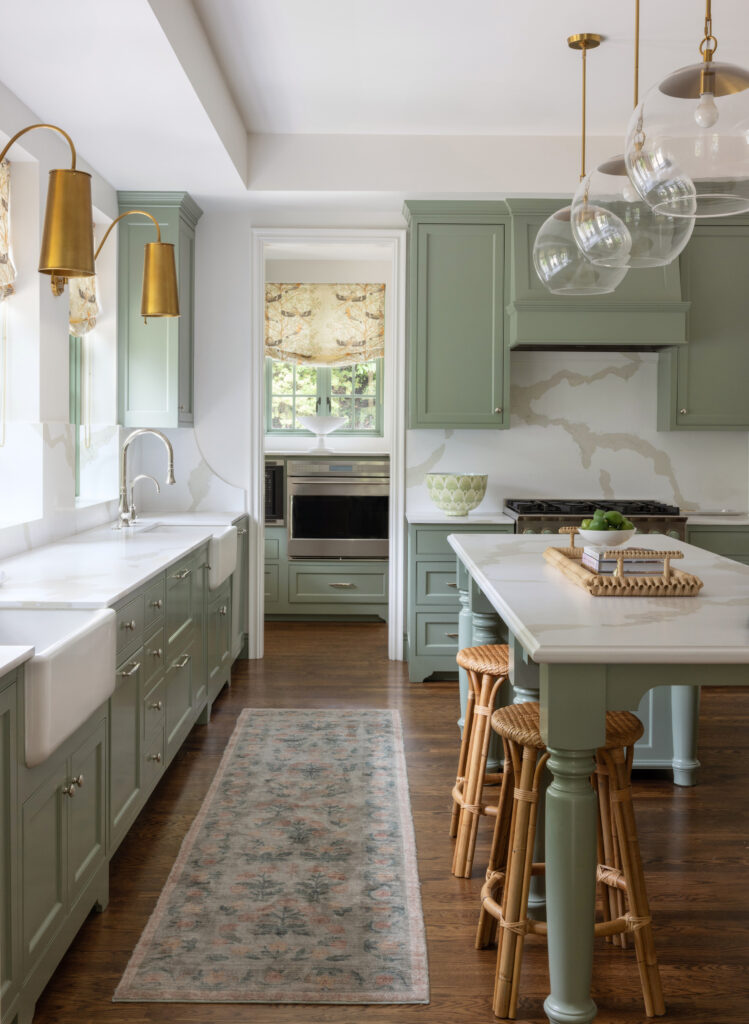
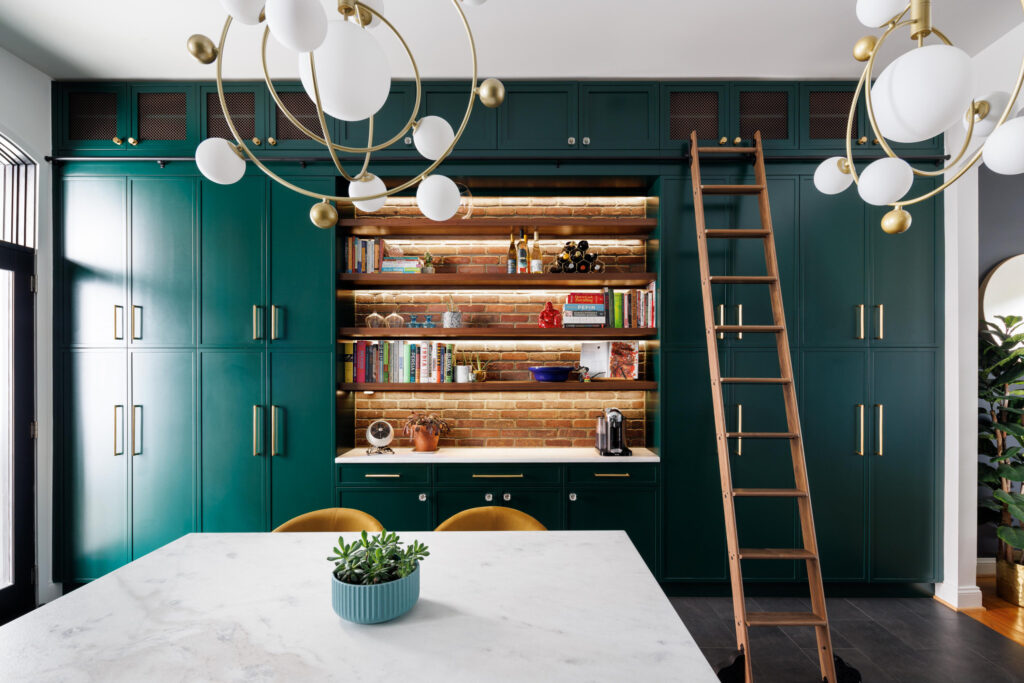
“There’s much more comfort now with richer, moodier colors like deep greens, earthy blues, even burgundies and rust,” says Annie Luttrell of Four Brothers Design + Build. She’s particularly excited about the embrace of tinted stains. “Think a rich blue hue where the wood grain still shows. It’s a beautiful way to add texture and depth.”
On the edgier end of the bold look, Wayne Adams of BarnesVanze Architects says his team has seen growing interest in a “very functional, very moody” style he describes as “steampunk”: dark-burgundy lacquer cabinets, equestrian-inspired straps and other metal accents, black or Calacatta Viola marble with pink or burgundy veining, all paired with moody lighting.
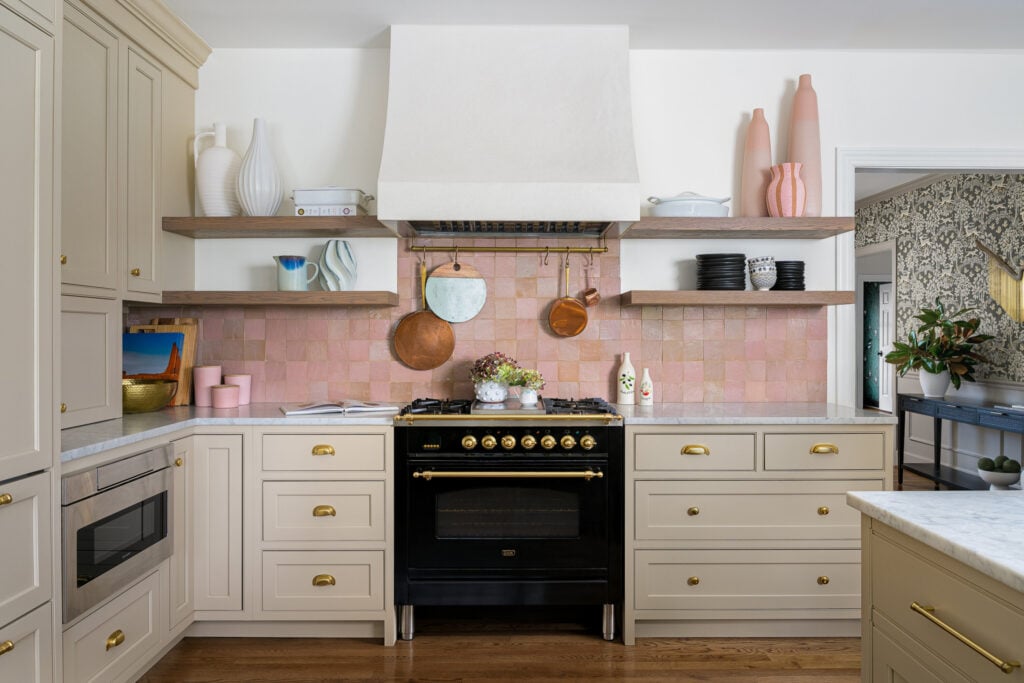
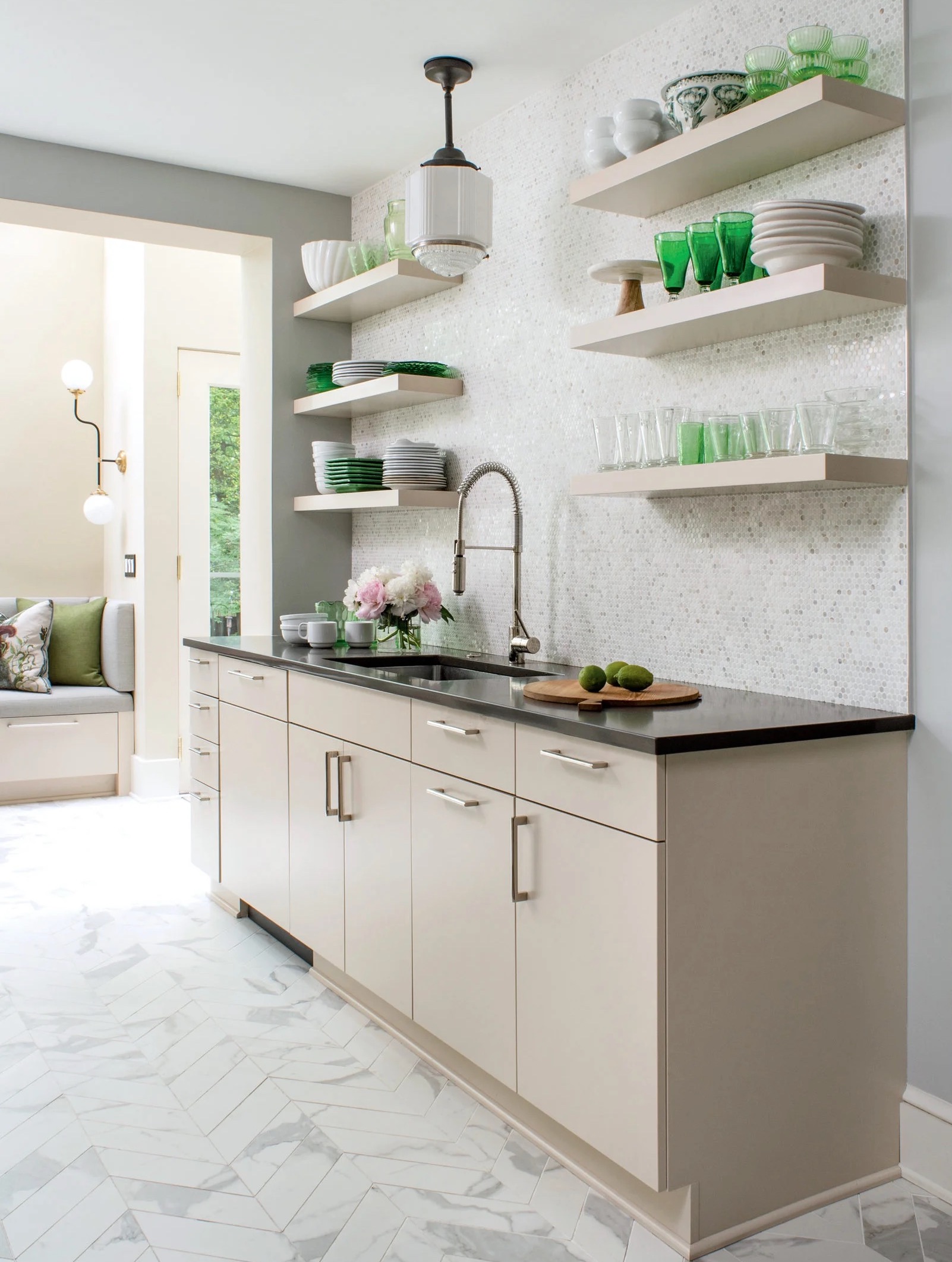
While two-tone painted kitchens have probably seen their heyday, Luttrell says contrasting and multicolor palettes are very much in, using a combination of natural or stained wood and painted cabinetry. “Instead of having a colorful island with neutral perimeter cabinets, you might see two different painted-cabinet colors paired with a stained-wood hutch or another freestanding piece,” says Luttrell. “There’s a real desire for kitchens to feel more like furnished rooms and less like a collection of perfectly matching cabinets.” The style is in keeping with the “Nancy Meyers aesthetic”—kitchens that feel cozy, timeless, and full of character. Elements such as plate racks; vintage decor; artwork; open shelves and glass-fronted cabinets; and furniture-style islands are part of the vibe—baker’s tables, in particular, are something Johanna Howe of Howe Interiors expects to see more of in 2027: “They are charming, classic, and the open legs give a room a more open feel.”
Warm woods like walnut are gaining popularity. And for those who want a neutral kitchen, warm hues such as taupe and mushroom are winning out over white, says Luttrell.
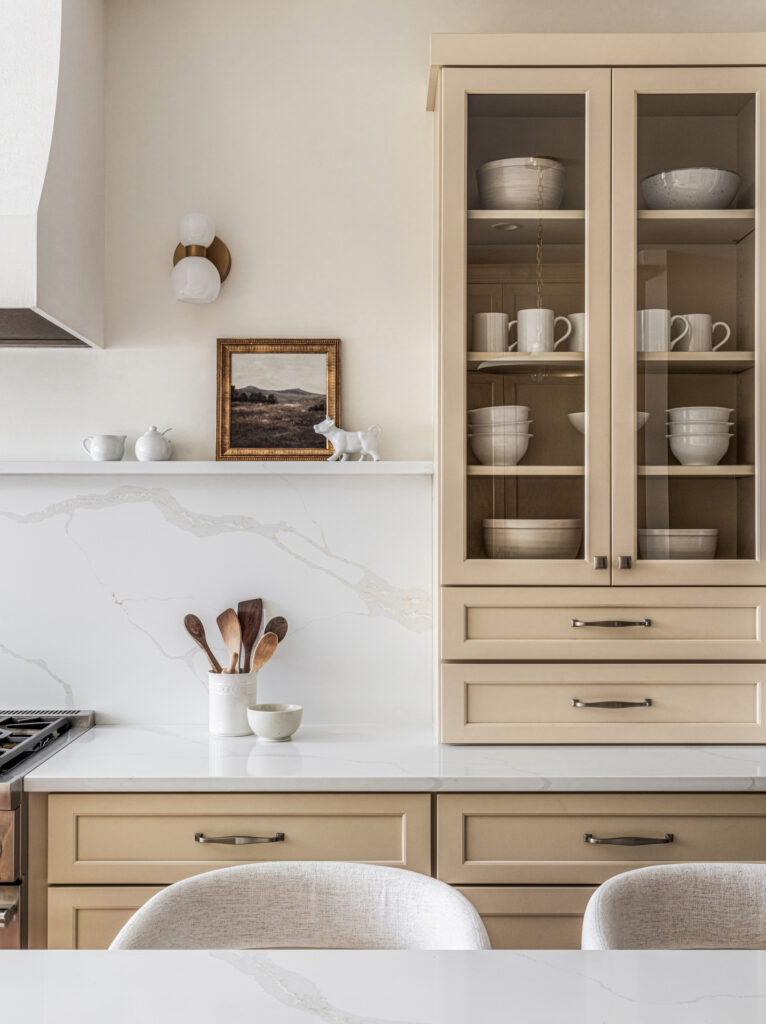
The desire for more warmth includes lighting. “Pendants, sconces, countertop lamps, in addition to task- and under-cabinet lighting—absolutely nothing makes a room feel more inviting than layered lighting,” says Katie Bromley of Spaces by Katie. “If you have to be in there cooking, you might as well feel calm and look great.”
Heart of the Home
People want kitchens to feel like an extension of their living space, Luttrell says—whether in an open floor plan or a more defined space (which is seeing a resurgence). One way to encourage loved ones to sit a little longer: comfortable seating. “One of the most requested features we’re seeing is a banquette,” she notes. “It creates a place to not just eat but gather, work, do homework, and linger.” Plus, Luttrell adds, it softens a room otherwise dominated by hard surfaces.
But for a banquette to have the intended effect, you have to get it right, says Bromley: “Nobody wants to sit at a banquette that’s too far or too close to the table, or one that’s too low or too high. Considering the foam and table height is crucial.”
Kitchen TVs are making a comeback—Bromley will sometimes recommend adding one. “For sports-loving families like ours, we frequently host get-togethers, and naturally, guests collect in the kitchen,” she says. “We have a small Frame TV so guests can keep watch while grabbing food or sitting at the kitchen bar.”
Other details that can make a kitchen look more like a space to gather and less like one designed solely for food prep, says Bromley, include curved cabinetry; wall coverings and window treatments; and textures such as wood, rattan, mesh, and metal: “There are so many ways to make the kitchen a functional space that’s inviting and truly cohesive with the rest of a well-designed and cozy home.”
Function Over Form
Adams says that regardless of aesthetic trends, the design process now begins with a broader question: How are you going to use this kitchen? Designing for someone who likes to cook, he explains, often includes exposed shelves for displaying oils and spices, a hanging display of pots and pans (a bygone detail that’s returning), and a layout designed to keep everything in reach. For families with school-age kids, it might mean a great space for breakfast and an island for homework.
In especially large kitchens, Adams says homeowners are likely now to include an auxiliary space to support the kitchen, such as a scullery—where they may put several dishwashers and a sink for doing everything from post-meal cleanup to cutting flowers from the garden—or a butler’s pantry, which might have a sink or wet bar as well as storage space for silver, china, and more.
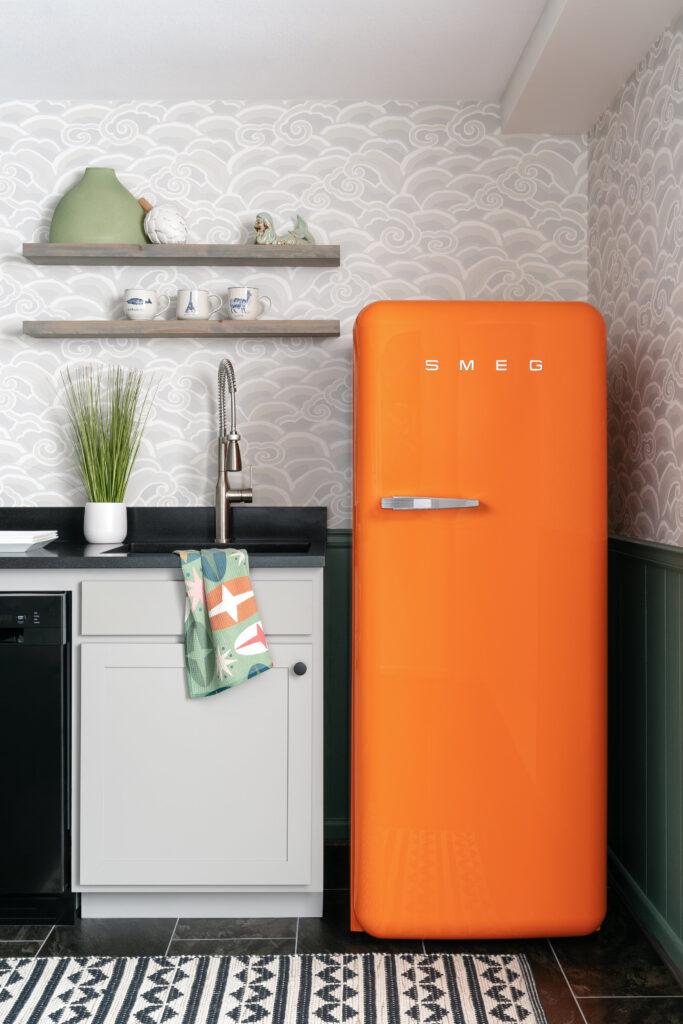
Bromley says appliance garages are being rethought: “The notion that every single appliance should be hidden is not practical.” With small appliances becoming more stylish, there’s no need to shy away from displaying, say, a beautiful espresso machine. “For the oft-used air fryer, choose something in stainless steel and create a cutout so it’s tucked aside but not closed off.”
Finishing Touches
As with anything in design, the differences are in the details.
Handcrafted details like bobbin molding on cabinets and painted wood floors; chair cushions with scalloped edges; and “living finishes”—natural materials that change over time, such as copper, unlacquered brass, and uncoated nickel—are among the things Howe expects to see more of. “The patina these materials develop is the charm,” she says.
For backsplashes, Bromley hopes people will embrace options softer than stone—drywall, wallpaper, V-groove paneling, or beadboard painted to match the walls, for instance.
And when it comes to islands, Adams says waterfall sides and simple edges are giving way to more intricate elements like fluted or drill-hole edges. Curved “double ogee” edges are another good option, says Bromley.
Ultimately, she concludes, it’s about to personality: “I don’t want to walk into your kitchen and see a room that could be anywhere or for anyone. I want to see reflections of the people who use it and the home that it’s within. Connect the style of the kitchen to all of the other things you love in your home, whether that be the use of color, pattern, antiques, art, textures. There is a role for all of it in a kitchen.”
Pro Tips
Five chefs share the appliances, design details, and other features they have or would love in a dream kitchen
By Claudia Rosenbaum
A Rational iCombi Pro 6-Pan Oven
“It’s a smart oven that can do a combination of convection and steam heat. It’s so convenient. I don’t throw a lot of dinner parties, but it would be a very nice piece of machinery to have if I did.”
—Anthony Jones, Marcus DC
A Good Range Hood
“The hood in my kitchen [a GE 30-inch Smart Designer Custom Insert] is very powerful and immediately sucks all the smoke out of the room, which allows me to cook at the very high heat you need to get effective caramelization.”
—Amy Brandwein, Centrolina and Piccolina
A Second Refrigerator
“A couple of years ago, I renovated and installed a beautiful, large, full-height Miele refrigerator. But looking back, adding a matching one beside it would have been perfect. You can never have enough refrigerator space.”
—David Deshaies, L’Ardente and Unconventional Diner
A Mill Food Recycler
“It dries and grinds food scraps into grounds that I can sprinkle in my garden. Food scraps contribute to our landfill—I wish tools like these were readily available to support human and planetary health.”
—Johanna Hellrigl, Ama
A Gas Stove
“I currently have an electric one at home, but gas has a constant flame that really does make a difference, especially when I’m cooking Nepalese-style food, frying, or making roti flatbread.”
—Suresh Sundas, Tapori

Amy leads Washingtonian Weddings and writes Style Setters for Washingtonian. Prior to joining Washingtonian in March 2016, she was the editor of Capitol File magazine in DC and before that, editor of What’s Up? Weddings in Annapolis.