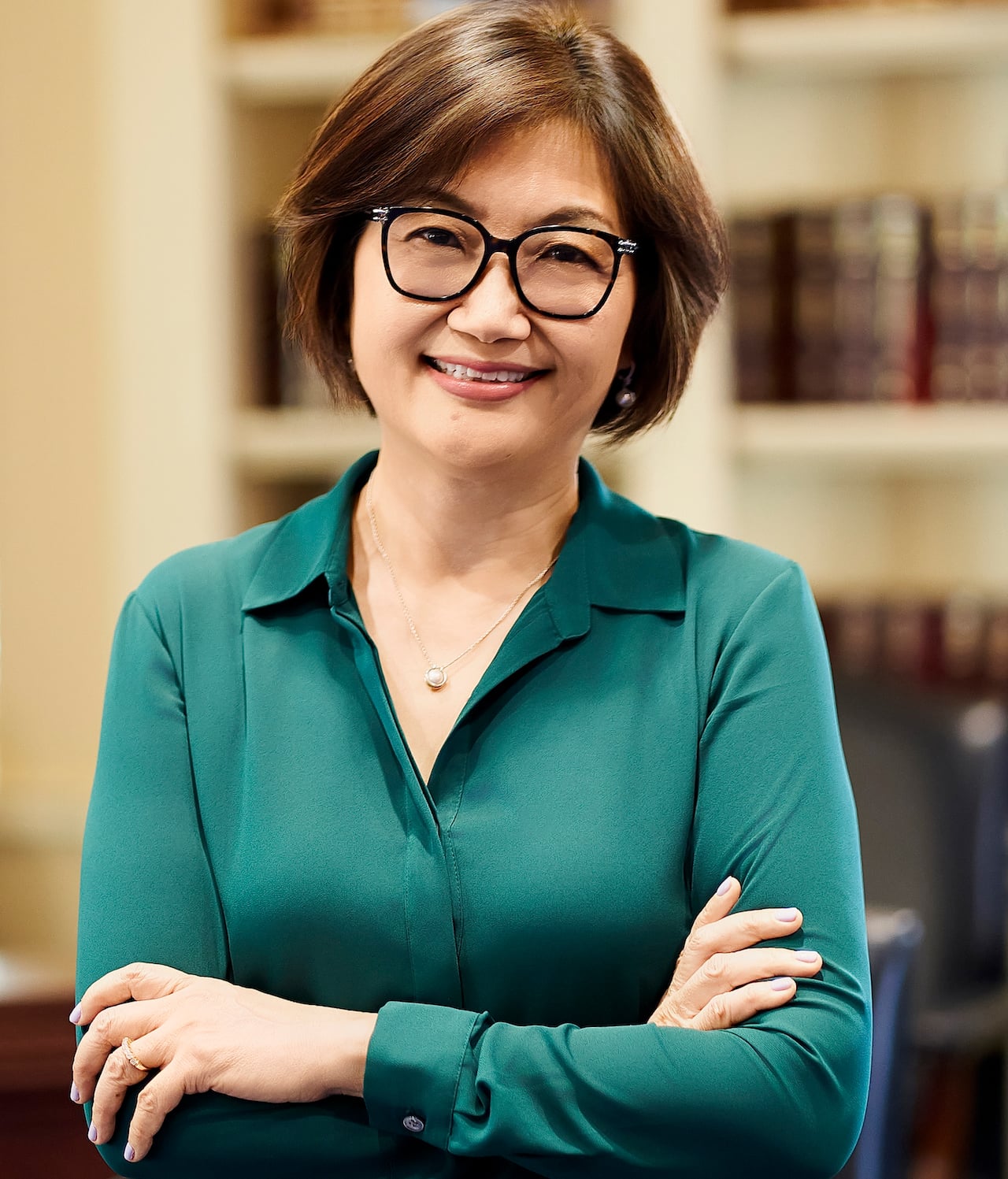
Lily Qi grew up in Shanghai during the Cultural Revolution, under the authoritarian rule of Mao Zedong. When she emigrated to the United States in 1989, she thought she’d escaped China’s moribund economy and stifling society for better opportunities abroad; she started a family, earned several advanced degrees, and became one of the nation’s first Chinese-born state legislators, representing a portion of Montgomery County in the Maryland House of Delegates. But nowadays, with China surging and the US economically adrift and falling into anti-democratic norms, she sometimes wonders if she made the right choice.
Qi’s new memoir, Elected American, weaves together the story of her migration to the United States with a cri de coeur about its failure to compete with China. “As a progressive Democrat, I wish I did not have to talk so much about business,” she says. “That is not my first passion—culture and humanity are my first passion. But I know the importance of the private sector because I grew up without one. I saw what that looked like, and that’s why I’m here.”
In Elected American, Qi recounts moving to the United States to attend college in Indiana, earning an MBA at American University, then working in economic development before the election of Donald Trump galvanized her to run for office in 2018. In the legislature, she has become a “cultural bridge” between the Democratic Party and the communities she represents. Her district is rich with immigrant-owned small businesses. Democrats, she says, “keep talking in a language that punishes success, and I don’t understand it. I think we should own the agenda on building the middle class, not just through redistribution but through growth.”
In addition to being a memoir, Elected American is a road map for immigrant participation in our democracy. Qi wrote it, in part, because she saw how her own Chinese immigrant community has struggled to make sense of local politics. She wanted to demystify the process and enumerate the stakes. “Immigrant Americans are real Americans,” Qi stresses. “We are the ones who chose America. We know better than anyone what makes America great and special.”
Qi sometimes marvels that the US seems like the only place where a person could be elected to public office with a last name that most voters can’t even pronounce (it sounds like Chee ). That helps in moments when she wonders if leaving was worth it. But in the end, she wants to shape her society rather than merely live in it. “For someone like me who loves public policy, this is my country,” she says. “I made the right choice.”
This article appears in the July 2026 issue of Washingtonian.