Been to the National Air and Space Museum before? It might be time for a return visit. The museum will open five new and renovated galleries on July 1 as part of its 50th anniversary celebration and transformation project.
“We celebrate the nation’s remarkable achievements in aviation and space exploration every day,” Chris Browne, the museum’s director, said in a press release. “As we finish our renovation this year, visitors will now be able to enjoy the Smithsonian’s world-class aerospace collection in a modern facility, one that will last the next 50 years and beyond.”
Textron How Things Fly, the highly interactive exhibit that has been part of the museum since 1996, has been revamped to include even more experiences. Mike Hulslander, who curated the exhibition, says that visitors stay at How Things Fly three times longer than other museum exhibits.
“The success here has really encouraged [us to] make our exhibitions in other parts of the museum more interactive,” Hulslander says.
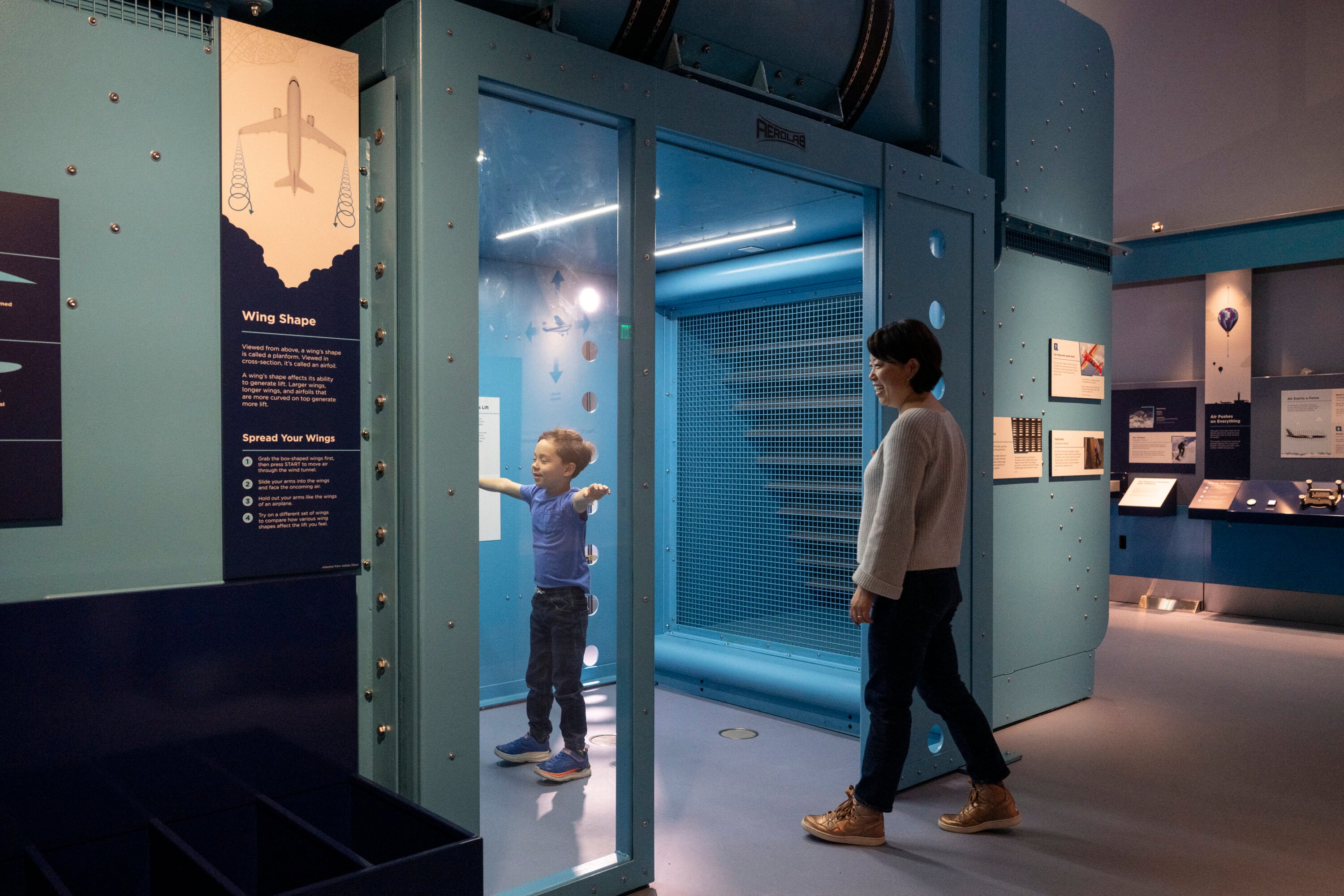
The exhibit, which teaches visitors about how planes and spaceships get and stay in the air, now features more than 50 interactive experiences. There’s a new paper plane launcher, and, says Hulslander, “the only supersonic wind tunnel in the world that museum visitors can operate themselves.”
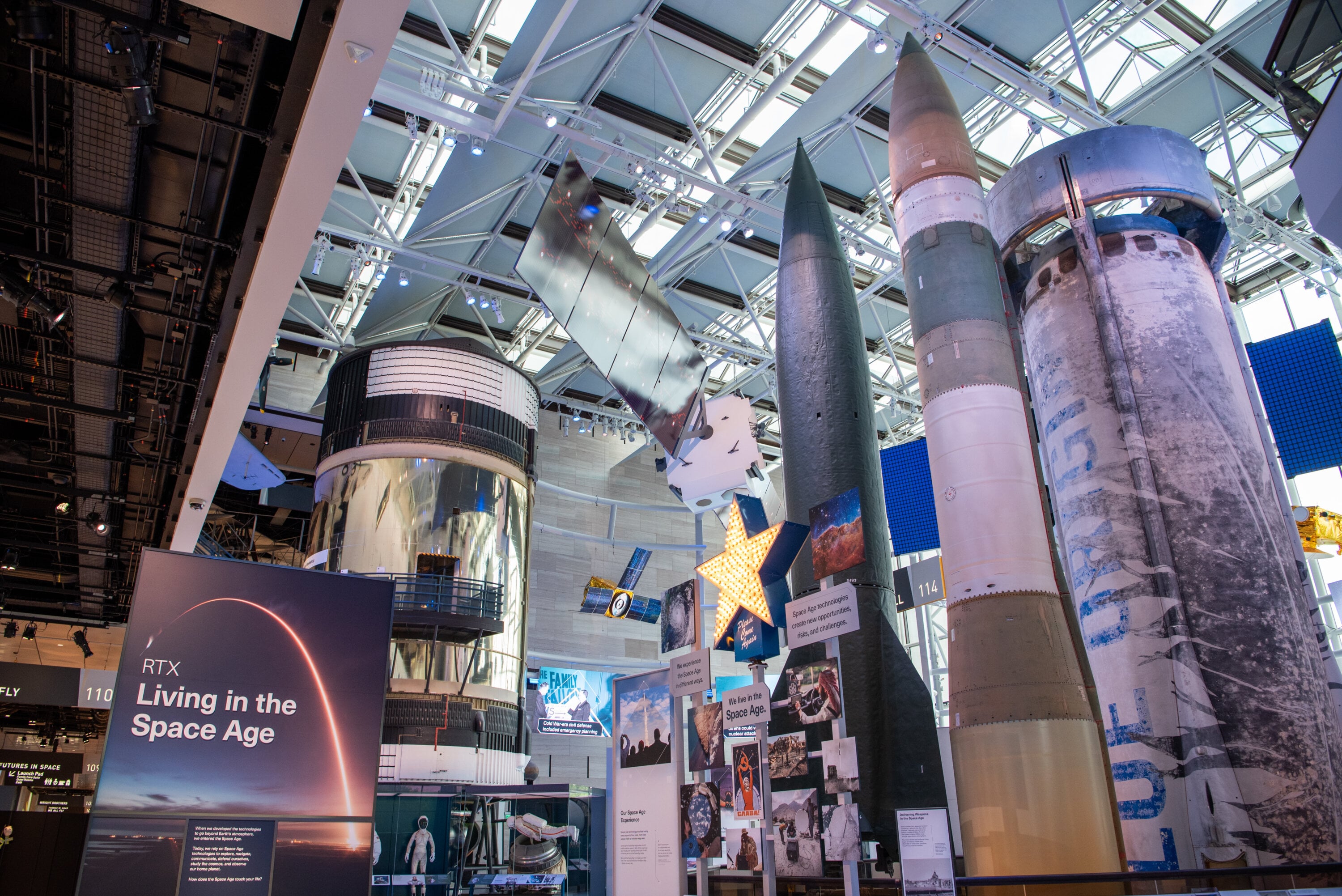
There are two brand-new exhibits: the U.S. National Science Foundation Discovering Our Universe and RTX Living in the Space Age. Living in the Space Age invites visitors to reflect on how space exploration has changed our daily lives, complete with a full-scale mockup of the Hubble Space Telescope used by NASA. Discovering the Universe takes a more theoretical approach, leading viewers through the history of theoretical and experimental understandings of space, earth, and physics.
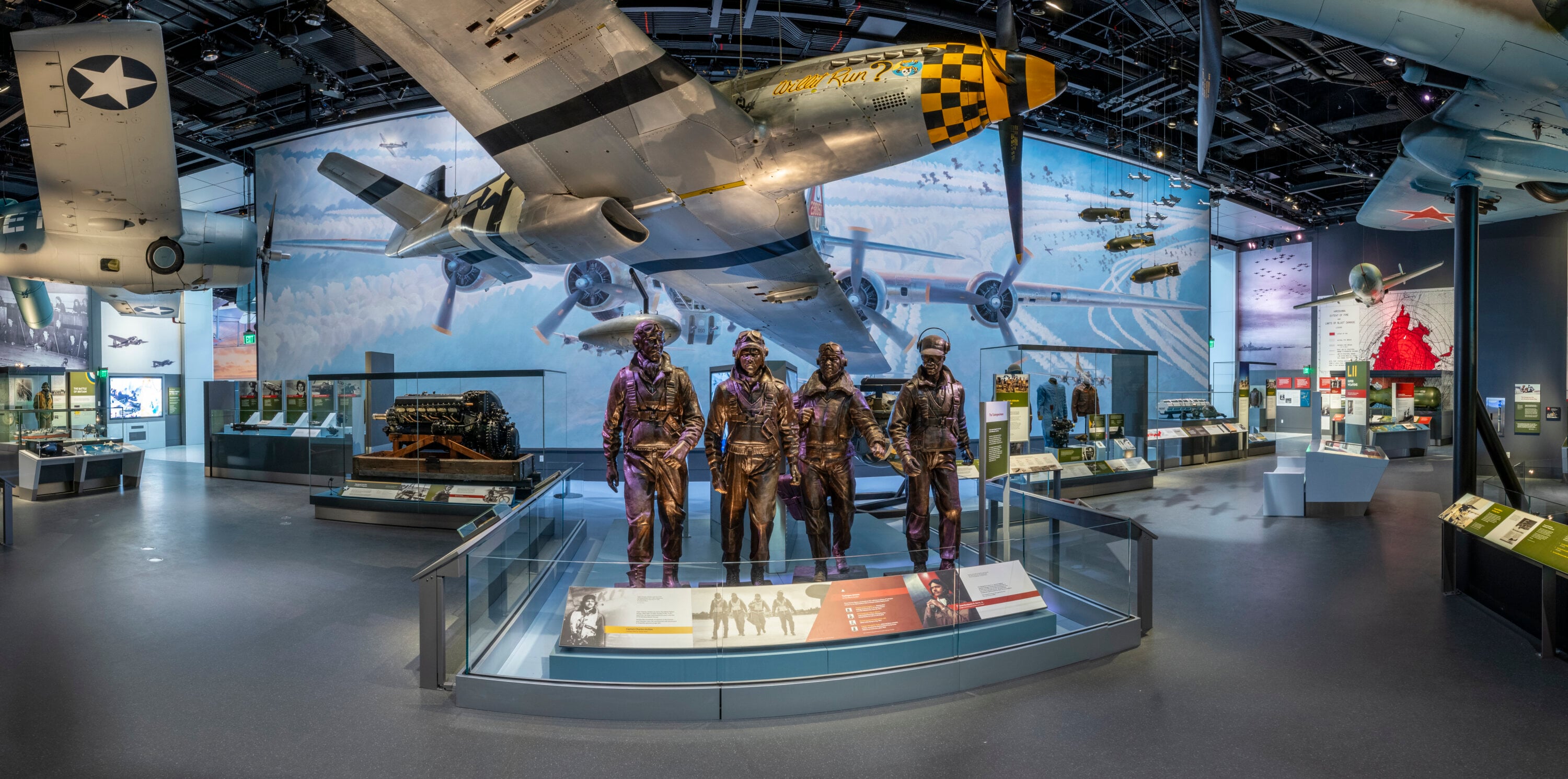
The Jay I. Kislak World War II in the Air exhibit has been redesigned to include even more artifacts and interactive elements. Visitors can take in statues of Tuskegee airmen, view uniforms used by soldiers and pilots, and look up to see real planes and equipment used in World War II.
The Flight and the Arts Center also has been redesigned with two brand-new galleries. The Art of Air and Space takes visitors through various representations of space flight and air travel in art. Items on display include Norman Rockwell paintings of NASA astronauts, a dress made to honor NASA statistician Katherine Johnson, and sculptures fashioned from plane parts. Curator Carolyn Russo combed through the museum’s 8,000-item art collection to select about 80 works for the exhibit.
“I wanted to show the lineage through art history in which flight has been a common theme through all artists,” Russo says. “We have Georgia O’Keeffe, we have Man Ray, all the way up to Norman Rockwell, Alma Thomas, to photographers like Annie Leibovitz and William Wegman.”
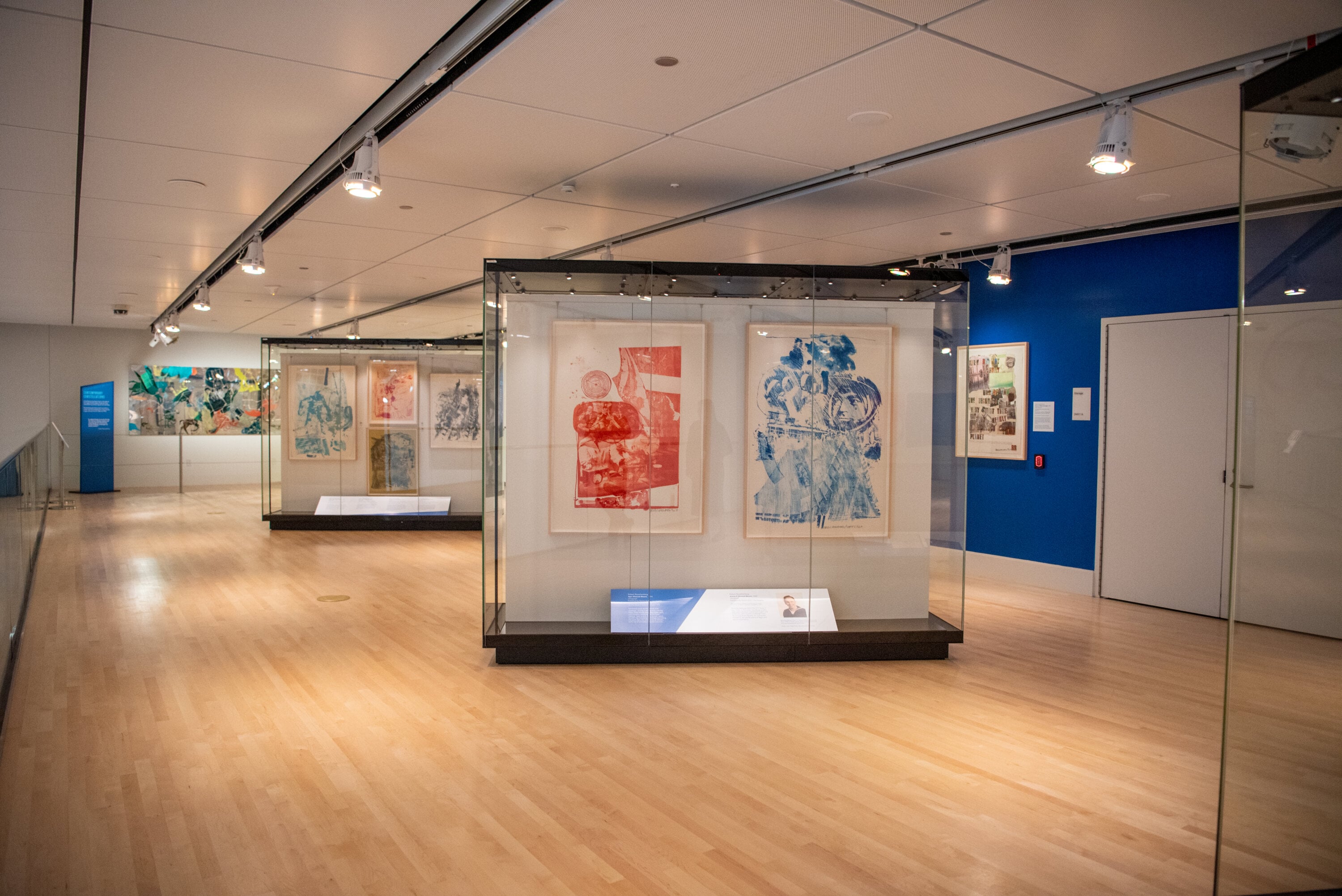
Above the Art of Air and Space is The Ascent of Rauschenberg, a one-year exhibit that will be the first of several rotating exhibitions. The gallery displays 30 Rauschenberg works, including many air travel-related paintings that have never been displayed before.
The new and redesigned exhibits will be open to the public starting Wednesday, July 1. Visitors can reserve free timed-entry passes here.