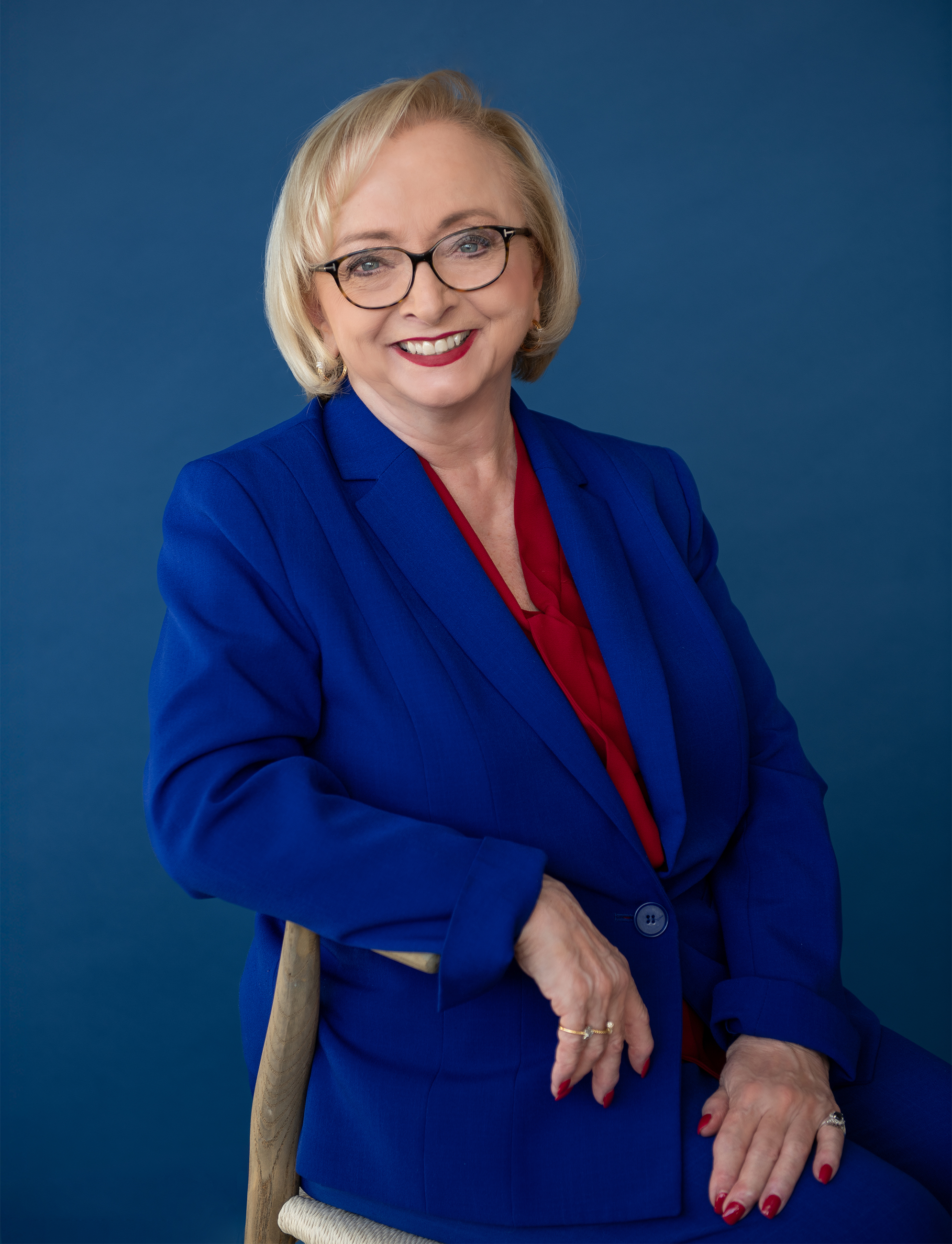
In 2023, the educator Carey Wright came out of retirement to run Maryland’s public schools. This was seen as a coup for the state. Wright had been in charge of the Mississippi schools from 2013 to 2022, during a period some now call the “Mississippi miracle.” Under Wright’s watch, one of the worst-ranked systems in the nation became, by some metrics, among the best—a particularly startling result since Mississippi has the most entrenched child poverty of any state. Now that Wright is superintendent of Maryland’s schools, the hope is that scores will rise there, too.
Wright herself is a product of Maryland’s public-education system. She moved to Prince George’s County when she was 11—first to New Carrollton and then to Lanham—and began her career there as a fifth-grade teacher in 1972. Quickly, she became an assistant principal, then a principal, then a district-level administrator in Howard and Montgomery counties. For a time, she was the chief academic officer of DC public schools under Michelle Rhee. Now that she’s back in Maryland, Wright’s goal is to revive the state’s schools from a decade-long slump, to “restore Maryland as an education destination that is top ten in the nation.” We talked to her to find out how she’ll do it.
You came out of retirement in order to run the Maryland schools. Why?
My daughters have told me that I failed at retirement. I initially decided to retire and move back [to Maryland] because I’ve got a grandson here. So I did that, but I really wasn’t done working, so I started a consulting firm. I was mentoring new state chiefs, working with school districts and legislatures, and I was really loving it. But I also knew things were going south in the state. Maryland was looking at a decade of decline in student achievement, which was just heartbreaking because I was a principal for many years here in Maryland, and in any given year we were bumping heads with Massachusetts as to who was going to be number one. The state has been so good to me, and when I was offered this job, I thought, “We’ve got to do something to turn this trajectory around.” That’s why I did it.
What do you think went wrong during that decade?
Well, I’m not sure that people were really attending to the data. Maryland takes great pride in itself and its schools and its workforce. And I think sometimes that can kind of pull the wool over your eyes and make you believe things are a little better than they are.
But as state chief, you’ve got to be honest and transparent about your data. In 2013, Maryland was second in the nation in fourth-grade reading. By 2022, it had fallen to 40th. In 2024, we rebounded back up to 20th, but we’re still not where we need to be.
What are you doing now to turn those numbers around?
We’ve been expanding the number of children who are taking advantage of high-quality early child-hood [education], but the most important thing, for me, is there’s a lot more attention being paid now to reading. Teachers need to know how to teach reading better. And we need to see our math rates come up. It goes back to looking at your data and then making sure schools are addressing the needs they have. Over the past two years, our data have definitely been inching up, so we’re feeling good about that.
What made you want to spend your life as an educator?
I was one of those students who just loved being a student. And I was blessed all my life to have an outstanding education in public schools. Neither of my parents had gone to college, but education was the number-one priority for them, so that was, I think, part of it.
Why was education a priority?
My mom was a traditional mom. She grew up on a farm and had never wanted to do anything other than be a mom. That was her dream, and she was excellent at it. But school always terrified her, and she said, “I want you kids to have a good education.” My dad didn’t have the funds to go to college. He was one of those self-made people—like, he wanted to be an electrical engineer, so he bought all of the books that taught you how to become an electrical engineer and then took the test and passed. By the time my dad retired, he was the director of manned flight for Goddard Space Flight Center. So education was everything to him, and he wanted to make sure that his kids had every opportunity in life.
You started in 1972 as a fifth-grade teacher. Can you tell me about that?
That was a really impactful year for me. It was the year that busing took place in Prince George’s County. So in mid-January of my first year, half of our school went to another school and half of another school came to our school. Those who came to our school were African American children who had never been to school with white children, ever. I remember the difficulty the children had acclimating. And there was no professional development done for teachers across the district, no plan to make [the students] feel welcome.
I’ll never forget getting to know those kids and how many of them couldn’t read. It made such a lasting impression on me, and it really did follow me throughout my career. I always had a tendency to lean toward kids that needed help the most, whether that was with behavior or academics. When I was a classroom teacher, I would sometimes start the year out with 24 [kids], and by the time the year ended, I had, like, 38 because the principal would say, “Can I just put this child in your class?” I believe that all kids can learn and excel given the right kind of teaching, the right kinds of interventions.
Why did you decide to take on a school system as troubled as Mississippi’s?
By any given data point, Mississippi was either 49th or 50th, and had been for years. I had never thought about being a state superintendent, but when I got the call from the headhunters, I thought, “Well, you know what excellence looks like, because you worked in two of the most outstanding counties in the United States—Montgomery County and Howard County—and you’ve also seen what it takes to get a district back on track,” because I was in DC at the time, and it was all about educational reform. I thought, “Let me give this a try.” People said, “You’re moving where?” They said, “Have you ever been there?” I said no. But I thought, “These kids deserve the same opportunity for success that everybody else does.”
Some people believe that you can’t improve academic outcomes without improving a child’s life in a more holistic way. You didn’t fix poverty, but you did improve school outcomes. What’s the lesson there?
Once, I was meeting with a large group of superintendents, and one of them stood up and said, “I want to know how you expect us to teach all these poor kids.” That was the way he said it. And I was so taken aback. I stood there for a hot minute and then said, “Yeah, you can’t control what happens before they get to school, and you can’t control what happens when they get home. But they’re at school every single day, so from the time they walk in the door until the time they leave, you’ve got to make it the best that it can be.”
I would tell superintendents, “When you’re out walking through schools, the first question I want you to ask a principal is ‘Have you identified the bottom 25 percent?’ And if they say yes, then you say, ‘Show me the list.’ You take your finger and point at some random kid’s name and say, ‘What are you doing for that kid, right there?’ ” Because that’s the level of detail that principals have to get to in order to start making those improvements.
One controversial aspect of Mississippi’s success is the accountability portion–specifically, the rule that third-graders have to pass a literacy test or be held back. How would you defend that to a standardized-test skeptic?
The most important thing any superintendent can do is make sure your kids are learning. And the only way you’re going to do that is by monitoring achievement and then adjusting as you need to. The state was already testing when I got there, but the test they were administering was really not measuring proficiency. It stunned me to discover that. So we dumped that test and revised all of our standards, and then we put out a new statewide assessment that was aligned to our standards. It wasn’t just a random, off-the-shelf standardized test. This was a true measure of what our kids should know and be able to do at the end of each grade, the most rigorous standards that Mississippi has ever put in play.
For me, it was a dipstick in time each year to get a sense of “Are our kids growing in proficiency? What districts need more help? What are the content areas that are showing strengths or weaknesses?” Having those data points at the end of each year gave me an opportunity to deploy resources according to need.
What’s your advice for how parents can best support their children’s education?
Number one, talk to them each and every day. Don’t ask yes-no questions. Instead of saying, “Did you have a good day today?” try, “Tell me about the best part of your day today” or “What was the part that you liked the most, or even the least?” Having a place at home for them to come and get their homework done is important.
If there’s one thing I say to any parent, whether with an infant or a 15-year-old, it’s take the time to read every single day—to them or with them—and make it something fun. And set time limits on electronics, because there’s so much research now that electronics are rewiring the brain. Set time limits on it so that they understand that there’s other parts of the world other than just that screen that’s in front of them.
If you could wave a wand and implement changes to American public education, what would they be?
I would ensure that all kids are reading proficiently by the end of grade three. We should also make sure that kids’ emotional and mental-health needs are attended to, that all children are feeling seen and heard and cared for and safe in school. I just firmly believe that parents have entrusted the people they love the most to us, and that is a huge responsibility that I don’t take lightly. I would hope that every school would look at it that way—that this is a very sacred thing that we do.
This article appears in the May 2026 issue of Washingtonian.