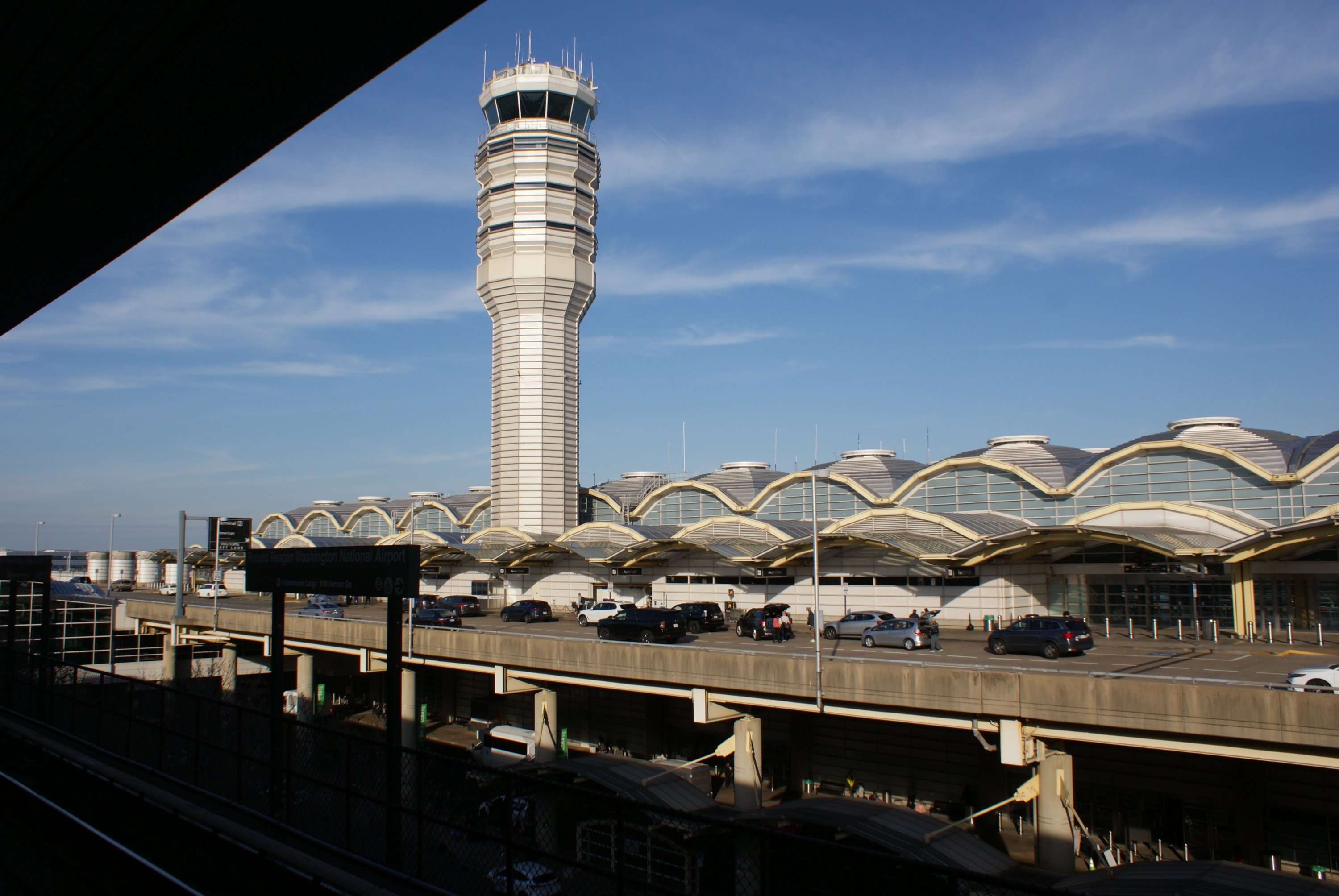
If you’ve flown out of Ronald Reagan Washington National Airport in the year since the midair collision over the Potomac that killed 67 people, a question may have been nagging at you: what has actually been done since then to prevent something like that from happening again?
Since the collision on January 29, 2025, between an American Airlines flight from Wichita and a military helicopter on a training ride, military pilots have had to broadcast their precise GPS-based location data to other aircraft and to air traffic control, something they frequently skipped before the crash. The FAA has also barred all but the most essential helicopter traffic along the Potomac near the airport.
In the tower, helicopter and jet traffic are now always handled by two separate controllers—on the night of the crash, one of the controllers was handling both kinds of aircraft. And controllers no longer give pilots leeway to maintain their own “visual separation” from others within five miles of the airport. The FAA also says it has increased oversight and staffing at DCA.
Last week, the Federal Aviation Administration announced it was making these changes permanent.
But the National Transportation Safety Board isn’t satisfied. At a hearing today, after determining that the probable cause of the crash was in part an over-reliance on pilots using the “see-and-avoid” technique to maintain visual separation, its board voted on more than 40 new recommendations intended to prevent a repeat of the collision. These included adding training for controllers, using 30-minute windows rather than one-hour windows for takeoffs and landings to further space out traffic, improving some collision warning systems, and boosting the tower to a higher ranking among air traffic control facilities, which would give staff higher pay and more training.
During the hearing, NTSB chair Jennifer Homendy ripped into the FAA for past oversights in these areas, saying the accident was “100 percent preventable.”
“This helicopter route shouldn’t have been there in the first place,” she said at one point.
Within a few weeks, the board will issue its 500-page final report on the crash. But as a passenger, most of these changes aren’t obvious. So what to make of them?
Aviation is complex. Horrendous accidents don’t usually have one simple cause. But that doesn’t mean there weren’t clear systemic problems that came out of the NTSB investigation.
“NTSB people have a saying that when you find the human error, that’s not the end of the investigation,” chair Homendy said at Tuesday’s hearing. “That’s the beginning of the investigation.”
Staffing was lean in the air traffic control tower, and employees were overworked. Helicopter routes weren’t precisely defined. Unlike civilians, military pilots frequently flew without transmitting “ADS-B Out,” a form of location data. The Sikorsky Black Hawk helicopter was relying on faulty altimeter readings. Communication between the tower and helicopter crew was imperfect: the helicopter crew were likely referring to another jet when they said they had the plane in sight. And their night vision goggles may have hampered their ability to see the jet.
NTSB members have also criticized aviation regulators for not acting on data that indicated many near-misses had already occurred at DCA, and in December, Homendy condemned a section in the National Defense Authorization Act that would allow military helicopters to operate without ADS-B Out, watering down the requirement made by the FAA at the NTSB’s urging. The army is upgrading ADSB systems on its helicopters, but the provision in the NDAA would have effectively restored the pre-crash status quo, NTSB officials said.
Soon after, a group of senators on the Committee on Commerce, Science and Transportation, led by Ted Cruz and Maria Cantwell, filed an amendment to strike that section from the bill. After meeting with families of the American Airlines Flight 5342 victims, they had also introduced the bipartisan ROTOR Act, which would close all loopholes that allow any military flights to use under “sensitive government mission” exemptions. The act passed in the Senate but is stuck in the House.
The particulars of all those changes are still subject to change. One thing that hasn’t changed much: the jam-packed schedule of arrivals and takeoffs at National. This continues to worry some officials and lawmakers.
DCA is one of just three airports in the nation (the other two are New York’s John F. Kennedy and LaGuardia) to be governed by the FAA’s slot control system, meaning the agency can strictly regulate how many takeoffs and landings are allowed per hour. In recent years, Congress has passed exemptions to allow more flights at DCA, sometimes at the behest of congressional representatives looking for convenient routes to their home districts. Since 2000, legislators have added more than 50 new slots, including 10 just months before the crash that were vigorously opposed by Virginia and Maryland senators. Those new flights weren’t operating yet at the time of the crash.
Before the accident, the FAA had reportedly ignored a request from air traffic control staff to reduce the rate of arrivals. After the collision, the FAA reduced flight arrival rates slightly after the crash—from 36 to 30 per hour—but that’s a temporary measure. The NTSB has recommended further reducing hourly flights.
Where does all this leave the average passenger? As with any accident, a terrible combination of preventable factors and bad luck had to come together in just the wrong way. With the recent changes from the FAA and the military, and more likely to come, experts agree the situation has improved.
“It is safer,” says Greg Feith, a former NTSB air safety investigator. “After every accident, because it’s highly scrutinized, safety increases naturally.”

Ike Allen covers politics, food, culture, and transportation in DC and writes the monthly Hidden Eats column for the magazine. He grew up in DC.