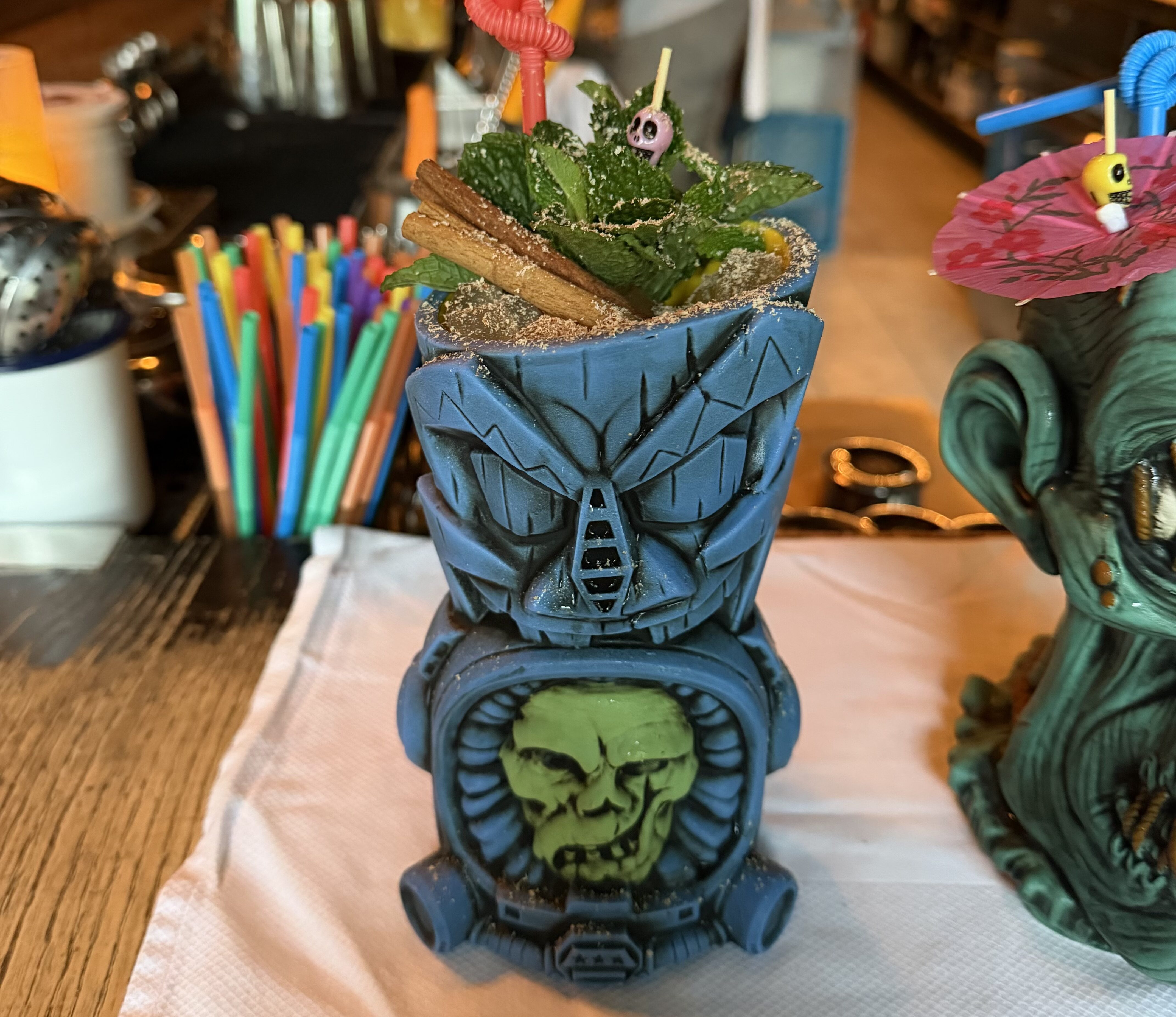
10. DC gets its first phone-free bar.
Chef Rock Harper closed Hill Prince on H Street and reopened it this fall as Hush Harbor, DC’s first phone-free bar. To ensure everyone’s actually unplugged, the bar uses Yondr pouches—the same ones that have become popular from schools to comedy shows—which allow you to carry your phone with you but not look at it. “All we’re doing is giving people a little nudge to be supremely present and intentional about this hospitality experience,” says Harper. “It’s not going to be preachy or punitive. I just know in my life and in others, if you put [your phone] away, you can really have a wonderful, different time that we’re not really used to having right now.”
9. Woodmont Grill abruptly closes.
In a year full of closures, perhaps none was as shocking as the abrupt end of Woodmont Grill in Bethesda. Even some employees didn’t learn it had shut down until they read the news in media reports the next day. The modern American restaurant, originally Houston’s, first opened in 1992 before rebranding in 2008. Hillstone Restaurant Group blamed diminished parking and staffing struggles. And while the restaurant had a reputation for being consistently busy, one front-of-house employee says the word among the staff was that Woodmont Grill was last in sales among Hillstone’s restaurants. “From what I heard, we were costing the company money to stay open,” she says.
8. Trump dines out in DC.
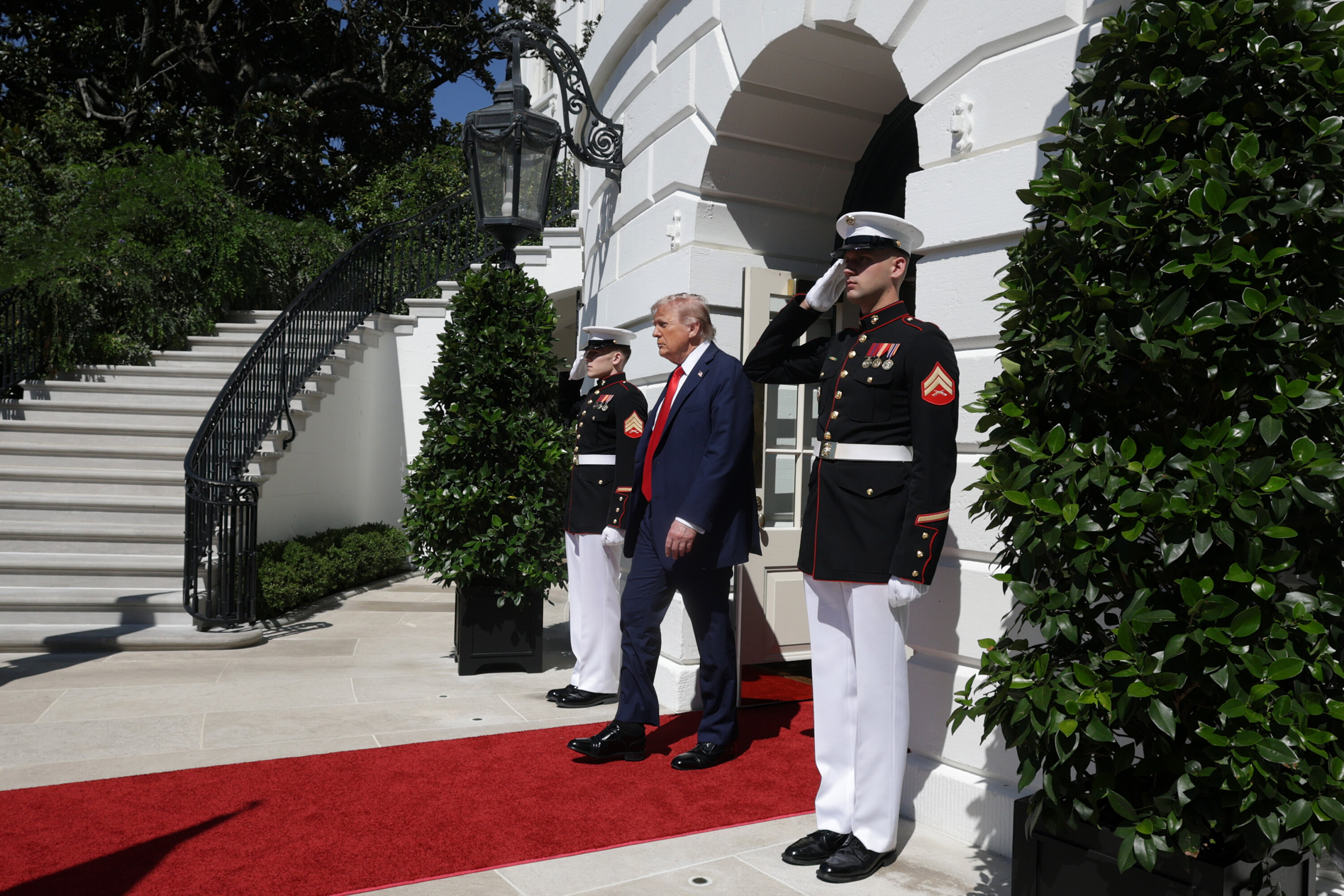
During his first term, the only DC restaurant Trump ever visited was the steakhouse in his former namesake hotel. But in September, he ventured just over a block from the White House to Joe’s Seafood, Prime Steak, and Stone Crab with VP JD Vance and other Cabinet secretaries in tow. Trump used the outing to tout how “safe” the city was and how local restaurants were “booming” (never mind if it wasn’t true). But his big night out was interrupted by protesters inside the dining room yelling, “Free DC. Free Palestine. Trump is the Hitler of our time.”
7. The Inn at Little Washington loses a star.
Sorry, but the DC region is no longer home to a three-star Michelin restaurant. The Inn at Little Washington was downgraded from three to two stars this year, along with dining heavyweights Masa in New York and Alinea in Chicago. To top it off: Michelin awarded no new DC stars this year, and three Michelin-starred restaurants (Metier, Kinship, Reverie) have closed. That’s a net loss of four stars for the DC guide.
6. Restaurant workers attempt to unionize.
Few unions exist across the DC restaurant industry, outside a handful of hotel establishments. But there was a high-profile push to change that this year, beginning with unionization efforts within Starr Restaurant Group (Le Diplomate, Pastis, St. Anselm) and Knightsbridge Restaurant Group (Rasika and now-closed Modena).
The union fights have only intensified over the last year, with boycotts involving dozens of Democratic lawmakers (including former House Speaker Nancy Pelosi and representative Alexandria Ocasio-Cortez) and recent National Labor Relations Board charges against Starr for alleged union-busting at St. Anselm. (Starr group “strongly disagrees” with the NLRB allegations and is pursuing its own charges against Unite Here Local 25, which represents the unionizing workers.) More recently, employees of Capitol Hill sister spots the Duck & the Peach, La Collina, and the Wells announced moves to unionize as well.
5. The era of streateries (sort of, almost) ends.
Streateries provided a lifeline for many restaurants during the pandemic and transformed streetscapes across the city. But many of them came down this fall due to new rules from the DC Department of Transportation. Restaurant owners now have to pay to use the public space, and they have to revamp their outdoor dining structures to meet new specifications (no plexiglass windows, for example). Emergency legislation from the DC Council eased some of the restrictions and lowered the costs a bit, but for some, it came too late.
4. The government shutdown delivers a blow to the restaurant industry.
We all saw how the longest government shutdown in history hurt federal employees and the people who depend on their services. But less front and center was the way local restaurants suffered as federal employees stopped going into offices and began cutting back spending. Just one example: Henceforth, a new brewery, wine bar, and restaurant on H Street, Northeast, saw business decline 40 percent between September and October, with a sudden drop at the start of the shutdown, leading it to cut back hours and reduce staff shifts. For many restaurants, it was one more hit after after a year of them. “It feels different, like there’s more things that we’re coming up against,” said restaurateur Micheline Mendelsohn of Good Stuff Eatery, We, The Pizza, and others. “The government shutdown for us is just another exhausting pivot.”
If there was one bright spot, though, it was the IRS lawyer who used his furlough to launch a viral hot dog stand.
3. Tom Sietsema steps down, and the Post gets a new food critic.
After more than 25 years, Tom Sietsema stepped down as the Washington Post food critic, revealing his face publicly for the first time on the way out. Taking over the high-profile role: Elazar Sontag, the 27-year-old former restaurant editor at Bon Appétit. Sontag has already made some notable changes, including ditching anonymity and bringing back the star rating system.
2. A roller coaster for the tipped wage.
Initiative 82—the ballot measure aimed at phasing out the tipped wage in DC—has been one of the restaurant industry’s most divisive topics since voters overwhelmingly passed it in 2022. Earlier this year, Mayor Muriel Bowser escalated the fight with a push to repeal the law. Ultimately, the DC Council passed a “compromise,” slowing down increases to the tipped wage and capping it. No one seemed to be totally happy with the decision, with one side calling it a betrayal of democracy that would hurt workers, while the other lamented that it didn’t go far enough to prevent businesses from making cuts and potentially closing.
But the matter is far from settled. “One fair wage” advocates are working to get a new initiative on the DC ballot next November that would raise the minimum wage—including for tipped workers—to $25 by 2029.
1. Immigration agents crack down on DC.
In May, immigration officials descended on more than 100 DC area businesses, including many restaurants, seeking I-9 forms verifying employment eligibility. But that was just a teaser for what was to come. Beginning with a law enforcement blitz in August, ICE and other federal authorities began setting up checkpoints and detaining people off the street. The result has been fear and disruption across the restaurant industry, which is powered in large part by immigrants. Even those with legal status have been afraid of getting caught up in the chaos: “I’m stressed. I’m panicked sometimes,” says one chef, an immigrant from Mexico with a work permit. “Hopefully, one day somebody understands we’re here to try to get a different opportunity that our country never gave to us. That’s all.”

Jessica Sidman covers the people and trends behind DC’s food and drink scene. Before joining Washingtonian in July 2016, she was Food Editor and Young & Hungry columnist at Washington City Paper. She is a Colorado native and University of Pennsylvania grad.