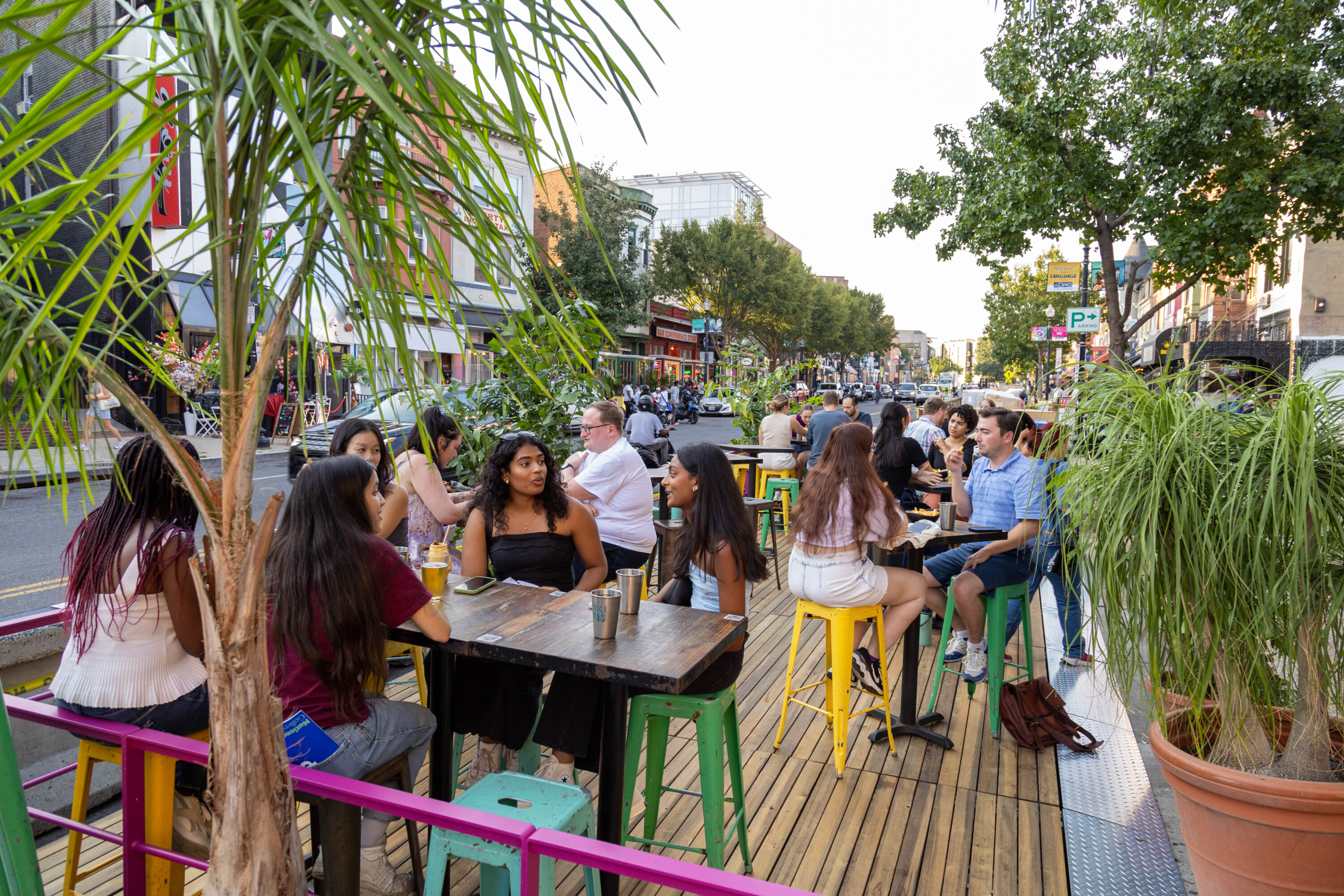
Last year, DC shelled out about $750,000 to build bright, minimalist, Norwegian-designed outdoor dining platforms for restaurants along 18th Street in Adams Morgan. The 33 participating restaurants were meant to serve as models for what DC’s outdoor dining landscape could look like in the future.
If so, then the future for streateries now doesn’t look too bright.
This fall, just three of the 33 participating restaurants expressed interest in keeping their streateries when the District Department of Transportation conducted a survey. In December, the city will remove all of the dining platforms at a cost of $100,000 and plans to use them to extend sidewalks in the Gallery Place area instead.
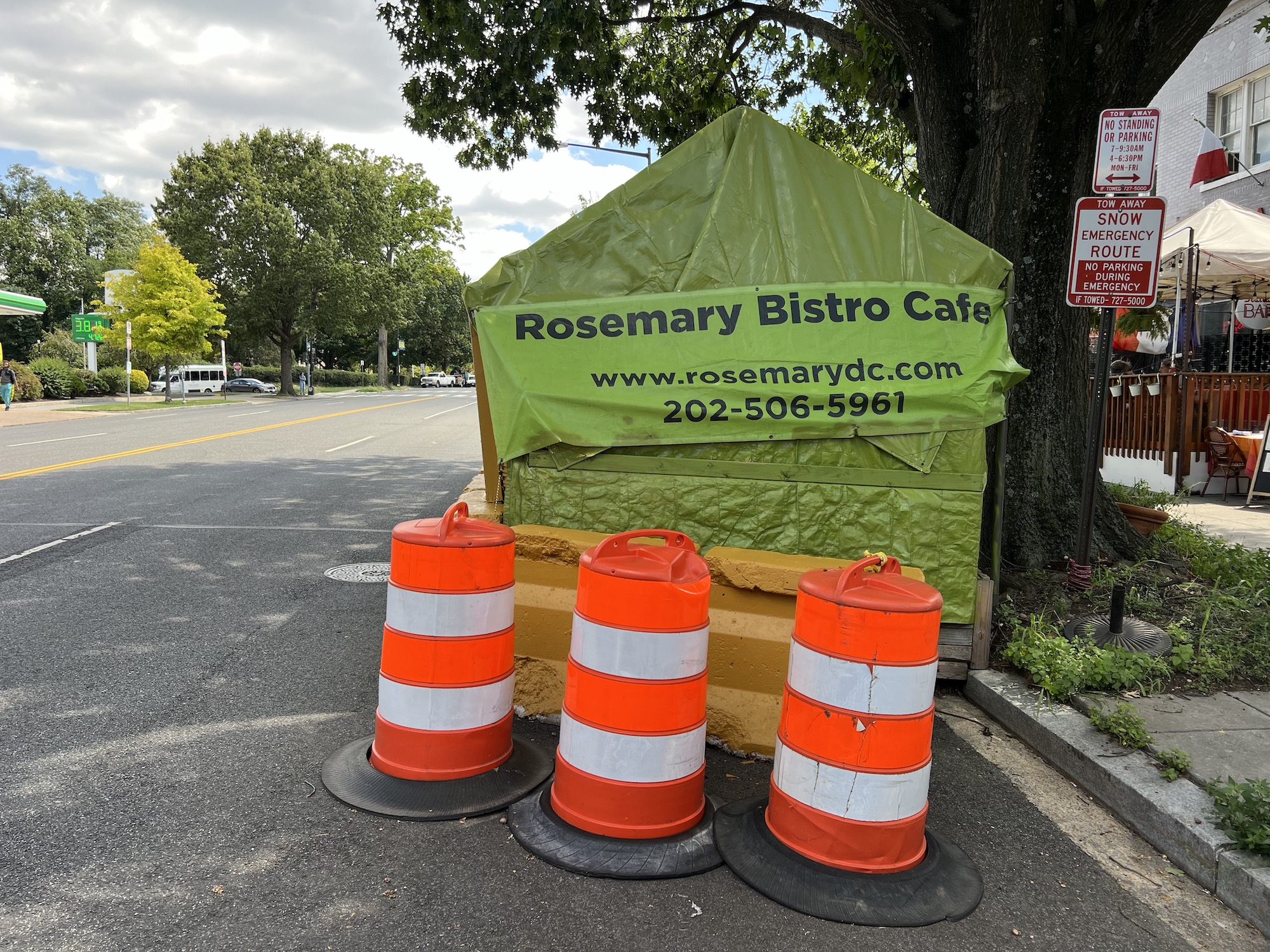
The Adams Morgan restaurants are now on their own, and few—if any—plan to attempt to meet DDOT’s new guidelines to rebuild their streateries. As it turns out, even the sleek city-designed structures from the pilot would be too wide to meet the requirements the very same agency will soon be enforcing.
Councilmember Charles Allen, who chairs the council’s Committee on Transportation and the Environment, told Washingtonian that the Adams Morgan project was “not a great use of our tax dollars.”
On November 30, the new rules from DDOT go into effect. To hear many restaurant owners tell it, this will quickly usher in the demise of the vast majority of the District’s surviving on-street dining structures.
Streatery permitting was initially free under the emergency conditions of the pandemic. Now, on top of a $260 permit fee, restaurant owners will have to pay $20 per square foot annually—as much as $24,000 for some streateries. Under the new rules, streateries can’t be fully enclosed—even with plexiglass—so winter outdoor dining is off the table. And there are new requirements on distances from residential entrances, alleys, and trees, making some existing streateries entirely illegal.
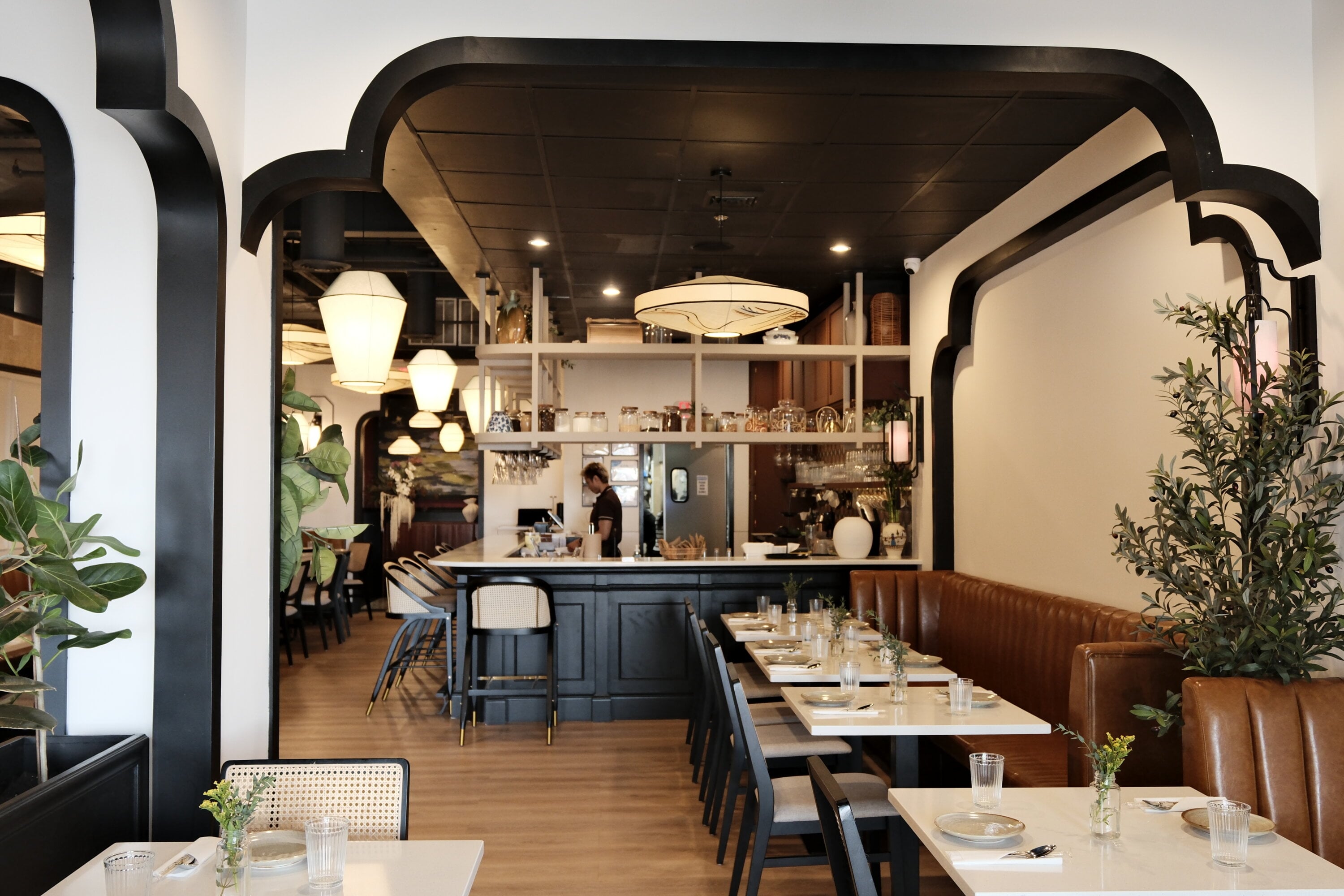
David Sales, general manager of Lutèce, says though the permitting process has grown “increasingly complex and expensive,” he is optimistic about finding a way to meet the new requirements and hold on to the restaurant’s five streatery tables.
Most other restaurateurs were less hopeful.
“If we go by the letter of the new regulations, our streatery will go from seven tables to one,” says Daniel Kramer, a managing partner at Duke’s Grocery. “In its place could go absolutely nothing.”
Daisuke Utagawa, who co-owns Tonari and Daikaya in the Penn Quarter, told Washingtonian he plans to tear down his streatery altogether.
At the Green Zone, owner Chris Hassaan Francke says the well-appointed, insulated streatery is responsible for about one third of his revenue. It will be gone by November 30, and Francke says it’s “doubtful that it would be a return on the investment and the hassle” to rebuild according to the new rules.
At a transportation committee hearing last week, the owners of Prost, Purple Patch, Mikko, and Martin’s Tavern told council members that the new regulations would effectively kill their outdoor dining. Shawn Townsend, president of the Restaurant Association of Metropolitan Washington, said DDOT is risking “creating beautiful regulations for empty spaces.”
All of this comes at a moment some DC restaurant owners are referring to as “Pandemic 2.0”— the depressing effect of a government shutdown, National Guard occupation, and immigration raids on a city reeling from cuts to its biggest employer.
Allen came away from last week’s hearing concerned that DC’s streateries would die by a thousand cuts.
“This feels like a way to say ‘I don’t want streateries, but I don’t want to say that part out loud, and so we’re going to create this really onerous process,’ ” he said in an interview. “If your position is you just want to get rid of streateries, just say it.”
Gwendolyn Lohse, an Advisory Neighborhood Commission chair, had a different perspective— but was just as dissatisfied with DDOT. She spoke at the hearing on behalf of many Georgetown constituents who feel more agnostic about streateries, and are particularly concerned about largely vacant ones that take up much-needed parking spots in their neighborhood. She said DDOT seemed under-equipped to deal with this problem, and advised that any future streatery permits be given time limits and take into account aesthetic advice from the Old Georgetown Board. DDOT’s work thus far, she said, had been “confusing and chaotic.”
DDOT director Sharon Kershbaum, defending her agency’s process at the hearing, pointed out that the rules were first announced over a year ago, and those with pending permit applications will be spared tear downs. Many restaurants, she said, had waited until the last minute to get involved in the process.
Kershbaum said 62 restaurants had applied for permits for new structures as of last week, out of about 139 with currently active streateries. Some may not make it through the permitting process, but if around 45 percent of streateries survive the transition, she suggested, DDOT would consider that a success. In New York, Kershbaum said, only about 10 percent of streateries survived a change to the city’s rules last year.
“We are not coming through with bulldozers on December 1, but we need to have deadlines,” Kershbaum told the council. “A streatery that’s not invested in, that stays empty because it looks terrible and is not attractive to diners brings in nothing and becomes an eyesore.”
As for the cost, she added: “you need to put a little skin in the game to make sure you’re committed to it.”
Several restaurant owners and ANC commissioners told the council that DDOT had ignored their questions and suggestions. Washingtonian didn’t fare much better: we requested an interview with DDOT officials, but a spokesperson did not make anyone available by press time.
Allen clearly wants DDOT to dream bigger. After he asked Kershbaum about the possibility of using clear plastic to enclose streateries for year-round dining, she reminded him that the structures had been designed to be open to the elements to prevent the spread of Covid.
“That is a perspective from five years ago that does not hold today,” Allen said later. “That one exchange actually showed me a lot about their perspective on this. They’ve been unable to evolve and understand the way that these spaces now support local businesses and are really good things for a vibrant outdoor city.”

Ike Allen covers politics, food, culture, and transportation in DC and writes the monthly Hidden Eats column for the magazine. He grew up in DC.