location_on2606 Connecticut Ave., NW
languageWebsite
Any restaurant claiming to be Italian will use the right ingredients. The right canned tomatoes, the right cheeses, the right olive oil. If you know anything about Italian food—and Italians—you know how much passion is spent on matching pasta shapes and sauces, the proper (and improper) toppings for pizza, the controversies of carbonara.
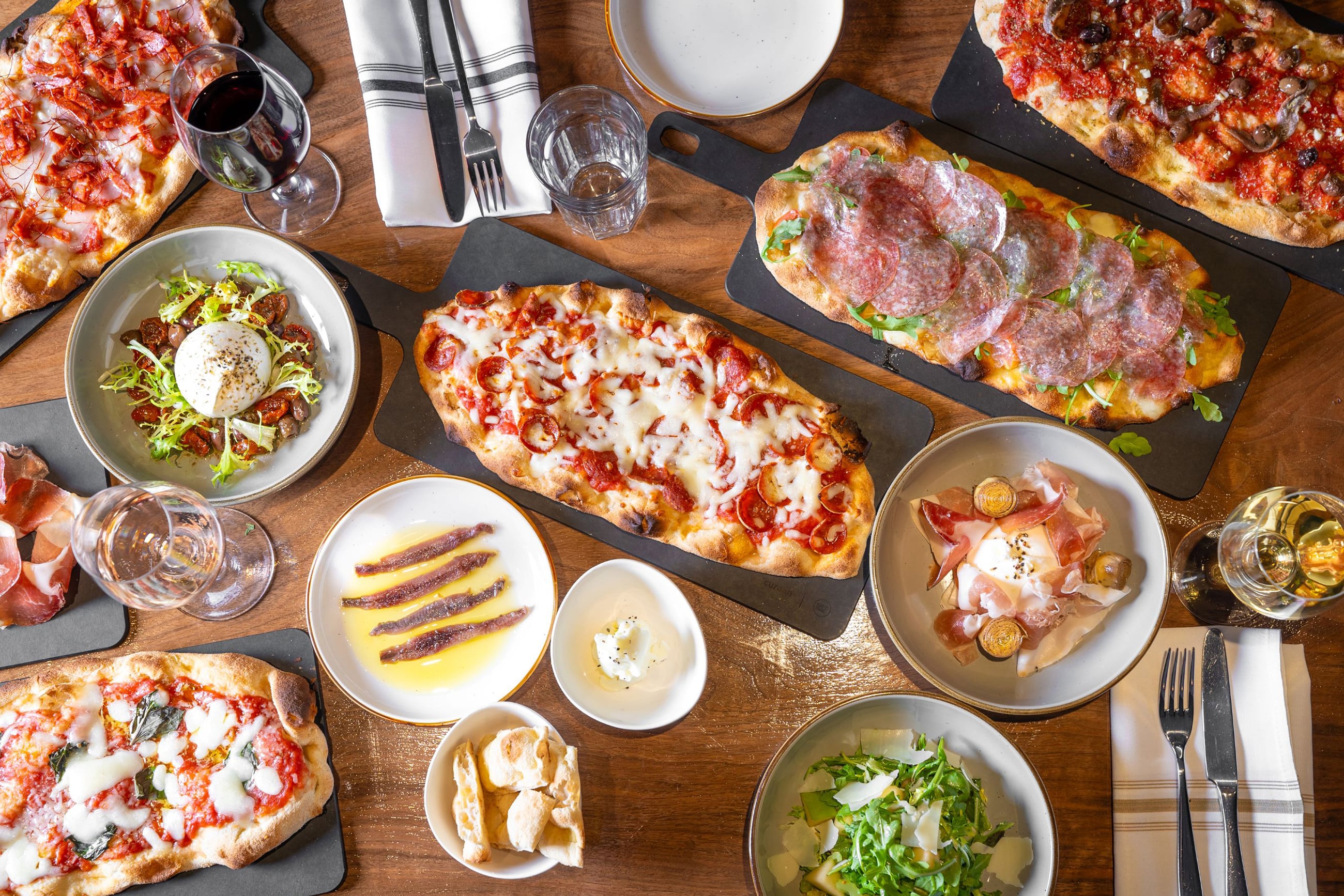
The Woodley Park pizzeria Via Roma, which opened last year and specializes in pinsa (oval-shaped Roman pizzas), does all the right things. Its cheeses have DOP pedigree. Its tomatoes come from Campania’s volcanic soil. Even its oven, built in Italy and shipped to DC at great expense, has a stone conveyor belt and two temperature zones.
But that’s just part of the reason local Italian chefs and embassy officials, who regularly make the 20-minute walk to the restaurant, keep coming back.
Tonino Topolino, Via Roma’s pizzaiolo, and partner Biaggio Cepollaro are behind the place, the second iteration of the Via Roma concept. (The first, now closed, was in Camp Springs.)
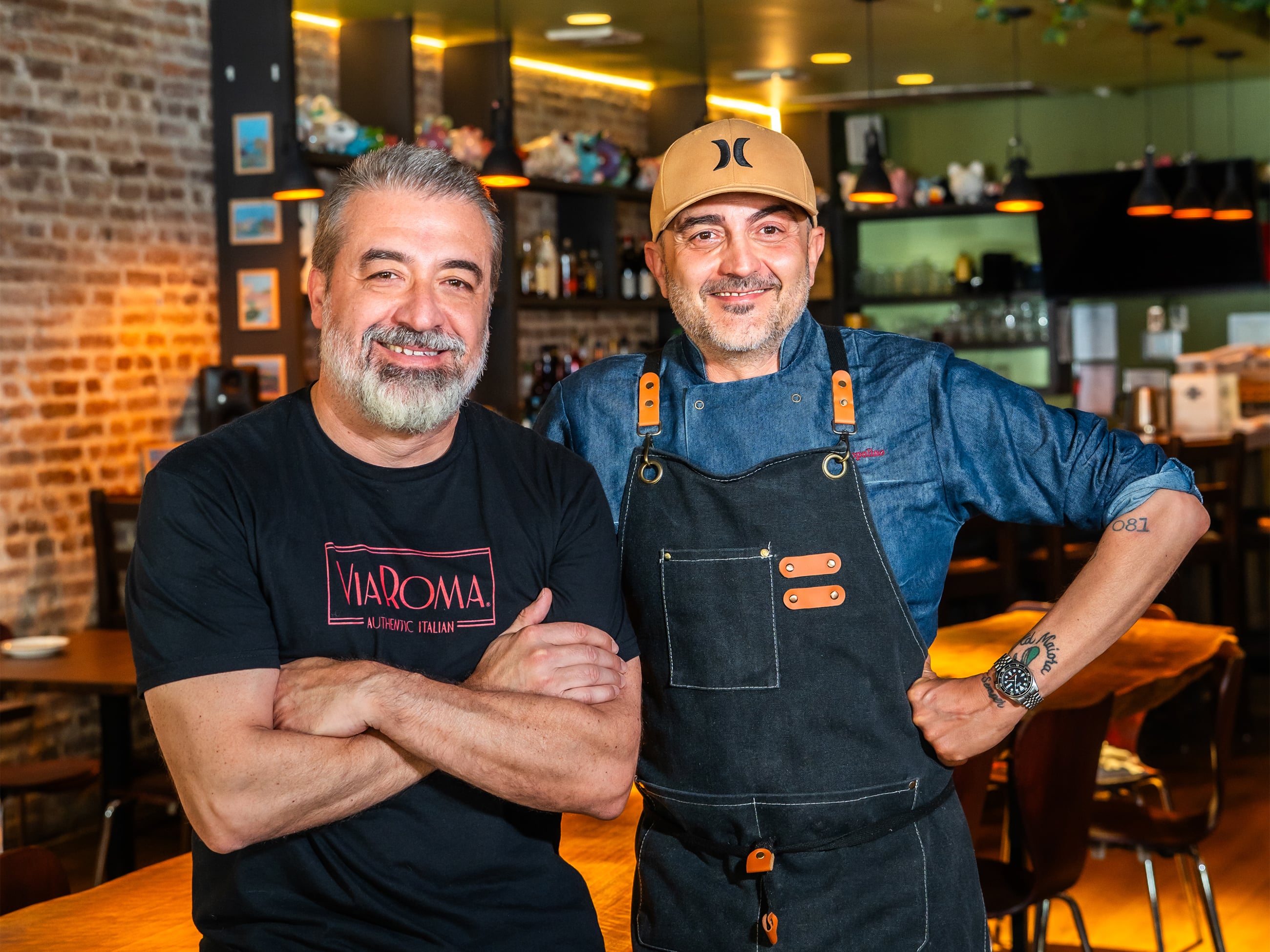
The pair grew up in Naples, and Topolino comes from a baking family—he was raised in one of the city’s most dangerous neighborhoods but remembers a good childhood with a bread-baking grandfather.
The pizza at Via Roma, though, is nothing his Neapolitan forebears would recognize. Pinsa is a newly developed style, created 25 years ago by an Italian entrepreneur who wanted to make a lighter crust using a combination of rice, soy, and wheat flours. He created an origin story about pinsa being Italy’s original pizza, eaten by the Roman legion, but Topolino is skeptical: “There’s no evidence of that. Pure marketing.” Still, pinsa caught on in Rome, and Via Roma is our area’s first certified pinseria.
The food—airy and crisp pinsas, al dente pastas, fresh salads—is “mamma style,” says Topolino. “Italians know I don’t cheat.”
Antonio Marmolia, head chef at the lauded Penn Quarter dining room Fiola, agrees: “The food is really good and simple. I think that’s what Italians want when we visit a pizzeria, a place you can visit every week, where they use good ingredients. It’s genuine—I think that’s the magic.”
But Marmolia sees something in Via Roma other than just the food—it’s the people behind it: “It’s like an old-school place. You walk in and they say, ‘How are you? Come in, sit down,’ and all of a sudden you’re their friend.”
This article appears in the July 2026 issue of Washingtonian.