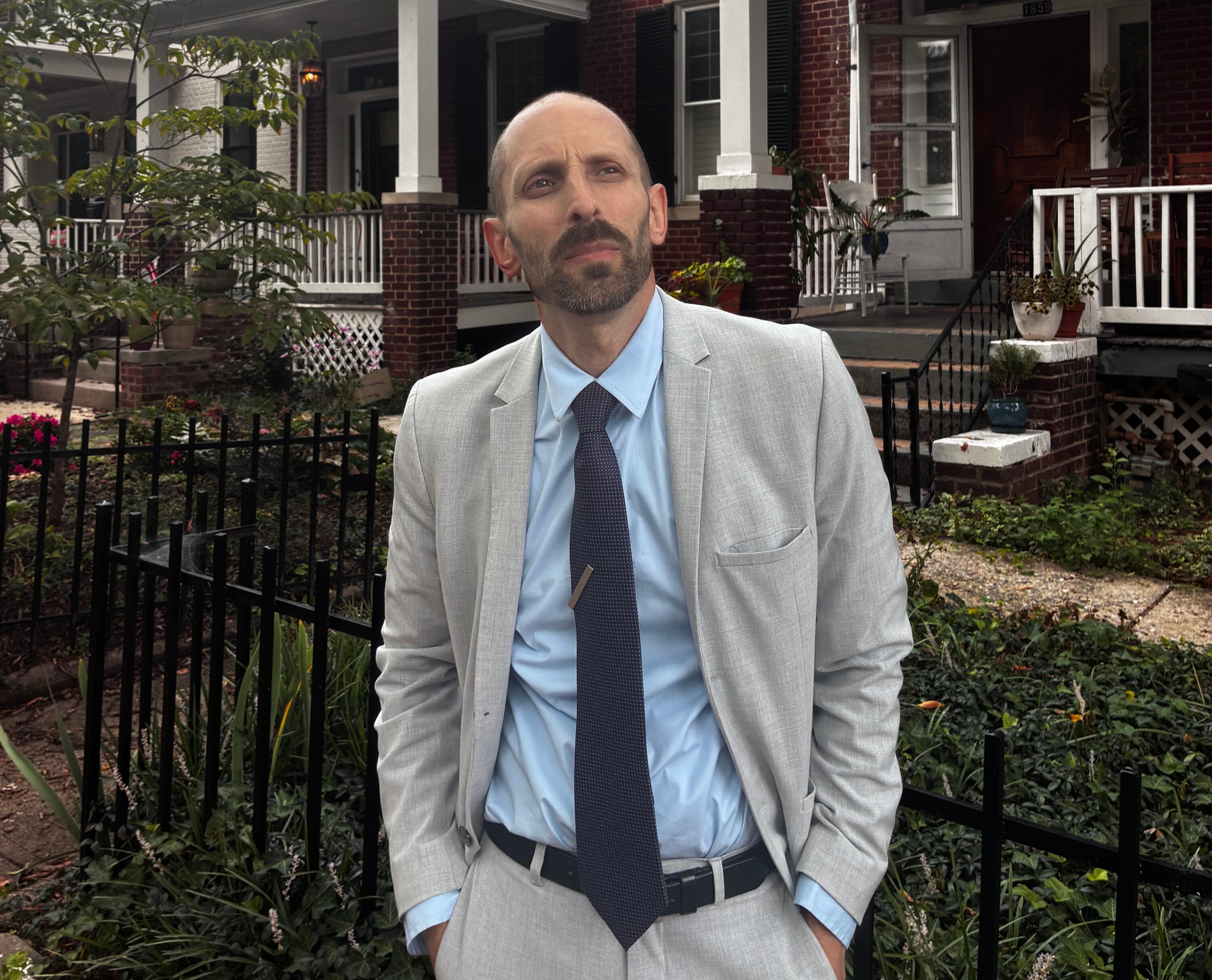
A few years ago, Washingtonian did quite a lot of reporting on a nondescript brick home across the street from the Russian embassy in Glover Park. That house looked almost normal—except for the three tinted skylights that awkwardly faced the street—and yet, for almost a quarter century, the FBI used it to spy on the Russians, visually surveilling the embassy and probably collecting electronic signals, too. The bureau left about a decade ago, and the house has sat vacant ever since. Now it’s going on the market as a luxury home.
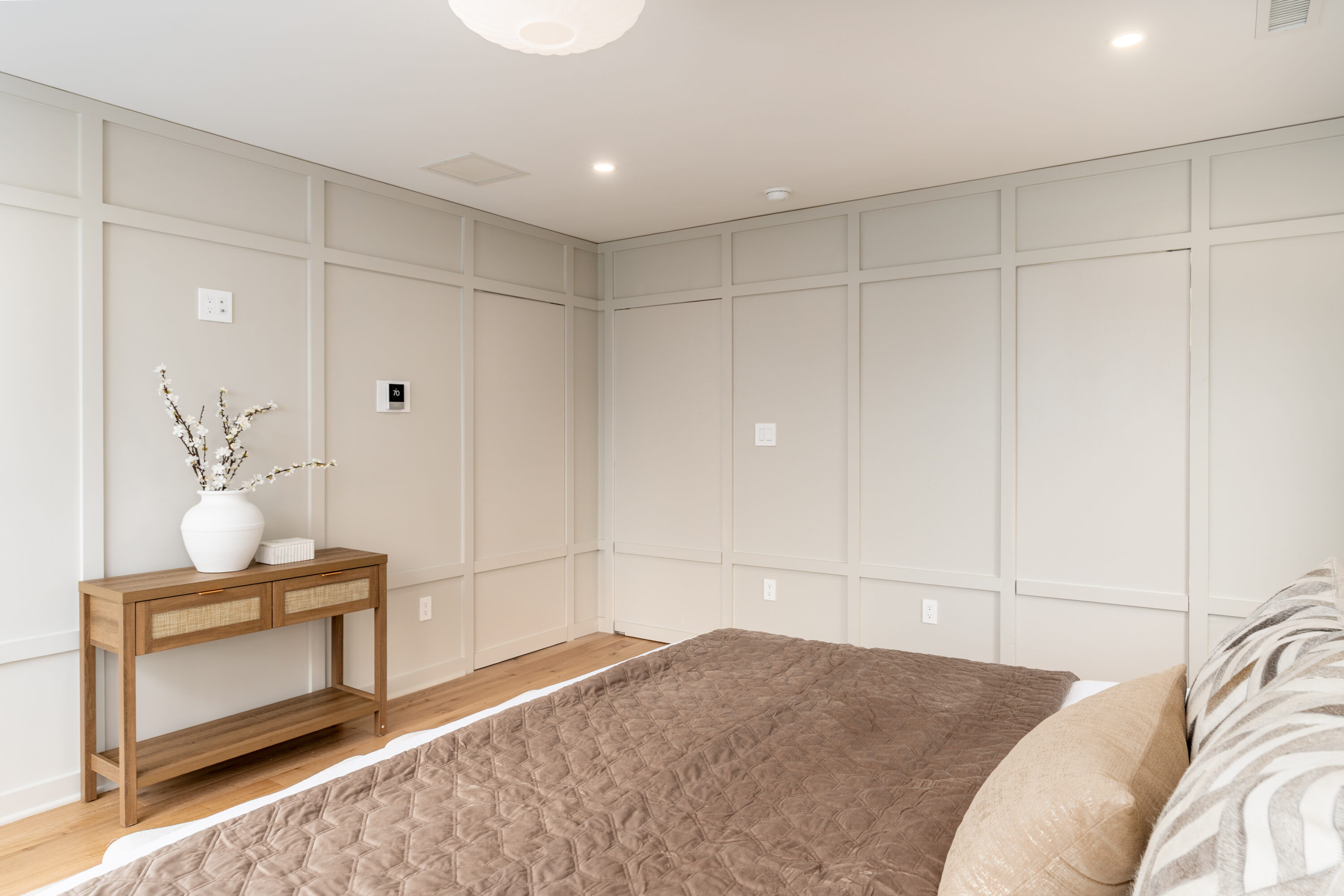
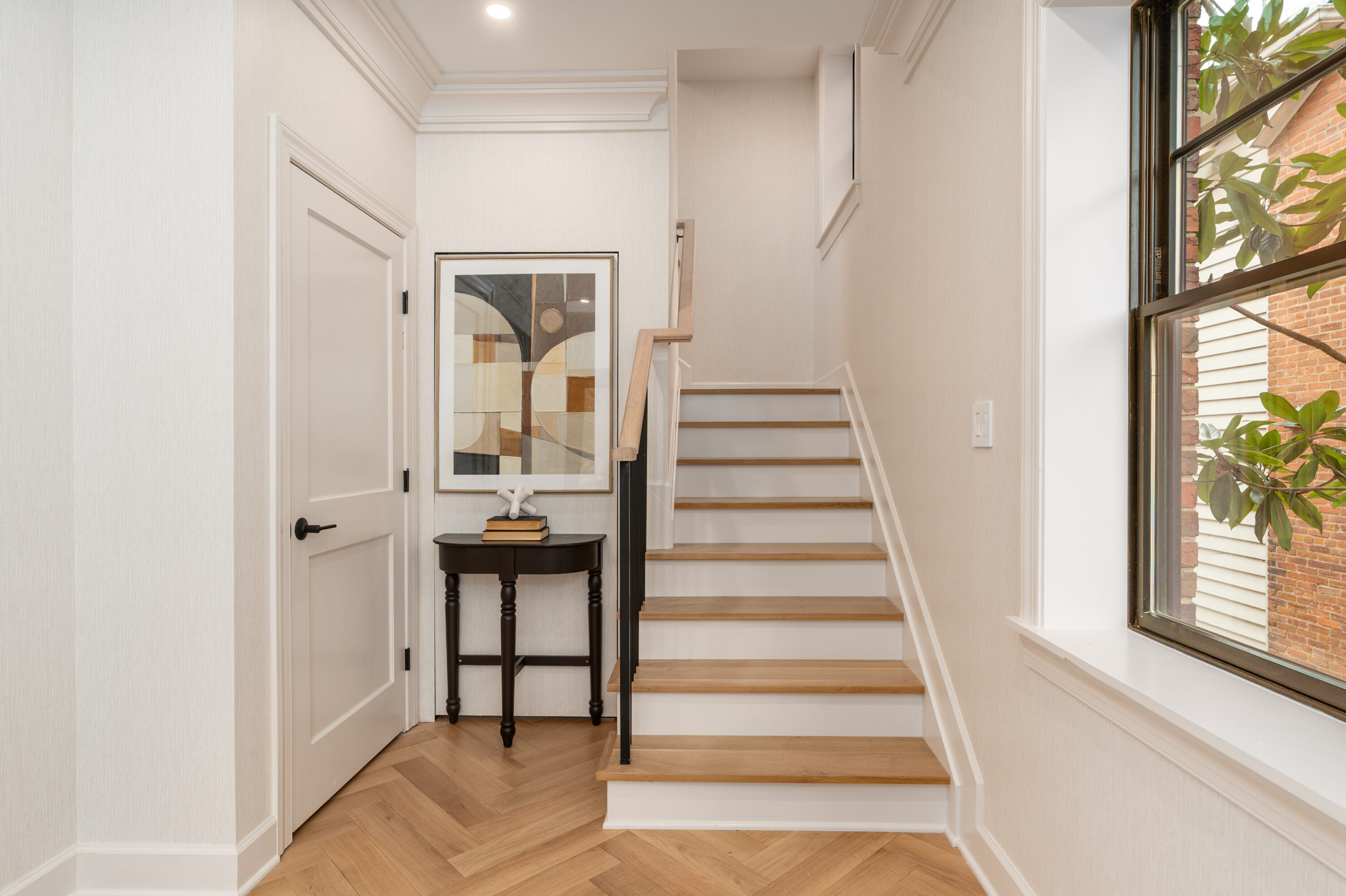
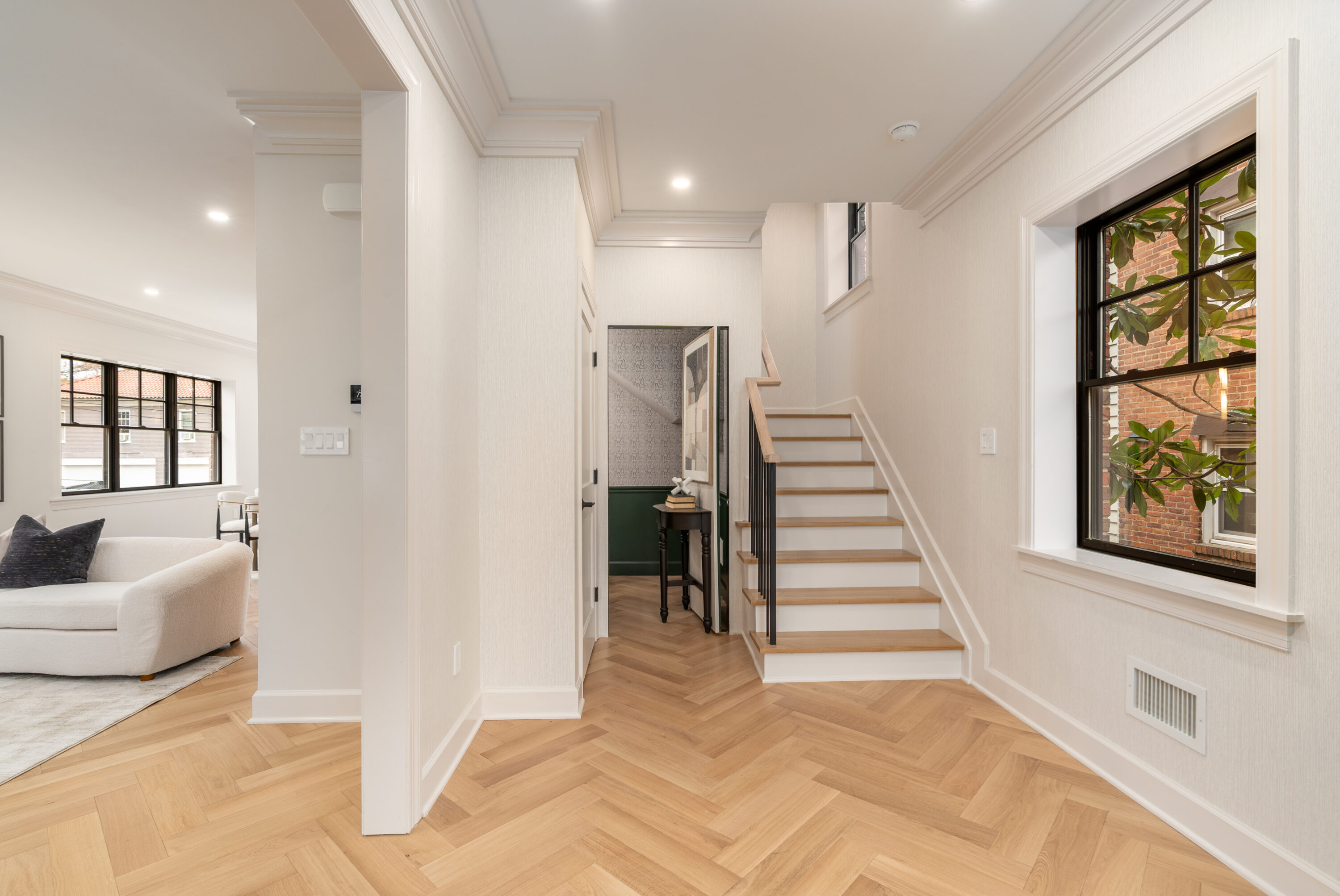
“It’s basically a brand new house except for the exterior facade,” says Joey Yaffe, president and CEO of the real estate company NewCity. In reimagining the house, Yaffe gutted and expanded it, but he also wanted to honor its past. He kept the skylights, where neighbors used to glimpse the bureau’s cameras mounted on tripods, and installed hidden doors throughout the home. The first-floor bathroom, for example, is accessed by pushing on a wall-mounted artwork. And from the inside, the master bedroom appears to have no doors at all, just normal-looking wall panels marked by decorative trim.
NewCity closed on the spy house in the summer of 2024, and Yaffe says that when he first went inside—before his company renovated it—the interior was “remarkably undramatic. It honestly just looked like an old house.” But he did encounter some traces of its past. For example, there were empty filing cabinets in the basement and “a bunch of old office-looking desks” strewn about the house, which is not necessarily what you’d expect to find in a residential home. Also, the house was “very closed up” with “all of the windows covered with paper” to keep people from peering inside.
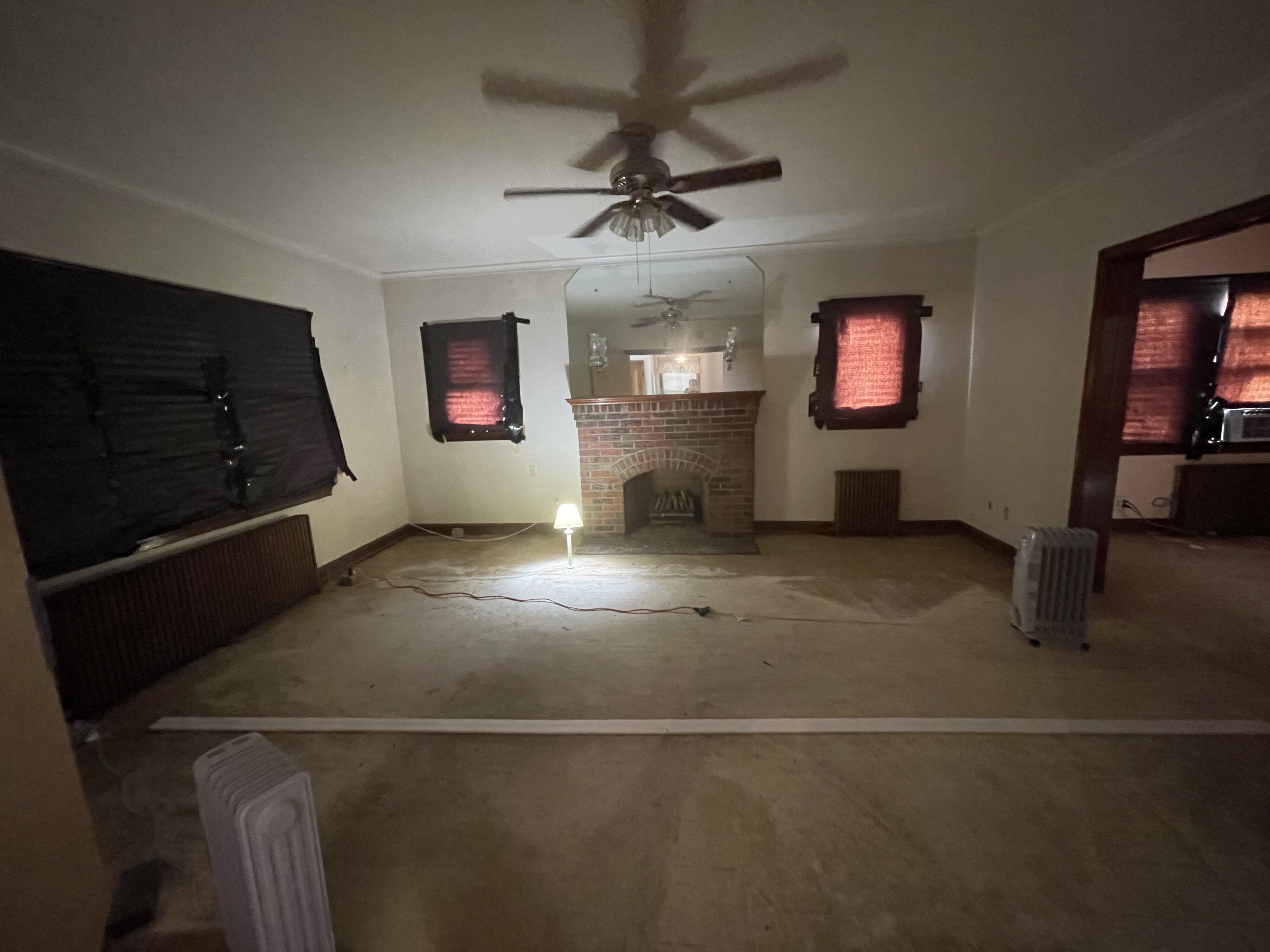
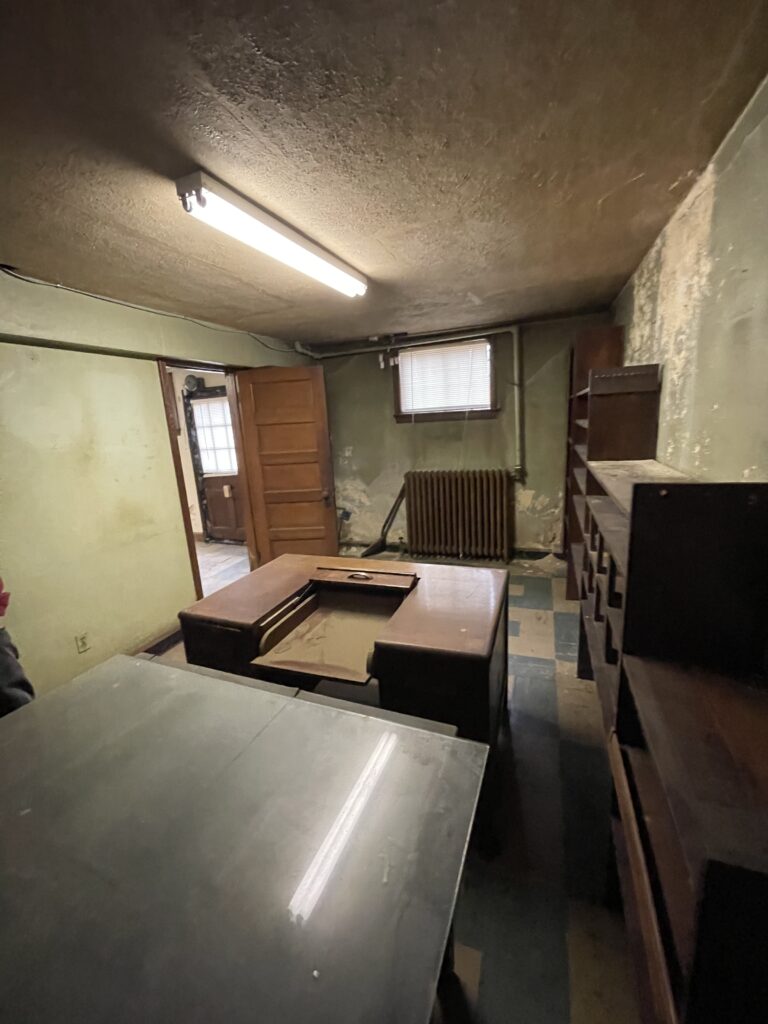
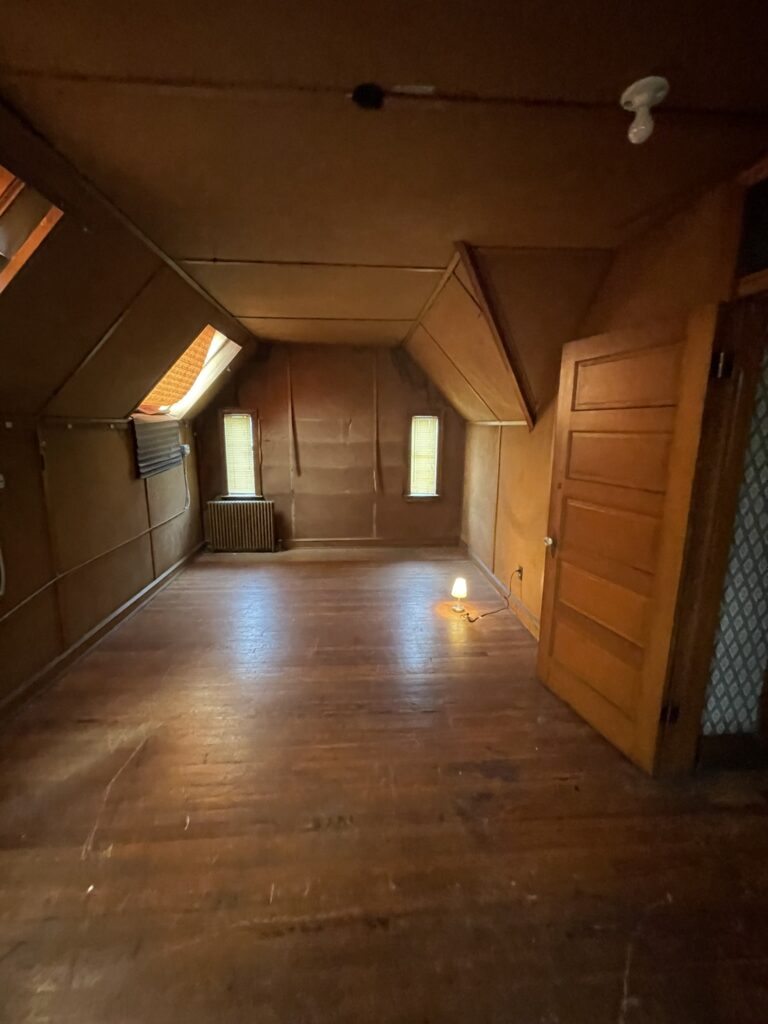
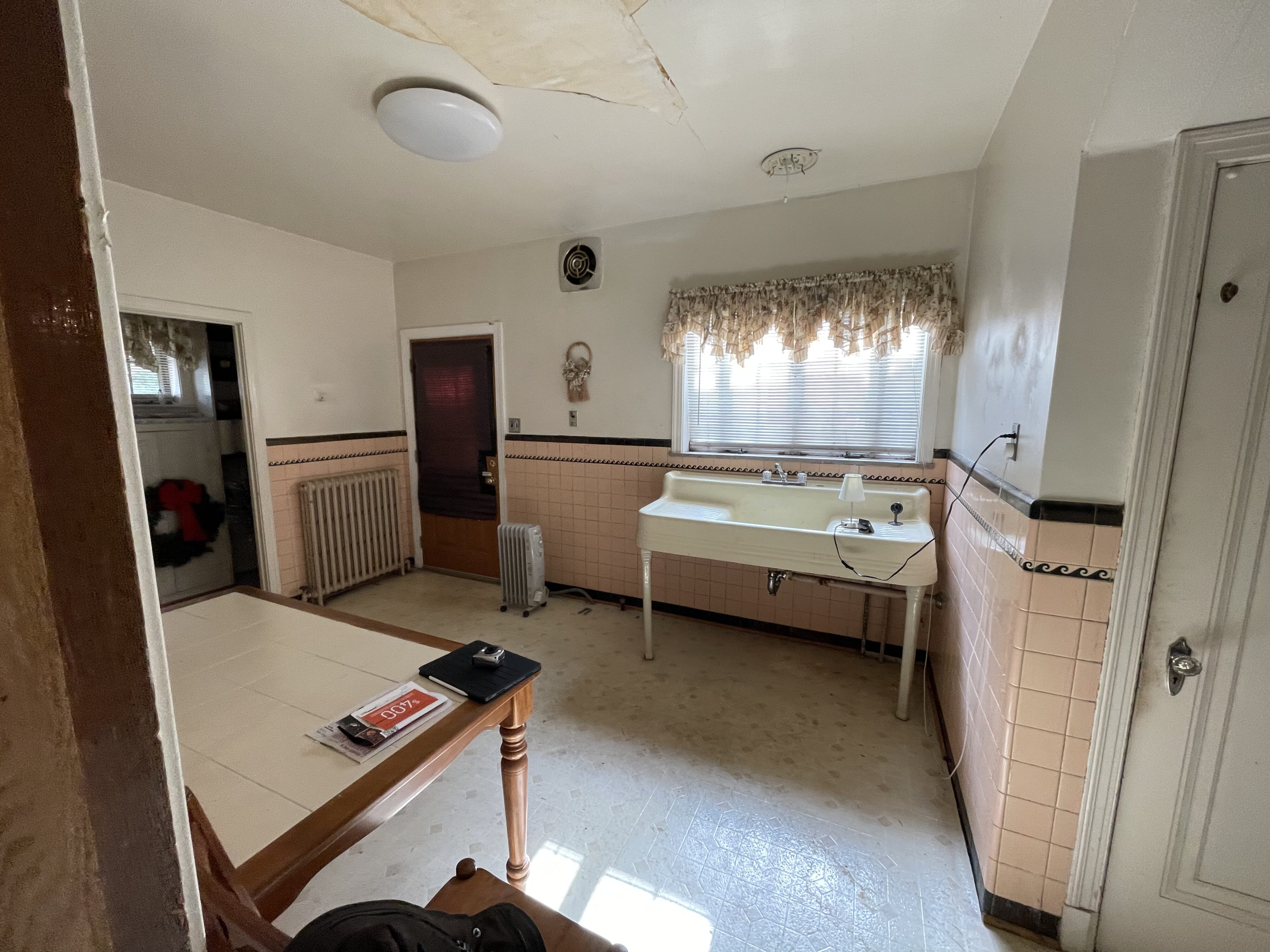
Pre-renovation photos, provided by the developer, show a midcentury home with arched doorways, a brick fireplace, dark wood trim around the windows, and the kind of light-pink bathroom tile that Mamie Eisenhower loved. The skylights that overlook the embassy are cut into a wood-paneled attic space, whose ceiling traces the gabled outline of the roof. It’s funny to imagine the FBI working in that house, filling an old family dining room with 1980s office furniture, sitting at their desks while sunlight strained against paper taped over the blinds.
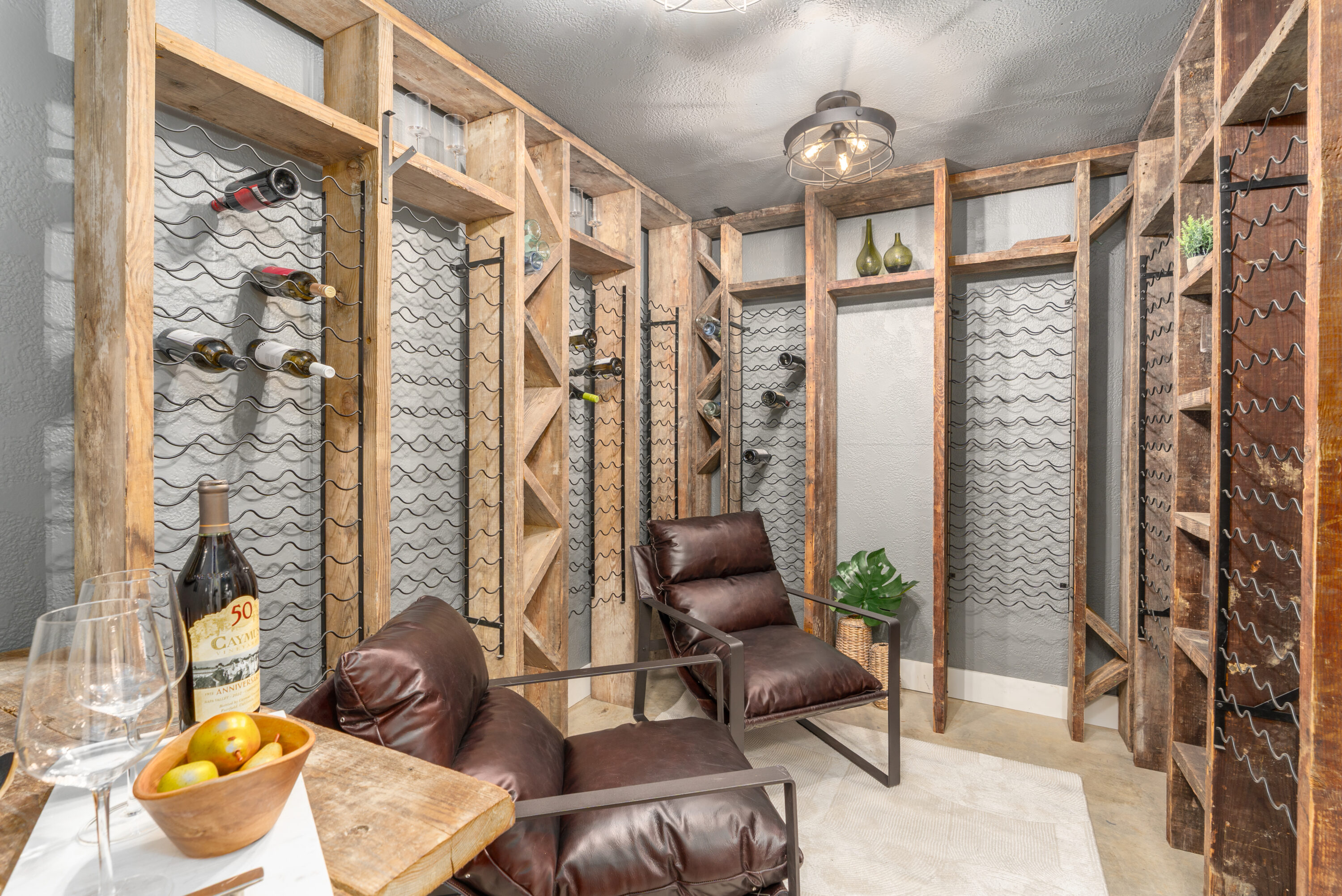
In renovating the spy house, Yaffe wanted to honor the home’s full history, not just the part with the FBI. From the 1930s through the ’80s, the house belonged to a local family. Its patriarch built the house, raised his family there, and stayed until he died. Last year, NewCity bought the property from one of his grandsons, who told Yaffe that his forbears used to make wine beneath the front porch. As a tribute to the family, the developers built a wine cellar into that porch space, hidden behind a bookcase in the basement. “So we’re leaning into both aspects: the first 50 years as this beloved family home, and then the next 25 years as a surveillance post,” Yaffe says.
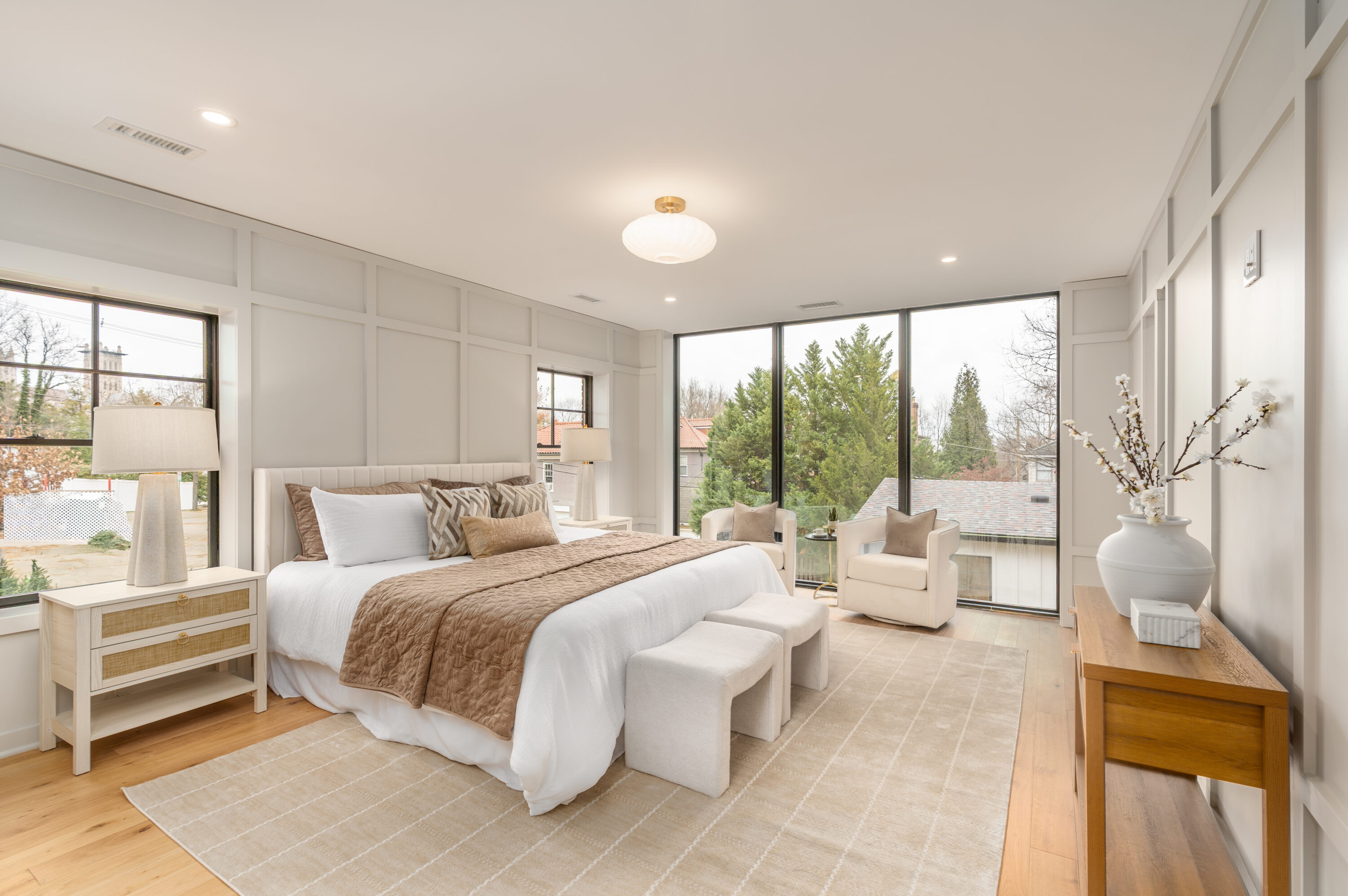
The spy house is the first property in a planned three-home development called Wisconsin Overlook. Construction on the other two houses, in the adjoining vacant lot that’s currently used to sell Christmas trees, is slated to begin in 2026. One of those homes will be 7,250 square feet with an elevator and a gym. The other will be even bigger—8,500 square feet with seven bedrooms, a media room, and space for a swimming pool. The spy house, represented by Jonathan Taylor Group, is slightly more modest: four stories, five bedrooms, about 4,500 square feet. In renovating it, NewCity expanded the home’s footprint, installed a 30-foot bank of floor-to-ceiling windows at the rear, added a screened porch and outdoor terrace, and built an accessory dwelling unit above the three-car garage.
While operating a surveillance post, the FBI wasn’t always the easiest neighbor. One nearby resident’s garage door used to open and close at all hours of the day and night, for example—likely because a signals intelligence operation was accidentally interfering with his electronic door opener. But over the years, the house became somewhat beloved in the neighborhood. It remains the subject of voluminous local lore. Still, Yaffe’s hope is that his luxe remodel will attract a more normal buyer than the Bureau. “Our goal was to create the absolute best possible place for its next family,” he says, “who we hope will move in and love it for the next 50 years.”