Takoma Park jazz musician Charles “Chuck” Redd can finally cast off the “bah, humbug” spirit that has dodged him ever since he canceled his annual Christmas Eve Jazz Jam at the Kennedy Center’s Millennium Stage.
On Friday afternoon, a District of Columbia Superior Court judge not only tossed out a breach-of-contract lawsuit the Kennedy Center brought against Redd, she ordered the center, which President Trump took over early in his second term, to pay all of the musician’s legal fees and court costs.
Judge Tanya Jones Bosier found the center’s breach of contract complaint lacked a crucial piece of evidence that would have made the Kennedy Center more likely to succeed had a trial gone forward:
“Mr. Redd did not sign the contract,” Jones Bosier said.
As requested by Redd’s legal team, she dismissed the case under both a standard contract law statute and a “special motion” allowed under D.C.’s anti-SLAPP law, which will require the Kennedy Center to pay Redd’s court costs and attorney’s fees. Her ruling could set an important precedent should the administration attempt to sue other critics.
Jones Bosier determined that the suit qualified as “strategic litigation against public participation,” or “SLAPP,” because the center attempted to penalize Redd for speaking to an Associated Press reporter in the wake of canceling the concert and because the center attempted to stifle the musician’s protected “right of advocacy on an issue of public interest.”
Redd’s attorneys from the Dupont Circle law firm Katz Bates Kumin successfully argued that former Kennedy Center president Ric Grenell “baselessly disparaged” their client via a “media offensive.” In an open letter to Redd widely distributed to the media, Grenell called Redd’s decision to cancel his free concert, “classic intolerance and very costly to a nonprofit arts institution.”
“This is your official notice that we will seek $1 million in damages from you for this political stunt,” the letter continued.
The actual lawsuit against the percussionist, filed March 5 by attorney Earl “Trey” Mayfield for the Georgia-based law firm Chalmers, Adams, Backer & Wallen, did not seek specified damages and instead said the dollar figure for “lost goodwill with the public, wasted marketing expenses, and sunk costs preparing for a concert that did not occur” should be determined by a jury at trial.
Redd and his band were scheduled to be paid $6,500 if they had performed the free concert.
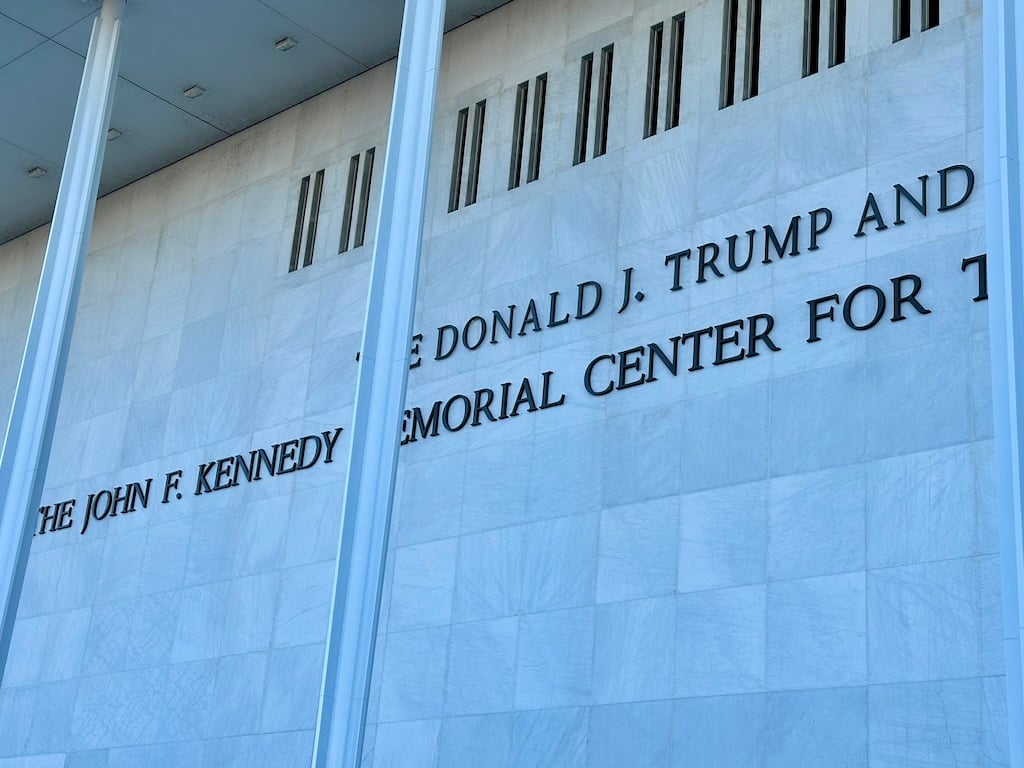
As the percussionist told the reporter, the December 18 board vote to rename the Kennedy Center after Trump was the straw that had broken his proverbial camel’s back, as a musician who was already waffling on whether he and his band would perform holiday jam. The event had been a Foggy Bottom tradition for more than 20 years. Redd did not take the cancellation lightly, and said he and his band had been looking forward to highlighting a local student. Redd said he chose to cancel the concert “[w]hen I saw the name change on the Kennedy Center website and then hours later on the building.”
Expressing that sentiment violated a newly added “morals clause” to contracts for artists performing at the center, the Kennedy Center tried to argue, even though Redd never signed the agreement.
Jones Bosier said Redd had a right to share his reason for canceling because, among other factors, “there was a community-wide debate about the name change.” The musician’s comments to the Associated Press amount to “expressive conduct allowed under the SLAPP Act,” which she said was designed to protect opposing points of view on issues of public interest.
Redd’s attorney Lisa J. Banks called the lawsuit “political retribution, pure and simple” in a statement after the ruling.
The decision came one week after another judge ruled that Trump’s name must come off the building and everywhere else the Kennedy Center’s name appears, from paper letterhead to email signatures because the board acted beyond its authority when adding Trump’s name to the center.
All those changes are now underway, according to an internal memo written by the center’s general counsel.