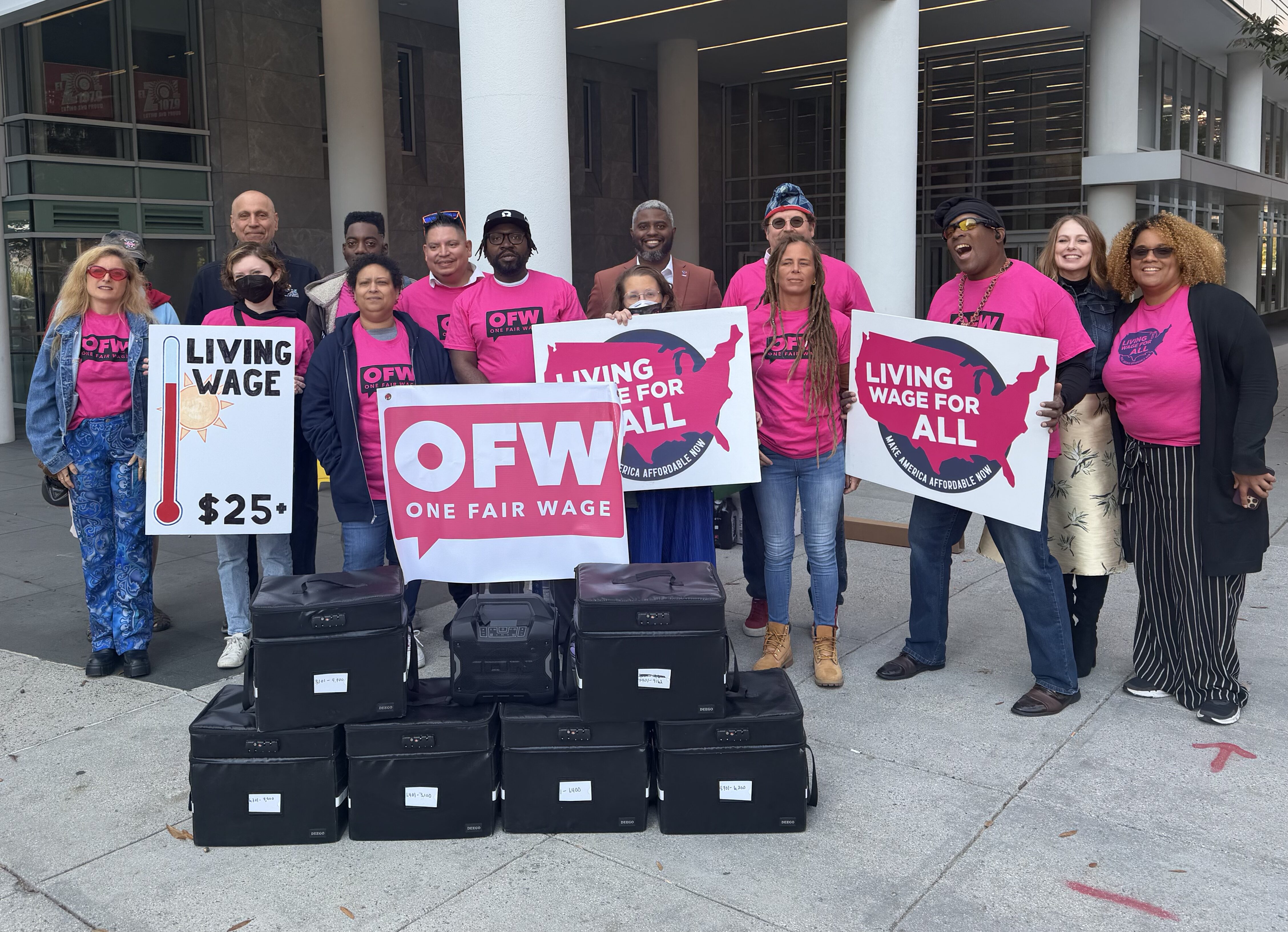
An initiative to raise DC’s minimum wage to $25 an hour and eliminate the tipped wage moved one step closer to landing on the special election ballot next April. Proponents of the initiative delivered a petition with more than 43,000 signatures to the DC Board of the Elections today.
Initiative 87 would raise the current $18.40 minimum wage to $25 by July 2029. The tipped wage (currently $10.30)—which allows employers to subsidize the minimum wage of tipped workers with gratuities—would be gradually phased out by July 2031.
One Fair Wage, the New York-based non-profit that’s spearheaded the initiative, previously tried to get the measure on this November’s ballot. The effort was delayed following a lawsuit filed by DC bar owner John Guggenmos (Number Nine, Trade, Town) against the DC Board of Elections this spring, which claimed that the board did not follow proper procedures and that the initiative’s language was misleading. A DC Superior Court judge ultimately ruled against Guggenmos, but One Fair Wage president Saru Jayaraman told Washingtonian that left less than a week for the organization to collect the required signatures to get on this year’s ballot.
The battle to get rid of DC’s tipped minimum wage has now been going on for years. Proponents argue that “one fair wage” will offer workers more stability and reduce wage theft, while opponents say the increased labor costs for restaurants have already led to staff cuts, lower pay, the proliferation of unpopular service fees, and ultimately, restaurant closures.
Previous ballot initiatives to phase out the tipped wage have a rocky history: Initiative 77, passed in 2018, was ultimately overturned by the DC Council. Then came Initiative 82, which the DC Council voted to reform last summer by slowing down and ultimately capping increases to the tipped wage.
Initiative 87 will continue to face opposition from the Restaurant Association Metropolitan Washington. The group claims that Initiative 82 is already responsible for a spike in restaurant closures and has been warning that Initiative 87 could have even more dire consequences for the health of the dining scene.
RAMW has been pushing to reform the current ballot initiative process in general, which it notes does not require a fiscal impact statement before signature collection and leaves little time for public review.
The group also has taken issue with the initiative appearing in a special election, when turnout is consistently low and the issue could be decided by only a sliver of voters. RAMW CEO Shawn Townsend did not respond to a request for further comment.

Jessica Sidman covers the people and trends behind DC’s food and drink scene. Before joining Washingtonian in July 2016, she was Food Editor and Young & Hungry columnist at Washington City Paper. She is a Colorado native and University of Pennsylvania grad.