Sweetgreen was, technically, MAHA before MAHA was a thing. Back in 2016, the salad company made “Make America Healthy Again” hats and bumper stickers while it promoted removing bacon and sriracha from its menu. Although it was a riff on Donald Trump’s campaign slogan, it was long before Robert F. Kennedy Jr. mainstreamed the phrase and brought it under the umbrella of the President’s policy agenda.
Since then, Sweetgreen has not directly aligned itself with Kennedy’s MAHA. But yesterday, CEO Jonathan Neman appeared as a panelist at the MAHA Summit, a DC conference spanning cancer prevention, psychedelic medicine, and AI with a slew of Trump officials. Kennedy and JD Vance headlined the event.
Sweetgreen may share MAHA’s healthy eating ethos, but it’s trying not to faceplant into the movement’s broader and more polarizing Trump-aligned politics. It’s precarious territory for a DC-founded chain that has built its brand selling $16 salads to a largely liberal, urban customer base.
For a discussion on “real food at scale,” Neman joined a VP from Walmart and the “Chief MAHA Officer” for Steak ‘n Shake, the Midwestern fast-food chain which has become a Trumpworld darling for its beef tallow fries and Republican endorsements. The panel was moderated by HHS official Stefanie Spear, one of Kennedy’s longtime aides, who said she looked forward to a future with “hundreds of thousands of chief MAHA officers.”
“When are you going to bring on your Chief MAHA officer?,” Spear asked Neman.
“You know, it’s in our DNA,” Neman said. “It’s totally built into our DNA and it’s built into our food ethos.”
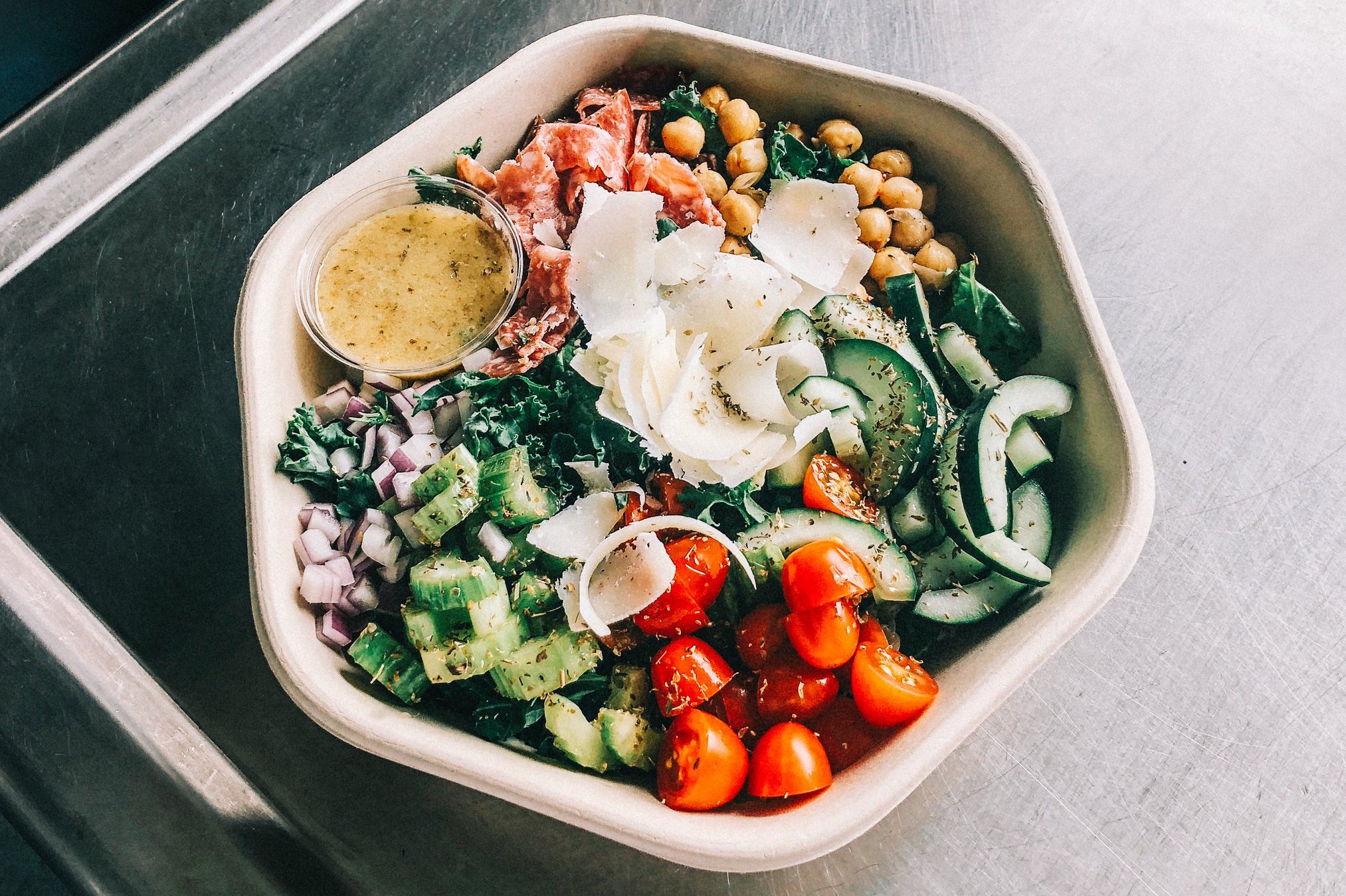
Sweetgreen was, after all, at the forefront of the anti-seed oil movement now embraced by MAHA. Although it was long in the works, the launch of its first seed oil-free menu happened to coincide with Trump’s return to the White House. Meanwhile, Sweetgreen has leaned into the protein-maxxing championed by Kennedy and his inverted meat-centric food pyramid, offering a limited-run 106-gram “Power Max Protein Bowl” last year. Earlier this year, the company also collaborated with Dr. Mark Hyman, a controversial “functional medicine” proponent with very close ties to Kennedy.
To be fair, Sweetgreen also worked with the Obama administration, back when access to healthy food was seen as more of a left-coded policy issue. Sweetgreen founder Nic Jammet even joined Michelle Obama for an international summit on global nutrition and sustainable food solutions.
“We say we’re not red or blue, but we’re green,” Neman told the New York Times last year. He said he agreed with Kennedy about bringing more transparency to the food system and that artificial dyes are bad. “We don’t like to get involved in the rest of it. So we’re not trying to insert ourselves politically, either me personally or as a brand.”
The company reiterated as much in a statement to Washingtonian about its involvement in the MAHA Summit: “Sweetgreen’s mission is to connect people to real food, and we accepted an invitation to join a discussion about food and nutrition. We believe that access to healthy food should not be a partisan issue. We have engaged in discussions about food’s role in society for nearly 20 years. We’re encouraged to see a national conversation focused on the quality of the food we eat, where it comes from, how it’s made, and its impact on our health.”
The reality, however, is that MAHA has been highly politicized. Sure, both sides of the aisle can agree that everyone should have access to healthy food and eat fewer ultra-processed products. But Kennedy’s MAHA is also inextricably linked to vaccine skepticism, an administration that’s sidelined public health experts and cut food safety officials, and, of course, Trump himself.
Remember when Taylor Gourmet faced a boycott after its founder joined Trump at a small business roundtable at the White House in 2017? Never mind that he’d participated in a similar roundtable discussion with Barack Obama. Some insiders claimed the Trump meeting contributed to the hoagie chain’s demise.
These days, restaurants risk political backlash for less. Brookland pizzeria Menomale found itself at the center of a political maelstrom for congratulating Trump on his 2024 election victory. And last year, Good Company Doughnuts & Cafe faced a surge of social-media vitriol for posting an Instagram pic of White House press secretary Karoline Leavitt celebrating her 28th birthday with its sweet treats.
Chef Andre Rush, a TV and social media personality who’s cooked for four different White Houses, recently experienced the MAHA backlash firsthand. Rush and his viral biceps appeared on Kennedy’s new cooking series, “The Real Food Show,” making healthy crunch wraps and talking about cooking with kids and workout regimens. He’d connected with Kennedy’s aides while in DC this summer for the America 250th celebration on the National Mall and the UFC fight at the White House.
Shortly after the cooking show, Rush posted a followup video on Instagram saying he’d lost 20,000 followers and received racist threats. He blocked all the detractors. Kennedy reposted the video, asking his audience to help Rush regain his followers.
“I don’t think about politicization. I think about humanization,” Rush, a former US Army Master Sergeant, tells Washingtonian. He says a lot of his audience is comprised of kids, and he’d hoped the video with Kennedy would be a way of “showing them the right way to do things.”
Rush says he has thick skin, but recognizes not everyone does. I asked what he thought about others, like Sweetgreen, trying to avoid politicization.
“I know for a fact that there are so many companies, individuals who align with MAHA, but they don’t want to be attacked,” Rush says. He went in knowing he’d probably face some backlash. “At the end of the day, we all have to make our own choices. You personally have to live with that.”
Correction: Jonathan Neman is Sweetgreen CEO, not co-CEO.

Jessica Sidman covers the people and trends behind DC’s food and drink scene. Before joining Washingtonian in July 2016, she was Food Editor and Young & Hungry columnist at Washington City Paper. She is a Colorado native and University of Pennsylvania grad.